

Peas and onions, frozen, cooked, boiled, drained, with salt
Whole food · Vegetables and Vegetable Products

Photo: Wikipedia
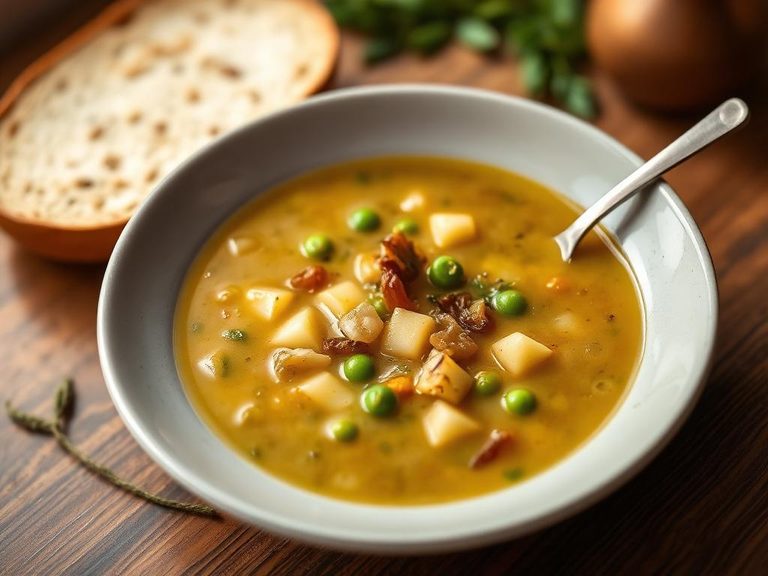
This humble, savory side dish combines the sweet, starchy pop of green peas with the mellow, caramelized bite of onions, all softened by boiling and seasoned with salt. It offers a surprisingly low-calorie, fiber-rich profile (45 kcal, 2.2g fiber per 100g) with a mild, comforting flavor that bridges the gap between a simple vegetable and a hearty, satisfying accompaniment.
Calorie split: 22% protein · 74% carbs · 4% fat
↓ Full nutrition💚 Why it's loved
People adore this dish for its comforting, nostalgic appeal—it's a staple in home cooking and school cafeterias, offering a simple, savory sweetness that pairs well with almost any main course. Its versatility allows it to be dressed up with herbs or butter, or enjoyed plain as a reliable, crowd-pleasing side.
⚠️ Watch-outs & how to enjoy it better
The added salt can be a concern for those monitoring sodium intake, and the natural sugars (3.77g per 100g) may cause mild blood-sugar spikes if eaten in large portions without protein or fat. To counteract, pair it with a lean protein like grilled chicken or a healthy fat like olive oil, and practice portion control by keeping servings to about 1 cup (150g).
Key benefits
- Low in calories and fat, making it a light yet filling side.
- Good source of plant-based protein (2.54g per 100g).
- High in dietary fiber (2.2g per 100g) for digestive health.
- Rich in vitamins like vitamin K and folate from peas and onions.
- Provides a quick, natural energy boost from its carbohydrate content.
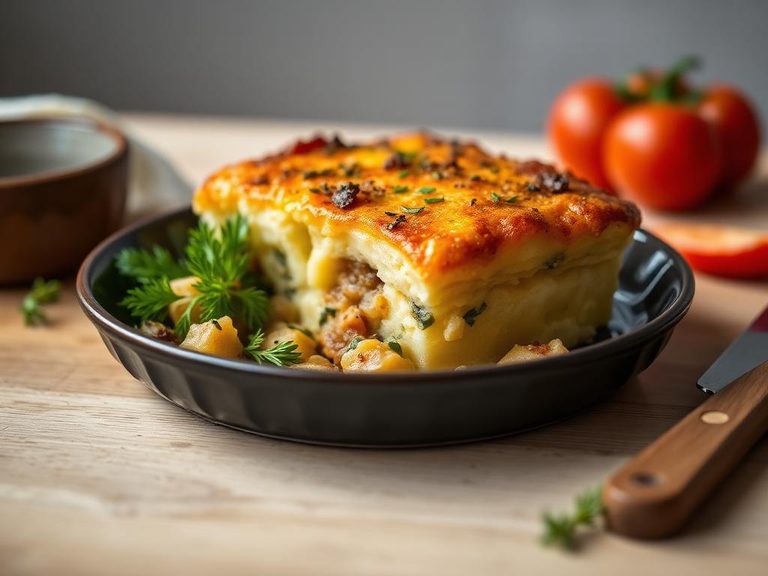
🍽️ Popular dishes
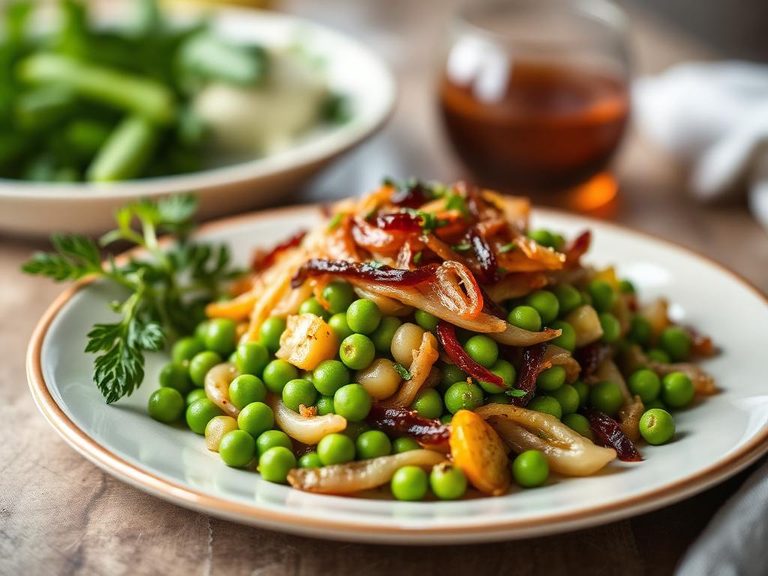
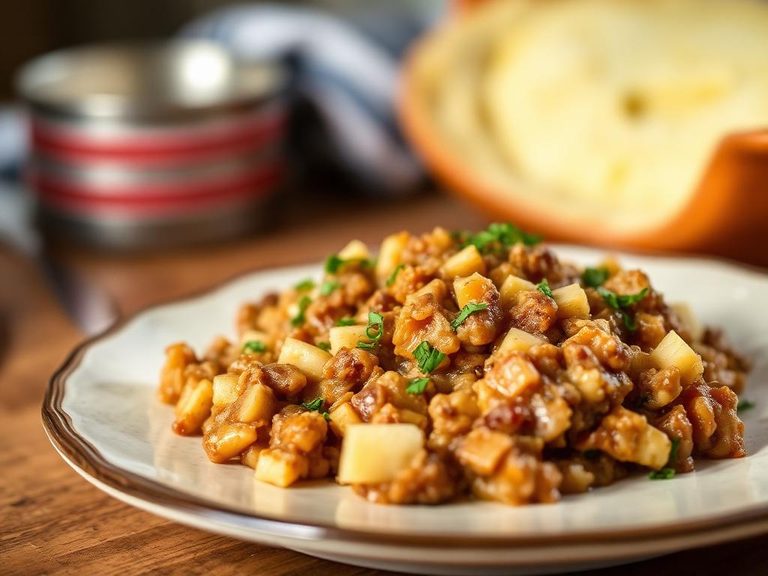
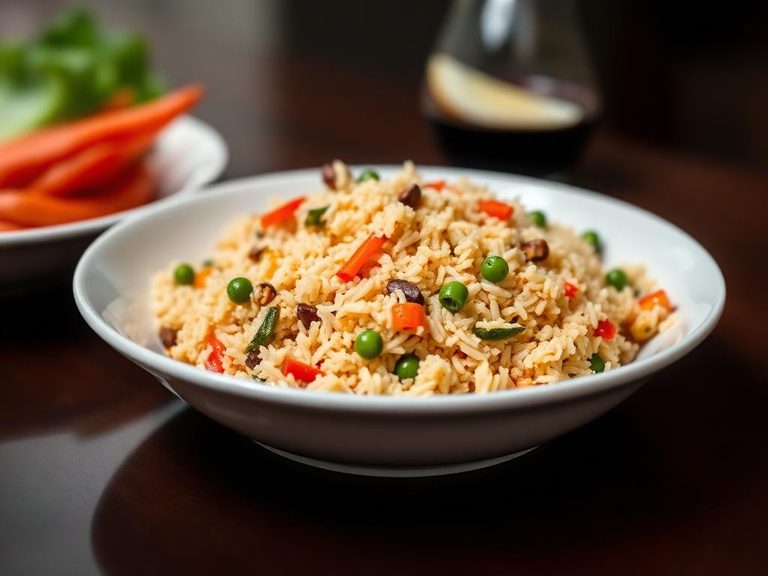
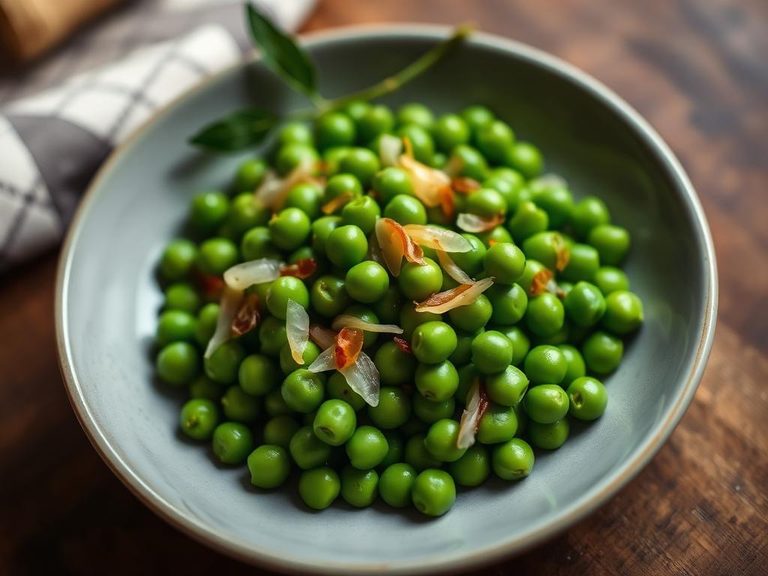
🌍 Where it's eaten
💡 Did you know?
Peas and onions are a classic pairing in British cuisine, often served as a simple side with fish and chips, and the combination dates back to the 18th century as a staple in working-class meals.
Full nutrition (USDA data · scales with serving)
| Water | 88.2 g |
| Energy | 45.0 kcal |
| Energy | 188 kj |
| Protein | 2.5 g |
| Total lipid (fat) | 0.20 g |
| Ash | 0.45 g |
| Carbohydrate, by difference | 8.6 g |
| Fiber, total dietary | 2.2 g |
| Total Sugars | 3.8 g |
| Calcium, Ca | 14.0 mg |
| Iron, Fe | 0.94 mg |
| Magnesium, Mg | 13.0 mg |
| Phosphorus, P | 34.0 mg |
| Potassium, K | 117 mg |
| Sodium, Na | 273 mg |
| Zinc, Zn | 0.29 mg |
| Copper, Cu | 0.06 mg |
| Manganese, Mn | 0.17 mg |
| Selenium, Se | 0.40 ug |
| Vitamin C, total ascorbic acid | 6.9 mg |
| Thiamin | 0.15 mg |
| Riboflavin | 0.07 mg |
| Niacin | 1.0 mg |
| Pantothenic acid | 0.09 mg |
| Vitamin B-6 | 0.09 mg |
| Folate, total | 20.0 ug |
| Folic acid | 0.00 ug |
| Folate, food | 20.0 ug |
| Folate, DFE | 20.0 ug |
| Choline, total | 15.9 mg |
| Vitamin B-12 | 0.00 ug |
| Vitamin B-12, added | 0.00 ug |
| Vitamin A, RAE | 53.0 ug |
| Retinol | 0.00 ug |
| Carotene, beta | 626 ug |
| Carotene, alpha | 10.0 ug |
| Cryptoxanthin, beta | 0.00 ug |
| Vitamin A, IU | 1051 iu |
| Lycopene | 0.00 ug |
| Lutein + zeaxanthin | 1202 ug |
| Vitamin E (alpha-tocopherol) | 0.02 mg |
| Vitamin E, added | 0.00 mg |
| Vitamin D (D2 + D3), International Units | 0.00 iu |
| Vitamin D (D2 + D3) | 0.00 ug |
| Vitamin K (phylloquinone) | 12.1 ug |
| Alcohol, ethyl | 0.00 g |
| Caffeine | 0.00 mg |
| Theobromine | 0.00 mg |
Fat & fatty acid profile (per 100g)
| Fatty acids, total saturated | 0.04 g |
| SFA 4:0 | 0.00 g |
| SFA 6:0 | 0.00 g |
| SFA 8:0 | 0.00 g |
| SFA 10:0 | 0.00 g |
| SFA 12:0 | 0.00 g |
| SFA 14:0 | 0.00 g |
| SFA 16:0 | 0.03 g |
| SFA 18:0 | 0.00 g |
| Fatty acids, total monounsaturated | 0.02 g |
| MUFA 16:1 | 0.00 g |
| MUFA 18:1 | 0.02 g |
| MUFA 20:1 | 0.00 g |
| MUFA 22:1 | 0.00 g |
| Fatty acids, total polyunsaturated | 0.09 g |
| PUFA 18:2 | 0.08 g |
| PUFA 18:3 | 0.02 g |
| PUFA 18:4 | 0.00 g |
| PUFA 20:4 | 0.00 g |
| PUFA 20:5 n-3 (EPA) | 0.00 g |
| PUFA 22:5 n-3 (DPA) | 0.00 g |
| PUFA 22:6 n-3 (DHA) | 0.00 g |
| Fatty acids, total trans | 0.00 g |
| Cholesterol | 0.00 mg |
Amino acid profile (per 100g)
| Tryptophan | 0.02 g |
| Threonine | 0.09 g |
| Isoleucine | 0.09 g |
| Leucine | 0.15 g |
| Lysine | 0.15 g |
| Methionine | 0.04 g |
| Cystine | 0.02 g |
| Phenylalanine | 0.09 g |
| Tyrosine | 0.05 g |
| Valine | 0.11 g |
| Arginine | 0.21 g |
| Histidine | 0.05 g |
| Alanine | 0.11 g |
| Aspartic acid | 0.23 g |
| Glutamic acid | 0.35 g |
| Glycine | 0.09 g |
| Proline | 0.08 g |
| Serine | 0.08 g |
FAQ
Is this dish suitable for a low-carb diet?
It contains 8.63g of carbs per 100g, which is moderate, so it can fit in a low-carb diet in small portions, but it's not ultra-low-carb.
Can I reduce the sodium content?
Yes, you can use less salt or opt for a salt-free version, and rinse the cooked peas and onions lightly to reduce sodium.
How does this compare to fresh peas and onions?
Frozen peas and onions retain most nutrients and are often more convenient, but fresh versions may have a slightly brighter flavor and texture.
Nutrient density (calculated · NRF9.3)
Nutrient Rich Foods index: beneficial nutrients (protein, fiber, vitamins, minerals) minus saturated fat, added sugar & sodium, per 100 kcal.
NRF9.3 index — Fulgoni, Keast & Drewnowski, 2009. Computed from USDA nutrients.
Weight-loss friendliness (composite index)
Energy density 0.45 kcal/g · 23% calories from protein · 2.2 g fiber · 3.8 g sugar per 100 g.
Composite of energy density (Rolls et al., 1999), protein & fiber satiety, minus sugar. A calculated heuristic — ranks satiety-per-calorie, not a clinical measure.
Dietary load (calculated from USDA values)
Potential renal acid load. Positive = acid-forming, negative = alkaline-forming.
Sodium-to-potassium ratio: 2.33 (lower is better — aim for ≤ 1)
Sodium:potassium per WHO potassium guidance. Computed from USDA nutrients.