

Whey, acid, dried
Whole food · Dairy and Egg Products

Photo: Wikipedia
Acid-dried whey is the tangy, granular residue left after curdling milk for cheese, then dehydrated to a fine powder or small crystals. It has a distinctively sour, slightly sweet, and milky flavor with a light, sandy texture that dissolves easily in liquids. Nutritionally, it's a concentrated source of fast-digesting carbs (mostly lactose) with a modest amount of protein and virtually no fat.
Calorie split: 14% protein · 85% carbs · 1% fat
↓ Full nutrition💚 Why it's loved
People love it for its unique, bright tang that can elevate everything from baked goods to soups, and for its role in traditional, resourceful cooking that wastes nothing.
⚠️ Watch-outs & how to enjoy it better
Its high lactose content can cause digestive issues for those with lactose intolerance or sensitive stomachs. To mitigate, use it in small amounts as a flavoring agent rather than a main ingredient, or pair it with a source of fat or fiber to slow sugar absorption. As a dairy product, it's a common allergen for those with milk allergies.
Key benefits
- Provides a quick source of energy from carbohydrates
- Contains whey protein, which is high in essential amino acids
- Adds a tangy flavor boost to both sweet and savory dishes
- A cost-effective way to use a byproduct of cheesemaking
- Rich in minerals like calcium and potassium
🍽️ Popular dishes



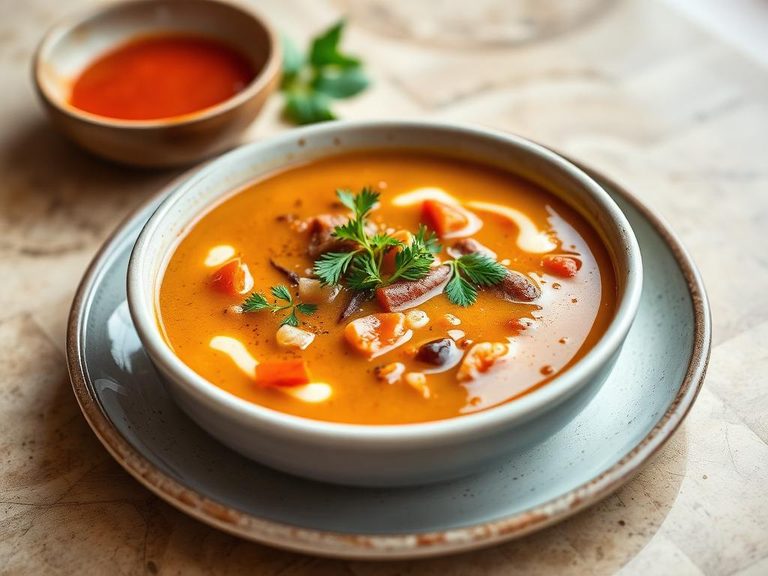

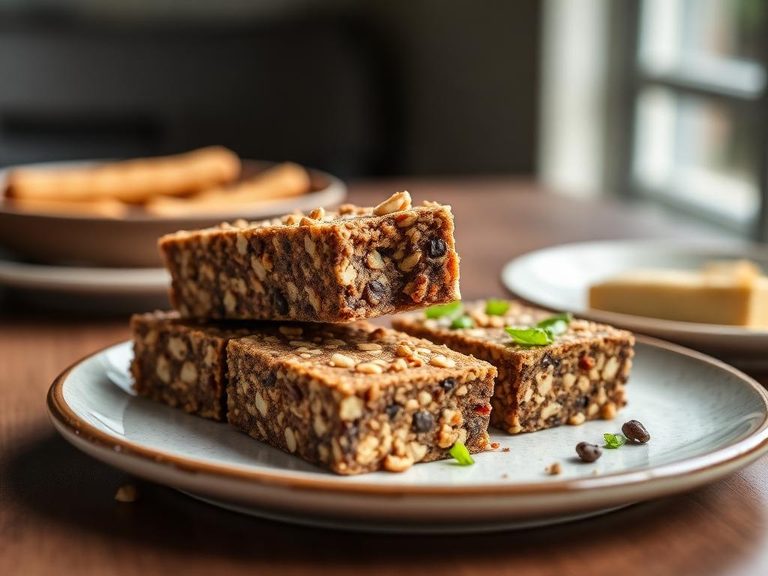
🌍 Where it's eaten
💡 Did you know?
In Finland, the traditional 'ruisleipä' (rye bread) is often made with 'heramaito' (whey), giving it a signature sourdough-like tang without a starter culture.
Full nutrition (USDA data · scales with serving)
| Water | 3.5 g |
| Energy | 339 kcal |
| Energy | 1419 kj |
| Protein | 11.7 g |
| Total lipid (fat) | 0.54 g |
| Ash | 10.8 g |
| Carbohydrate, by difference | 73.5 g |
| Fiber, total dietary | 0.00 g |
| Total Sugars | 73.5 g |
| Calcium, Ca | 2054 mg |
| Iron, Fe | 1.2 mg |
| Magnesium, Mg | 199 mg |
| Phosphorus, P | 1349 mg |
| Potassium, K | 2289 mg |
| Sodium, Na | 968 mg |
| Zinc, Zn | 6.3 mg |
| Copper, Cu | 0.05 mg |
| Manganese, Mn | 0.01 mg |
| Selenium, Se | 27.3 ug |
| Vitamin C, total ascorbic acid | 0.90 mg |
| Thiamin | 0.62 mg |
| Riboflavin | 2.1 mg |
| Niacin | 1.2 mg |
| Pantothenic acid | 5.6 mg |
| Vitamin B-6 | 0.62 mg |
| Folate, total | 33.0 ug |
| Folic acid | 0.00 ug |
| Folate, food | 33.0 ug |
| Folate, DFE | 33.0 ug |
| Choline, total | 225 mg |
| Vitamin B-12 | 2.5 ug |
| Vitamin B-12, added | 0.00 ug |
| Vitamin A, RAE | 17.0 ug |
| Retinol | 17.0 ug |
| Carotene, beta | 1.0 ug |
| Carotene, alpha | 0.00 ug |
| Cryptoxanthin, beta | 0.00 ug |
| Vitamin A, IU | 59.0 iu |
| Lycopene | 0.00 ug |
| Lutein + zeaxanthin | 0.00 ug |
| Vitamin E (alpha-tocopherol) | 0.00 mg |
| Vitamin E, added | 0.00 mg |
| Vitamin D (D2 + D3), International Units | 0.00 iu |
| Vitamin D (D2 + D3) | 0.00 ug |
| Vitamin K (phylloquinone) | 0.00 ug |
| Alcohol, ethyl | 0.00 g |
| Caffeine | 0.00 mg |
| Theobromine | 0.00 mg |
Fat & fatty acid profile (per 100g)
| Fatty acids, total saturated | 0.34 g |
| SFA 4:0 | 0.02 g |
| SFA 6:0 | 0.01 g |
| SFA 8:0 | 0.01 g |
| SFA 10:0 | 0.01 g |
| SFA 12:0 | 0.01 g |
| SFA 14:0 | 0.05 g |
| SFA 16:0 | 0.15 g |
| SFA 18:0 | 0.06 g |
| Fatty acids, total monounsaturated | 0.15 g |
| MUFA 16:1 | 0.03 g |
| MUFA 18:1 | 0.11 g |
| MUFA 20:1 | 0.00 g |
| MUFA 22:1 | 0.00 g |
| Fatty acids, total polyunsaturated | 0.02 g |
| PUFA 18:2 | 0.02 g |
| PUFA 18:3 | 0.00 g |
| PUFA 18:4 | 0.00 g |
| PUFA 20:4 | 0.00 g |
| PUFA 20:5 n-3 (EPA) | 0.00 g |
| PUFA 22:5 n-3 (DPA) | 0.00 g |
| PUFA 22:6 n-3 (DHA) | 0.00 g |
| Cholesterol | 3.0 mg |
Amino acid profile (per 100g)
| Tryptophan | 0.24 g |
| Threonine | 0.59 g |
| Isoleucine | 0.58 g |
| Leucine | 1.1 g |
| Lysine | 1.0 g |
| Methionine | 0.22 g |
| Cystine | 0.21 g |
| Phenylalanine | 0.39 g |
| Tyrosine | 0.30 g |
| Valine | 0.58 g |
| Arginine | 0.33 g |
| Histidine | 0.23 g |
| Alanine | 0.51 g |
| Aspartic acid | 1.1 g |
| Glutamic acid | 2.1 g |
| Glycine | 0.21 g |
| Proline | 0.70 g |
| Serine | 0.54 g |
FAQ
How does acid-dried whey differ from sweet whey?
Acid whey is a byproduct of acid-set cheeses (like cream cheese) or Greek yogurt, making it more sour and higher in lactose. Sweet whey comes from rennet-set cheeses (like cheddar) and is milder. They are not always interchangeable in recipes.
Can I substitute it for milk powder in recipes?
Not directly. Acid whey has a strong tangy flavor and different composition. Use it to add flavor and acidity, but you may need to adjust other liquids and leavening agents (like baking soda) in the recipe.
Is it the same as whey protein powder?
No. Whey protein powder is a highly processed isolate or concentrate of whey protein with most lactose and carbs removed. Acid-dried whey is a more whole-food byproduct containing the full carbohydrate (lactose) content.
Nutrient density (calculated · NRF9.3)
Nutrient Rich Foods index: beneficial nutrients (protein, fiber, vitamins, minerals) minus saturated fat, added sugar & sodium, per 100 kcal.
NRF9.3 index — Fulgoni, Keast & Drewnowski, 2009. Computed from USDA nutrients.
Weight-loss friendliness (composite index)
Energy density 3.39 kcal/g · 14% calories from protein · 0.0 g fiber · 73.5 g sugar per 100 g.
Composite of energy density (Rolls et al., 1999), protein & fiber satiety, minus sugar. A calculated heuristic — ranks satiety-per-calorie, not a clinical measure.
Dietary load (calculated from USDA values)
Potential renal acid load. Positive = acid-forming, negative = alkaline-forming.
Sodium-to-potassium ratio: 0.42 (lower is better — aim for ≤ 1)
Sodium:potassium per WHO potassium guidance. Computed from USDA nutrients.