Soup thickeners and sauces
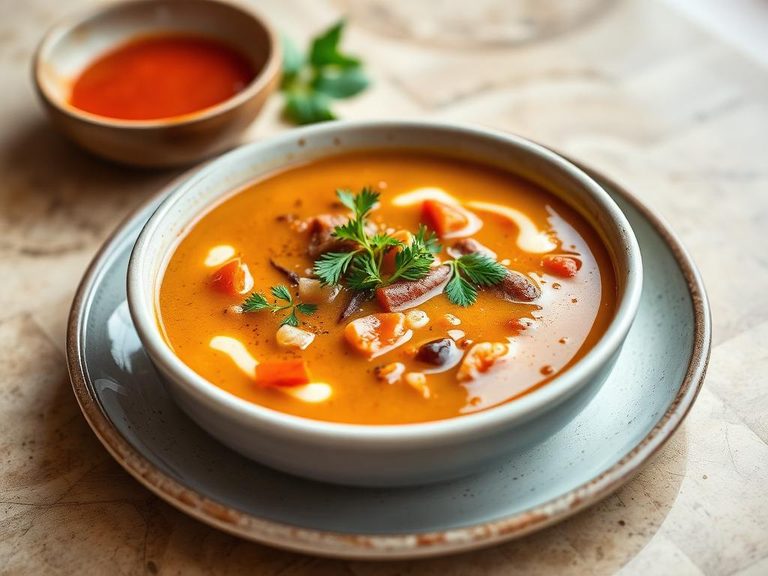
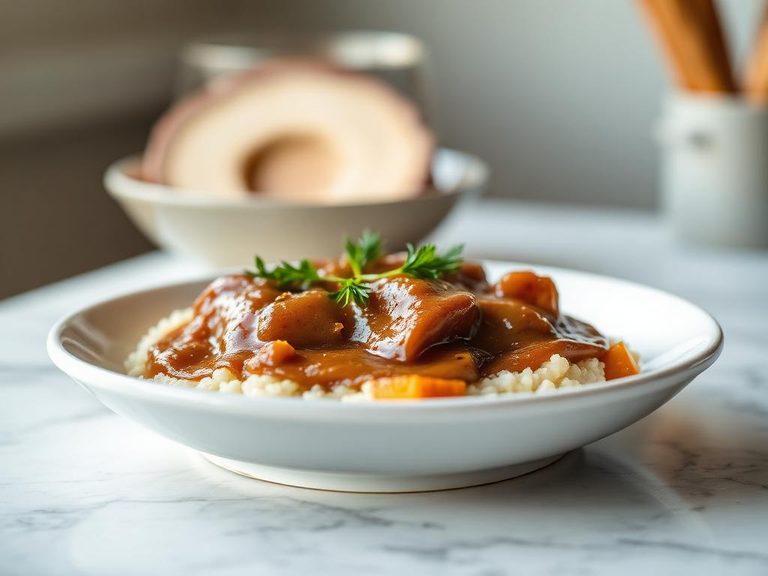
Soup thickeners and sauces are culinary techniques and ingredients used to add body, richness, and flavor to soups, stews, and gravies. Common thickeners include flour, cornstarch, arrowroot, and roux (a cooked mixture of fat and flour), while sauces like velouté, béchamel, or demi-glace often serve as both thickeners and flavor bases. These methods are foundational in French cuisine but are used globally to transform broths into hearty, cohesive dishes.
🍽️ Nutrition at a glance
Soup thickeners and sauces are typically moderate to high in carbohydrates and fat, depending on the base (e.g., a butter-based roux is higher in fat). They provide quick energy from starches and can add small amounts of protein and iron, but are often calorie-dense—roughly 50–150 calories per tablespoon for a basic roux or slurry.
Nutrition breakdown
| Calories | 85 kcal |
| Protein | 1 g |
| Carbs | 6 g |
| Fat | 7 g |
| Fiber | 0.3 g |
| Sugar | 0.1 g |
| Sodium | 45 mg |
| Iron | 0.4 mg |
| Thiamin (B1) | 0.04 mg |
| Niacin (B3) | 0.4 mg |
| Folate | 12 mcg |
| Selenium | 2.5 mcg |
| Manganese | 0.1 mg |
| Phosphorus | 15 mg |
| Vitamin A | 55 IU |
Per 1 tablespoon (15 g) of a basic all-purpose flour roux (equal parts flour and butter) · estimated, varies by recipe
💡 What's interesting
Culturally, the art of thickening soups is a cornerstone of classical French cooking, where a perfect roux or velouté is considered a mark of culinary skill. Nutritionally, using whole-grain flours or vegetable purees as thickeners can boost fiber and micronutrient content, making the dish more balanced.