

Veal, loin, separable lean and fat, cooked, braised
Whole food · Lamb, Veal, and Game Products

Photo: Wikipedia
Braised veal loin is a luxurious cut where lean muscle and delicate fat are slow-cooked until fork-tender, yielding a rich, velvety texture and a deep, savory flavor. Nutritionally, it's a powerhouse of high-quality protein with a substantial fat content that provides satiety and carries fat-soluble vitamins. The slow braising process transforms the connective tissue into gelatin, creating a luscious mouthfeel and a deeply flavorful cooking liquid.
Calorie split: 44% protein · 0% carbs · 56% fat
↓ Full nutrition💚 Why it's loved
People adore braised veal loin for its melt-in-the-mouth tenderness and the profound, meaty depth that develops during the slow cooking process. It's a centerpiece of celebratory meals, valued for its ability to absorb and meld with aromatic herbs, wine, and vegetables, creating a complex and comforting flavor profile.
⚠️ Watch-outs & how to enjoy it better
The relatively high fat content (17.21g per 100g) means it's calorie-dense, which may be a concern for those monitoring fat intake. To counteract this, practice portion control (stick to the suggested serving sizes) and pair it with a large portion of non-starchy vegetables like roasted broccoli or a bitter green salad to add fiber and balance the meal. Additionally, if braised in a high-sodium broth, the sodium content can be significant; opt for low-sodium stock and season with herbs and spices instead of extra salt.
Key benefits
- Excellent source of complete protein for muscle maintenance and repair.
- Rich in bioavailable iron and zinc, supporting immune function and energy metabolism.
- Contains B vitamins, particularly B12 and niacin, crucial for nerve health and energy production.
- The slow-cooking method makes it highly digestible and tender, ideal for those with sensitive digestion.
- Provides a satisfying, high-fat meal that promotes long-lasting satiety.
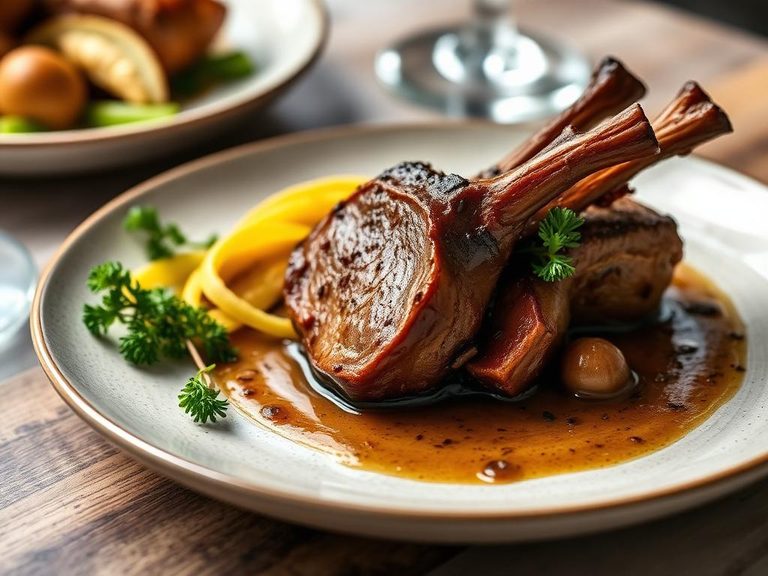
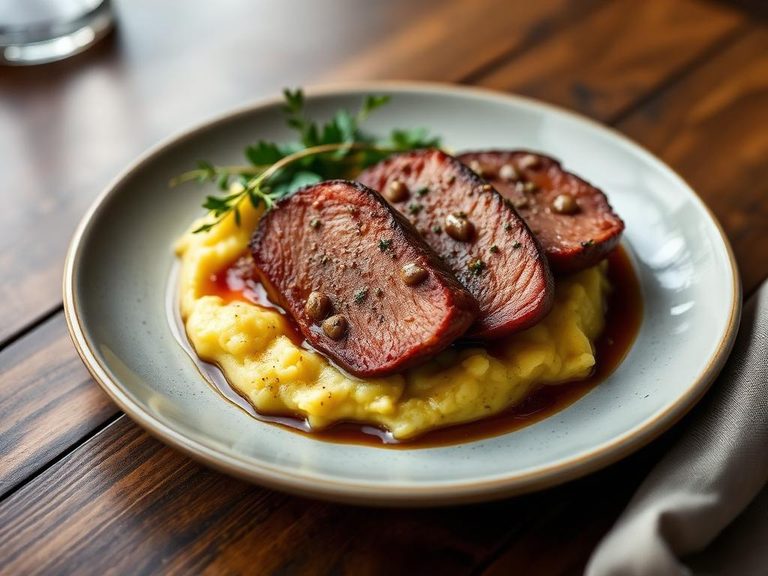
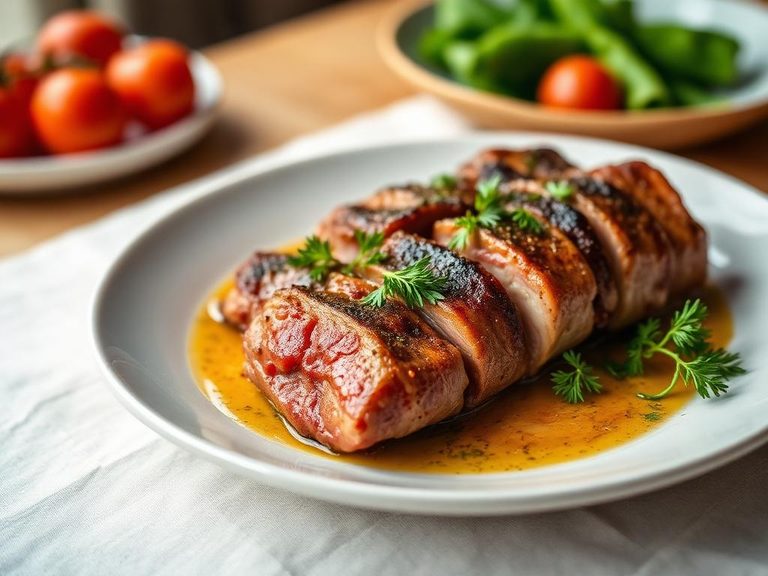
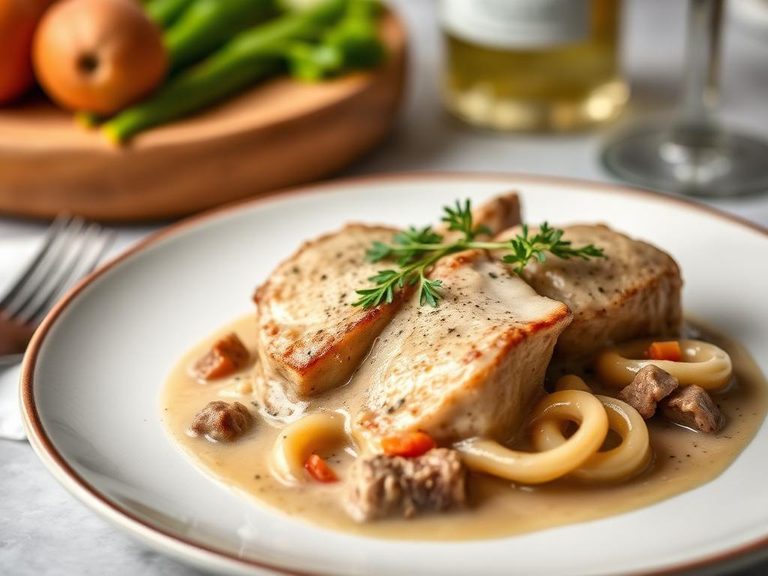
🍽️ Popular dishes
🌍 Where it's eaten
💡 Did you know?
The term 'osso buco' literally translates to 'bone with a hole' in Italian, referring to the marrow bone in the center of the veal shank, which is considered a delicacy and is often scooped out and eaten during the meal.
Full nutrition (USDA data · scales with serving)
| Water | 52.0 g |
| Energy | 284 kcal |
| Energy | 1188 kj |
| Protein | 30.2 g |
| Total lipid (fat) | 17.2 g |
| Ash | 1.1 g |
| Carbohydrate, by difference | 0.00 g |
| Fiber, total dietary | 0.00 g |
| Total Sugars | 0.00 g |
| Calcium, Ca | 28.0 mg |
| Iron, Fe | 1.1 mg |
| Magnesium, Mg | 24.0 mg |
| Phosphorus, P | 220 mg |
| Potassium, K | 280 mg |
| Sodium, Na | 80.0 mg |
| Zinc, Zn | 3.6 mg |
| Copper, Cu | 0.09 mg |
| Manganese, Mn | 0.03 mg |
| Selenium, Se | 13.2 ug |
| Vitamin C, total ascorbic acid | 0.00 mg |
| Thiamin | 0.04 mg |
| Riboflavin | 0.30 mg |
| Niacin | 9.0 mg |
| Pantothenic acid | 0.79 mg |
| Vitamin B-6 | 0.26 mg |
| Folate, total | 14.0 ug |
| Folic acid | 0.00 ug |
| Folate, food | 14.0 ug |
| Folate, DFE | 14.0 ug |
| Choline, total | 114 mg |
| Betaine | 15.0 mg |
| Vitamin B-12 | 1.2 ug |
| Vitamin B-12, added | 0.00 ug |
| Vitamin A, RAE | 0.00 ug |
| Retinol | 0.00 ug |
| Carotene, beta | 0.00 ug |
| Carotene, alpha | 0.00 ug |
| Cryptoxanthin, beta | 0.00 ug |
| Vitamin A, IU | 0.00 iu |
| Lycopene | 0.00 ug |
| Lutein + zeaxanthin | 0.00 ug |
| Vitamin E (alpha-tocopherol) | 0.40 mg |
| Vitamin E, added | 0.00 mg |
| Vitamin D (D2 + D3), International Units | 0.00 iu |
| Vitamin D (D2 + D3) | 0.00 ug |
| Vitamin D3 (cholecalciferol) | 0.00 ug |
| Vitamin K (phylloquinone) | 7.0 ug |
| Vitamin K (Dihydrophylloquinone) | 0.00 ug |
| Alcohol, ethyl | 0.00 g |
| Caffeine | 0.00 mg |
| Theobromine | 0.00 mg |
Fat & fatty acid profile (per 100g)
| Fatty acids, total saturated | 6.7 g |
| SFA 4:0 | 0.00 g |
| SFA 6:0 | 0.00 g |
| SFA 8:0 | 0.00 g |
| SFA 10:0 | 0.01 g |
| SFA 12:0 | 0.05 g |
| SFA 14:0 | 0.66 g |
| SFA 16:0 | 3.6 g |
| SFA 18:0 | 2.2 g |
| Fatty acids, total monounsaturated | 6.7 g |
| MUFA 16:1 | 0.73 g |
| MUFA 18:1 | 5.8 g |
| MUFA 20:1 | 0.00 g |
| MUFA 22:1 | 0.00 g |
| Fatty acids, total polyunsaturated | 1.2 g |
| PUFA 18:2 | 0.91 g |
| PUFA 18:3 | 0.11 g |
| PUFA 18:4 | 0.00 g |
| PUFA 20:4 | 0.13 g |
| PUFA 20:5 n-3 (EPA) | 0.00 g |
| PUFA 22:5 n-3 (DPA) | 0.00 g |
| PUFA 22:6 n-3 (DHA) | 0.00 g |
| Cholesterol | 118 mg |
Amino acid profile (per 100g)
| Tryptophan | 0.31 g |
| Threonine | 1.3 g |
| Isoleucine | 1.5 g |
| Leucine | 2.4 g |
| Lysine | 2.5 g |
| Methionine | 0.70 g |
| Cystine | 0.34 g |
| Phenylalanine | 1.2 g |
| Tyrosine | 0.96 g |
| Valine | 1.7 g |
| Arginine | 1.8 g |
| Histidine | 1.1 g |
| Alanine | 1.8 g |
| Aspartic acid | 2.6 g |
| Glutamic acid | 4.8 g |
| Glycine | 1.6 g |
| Proline | 1.3 g |
| Serine | 1.1 g |
FAQ
What is the difference between braised veal loin and roasted veal loin?
Braising is a slow, moist-heat cooking method that breaks down connective tissue, making tougher cuts tender and flavorful. Roasting is a dry-heat method that typically uses higher heat to create a browned crust while cooking the interior, best suited for more tender cuts.
Can I use a different cut of veal for braising?
Yes, cuts with more connective tissue like veal shank (for osso buco), shoulder, or breast are excellent for braising. They benefit from the long, slow cooking time to become tender.
How do I store leftover braised veal?
Store leftovers in an airtight container in the refrigerator for up to 3-4 days. For longer storage, freeze in a freezer-safe container or bag for up to 3 months. Reheat gently in a saucepan with a splash of broth or water.
Nutrient density (calculated · NRF9.3)
Nutrient Rich Foods index: beneficial nutrients (protein, fiber, vitamins, minerals) minus saturated fat, added sugar & sodium, per 100 kcal.
NRF9.3 index — Fulgoni, Keast & Drewnowski, 2009. Computed from USDA nutrients.
Weight-loss friendliness (composite index)
Energy density 2.84 kcal/g · 43% calories from protein · 0.0 g fiber · 0.0 g sugar per 100 g.
Composite of energy density (Rolls et al., 1999), protein & fiber satiety, minus sugar. A calculated heuristic — ranks satiety-per-calorie, not a clinical measure.
Dietary load (calculated from USDA values)
Potential renal acid load. Positive = acid-forming, negative = alkaline-forming.
Sodium-to-potassium ratio: 0.29 (lower is better — aim for ≤ 1)
Sodium:potassium per WHO potassium guidance. Computed from USDA nutrients.