

Tortillas, ready-to-bake or -fry, corn
Whole food · Baked Products
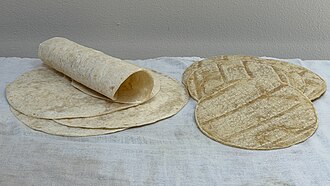
Photo: Wikipedia
Ready-to-bake or -fry corn tortillas are the pliable, golden discs of masa harina that form the edible backbone of countless dishes. They offer a distinct, earthy corn flavor and a satisfyingly chewy texture that crisps beautifully when heated. Nutritionally, they are a notable source of dietary fiber, providing over 6 grams per 100 grams.
Calorie split: 10% protein · 79% carbs · 11% fat
↓ Full nutrition💚 Why it's loved
People adore corn tortillas for their authentic, toasted corn aroma and their unmatched versatility as a vessel, wrapper, or chip base. They are deeply woven into the cultural fabric of Mexican and Central American cuisine, representing heritage and home cooking.
⚠️ Watch-outs & how to enjoy it better
The primary downside is their high carbohydrate content (44.64g per 100g), which can lead to blood sugar spikes if eaten in large quantities alone. To counteract this, pair them with protein (beans, meat) and healthy fats (avocado, cheese) to slow digestion and enhance satiety. Some commercial brands may also be high in sodium.
Key benefits
- Good source of dietary fiber (6.3g per 100g)
- Naturally low in fat (2.85g per 100g)
- Provides plant-based protein (5.7g per 100g)
- Contains minimal added sugar (0.88g per 100g)
- Traditional preparation (nixtamalization) increases nutrient availability
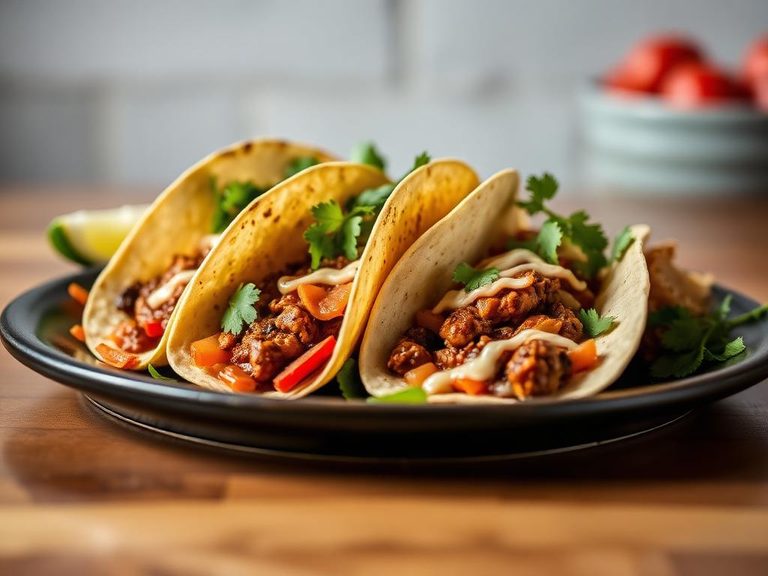
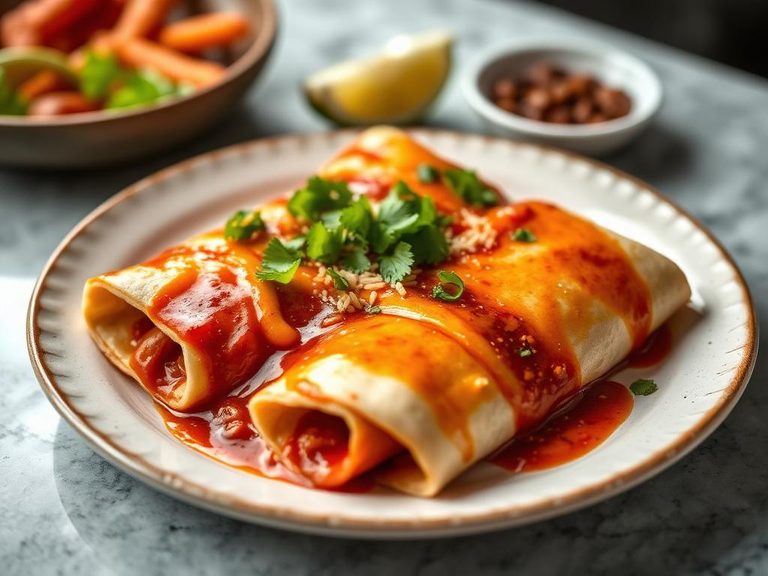
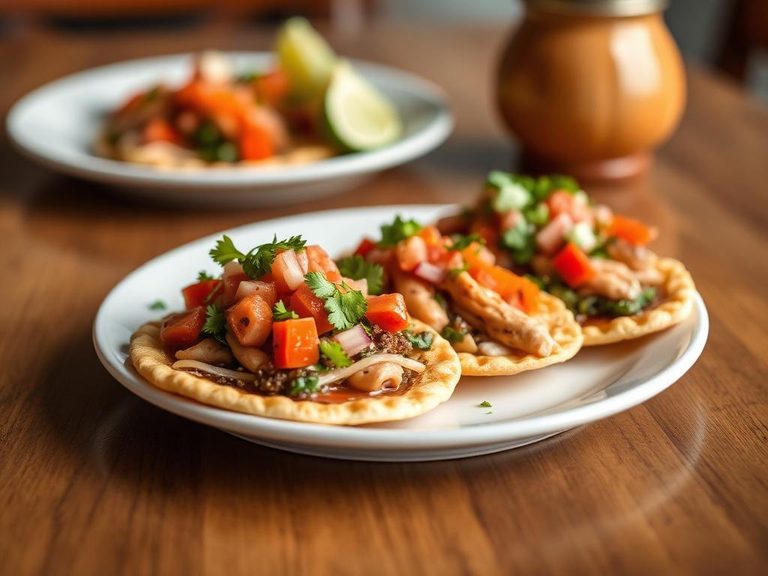
🍽️ Popular dishes
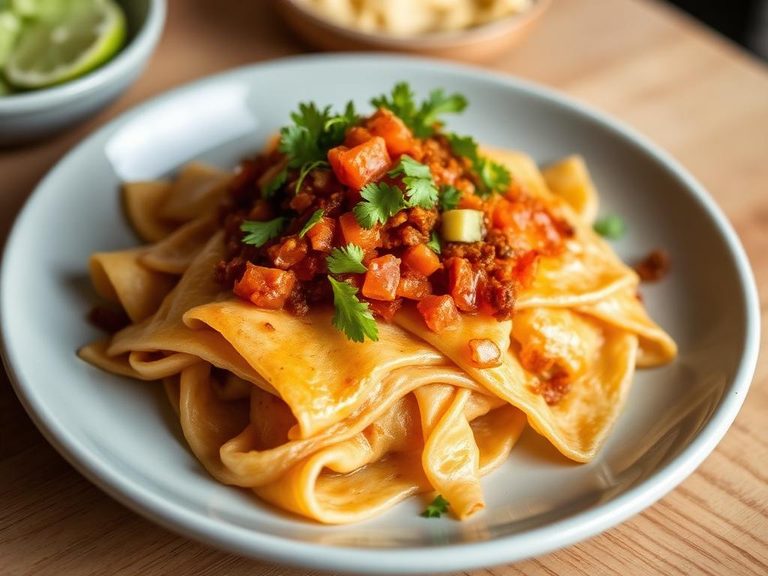

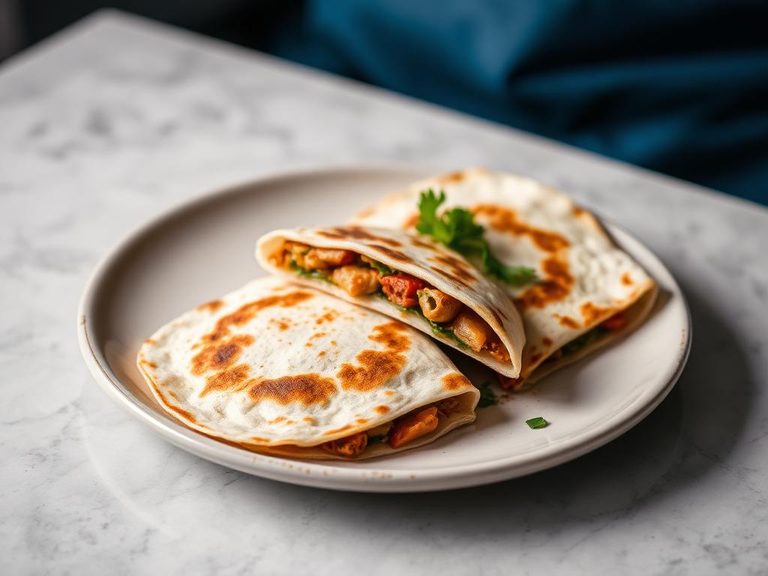
🌍 Where it's eaten
💡 Did you know?
The process of making corn tortillas, called nixtamalization, involves soaking corn in an alkaline solution (like lime water), which unlocks niacin (vitamin B3) and improves the dough's workability—a technique developed over 3,500 years ago.
Full nutrition (USDA data · scales with serving)
| Water | 45.9 g |
| Energy | 218 kcal |
| Energy | 912 kj |
| Protein | 5.7 g |
| Total lipid (fat) | 2.9 g |
| Ash | 0.93 g |
| Carbohydrate, by difference | 44.6 g |
| Fiber, total dietary | 6.3 g |
| Total Sugars | 0.88 g |
| Calcium, Ca | 81.0 mg |
| Iron, Fe | 1.2 mg |
| Magnesium, Mg | 72.0 mg |
| Phosphorus, P | 314 mg |
| Potassium, K | 186 mg |
| Sodium, Na | 45.0 mg |
| Zinc, Zn | 1.3 mg |
| Copper, Cu | 0.15 mg |
| Manganese, Mn | 0.33 mg |
| Selenium, Se | 6.1 ug |
| Vitamin C, total ascorbic acid | 0.00 mg |
| Thiamin | 0.09 mg |
| Riboflavin | 0.07 mg |
| Niacin | 1.5 mg |
| Pantothenic acid | 0.11 mg |
| Vitamin B-6 | 0.22 mg |
| Folate, total | 5.0 ug |
| Folic acid | 0.00 ug |
| Folate, food | 5.0 ug |
| Folate, DFE | 5.0 ug |
| Choline, total | 13.3 mg |
| Betaine | 0.40 mg |
| Vitamin B-12 | 0.00 ug |
| Vitamin B-12, added | 0.00 ug |
| Vitamin A, RAE | 0.00 ug |
| Retinol | 0.00 ug |
| Carotene, beta | 1.0 ug |
| Carotene, alpha | 0.00 ug |
| Cryptoxanthin, beta | 1.0 ug |
| Vitamin A, IU | 2.0 iu |
| Lycopene | 0.00 ug |
| Lutein + zeaxanthin | 3.0 ug |
| Vitamin E (alpha-tocopherol) | 0.28 mg |
| Vitamin E, added | 0.00 mg |
| Vitamin D (D2 + D3), International Units | 0.00 iu |
| Vitamin D (D2 + D3) | 0.00 ug |
| Vitamin K (phylloquinone) | 0.00 ug |
| Alcohol, ethyl | 0.00 g |
| Caffeine | 0.00 mg |
| Theobromine | 0.00 mg |
Fat & fatty acid profile (per 100g)
| Fatty acids, total saturated | 0.45 g |
| SFA 4:0 | 0.00 g |
| SFA 6:0 | 0.00 g |
| SFA 8:0 | 0.00 g |
| SFA 10:0 | 0.00 g |
| SFA 12:0 | 0.00 g |
| SFA 14:0 | 0.00 g |
| SFA 16:0 | 0.41 g |
| SFA 18:0 | 0.04 g |
| Fatty acids, total monounsaturated | 0.69 g |
| MUFA 16:1 | 0.00 g |
| MUFA 18:1 | 0.69 g |
| MUFA 20:1 | 0.00 g |
| MUFA 22:1 | 0.00 g |
| Fatty acids, total polyunsaturated | 1.4 g |
| PUFA 18:2 | 1.4 g |
| PUFA 18:3 | 0.03 g |
| PUFA 18:4 | 0.00 g |
| PUFA 20:4 | 0.00 g |
| PUFA 20:5 n-3 (EPA) | 0.00 g |
| PUFA 22:5 n-3 (DPA) | 0.00 g |
| PUFA 22:6 n-3 (DHA) | 0.00 g |
| Cholesterol | 0.00 mg |
Amino acid profile (per 100g)
| Tryptophan | 0.04 g |
| Threonine | 0.22 g |
| Isoleucine | 0.21 g |
| Leucine | 0.71 g |
| Lysine | 0.16 g |
| Methionine | 0.12 g |
| Cystine | 0.10 g |
| Phenylalanine | 0.28 g |
| Tyrosine | 0.24 g |
| Valine | 0.29 g |
| Arginine | 0.29 g |
| Histidine | 0.18 g |
| Alanine | 0.43 g |
| Aspartic acid | 0.40 g |
| Glutamic acid | 1.1 g |
| Glycine | 0.24 g |
| Proline | 0.51 g |
| Serine | 0.28 g |
FAQ
What's the difference between corn and flour tortillas?
Corn tortillas are made from ground corn (masa harina) and are gluten-free, with a more robust corn flavor. Flour tortillas are made from wheat flour, are softer and more pliable, and contain gluten.
How do I keep corn tortillas from breaking?
Warm them briefly on a dry skillet, in a microwave wrapped in a damp paper towel, or in a dedicated tortilla warmer. This makes them more flexible and less likely to crack when folded.
Are corn tortillas gluten-free?
Yes, traditional corn tortillas made from 100% corn masa are naturally gluten-free. However, always check labels for cross-contamination or added wheat flour in some commercial blends.
Nutrient density (calculated · NRF9.3)
Nutrient Rich Foods index: beneficial nutrients (protein, fiber, vitamins, minerals) minus saturated fat, added sugar & sodium, per 100 kcal.
NRF9.3 index — Fulgoni, Keast & Drewnowski, 2009. Computed from USDA nutrients.
Weight-loss friendliness (composite index)
Energy density 2.18 kcal/g · 10% calories from protein · 6.3 g fiber · 0.9 g sugar per 100 g.
Composite of energy density (Rolls et al., 1999), protein & fiber satiety, minus sugar. A calculated heuristic — ranks satiety-per-calorie, not a clinical measure.
Dietary load (calculated from USDA values)
Potential renal acid load. Positive = acid-forming, negative = alkaline-forming.
Sodium-to-potassium ratio: 0.24 (lower is better — aim for ≤ 1)
Sodium:potassium per WHO potassium guidance. Computed from USDA nutrients.