

Syrups, chocolate, HERSHEY'S Sugar free, Genuine Chocolate Flavored, Lite Syrup
Whole food · Sweets

Photo: Wikipedia
This is Hershey's sugar-free chocolate syrup, a dark, glossy, and pourable topping designed to deliver genuine chocolate flavor without the sugar. It has a smooth, slightly thinner consistency than traditional syrup and a rich, cocoa-forward taste with a clean, sweet finish. Nutritionally, it's a low-calorie way to add chocolate notes, with most of its carbs coming from sugar alcohols and fiber.
Calorie split: 13% protein · 66% carbs · 21% fat
↓ Full nutrition💚 Why it's loved
People love it for providing a guilt-free hit of classic Hershey's chocolate flavor, making it a versatile staple for topping everything from Greek yogurt and cottage cheese to protein pancakes and ice cream sundaes. It's a cultural icon in American households, offering a familiar taste for those managing sugar intake.
⚠️ Watch-outs & how to enjoy it better
Some may experience digestive discomfort (like bloating or laxative effects) from the sugar alcohols (maltitol) used as sweeteners, especially in larger portions. To counteract this, start with a small serving (e.g., 1 tablespoon) to assess tolerance and consider pairing it with a protein or fat source (like nuts or peanut butter) to slow absorption and improve satiety.
Key benefits
- Very low in calories (43 kcal per 100g)
- Contains no sugar (0.27g per 100g)
- Good source of dietary fiber (2.9g per 100g)
- Provides a small amount of protein (2.87g per 100g)
- Suitable for low-sugar and diabetic-friendly diets
🍽️ Popular dishes



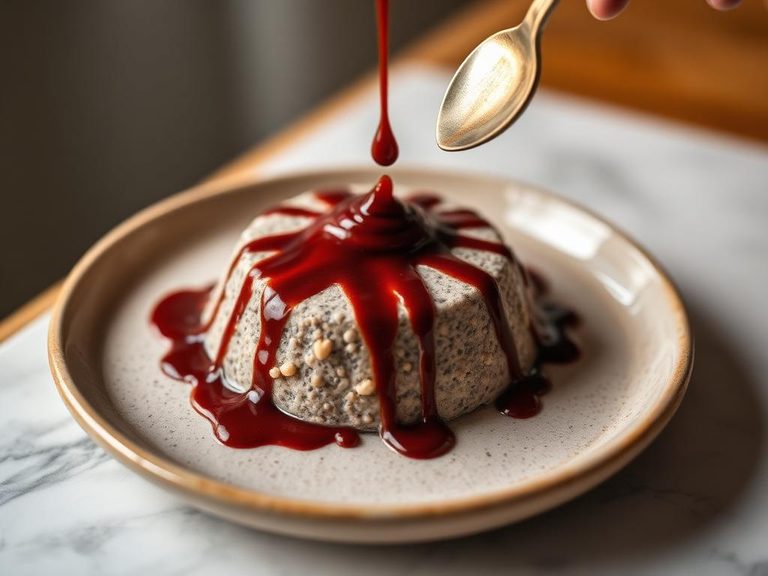
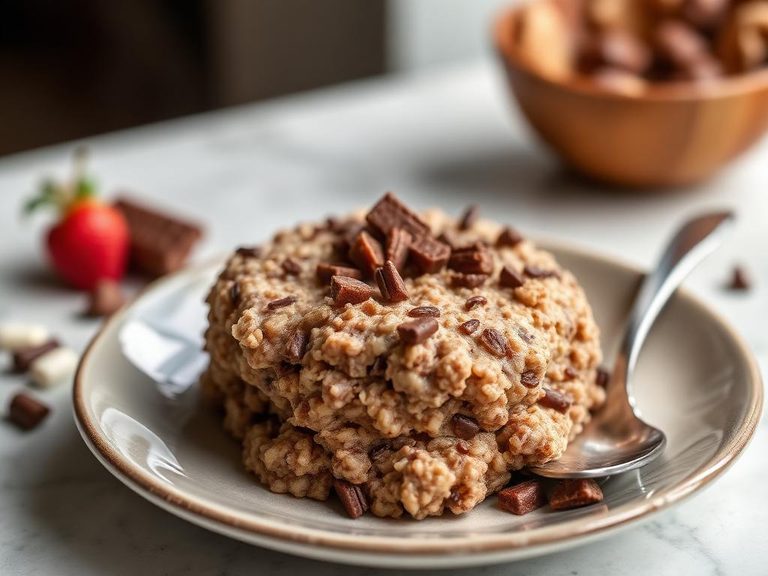
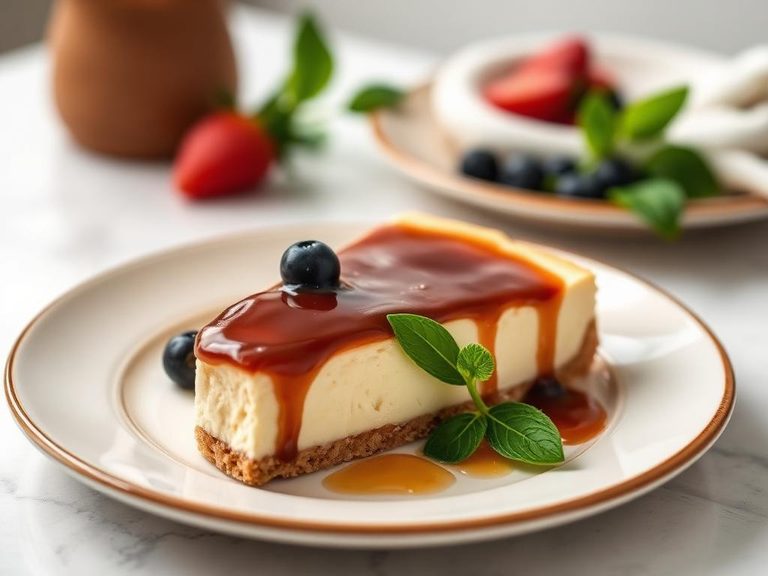
🌍 Where it's eaten
💡 Did you know?
Hershey's introduced its sugar-free syrup in the 1990s, capitalizing on the low-carb diet trend, but its formula uses maltitol, a sugar alcohol that has about 75-90% of the sweetness of sugar but with fewer calories.
Full nutrition (USDA data · scales with serving)
| Water | 78.9 g |
| Energy | 43.0 kcal |
| Energy | 179 kj |
| Protein | 2.9 g |
| Total lipid (fat) | 2.0 g |
| Ash | 1.8 g |
| Carbohydrate, by difference | 14.2 g |
| Fiber, total dietary | 2.9 g |
| Total Sugars | 0.27 g |
| Starch | 0.00 g |
| Calcium, Ca | 0.00 mg |
| Iron, Fe | 2.1 mg |
| Magnesium, Mg | 74.0 mg |
| Phosphorus, P | 113 mg |
| Potassium, K | 388 mg |
| Sodium, Na | 343 mg |
| Zinc, Zn | 0.99 mg |
| Copper, Cu | 0.56 mg |
| Manganese, Mn | 0.58 mg |
| Selenium, Se | 2.0 ug |
| Fluoride, F | 63.5 ug |
| Vitamin C, total ascorbic acid | 0.00 mg |
| Thiamin | 0.02 mg |
| Riboflavin | 0.07 mg |
| Niacin | 0.37 mg |
| Pantothenic acid | 0.04 mg |
| Vitamin B-6 | 0.02 mg |
| Folate, total | 5.0 ug |
| Folic acid | 0.00 ug |
| Folate, food | 5.0 ug |
| Folate, DFE | 5.0 ug |
| Choline, total | 1.8 mg |
| Betaine | 0.00 mg |
| Vitamin B-12 | 0.00 ug |
| Vitamin B-12, added | 0.00 ug |
| Vitamin A, RAE | 0.00 ug |
| Retinol | 0.00 ug |
| Carotene, beta | 0.00 ug |
| Carotene, alpha | 0.00 ug |
| Cryptoxanthin, beta | 0.00 ug |
| Vitamin A, IU | 0.00 iu |
| Lycopene | 0.00 ug |
| Lutein + zeaxanthin | 6.0 ug |
| Vitamin E (alpha-tocopherol) | 0.02 mg |
| Vitamin E, added | 0.00 mg |
| Vitamin D (D2 + D3), International Units | 0.00 iu |
| Vitamin D (D2 + D3) | 0.00 ug |
| Vitamin K (phylloquinone) | 0.40 ug |
| Alcohol, ethyl | 0.00 g |
| Caffeine | 12.0 mg |
| Theobromine | 407 mg |
Fat & fatty acid profile (per 100g)
| Fatty acids, total saturated | 0.75 g |
| SFA 4:0 | 0.00 g |
| SFA 6:0 | 0.00 g |
| SFA 8:0 | 0.00 g |
| SFA 10:0 | 0.00 g |
| SFA 12:0 | 0.00 g |
| SFA 14:0 | 0.00 g |
| SFA 16:0 | 0.35 g |
| SFA 18:0 | 0.40 g |
| Fatty acids, total monounsaturated | 0.43 g |
| MUFA 16:1 | 0.00 g |
| MUFA 18:1 | 0.43 g |
| MUFA 20:1 | 0.00 g |
| MUFA 22:1 | 0.00 g |
| Fatty acids, total polyunsaturated | 0.04 g |
| PUFA 18:2 | 0.04 g |
| PUFA 18:3 | 0.00 g |
| PUFA 18:4 | 0.00 g |
| PUFA 20:4 | 0.00 g |
| PUFA 20:5 n-3 (EPA) | 0.00 g |
| PUFA 22:5 n-3 (DPA) | 0.00 g |
| PUFA 22:6 n-3 (DHA) | 0.00 g |
| Fatty acids, total trans | 0.00 g |
| Cholesterol | 0.00 mg |
| Phytosterols | 0.00 mg |
Amino acid profile (per 100g)
| Tryptophan | 0.04 g |
| Threonine | 0.11 g |
| Isoleucine | 0.11 g |
| Leucine | 0.17 g |
| Lysine | 0.14 g |
| Methionine | 0.03 g |
| Cystine | 0.03 g |
| Phenylalanine | 0.13 g |
| Tyrosine | 0.10 g |
| Valine | 0.17 g |
| Arginine | 0.16 g |
| Histidine | 0.05 g |
| Alanine | 0.13 g |
| Aspartic acid | 0.28 g |
| Glutamic acid | 0.42 g |
| Glycine | 0.13 g |
| Proline | 0.12 g |
| Serine | 0.12 g |
FAQ
Is this syrup keto-friendly?
It can fit into a ketogenic diet in very small amounts, but it's not zero-carb. The 14.2g of carbs per 100g come largely from maltitol and polydextrose, which have a lower glycemic impact than sugar but still count toward net carbs. Strict keto dieters often limit or avoid it.
Why does it taste different from regular Hershey's syrup?
The taste difference comes from the sweetener blend. Maltitol and other sugar alcohols can have a slightly cooler or less 'clean' sweetness than sucrose, and the absence of sugar changes the syrup's body and mouthfeel, making it thinner.
Can I bake with this syrup?
Yes, but with adjustments. It adds moisture and chocolate flavor but not the structure or browning that sugar provides. It's best used in recipes like brownies or cakes where other sweeteners or flours are also used, and you may need to reduce other liquids slightly.
Nutrient density (calculated · NRF9.3)
Nutrient Rich Foods index: beneficial nutrients (protein, fiber, vitamins, minerals) minus saturated fat, added sugar & sodium, per 100 kcal.
NRF9.3 index — Fulgoni, Keast & Drewnowski, 2009. Computed from USDA nutrients.
Weight-loss friendliness (composite index)
Energy density 0.43 kcal/g · 27% calories from protein · 2.9 g fiber · 0.3 g sugar per 100 g.
Composite of energy density (Rolls et al., 1999), protein & fiber satiety, minus sugar. A calculated heuristic — ranks satiety-per-calorie, not a clinical measure.
Dietary load (calculated from USDA values)
Potential renal acid load. Positive = acid-forming, negative = alkaline-forming.
Sodium-to-potassium ratio: 0.88 (lower is better — aim for ≤ 1)
Sodium:potassium per WHO potassium guidance. Computed from USDA nutrients.