

Squash, winter, all varieties, cooked, baked, without salt
Whole food · Vegetables and Vegetable Products

Photo: Wikipedia
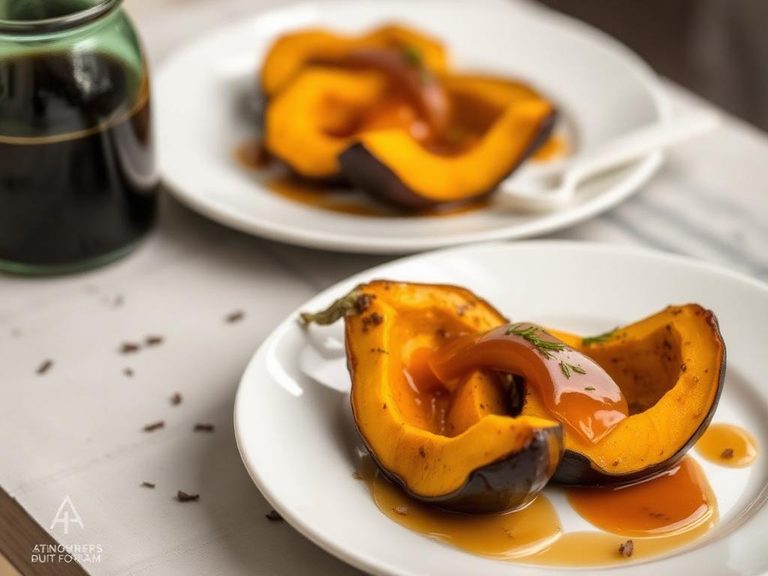
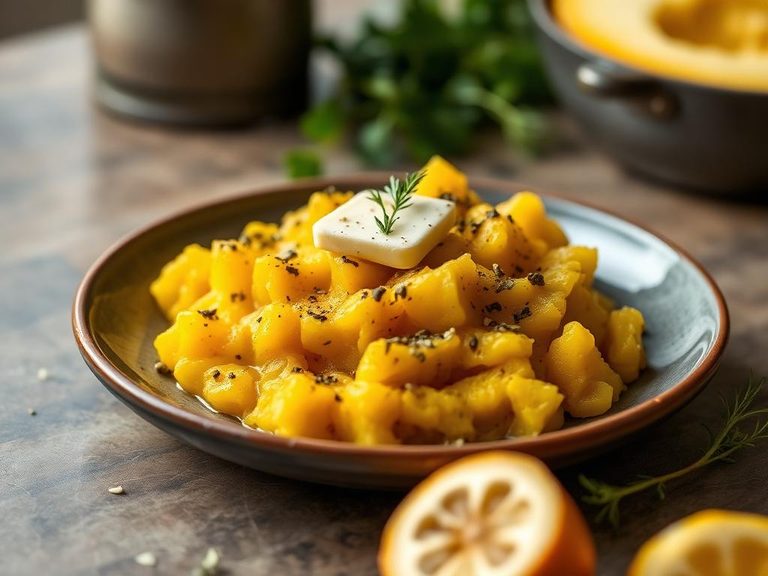
Baked winter squash is a velvety, caramelized side dish with a naturally sweet, nutty flavor that deepens in the oven. Its soft, spoonable texture makes it a comforting staple, while its low calorie count (37 kcal/100g) and high fiber (2.8g) make it a nutrient-dense choice.
Calorie split: 8% protein · 84% carbs · 7% fat
↓ Full nutrition💚 Why it's loved
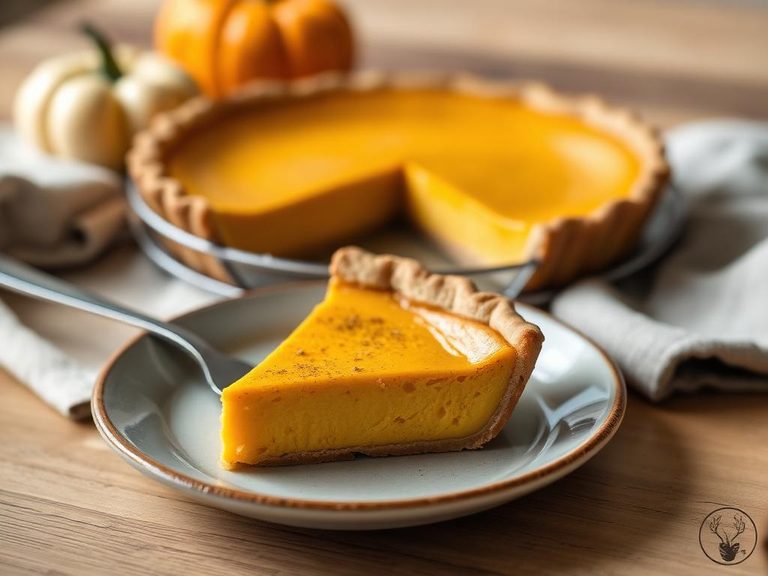
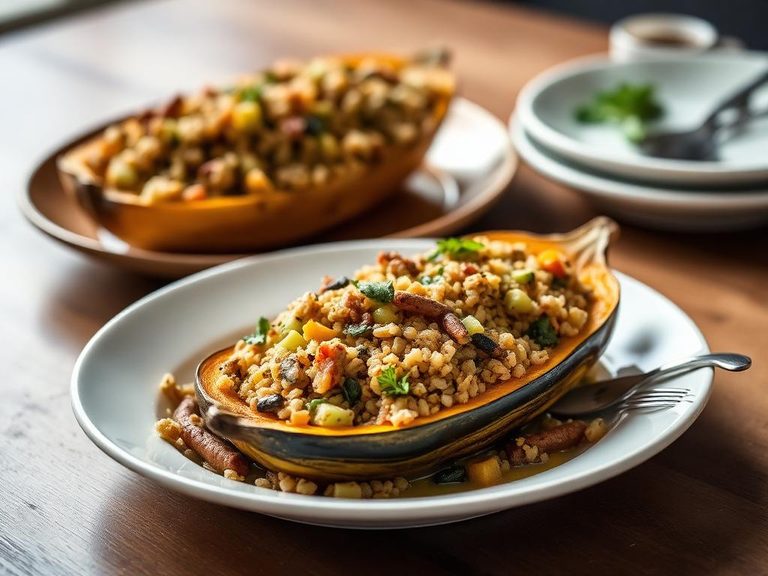
People love baked winter squash for its warm, sweet, and earthy flavor that pairs beautifully with both savory and sweet seasonings. Its versatility allows it to be a simple side dish or a base for soups, pies, and casseroles, making it a beloved comfort food across many cultures.
⚠️ Watch-outs & how to enjoy it better
While nutritious, baked squash can cause blood-sugar spikes due to its 3.3g of sugar per 100g, especially when eaten alone. To counteract this, pair it with protein (like nuts or cheese) or healthy fats (like olive oil) to slow sugar absorption. Those with digestive sensitivities should start with small portions, as the 2.8g of fiber may cause bloating if consumed in large amounts.
Key benefits
- Rich in beta-carotene, a precursor to vitamin A that supports eye health
- High in fiber, promoting digestive health and satiety
- Low in calories and fat, making it suitable for weight management
- Contains potassium, which helps regulate blood pressure
- Provides antioxidants that may reduce inflammation
🍽️ Popular dishes

🌍 Where it's eaten
💡 Did you know?
Winter squash was a staple crop for Indigenous peoples of the Americas, who often grew it alongside corn and beans in the 'Three Sisters' planting system, where the squash vines helped suppress weeds and retain soil moisture.
Full nutrition (USDA data · scales with serving)
| Water | 89.2 g |
| Energy | 37.0 kcal |
| Energy | 154 kj |
| Protein | 0.89 g |
| Total lipid (fat) | 0.35 g |
| Ash | 0.69 g |
| Carbohydrate, by difference | 8.8 g |
| Fiber, total dietary | 2.8 g |
| Total Sugars | 3.3 g |
| Calcium, Ca | 22.0 mg |
| Iron, Fe | 0.44 mg |
| Magnesium, Mg | 13.0 mg |
| Phosphorus, P | 19.0 mg |
| Potassium, K | 241 mg |
| Sodium, Na | 1.0 mg |
| Zinc, Zn | 0.22 mg |
| Copper, Cu | 0.08 mg |
| Manganese, Mn | 0.19 mg |
| Selenium, Se | 0.40 ug |
| Vitamin C, total ascorbic acid | 9.6 mg |
| Thiamin | 0.02 mg |
| Riboflavin | 0.07 mg |
| Niacin | 0.49 mg |
| Pantothenic acid | 0.23 mg |
| Vitamin B-6 | 0.16 mg |
| Folate, total | 20.0 ug |
| Folic acid | 0.00 ug |
| Folate, food | 20.0 ug |
| Folate, DFE | 20.0 ug |
| Choline, total | 10.6 mg |
| Betaine | 0.20 mg |
| Vitamin B-12 | 0.00 ug |
| Vitamin B-12, added | 0.00 ug |
| Vitamin A, RAE | 261 ug |
| Retinol | 0.00 ug |
| Carotene, beta | 2793 ug |
| Carotene, alpha | 682 ug |
| Cryptoxanthin, beta | 0.00 ug |
| Vitamin A, IU | 5223 iu |
| Lycopene | 0.00 ug |
| Lutein + zeaxanthin | 1415 ug |
| Vitamin E (alpha-tocopherol) | 0.12 mg |
| Vitamin E, added | 0.00 mg |
| Vitamin D (D2 + D3), International Units | 0.00 iu |
| Vitamin D (D2 + D3) | 0.00 ug |
| Vitamin K (phylloquinone) | 4.4 ug |
| Alcohol, ethyl | 0.00 g |
| Caffeine | 0.00 mg |
| Theobromine | 0.00 mg |
Fat & fatty acid profile (per 100g)
| Fatty acids, total saturated | 0.07 g |
| SFA 4:0 | 0.00 g |
| SFA 6:0 | 0.00 g |
| SFA 8:0 | 0.00 g |
| SFA 10:0 | 0.00 g |
| SFA 12:0 | 0.00 g |
| SFA 14:0 | 0.00 g |
| SFA 16:0 | 0.06 g |
| SFA 18:0 | 0.01 g |
| Fatty acids, total monounsaturated | 0.03 g |
| MUFA 16:1 | 0.00 g |
| MUFA 18:1 | 0.02 g |
| MUFA 20:1 | 0.00 g |
| MUFA 22:1 | 0.00 g |
| Fatty acids, total polyunsaturated | 0.15 g |
| PUFA 18:2 | 0.06 g |
| PUFA 18:3 | 0.09 g |
| PUFA 18:4 | 0.00 g |
| PUFA 20:4 | 0.00 g |
| PUFA 20:5 n-3 (EPA) | 0.00 g |
| PUFA 22:5 n-3 (DPA) | 0.00 g |
| PUFA 22:6 n-3 (DHA) | 0.00 g |
| Fatty acids, total trans | 0.00 g |
| Cholesterol | 0.00 mg |
Amino acid profile (per 100g)
| Tryptophan | 0.01 g |
| Threonine | 0.03 g |
| Isoleucine | 0.04 g |
| Leucine | 0.05 g |
| Lysine | 0.03 g |
| Methionine | 0.01 g |
| Cystine | 0.01 g |
| Phenylalanine | 0.04 g |
| Tyrosine | 0.03 g |
| Valine | 0.04 g |
| Arginine | 0.05 g |
| Histidine | 0.02 g |
| Alanine | 0.04 g |
| Aspartic acid | 0.10 g |
| Glutamic acid | 0.15 g |
| Glycine | 0.03 g |
| Proline | 0.03 g |
| Serine | 0.04 g |
FAQ
Is baked winter squash healthy?
Yes, it's low in calories and fat, high in fiber, and a good source of vitamins like A and C, as well as potassium.
Can I eat baked squash if I have diabetes?
In moderation, yes. Its fiber can help manage blood sugar, but it's best paired with protein or fat to prevent spikes.
How do I store baked winter squash?
Store in an airtight container in the refrigerator for up to 5 days, or freeze for up to 3 months.
What's the difference between winter and summer squash?
Winter squash has a hard rind and is typically baked or roasted, while summer squash (like zucchini) is tender and often eaten raw or lightly cooked.
Does baking squash add calories?
Baking itself doesn't add calories, but any added ingredients like oil, butter, or sugar will increase the calorie count.
Nutrient density (calculated · NRF9.3)
Nutrient Rich Foods index: beneficial nutrients (protein, fiber, vitamins, minerals) minus saturated fat, added sugar & sodium, per 100 kcal.
NRF9.3 index — Fulgoni, Keast & Drewnowski, 2009. Computed from USDA nutrients.
Weight-loss friendliness (composite index)
Energy density 0.37 kcal/g · 10% calories from protein · 2.8 g fiber · 3.3 g sugar per 100 g.
Composite of energy density (Rolls et al., 1999), protein & fiber satiety, minus sugar. A calculated heuristic — ranks satiety-per-calorie, not a clinical measure.
Dietary load (calculated from USDA values)
Potential renal acid load. Positive = acid-forming, negative = alkaline-forming.
Sodium-to-potassium ratio: 0.00 (lower is better — aim for ≤ 1)
Sodium:potassium per WHO potassium guidance. Computed from USDA nutrients.