

Spinach, canned, regular pack, solids and liquids
Whole food · Vegetables and Vegetable Products

Photo: Wikipedia
This is spinach that has been cooked and preserved in its own liquid within a can, resulting in a soft, tender texture and a deep, earthy, slightly metallic flavor. It's a convenient, shelf-stable source of plant-based iron and vitamins, offering a milder taste than fresh spinach. The canning process concentrates its minerals, making it a surprisingly potent nutrient source per bite.
Calorie split: 36% protein · 50% carbs · 14% fat
↓ Full nutrition💚 Why it's loved
People love its incredible convenience and the way its deep, savory flavor anchors hearty dishes like creamed spinach or savory pies. It's a kitchen staple that delivers consistent nutrition and taste without the prep work of fresh greens.
⚠️ Watch-outs & how to enjoy it better
The canning process can impart a slightly metallic taste and a softer, less vibrant texture than fresh spinach. It is also high in oxalates, which can inhibit mineral absorption and be a concern for those with kidney issues. To counteract, pair it with a vitamin C source like lemon juice or tomatoes to boost iron absorption, and consider rinsing it well before use.
Key benefits
- Excellent source of non-heme iron for energy and blood health.
- Very low in calories and fat, supporting weight management.
- Good source of dietary fiber for digestive health.
- Provides essential vitamins like vitamin K, A, and folate.
- Convenient and shelf-stable with a long pantry life.
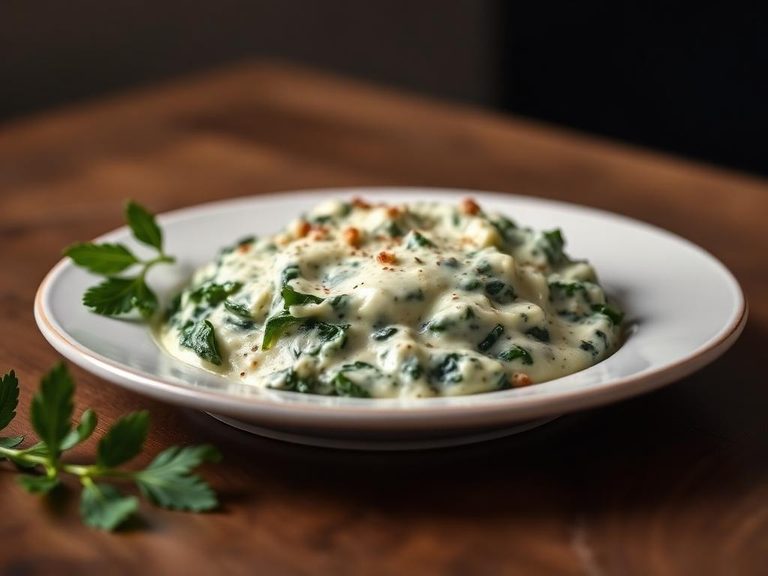
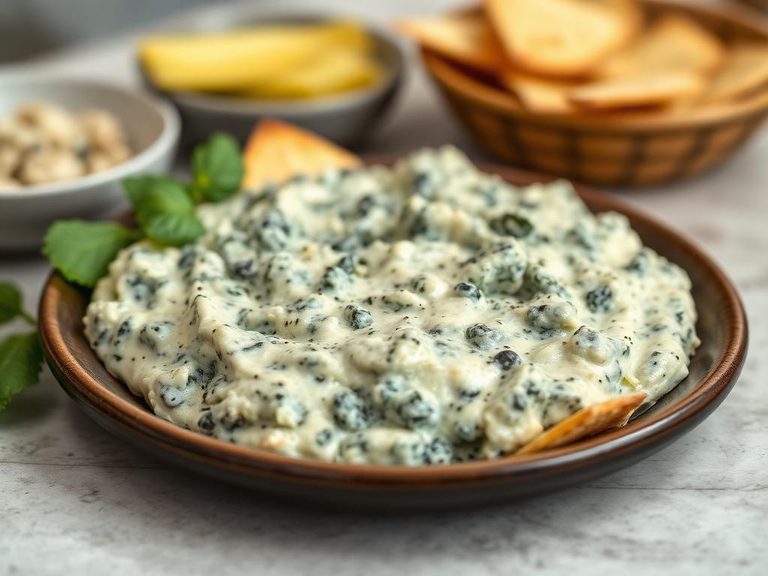
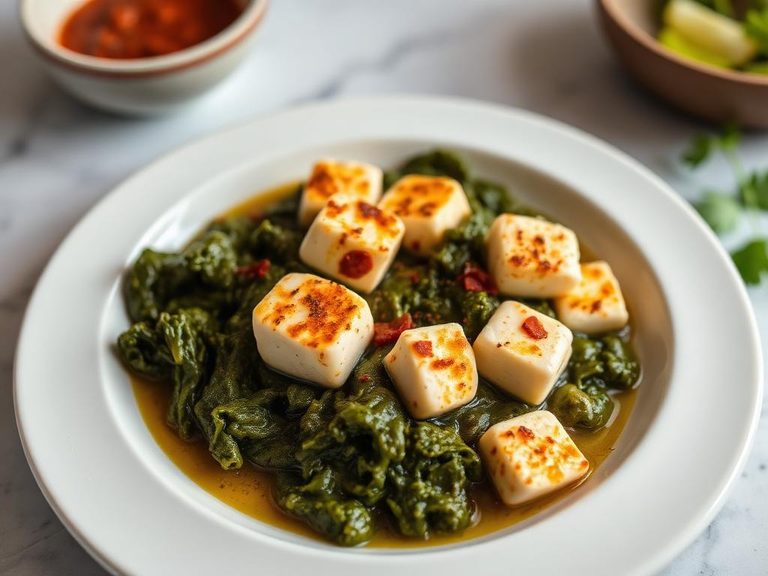
🍽️ Popular dishes



🌍 Where it's eaten
💡 Did you know?
Canned spinach was a staple on naval ships in the early 20th century, famously promoted by Popeye the Sailor Man to boost sailor strength, though the actual iron content per can was modest.
Full nutrition (USDA data · scales with serving)
| Water | 93.2 g |
| Energy | 19.0 kcal |
| Energy | 79.0 kj |
| Protein | 2.1 g |
| Total lipid (fat) | 0.37 g |
| Ash | 1.4 g |
| Carbohydrate, by difference | 2.9 g |
| Fiber, total dietary | 1.6 g |
| Total Sugars | 0.33 g |
| Calcium, Ca | 83.0 mg |
| Iron, Fe | 1.6 mg |
| Magnesium, Mg | 56.0 mg |
| Phosphorus, P | 32.0 mg |
| Potassium, K | 230 mg |
| Sodium, Na | 319 mg |
| Zinc, Zn | 0.42 mg |
| Copper, Cu | 0.12 mg |
| Manganese, Mn | 0.49 mg |
| Selenium, Se | 1.2 ug |
| Vitamin C, total ascorbic acid | 13.5 mg |
| Thiamin | 0.02 mg |
| Riboflavin | 0.11 mg |
| Niacin | 0.27 mg |
| Pantothenic acid | 0.04 mg |
| Vitamin B-6 | 0.08 mg |
| Folate, total | 58.0 ug |
| Folic acid | 0.00 ug |
| Folate, food | 58.0 ug |
| Folate, DFE | 58.0 ug |
| Choline, total | 15.2 mg |
| Vitamin B-12 | 0.00 ug |
| Vitamin A, RAE | 404 ug |
| Retinol | 0.00 ug |
| Carotene, beta | 4850 ug |
| Carotene, alpha | 0.00 ug |
| Cryptoxanthin, beta | 0.00 ug |
| Vitamin A, IU | 8084 iu |
| Lycopene | 0.00 ug |
| Lutein + zeaxanthin | 8722 ug |
| Vitamin E (alpha-tocopherol) | 1.6 mg |
| Vitamin D (D2 + D3), International Units | 0.00 iu |
| Vitamin D (D2 + D3) | 0.00 ug |
| Vitamin K (phylloquinone) | 381 ug |
| Alcohol, ethyl | 0.00 g |
| Caffeine | 0.00 mg |
| Theobromine | 0.00 mg |
Fat & fatty acid profile (per 100g)
| Fatty acids, total saturated | 0.06 g |
| SFA 4:0 | 0.00 g |
| SFA 6:0 | 0.00 g |
| SFA 8:0 | 0.00 g |
| SFA 10:0 | 0.00 g |
| SFA 12:0 | 0.00 g |
| SFA 14:0 | 0.01 g |
| SFA 16:0 | 0.04 g |
| SFA 18:0 | 0.00 g |
| Fatty acids, total monounsaturated | 0.01 g |
| MUFA 16:1 | 0.01 g |
| MUFA 18:1 | 0.01 g |
| MUFA 20:1 | 0.00 g |
| MUFA 22:1 | 0.00 g |
| Fatty acids, total polyunsaturated | 0.15 g |
| PUFA 18:2 | 0.02 g |
| PUFA 18:3 | 0.12 g |
| PUFA 18:4 | 0.00 g |
| PUFA 20:4 | 0.00 g |
| PUFA 20:5 n-3 (EPA) | 0.00 g |
| PUFA 22:5 n-3 (DPA) | 0.00 g |
| PUFA 22:6 n-3 (DHA) | 0.00 g |
| Fatty acids, total trans | 0.00 g |
| Cholesterol | 0.00 mg |
Amino acid profile (per 100g)
| Tryptophan | 0.03 g |
| Threonine | 0.09 g |
| Isoleucine | 0.11 g |
| Leucine | 0.16 g |
| Lysine | 0.13 g |
| Methionine | 0.04 g |
| Cystine | 0.03 g |
| Phenylalanine | 0.10 g |
| Tyrosine | 0.08 g |
| Valine | 0.12 g |
| Arginine | 0.12 g |
| Histidine | 0.05 g |
| Alanine | 0.10 g |
| Aspartic acid | 0.18 g |
| Glutamic acid | 0.25 g |
| Glycine | 0.10 g |
| Proline | 0.08 g |
| Serine | 0.08 g |
FAQ
Is canned spinach as nutritious as fresh?
Yes, and in some ways more so. The canning process can increase the bioavailability of certain antioxidants like beta-carotene. While some heat-sensitive vitamins like vitamin C are reduced, the mineral content (iron, calcium) remains high and is often more concentrated due to water loss.
Why does my canned spinach taste metallic?
The taste can come from the can itself or from the natural oxalic acid in spinach reacting with the metal. Rinsing the spinach thoroughly in a colander before use and cooking it with an acidic ingredient like tomatoes or lemon juice can significantly reduce this flavor.
How do I reduce the oxalates in canned spinach?
Oxalates are water-soluble. You can reduce them by draining and rinsing the spinach, then briefly sautéing it in a dry pan to release more liquid, which you can discard. Pairing it with calcium-rich foods like cheese or yogurt can also help bind oxalates in the digestive tract.
Nutrient density (calculated · NRF9.3)
Nutrient Rich Foods index: beneficial nutrients (protein, fiber, vitamins, minerals) minus saturated fat, added sugar & sodium, per 100 kcal.
NRF9.3 index — Fulgoni, Keast & Drewnowski, 2009. Computed from USDA nutrients.
Weight-loss friendliness (composite index)
Energy density 0.19 kcal/g · 44% calories from protein · 1.6 g fiber · 0.3 g sugar per 100 g.
Composite of energy density (Rolls et al., 1999), protein & fiber satiety, minus sugar. A calculated heuristic — ranks satiety-per-calorie, not a clinical measure.
Dietary load (calculated from USDA values)
Potential renal acid load. Positive = acid-forming, negative = alkaline-forming.
Sodium-to-potassium ratio: 1.39 (lower is better — aim for ≤ 1)
Sodium:potassium per WHO potassium guidance. Computed from USDA nutrients.