

Spinach, canned, no salt added, solids and liquids
Whole food · Vegetables and Vegetable Products

Photo: Wikipedia
This is spinach that has been cooked and preserved in its own liquid without added salt, offering a tender, slightly earthy flavor and a soft, wilted texture. It's a nutritional powerhouse in a convenient form, delivering a notable amount of fiber and protein for very few calories. The canning process locks in nutrients while the lack of added salt makes it a heart-healthy pantry staple.
Calorie split: 36% protein · 50% carbs · 14% fat
↓ Full nutrition💚 Why it's loved
People love it for its incredible convenience and year-round availability, making it easy to add a serving of greens to any meal. Its mild, cooked flavor blends seamlessly into a wide variety of dishes, from smoothies to casseroles.
⚠️ Watch-outs & how to enjoy it better
The canning process can give it a softer, sometimes slightly metallic taste compared to fresh spinach. Those with a history of kidney stones should be mindful of its oxalate content; pairing it with calcium-rich foods like cheese or yogurt can help bind oxalates in the gut.
Key benefits
- Excellent source of dietary fiber for digestive health.
- High in plant-based protein for a leafy green.
- Very low in calories and fat, supporting weight management.
- Provides essential minerals like iron and magnesium.
- No added sodium, beneficial for blood pressure control.
🍽️ Popular dishes

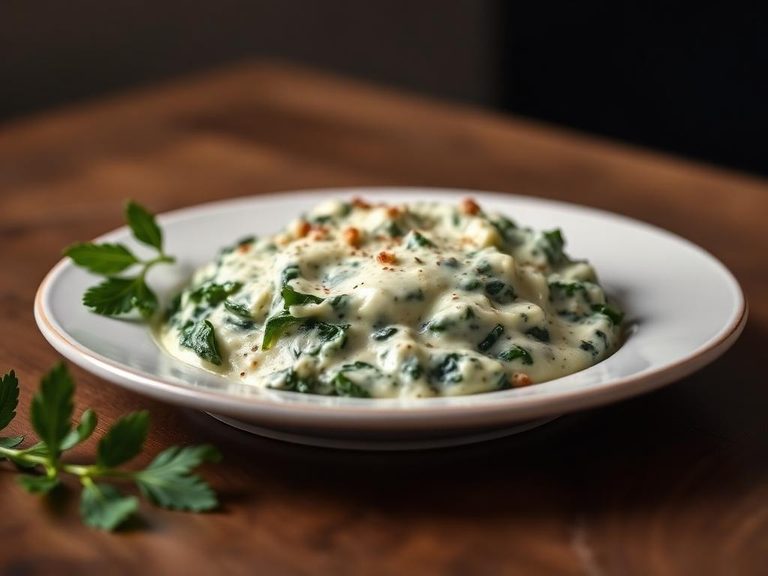
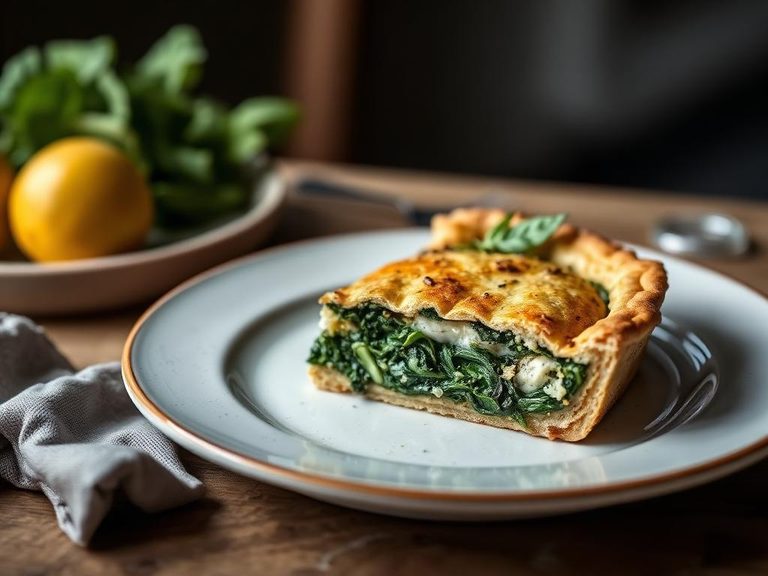
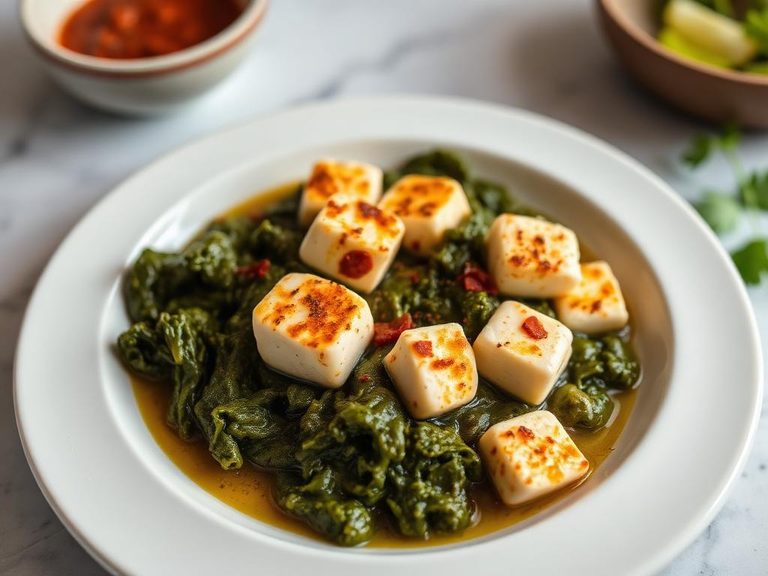


🌍 Where it's eaten
💡 Did you know?
Canned spinach was a staple on early 20th-century naval ships, including the USS Oregon, where it was served regularly to help prevent scurvy.
Full nutrition (USDA data · scales with serving)
| Water | 93.2 g |
| Energy | 19.0 kcal |
| Energy | 79.0 kj |
| Protein | 2.1 g |
| Total lipid (fat) | 0.37 g |
| Ash | 1.4 g |
| Carbohydrate, by difference | 2.9 g |
| Fiber, total dietary | 2.2 g |
| Total Sugars | 0.33 g |
| Calcium, Ca | 83.0 mg |
| Iron, Fe | 1.6 mg |
| Magnesium, Mg | 56.0 mg |
| Phosphorus, P | 32.0 mg |
| Potassium, K | 230 mg |
| Sodium, Na | 75.0 mg |
| Zinc, Zn | 0.42 mg |
| Copper, Cu | 0.12 mg |
| Manganese, Mn | 0.49 mg |
| Selenium, Se | 1.2 ug |
| Vitamin C, total ascorbic acid | 13.5 mg |
| Thiamin | 0.02 mg |
| Riboflavin | 0.11 mg |
| Niacin | 0.27 mg |
| Pantothenic acid | 0.04 mg |
| Vitamin B-6 | 0.08 mg |
| Folate, total | 58.0 ug |
| Folic acid | 0.00 ug |
| Folate, food | 58.0 ug |
| Folate, DFE | 58.0 ug |
| Choline, total | 15.2 mg |
| Vitamin B-12 | 0.00 ug |
| Vitamin A, RAE | 404 ug |
| Retinol | 0.00 ug |
| Carotene, beta | 4850 ug |
| Carotene, alpha | 0.00 ug |
| Cryptoxanthin, beta | 0.00 ug |
| Vitamin A, IU | 8084 iu |
| Lycopene | 0.00 ug |
| Lutein + zeaxanthin | 8722 ug |
| Vitamin E (alpha-tocopherol) | 1.6 mg |
| Vitamin D (D2 + D3), International Units | 0.00 iu |
| Vitamin D (D2 + D3) | 0.00 ug |
| Vitamin K (phylloquinone) | 381 ug |
| Alcohol, ethyl | 0.00 g |
| Caffeine | 0.00 mg |
| Theobromine | 0.00 mg |
Fat & fatty acid profile (per 100g)
| Fatty acids, total saturated | 0.06 g |
| SFA 4:0 | 0.00 g |
| SFA 6:0 | 0.00 g |
| SFA 8:0 | 0.00 g |
| SFA 10:0 | 0.00 g |
| SFA 12:0 | 0.00 g |
| SFA 14:0 | 0.01 g |
| SFA 16:0 | 0.04 g |
| SFA 18:0 | 0.00 g |
| Fatty acids, total monounsaturated | 0.01 g |
| MUFA 16:1 | 0.01 g |
| MUFA 18:1 | 0.01 g |
| MUFA 20:1 | 0.00 g |
| MUFA 22:1 | 0.00 g |
| Fatty acids, total polyunsaturated | 0.15 g |
| PUFA 18:2 | 0.02 g |
| PUFA 18:3 | 0.12 g |
| PUFA 18:4 | 0.00 g |
| PUFA 20:4 | 0.00 g |
| PUFA 20:5 n-3 (EPA) | 0.00 g |
| PUFA 22:5 n-3 (DPA) | 0.00 g |
| PUFA 22:6 n-3 (DHA) | 0.00 g |
| Fatty acids, total trans | 0.00 g |
| Cholesterol | 0.00 mg |
Amino acid profile (per 100g)
| Tryptophan | 0.03 g |
| Threonine | 0.09 g |
| Isoleucine | 0.11 g |
| Leucine | 0.16 g |
| Lysine | 0.13 g |
| Methionine | 0.04 g |
| Cystine | 0.03 g |
| Phenylalanine | 0.10 g |
| Tyrosine | 0.08 g |
| Valine | 0.12 g |
| Arginine | 0.12 g |
| Histidine | 0.05 g |
| Alanine | 0.10 g |
| Aspartic acid | 0.18 g |
| Glutamic acid | 0.25 g |
| Glycine | 0.10 g |
| Proline | 0.08 g |
| Serine | 0.08 g |
FAQ
Does canning destroy all the nutrients in spinach?
No. While some heat-sensitive vitamins like vitamin C may be reduced, canning preserves many nutrients, including fiber, protein, and minerals like iron and magnesium. The liquid in the can also contains leached nutrients, so using it in cooking is beneficial.
Why is no salt added important?
Canned vegetables often contain significant added sodium for preservation and flavor. Choosing 'no salt added' versions gives you control over your sodium intake, which is crucial for managing blood pressure and heart health.
How do I reduce the 'canned' taste or excess liquid?
Drain the spinach well and rinse it lightly under cold water. For recipes like dips or pies, squeeze out excess moisture using a clean kitchen towel or paper towels to prevent a watery result.
Nutrient density (calculated · NRF9.3)
Nutrient Rich Foods index: beneficial nutrients (protein, fiber, vitamins, minerals) minus saturated fat, added sugar & sodium, per 100 kcal.
NRF9.3 index — Fulgoni, Keast & Drewnowski, 2009. Computed from USDA nutrients.
Weight-loss friendliness (composite index)
Energy density 0.19 kcal/g · 44% calories from protein · 2.2 g fiber · 0.3 g sugar per 100 g.
Composite of energy density (Rolls et al., 1999), protein & fiber satiety, minus sugar. A calculated heuristic — ranks satiety-per-calorie, not a clinical measure.
Dietary load (calculated from USDA values)
Potential renal acid load. Positive = acid-forming, negative = alkaline-forming.
Sodium-to-potassium ratio: 0.33 (lower is better — aim for ≤ 1)
Sodium:potassium per WHO potassium guidance. Computed from USDA nutrients.