

Spices, celery seed
Whole food · Spices and Herbs

Photo: Wikipedia
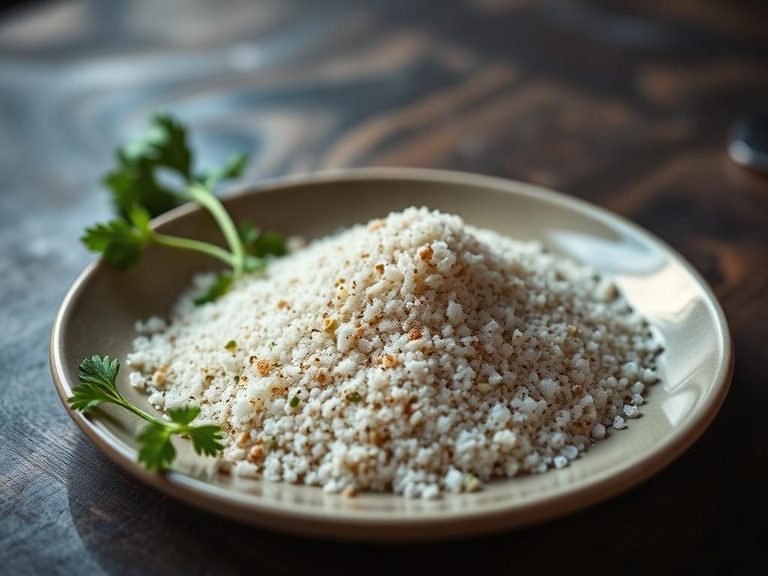
Celery seed is the tiny, dried fruit of the celery plant, packing an intensely aromatic, earthy, and slightly bitter punch far more potent than the stalks. Its flavor is warm and savory, with a texture that is gritty and crunchy when whole, or powdery when ground. Nutritionally, it is surprisingly dense, offering a notable 18g of protein and over 11g of fiber per 100g, alongside a substantial fat content.
Calorie split: 16% protein · 36% carbs · 49% fat
↓ Full nutrition💚 Why it's loved
People love celery seed for its ability to add a deep, savory, and slightly peppery complexity to dishes without overpowering them. It is a cornerstone of pickling spice blends and is cherished in Southern US and Indian cuisines for its unique, umami-like depth.
⚠️ Watch-outs & how to enjoy it better
The intense, concentrated flavor can be overwhelming if used excessively, and its strong aroma may not appeal to everyone. For those sensitive to oxalates or on low-sodium diets, celery seed (often found in spice blends with added salt) should be used sparingly; pairing it with potassium-rich foods can help balance sodium intake.
Key benefits
- Excellent source of dietary fiber (11.8g per 100g)
- Surprisingly high in plant-based protein (18g per 100g)
- Rich in minerals like iron, calcium, and manganese
- Contains antioxidants like apigenin and luteolin
- May support digestive health due to high fiber content
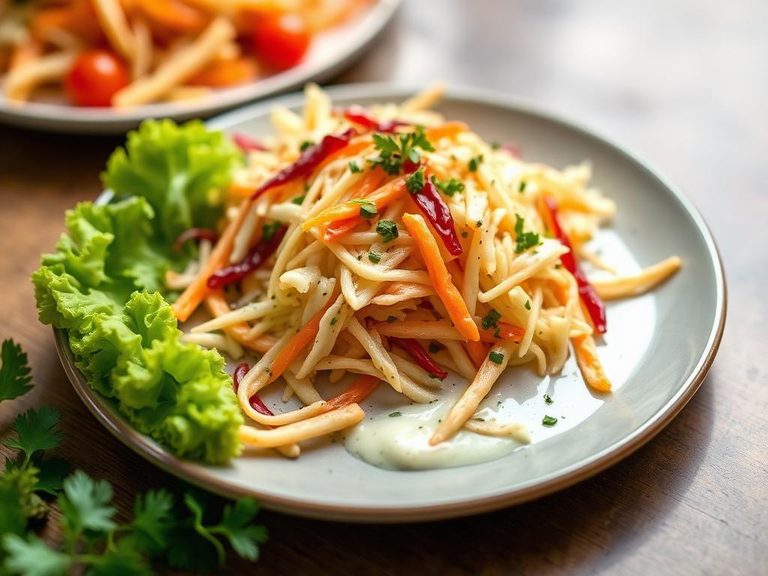
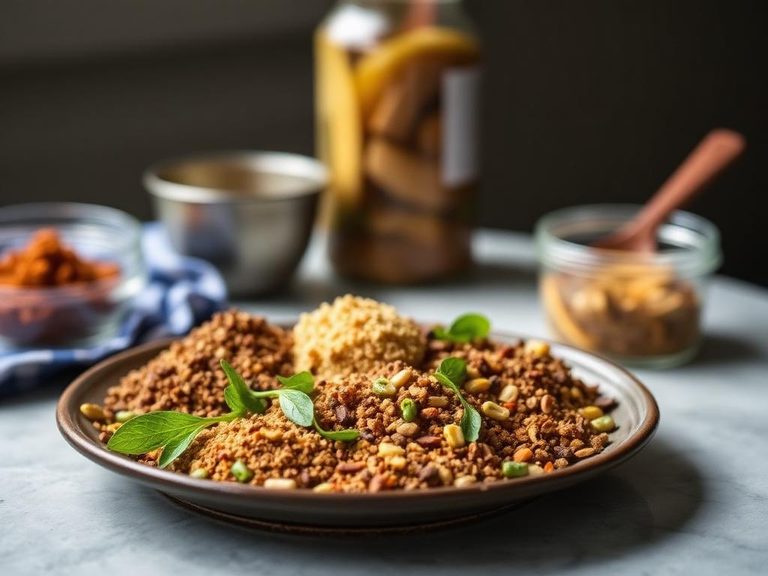
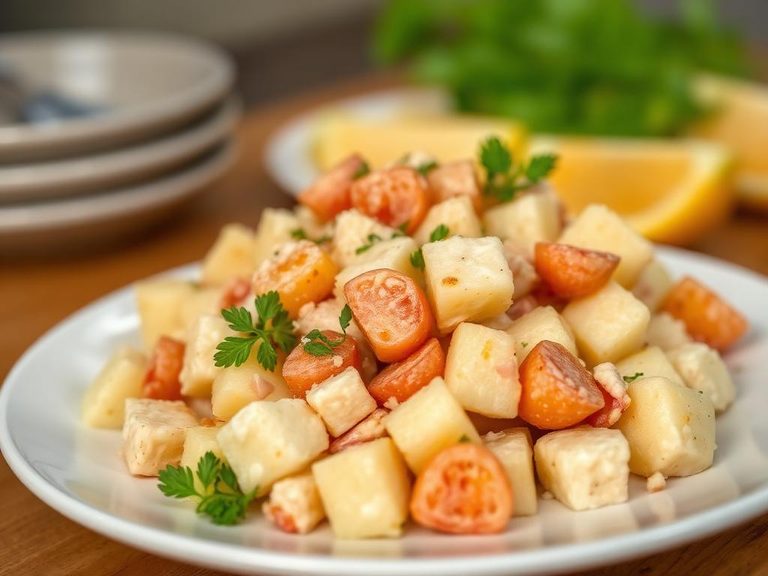
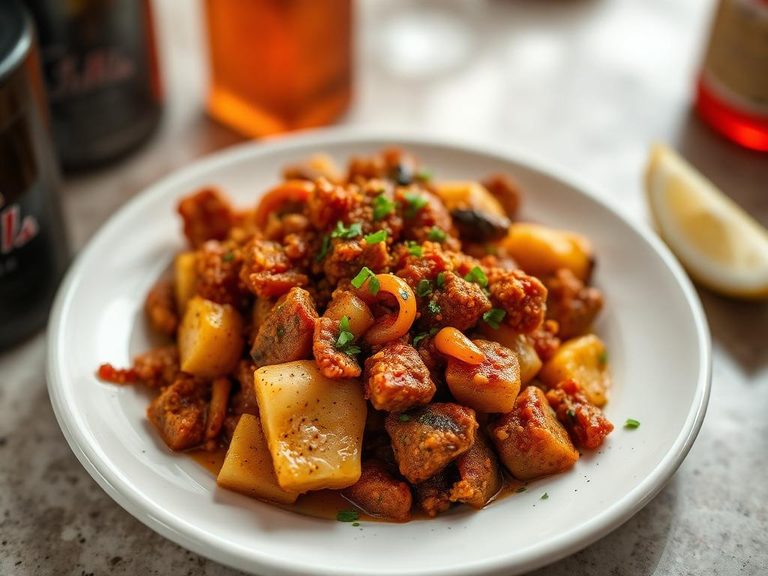
🍽️ Popular dishes
🌍 Where it's eaten
💡 Did you know?
It takes about 100,000 celery seeds to make a single pound of the spice, and its essential oil, apiol, was historically used as a diuretic and to treat rheumatism.
Full nutrition (USDA data · scales with serving)
| Water | 6.0 g |
| Energy | 392 kcal |
| Energy | 1641 kj |
| Protein | 18.1 g |
| Total lipid (fat) | 25.3 g |
| Ash | 9.3 g |
| Carbohydrate, by difference | 41.4 g |
| Fiber, total dietary | 11.8 g |
| Total Sugars | 0.67 g |
| Calcium, Ca | 1767 mg |
| Iron, Fe | 44.9 mg |
| Magnesium, Mg | 440 mg |
| Phosphorus, P | 547 mg |
| Potassium, K | 1400 mg |
| Sodium, Na | 160 mg |
| Zinc, Zn | 6.9 mg |
| Copper, Cu | 1.4 mg |
| Manganese, Mn | 7.6 mg |
| Selenium, Se | 12.1 ug |
| Vitamin C, total ascorbic acid | 17.1 mg |
| Thiamin | 0.34 mg |
| Riboflavin | 0.29 mg |
| Niacin | 3.1 mg |
| Vitamin B-6 | 0.89 mg |
| Folate, total | 10.0 ug |
| Folic acid | 0.00 ug |
| Folate, food | 10.0 ug |
| Folate, DFE | 10.0 ug |
| Choline, total | 24.7 mg |
| Vitamin B-12 | 0.00 ug |
| Vitamin B-12, added | 0.00 ug |
| Vitamin A, RAE | 3.0 ug |
| Retinol | 0.00 ug |
| Carotene, beta | 31.0 ug |
| Carotene, alpha | 0.00 ug |
| Cryptoxanthin, beta | 0.00 ug |
| Vitamin A, IU | 52.0 iu |
| Lycopene | 0.00 ug |
| Lutein + zeaxanthin | 0.00 ug |
| Vitamin E (alpha-tocopherol) | 1.1 mg |
| Vitamin E, added | 0.00 mg |
| Tocopherol, beta | 0.00 mg |
| Tocopherol, gamma | 0.00 mg |
| Tocopherol, delta | 0.00 mg |
| Vitamin D (D2 + D3), International Units | 0.00 iu |
| Vitamin D (D2 + D3) | 0.00 ug |
| Vitamin K (phylloquinone) | 0.00 ug |
| Alcohol, ethyl | 0.00 g |
| Caffeine | 0.00 mg |
| Theobromine | 0.00 mg |
Fat & fatty acid profile (per 100g)
| Fatty acids, total saturated | 2.2 g |
| SFA 4:0 | 0.00 g |
| SFA 6:0 | 0.00 g |
| SFA 8:0 | 0.00 g |
| SFA 10:0 | 0.02 g |
| SFA 12:0 | 0.02 g |
| SFA 14:0 | 0.02 g |
| SFA 16:0 | 1.3 g |
| SFA 18:0 | 0.39 g |
| Fatty acids, total monounsaturated | 15.9 g |
| MUFA 16:1 | 0.24 g |
| MUFA 18:1 | 15.4 g |
| MUFA 20:1 | 0.24 g |
| MUFA 22:1 | 0.00 g |
| Fatty acids, total polyunsaturated | 3.7 g |
| PUFA 18:2 | 3.5 g |
| PUFA 18:3 | 0.20 g |
| PUFA 18:4 | 0.00 g |
| PUFA 20:4 | 0.00 g |
| PUFA 20:5 n-3 (EPA) | 0.00 g |
| PUFA 22:5 n-3 (DPA) | 0.00 g |
| PUFA 22:6 n-3 (DHA) | 0.00 g |
| Cholesterol | 0.00 mg |
| Phytosterols | 60.0 mg |
Amino acid profile (per 100g)
Estimated from Spices, garlic powder — USDA does not publish this profile for Spices.
| Tryptophan | 0.12 g |
| Threonine | 0.37 g |
| Isoleucine | 0.41 g |
| Leucine | 0.73 g |
| Lysine | 0.77 g |
| Methionine | 0.11 g |
| Cystine | 0.25 g |
| Phenylalanine | 0.53 g |
| Tyrosine | 0.45 g |
| Valine | 0.67 g |
| Arginine | 3.4 g |
| Histidine | 0.26 g |
| Alanine | 0.48 g |
| Aspartic acid | 1.9 g |
| Glutamic acid | 3.7 g |
| Glycine | 0.53 g |
| Proline | 1.4 g |
| Serine | 0.51 g |
| Hydroxyproline | 0.00 g |
FAQ
What is the difference between celery seed and celery salt?
Celery salt is a blend of ground celery seed and salt, typically in a 2:1 ratio. Pure celery seed is just the dried seed without added sodium.
How should I store celery seed?
Store in a cool, dark, airtight container to preserve its volatile oils and potent flavor. Whole seeds retain potency longer than ground.
Can I use celery seed as a substitute for celery stalks?
No, they are not interchangeable. Celery seed provides concentrated flavor, while stalks provide texture, water content, and a milder taste.
Nutrient density (calculated · NRF9.3)
Nutrient Rich Foods index: beneficial nutrients (protein, fiber, vitamins, minerals) minus saturated fat, added sugar & sodium, per 100 kcal.
NRF9.3 index — Fulgoni, Keast & Drewnowski, 2009. Computed from USDA nutrients.
Weight-loss friendliness (composite index)
Energy density 3.92 kcal/g · 18% calories from protein · 11.8 g fiber · 0.7 g sugar per 100 g.
Composite of energy density (Rolls et al., 1999), protein & fiber satiety, minus sugar. A calculated heuristic — ranks satiety-per-calorie, not a clinical measure.
Dietary load (calculated from USDA values)
Potential renal acid load. Positive = acid-forming, negative = alkaline-forming.
Sodium-to-potassium ratio: 0.11 (lower is better — aim for ≤ 1)
Sodium:potassium per WHO potassium guidance. Computed from USDA nutrients.