

Snacks, tortilla chips, unsalted, white corn
Whole food · Snacks

Photo: Wikipedia
These are thin, crispy slices of white corn, fried or baked to a satisfying crunch without a hint of added salt. The pure, toasty corn flavor and light, airy texture make them a blank canvas for dips and toppings. Nutritionally, they provide a substantial energy source from carbohydrates and fats, with a modest amount of plant-based protein.
Calorie split: 6% protein · 52% carbs · 42% fat
↓ Full nutrition💚 Why it's loved
People love them for their pure, satisfying corn crunch and incredible versatility—they are the perfect vehicle for salsa, guacamole, cheese, or just on their own. Their neutral, unsalted profile makes them a foundational ingredient in countless dishes and a customizable snack.
⚠️ Watch-outs & how to enjoy it better
As a fried, calorie-dense snack, overconsumption can contribute to excess calorie intake. The refined carbohydrates can cause a rapid rise in blood sugar, especially when eaten alone. To counteract this, pair them with a protein-rich dip like hummus or a fat-based one like guacamole to slow digestion, and practice portion control by serving a measured amount.
Key benefits
- Gluten-free snack option
- Source of dietary fiber from whole corn
- Provides quick energy from carbohydrates
- Versatile base for various seasonings and dips
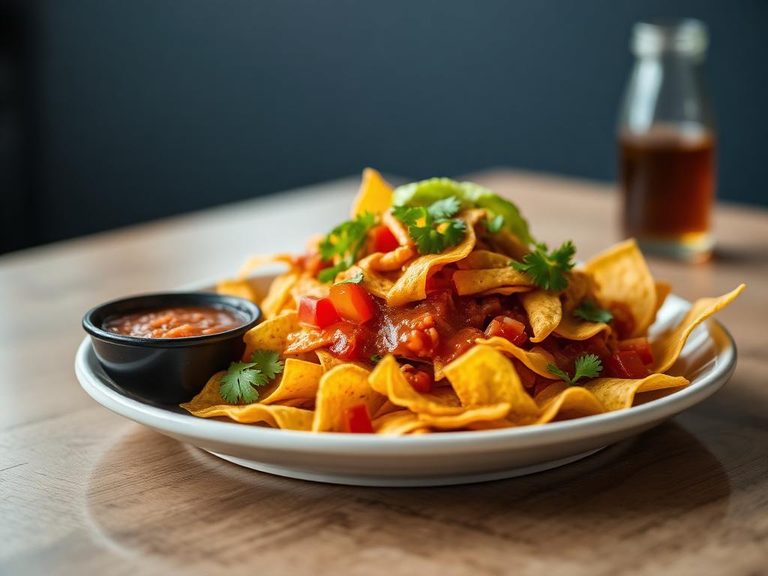
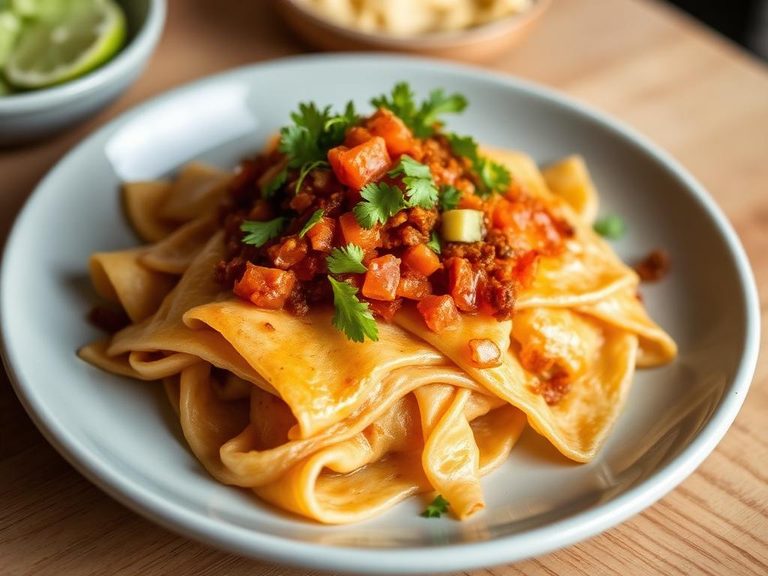
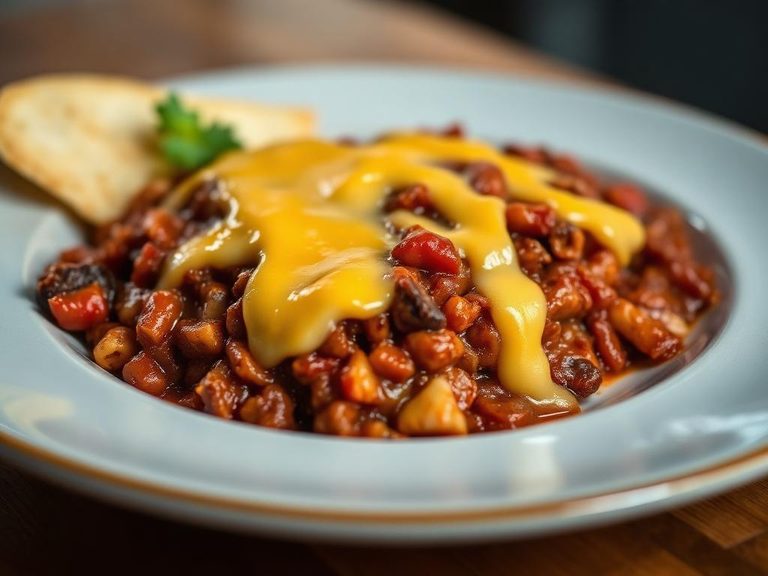
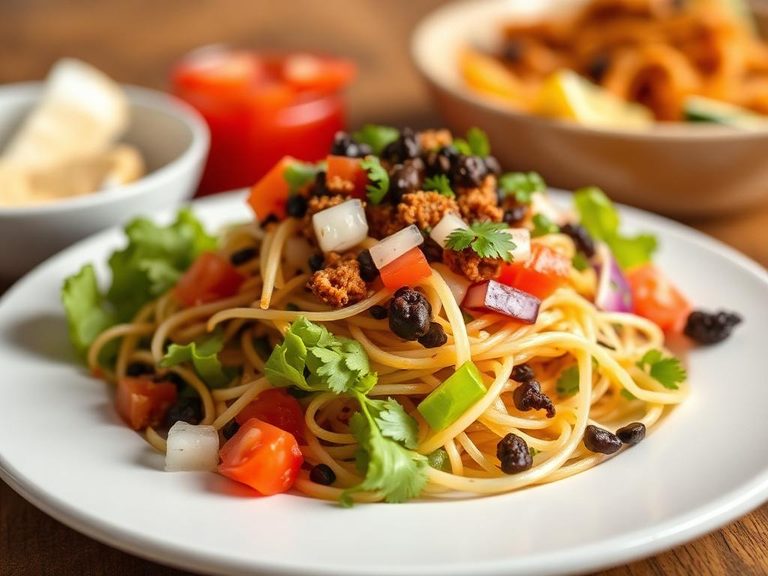
🍽️ Popular dishes
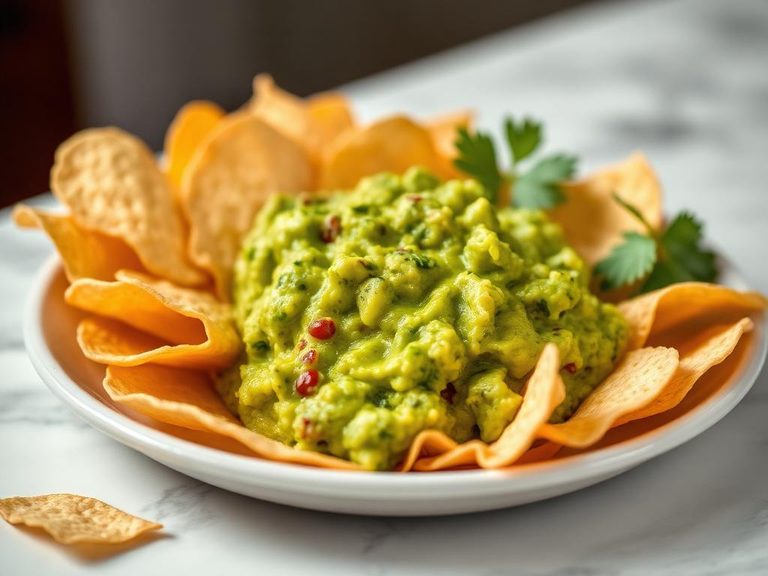
🌍 Where it's eaten
💡 Did you know?
The process of nixtamalization, where corn is treated with an alkaline solution (like lime water), is what unlocks the nutrients in corn and gives tortilla chips their distinctive flavor and texture.
Full nutrition (USDA data · scales with serving)
| Water | 2.1 g |
| Energy | 503 kcal |
| Energy | 2103 kj |
| Protein | 7.8 g |
| Total lipid (fat) | 23.4 g |
| Ash | 1.4 g |
| Carbohydrate, by difference | 65.3 g |
| Fiber, total dietary | 5.3 g |
| Total Sugars | 1.0 g |
| Sucrose | 0.85 g |
| Glucose | 0.07 g |
| Fructose | 0.07 g |
| Lactose | 0.00 g |
| Maltose | 0.00 g |
| Galactose | 0.00 g |
| Starch | 6.8 g |
| Calcium, Ca | 174 mg |
| Iron, Fe | 2.3 mg |
| Magnesium, Mg | 146 mg |
| Phosphorus, P | 200 mg |
| Potassium, K | 215 mg |
| Sodium, Na | 15.0 mg |
| Zinc, Zn | 2.5 mg |
| Copper, Cu | 0.52 mg |
| Selenium, Se | 6.7 ug |
| Vitamin C, total ascorbic acid | 0.00 mg |
| Thiamin | 0.01 mg |
| Riboflavin | 0.10 mg |
| Niacin | 1.3 mg |
| Pantothenic acid | 1.2 mg |
| Vitamin B-6 | 0.21 mg |
| Folate, total | 10.0 ug |
| Folic acid | 0.00 ug |
| Folate, food | 10.0 ug |
| Folate, DFE | 10.0 ug |
| Choline, total | 18.1 mg |
| Vitamin B-12 | 0.36 ug |
| Vitamin B-12, added | 0.00 ug |
| Vitamin A, RAE | 4.0 ug |
| Retinol | 0.00 ug |
| Carotene, beta | 37.0 ug |
| Carotene, alpha | 24.0 ug |
| Cryptoxanthin, beta | 0.00 ug |
| Vitamin A, IU | 82.0 iu |
| Lycopene | 0.00 ug |
| Lutein + zeaxanthin | 507 ug |
| Vitamin E (alpha-tocopherol) | 3.5 mg |
| Vitamin E, added | 0.00 mg |
| Vitamin D (D2 + D3), International Units | 0.00 iu |
| Vitamin D (D2 + D3) | 0.00 ug |
| Vitamin K (phylloquinone) | 0.70 ug |
| Vitamin K (Dihydrophylloquinone) | 43.7 ug |
| Alcohol, ethyl | 0.00 g |
| Caffeine | 0.00 mg |
| Theobromine | 0.00 mg |
Fat & fatty acid profile (per 100g)
| Fatty acids, total saturated | 2.5 g |
| SFA 4:0 | 0.00 g |
| SFA 6:0 | 0.00 g |
| SFA 8:0 | 0.00 g |
| SFA 10:0 | 0.00 g |
| SFA 12:0 | 0.04 g |
| SFA 14:0 | 0.00 g |
| SFA 16:0 | 1.9 g |
| SFA 18:0 | 0.42 g |
| Fatty acids, total monounsaturated | 9.5 g |
| MUFA 16:1 | 0.03 g |
| MUFA 18:1 | 9.2 g |
| MUFA 20:1 | 0.18 g |
| MUFA 22:1 | 0.06 g |
| Fatty acids, total polyunsaturated | 10.0 g |
| PUFA 18:2 | 8.9 g |
| PUFA 18:3 | 1.1 g |
| PUFA 18:4 | 0.00 g |
| PUFA 20:4 | 0.00 g |
| PUFA 20:5 n-3 (EPA) | 0.00 g |
| PUFA 22:5 n-3 (DPA) | 0.00 g |
| PUFA 22:6 n-3 (DHA) | 0.00 g |
| Cholesterol | 0.00 mg |
Amino acid profile (per 100g)
Estimated from Snacks, corn-based, extruded, chips, plain — USDA does not publish this profile for Snacks.
| Tryptophan | 0.05 g |
| Threonine | 0.25 g |
| Isoleucine | 0.23 g |
| Leucine | 0.80 g |
| Lysine | 0.18 g |
| Methionine | 0.14 g |
| Cystine | 0.12 g |
| Phenylalanine | 0.32 g |
| Tyrosine | 0.27 g |
| Valine | 0.33 g |
| Arginine | 0.33 g |
| Histidine | 0.20 g |
| Alanine | 0.49 g |
| Aspartic acid | 0.46 g |
| Glutamic acid | 1.2 g |
| Glycine | 0.27 g |
| Proline | 0.57 g |
| Serine | 0.31 g |
FAQ
Are unsalted tortilla chips healthier than salted?
They contain significantly less sodium, which is beneficial for blood pressure management. However, their calorie, fat, and carbohydrate content is similar, so portion control remains key.
Can I use them as a substitute for bread?
While they can add crunch to a meal, they are not a nutritionally equivalent substitute for bread, lacking the same protein, fiber, and micronutrient profile of whole-grain bread.
Why are they white instead of yellow?
The color comes from the specific variety of corn used. White corn tends to have a slightly milder, sweeter flavor compared to the more robust, earthy taste of yellow corn.
Nutrient density (calculated · NRF9.3)
Nutrient Rich Foods index: beneficial nutrients (protein, fiber, vitamins, minerals) minus saturated fat, added sugar & sodium, per 100 kcal.
NRF9.3 index — Fulgoni, Keast & Drewnowski, 2009. Computed from USDA nutrients.
Weight-loss friendliness (composite index)
Energy density 5.03 kcal/g · 6% calories from protein · 5.3 g fiber · 1.0 g sugar per 100 g.
Composite of energy density (Rolls et al., 1999), protein & fiber satiety, minus sugar. A calculated heuristic — ranks satiety-per-calorie, not a clinical measure.
Dietary load (calculated from USDA values)
Potential renal acid load. Positive = acid-forming, negative = alkaline-forming.
Sodium-to-potassium ratio: 0.07 (lower is better — aim for ≤ 1)
Sodium:potassium per WHO potassium guidance. Computed from USDA nutrients.