

Potatoes, red, without skin, raw
Whole food · Vegetables and Vegetable Products

Photo: Wikipedia
A peeled, raw red potato is a firm, starchy tuber with a subtly sweet, earthy flavor and a crisp, watery crunch. Its vibrant red skin (when present) and creamy white flesh are a staple, offering a low-calorie, high-carbohydrate energy source. Nutritionally, it is a lean, fat-free canvas, providing significant potassium and vitamin C, especially when cooked.
Calorie split: 11% protein · 86% carbs · 3% fat
↓ Full nutrition💚 Why it's loved
People love its incredible versatility—it can be boiled, roasted, mashed, or fried, acting as a neutral base that absorbs flavors beautifully. Its mild, comforting taste and satisfying texture make it a beloved staple in countless cuisines, from American comfort food to European classics.
⚠️ Watch-outs & how to enjoy it better
As a high-glycemic carbohydrate, it can cause rapid blood sugar spikes, particularly when peeled and cooked, which is a concern for those managing diabetes or insulin resistance. To counteract this, pair it with a source of protein (like chicken or beans) or healthy fat (like olive oil or avocado) to slow digestion, and opt for cooking methods that retain some skin or use cooling (like in potato salad) to increase resistant starch content.
Key benefits
- Excellent source of potassium, supporting heart and muscle function.
- High in vitamin C, an antioxidant that aids immune health.
- Naturally low in fat and cholesterol-free.
- Provides a quick, easily digestible source of energy from complex carbohydrates.
- Contains resistant starch when cooled, which may benefit gut health.
🍽️ Popular dishes
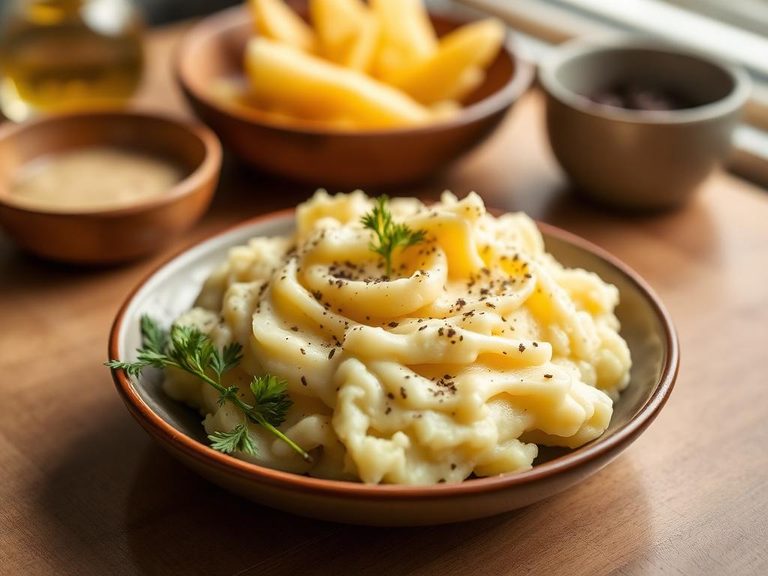
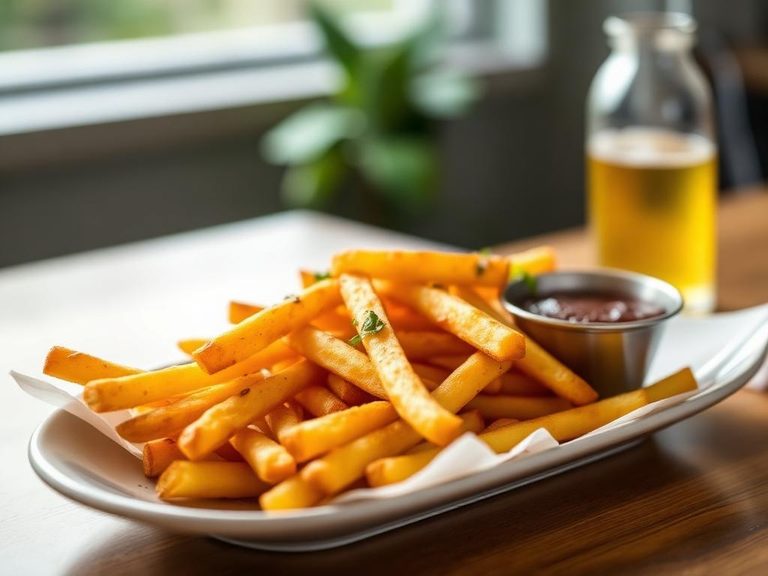
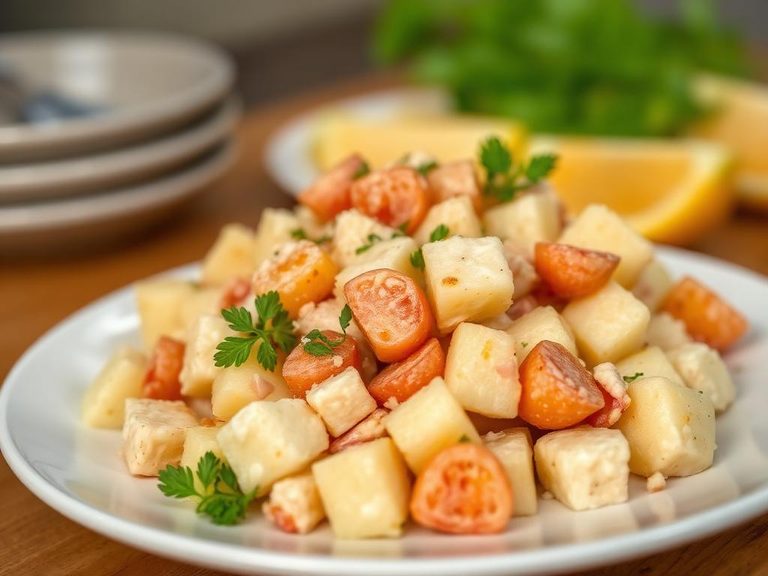
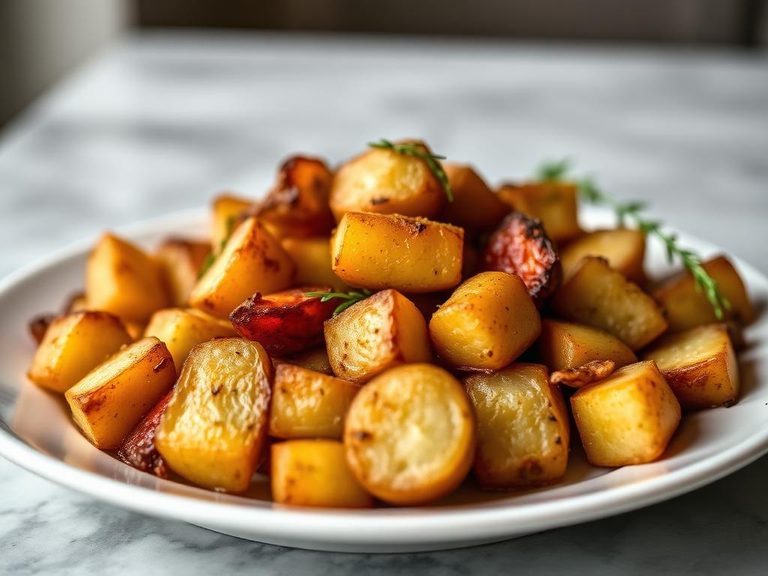
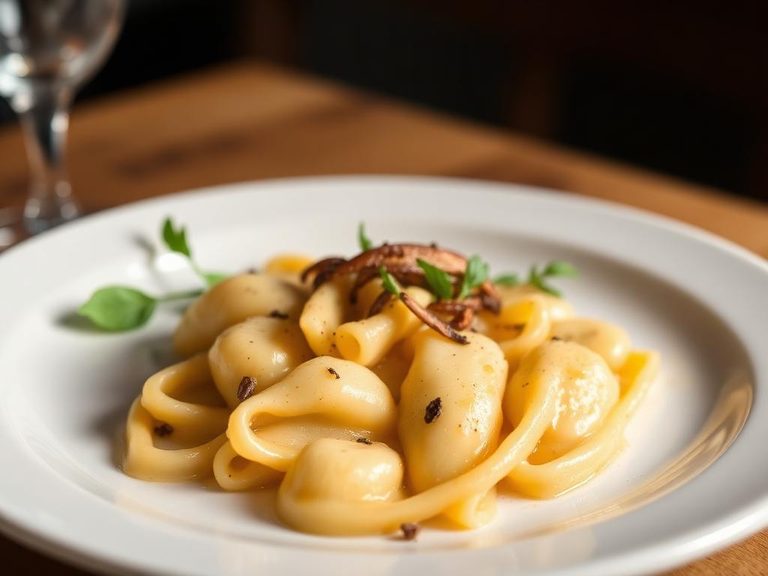

🌍 Where it's eaten
💡 Did you know?
The red pigment in red potato skin comes from anthocyanins, the same antioxidants found in blueberries and red cabbage, which may have anti-inflammatory properties.
Full nutrition (USDA data · scales with serving)
| Water | 80.5 g |
| Energy (Atwater General Factors) | 75.6 kcal |
| Energy (Atwater Specific Factors) | 73.4 kcal |
| Nitrogen | 0.33 g |
| Protein | 2.1 g |
| Total lipid (fat) | 0.25 g |
| Ash | 0.95 g |
| Carbohydrate, by difference | 16.3 g |
| Total dietary fiber (AOAC 2011.25) | 13.8 g |
| High Molecular Weight Dietary Fiber (HMWDF) | 12.9 g |
| Low Molecular Weight Dietary Fiber (LMWDF) | 0.89 g |
| Sugars, Total | 0.66 g |
| Sucrose | 0.26 g |
| Glucose | 0.18 g |
| Fructose | 0.22 g |
| Lactose | 0.00 g |
| Maltose | 0.00 g |
| Calcium, Ca | 5.1 mg |
| Iron, Fe | 0.39 mg |
| Magnesium, Mg | 23.6 mg |
| Phosphorus, P | 55.6 mg |
| Potassium, K | 472 mg |
| Sodium, Na | 2.9 mg |
| Zinc, Zn | 0.39 mg |
| Copper, Cu | 0.09 mg |
| Manganese, Mn | 0.16 mg |
| Selenium, Se | 0.00 ug |
| Molybdenum, Mo | 7.4 ug |
| Vitamin C, total ascorbic acid | 21.3 mg |
| Thiamin | 0.07 mg |
| Niacin | 1.5 mg |
| Vitamin B-6 | 0.14 mg |
| Vitamin K (phylloquinone) | 1.1 ug |
| Vitamin K (Dihydrophylloquinone) | 0.00 ug |
| Vitamin K (Menaquinone-4) | 0.00 ug |
Fat & fatty acid profile (per 100g)
Estimated from Potatoes, french fried, all types, salt added in processing, frozen, unprepared — USDA does not publish this profile for Potatoes.
| Fatty acids, total saturated | 1.0 g |
| SFA 4:0 | 0.00 g |
| SFA 6:0 | 0.00 g |
| SFA 8:0 | 0.00 g |
| SFA 10:0 | 0.00 g |
| SFA 12:0 | 0.00 g |
| SFA 14:0 | 0.00 g |
| SFA 15:0 | 0.00 g |
| SFA 16:0 | 0.53 g |
| SFA 17:0 | 0.00 g |
| SFA 18:0 | 0.43 g |
| SFA 20:0 | 0.02 g |
| SFA 22:0 | 0.02 g |
| Fatty acids, total monounsaturated | 3.2 g |
| MUFA 14:1 | 0.00 g |
| MUFA 15:1 | 0.00 g |
| MUFA 16:1 | 0.01 g |
| MUFA 17:1 | 0.00 g |
| MUFA 18:1 | 3.1 g |
| MUFA 20:1 | 0.01 g |
| Fatty acids, total polyunsaturated | 0.30 g |
| PUFA 18:2 | 0.26 g |
| PUFA 18:3 | 0.02 g |
| PUFA 18:3 n-3 c,c,c (ALA) | 0.02 g |
| PUFA 18:3 n-6 c,c,c | 0.00 g |
| PUFA 18:4 | 0.00 g |
| PUFA 20:2 n-6 c,c | 0.00 g |
| PUFA 20:3 | 0.00 g |
| PUFA 20:4 | 0.00 g |
| PUFA 20:5 n-3 (EPA) | 0.00 g |
| PUFA 22:5 n-3 (DPA) | 0.00 g |
| PUFA 22:6 n-3 (DHA) | 0.00 g |
| Cholesterol | 0.00 mg |
Amino acid profile (per 100g)
Estimated from Potatoes, french fried, all types, salt added in processing, frozen, unprepared — USDA does not publish this profile for Potatoes.
| Tryptophan | 0.02 g |
| Threonine | 0.08 g |
| Isoleucine | 0.08 g |
| Leucine | 0.13 g |
| Lysine | 0.13 g |
| Methionine | 0.04 g |
| Cystine | 0.04 g |
| Phenylalanine | 0.10 g |
| Tyrosine | 0.08 g |
| Valine | 0.12 g |
| Arginine | 0.13 g |
| Histidine | 0.05 g |
| Alanine | 0.09 g |
| Aspartic acid | 0.50 g |
| Glutamic acid | 0.40 g |
| Glycine | 0.07 g |
| Proline | 0.08 g |
| Serine | 0.10 g |
FAQ
Are red potatoes healthier than white potatoes?
Nutritionally, they are very similar. The key difference is the red skin, which contains anthocyanins (antioxidants). Keeping the skin on when cooking provides more fiber and nutrients.
Can I eat red potatoes raw?
While not toxic, raw potatoes are difficult to digest and contain solanine, which can cause stomach upset in large amounts. Cooking is recommended for better digestibility and safety.
How should I store raw, peeled red potatoes?
Store them submerged in cold water in a sealed container in the refrigerator for up to 24 hours. This prevents oxidation and browning. Drain and pat dry before using.
Do red potatoes have less carbs than other potatoes?
No, red potatoes have a similar carbohydrate content to other varieties like russets or Yukon golds. The main nutritional advantage is the antioxidants in their skin.
Nutrient density (calculated · NRF9.3)
Nutrient Rich Foods index: beneficial nutrients (protein, fiber, vitamins, minerals) minus saturated fat, added sugar & sodium, per 100 kcal.
NRF9.3 index — Fulgoni, Keast & Drewnowski, 2009. Computed from USDA nutrients.
Weight-loss friendliness (composite index)
Energy density 0.76 kcal/g · 11% calories from protein · 0.0 g fiber · 0.0 g sugar per 100 g.
Composite of energy density (Rolls et al., 1999), protein & fiber satiety, minus sugar. A calculated heuristic — ranks satiety-per-calorie, not a clinical measure.
Dietary load (calculated from USDA values)
Potential renal acid load. Positive = acid-forming, negative = alkaline-forming.
Sodium-to-potassium ratio: 0.01 (lower is better — aim for ≤ 1)
Sodium:potassium per WHO potassium guidance. Computed from USDA nutrients.