

Potatoes, boiled, cooked in skin, flesh, with salt
Whole food · Vegetables and Vegetable Products
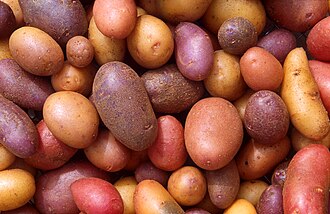
Photo: Wikipedia
A humble, skin-on boiled potato offers a fluffy, starchy interior and a slightly earthy, mineral-rich skin. Its mild, savory flavor makes it a perfect canvas for toppings, while its 2g of fiber per 100g supports digestive health.
Calorie split: 8% protein · 91% carbs · 1% fat
↓ Full nutrition💚 Why it's loved
People cherish its comforting, neutral taste and incredible versatility—it can be a simple side, a hearty base, or transformed into countless dishes across global cuisines.
⚠️ Watch-outs & how to enjoy it better
The added salt increases sodium content, which can be a concern for those monitoring blood pressure. Boiling can leach some water-soluble vitamins like vitamin C. Tip: Use minimal salt in the cooking water and pair with a potassium-rich food like a leafy green salad to help balance sodium levels.
Key benefits
- Good source of potassium for heart and muscle function.
- Contains vitamin B6 for brain health and metabolism.
- High in resistant starch when cooled, aiding gut health.
- Naturally low in fat and cholesterol-free.
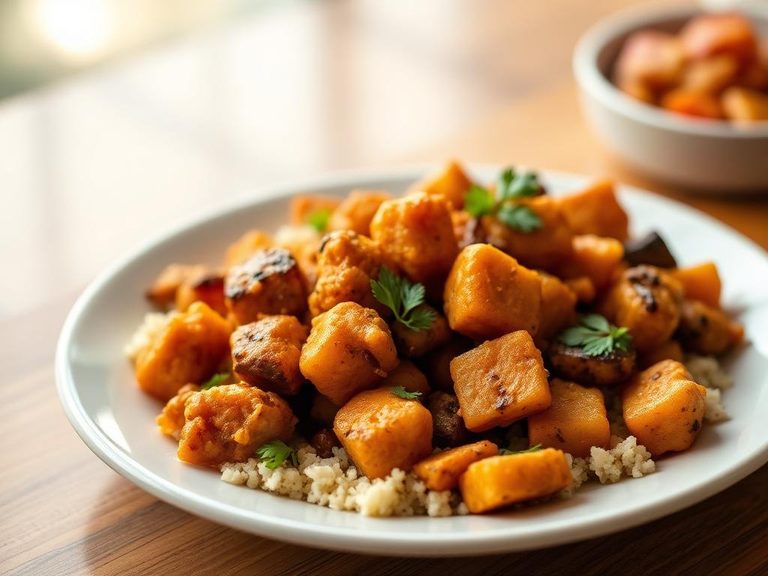
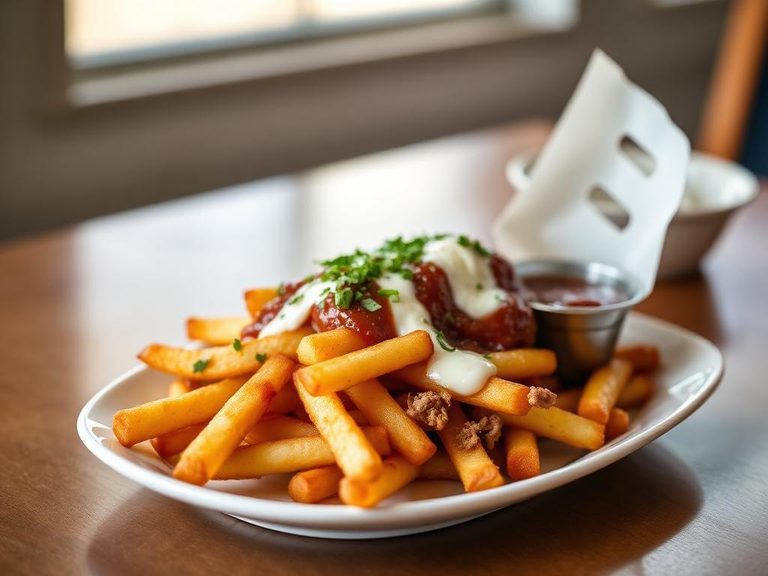
🍽️ Popular dishes
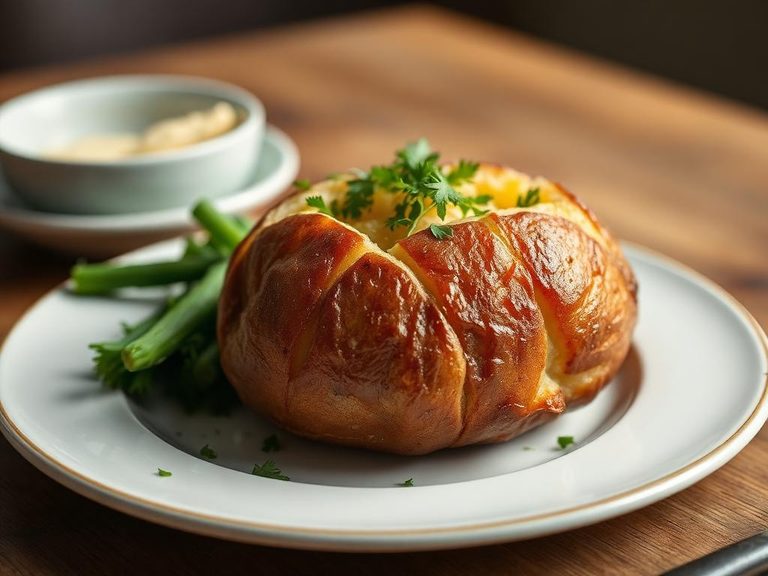
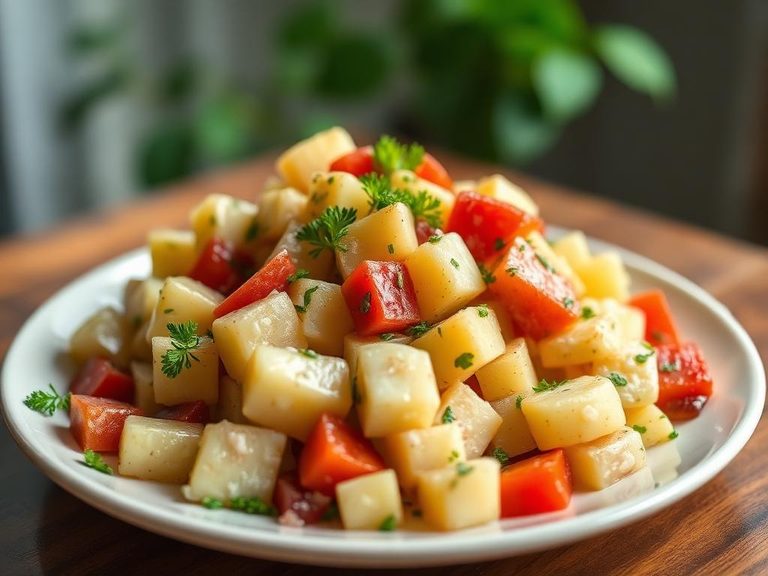
🌍 Where it's eaten
💡 Did you know?
The 'skin-on' preparation retains significantly more fiber and nutrients than peeled potatoes, as the skin is where much of the potato's iron and vitamin C is concentrated.
Full nutrition (USDA data · scales with serving)
| Water | 77.0 g |
| Energy | 87.0 kcal |
| Energy | 364 kj |
| Protein | 1.9 g |
| Total lipid (fat) | 0.10 g |
| Ash | 0.92 g |
| Carbohydrate, by difference | 20.1 g |
| Fiber, total dietary | 2.0 g |
| Total Sugars | 0.91 g |
| Calcium, Ca | 5.0 mg |
| Iron, Fe | 0.31 mg |
| Magnesium, Mg | 22.0 mg |
| Phosphorus, P | 44.0 mg |
| Potassium, K | 379 mg |
| Sodium, Na | 240 mg |
| Zinc, Zn | 0.30 mg |
| Copper, Cu | 0.19 mg |
| Manganese, Mn | 0.14 mg |
| Selenium, Se | 0.30 ug |
| Fluoride, F | 49.4 ug |
| Vitamin C, total ascorbic acid | 13.0 mg |
| Thiamin | 0.11 mg |
| Riboflavin | 0.02 mg |
| Niacin | 1.4 mg |
| Pantothenic acid | 0.52 mg |
| Vitamin B-6 | 0.30 mg |
| Folate, total | 10.0 ug |
| Folic acid | 0.00 ug |
| Folate, food | 10.0 ug |
| Folate, DFE | 10.0 ug |
| Choline, total | 13.5 mg |
| Vitamin B-12 | 0.00 ug |
| Vitamin B-12, added | 0.00 ug |
| Vitamin A, RAE | 0.00 ug |
| Retinol | 0.00 ug |
| Carotene, beta | 2.0 ug |
| Carotene, alpha | 0.00 ug |
| Cryptoxanthin, beta | 0.00 ug |
| Vitamin A, IU | 3.0 iu |
| Lycopene | 0.00 ug |
| Lutein + zeaxanthin | 10.0 ug |
| Vitamin E (alpha-tocopherol) | 0.05 mg |
| Vitamin E, added | 0.00 mg |
| Vitamin D (D2 + D3), International Units | 0.00 iu |
| Vitamin D (D2 + D3) | 0.00 ug |
| Vitamin K (phylloquinone) | 2.2 ug |
| Alcohol, ethyl | 0.00 g |
| Caffeine | 0.00 mg |
| Theobromine | 0.00 mg |
Fat & fatty acid profile (per 100g)
| Fatty acids, total saturated | 0.03 g |
| SFA 4:0 | 0.00 g |
| SFA 6:0 | 0.00 g |
| SFA 8:0 | 0.00 g |
| SFA 10:0 | 0.00 g |
| SFA 12:0 | 0.00 g |
| SFA 14:0 | 0.00 g |
| SFA 16:0 | 0.02 g |
| SFA 18:0 | 0.00 g |
| Fatty acids, total monounsaturated | 0.00 g |
| MUFA 16:1 | 0.00 g |
| MUFA 18:1 | 0.00 g |
| MUFA 20:1 | 0.00 g |
| MUFA 22:1 | 0.00 g |
| Fatty acids, total polyunsaturated | 0.04 g |
| PUFA 18:2 | 0.03 g |
| PUFA 18:3 | 0.01 g |
| PUFA 18:4 | 0.00 g |
| PUFA 20:4 | 0.00 g |
| PUFA 20:5 n-3 (EPA) | 0.00 g |
| PUFA 22:5 n-3 (DPA) | 0.00 g |
| PUFA 22:6 n-3 (DHA) | 0.00 g |
| Fatty acids, total trans | 0.00 g |
| Cholesterol | 0.00 mg |
Amino acid profile (per 100g)
| Tryptophan | 0.03 g |
| Threonine | 0.07 g |
| Isoleucine | 0.08 g |
| Leucine | 0.11 g |
| Lysine | 0.11 g |
| Methionine | 0.03 g |
| Cystine | 0.02 g |
| Phenylalanine | 0.08 g |
| Tyrosine | 0.07 g |
| Valine | 0.10 g |
| Arginine | 0.09 g |
| Histidine | 0.04 g |
| Alanine | 0.06 g |
| Aspartic acid | 0.46 g |
| Glutamic acid | 0.31 g |
| Glycine | 0.06 g |
| Proline | 0.07 g |
| Serine | 0.08 g |
FAQ
Why is boiling with the skin on better?
Cooking with the skin intact helps the potato retain more of its nutrients, especially potassium and vitamin C, which can leach into the water. It also adds texture and extra fiber.
Is the sugar content high?
The 0.91g of sugar per 100g is naturally occurring and relatively low. However, the high starch content (20.13g carbs) can raise blood sugar, so pairing with protein or fat is beneficial.
How does the salt affect the nutrition?
The listed 0.91g of salt per 100g adds sodium. To reduce intake, you can cook with less salt or rinse the potatoes briefly after boiling, though this may slightly reduce flavor.
Nutrient density (calculated · NRF9.3)
Nutrient Rich Foods index: beneficial nutrients (protein, fiber, vitamins, minerals) minus saturated fat, added sugar & sodium, per 100 kcal.
NRF9.3 index — Fulgoni, Keast & Drewnowski, 2009. Computed from USDA nutrients.
Weight-loss friendliness (composite index)
Energy density 0.87 kcal/g · 9% calories from protein · 2.0 g fiber · 0.9 g sugar per 100 g.
Composite of energy density (Rolls et al., 1999), protein & fiber satiety, minus sugar. A calculated heuristic — ranks satiety-per-calorie, not a clinical measure.
Dietary load (calculated from USDA values)
Potential renal acid load. Positive = acid-forming, negative = alkaline-forming.
Sodium-to-potassium ratio: 0.63 (lower is better — aim for ≤ 1)
Sodium:potassium per WHO potassium guidance. Computed from USDA nutrients.