

Pork, fresh, shoulder, whole, separable lean and fat, raw
Whole food · Pork Products
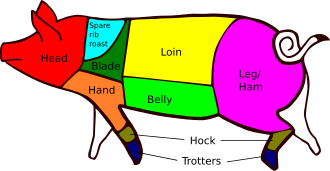
Photo: Wikipedia
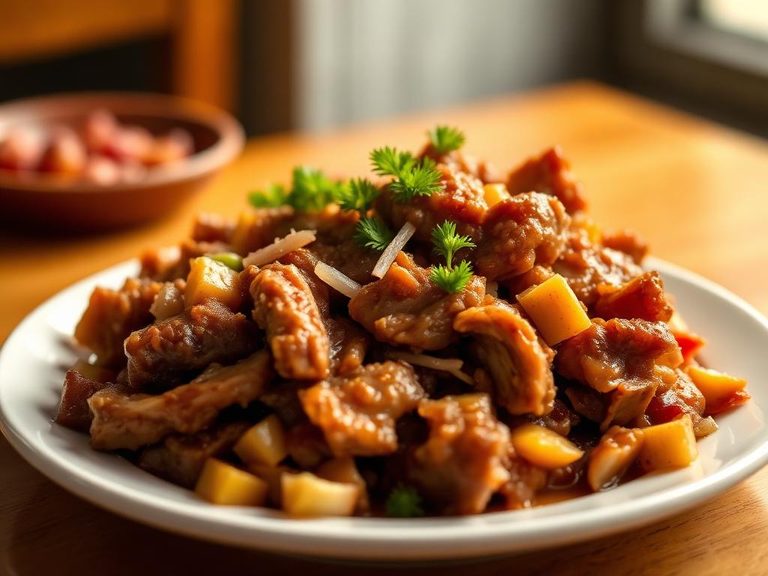
This is a raw, whole cut from the pork shoulder, featuring a marbled blend of lean meat and fat. It has a rich, meaty flavor and a firm, dense texture that becomes tender and succulent when cooked low and slow. Nutritionally, it's a powerhouse of protein and provides a significant amount of energy from its fat content.
Calorie split: 30% protein · 0% carbs · 70% fat
↓ Full nutrition💚 Why it's loved
People love it for its deep, porky flavor that stands up to bold seasonings and long cooking times, yielding incredibly tender, pull-apart meat. It's the beloved, economical workhorse behind iconic comfort foods across many cultures.
⚠️ Watch-outs & how to enjoy it better
The high fat content makes it a calorie-dense choice, which may not suit low-fat diets. To counteract, trim excess external fat before cooking and consider draining rendered fat from braising liquids. The cooking method is key: slow, moist heat (like braising or stewing) breaks down the connective tissue, while quick, high-heat methods can make it tough and chewy.
Key benefits
- Excellent source of high-quality protein for muscle maintenance.
- Provides essential B vitamins, especially thiamine (B1) and niacin (B3).
- Rich in minerals like selenium, zinc, and phosphorus.
- The fat content offers a source of energy and helps with the absorption of fat-soluble vitamins.
🍽️ Popular dishes
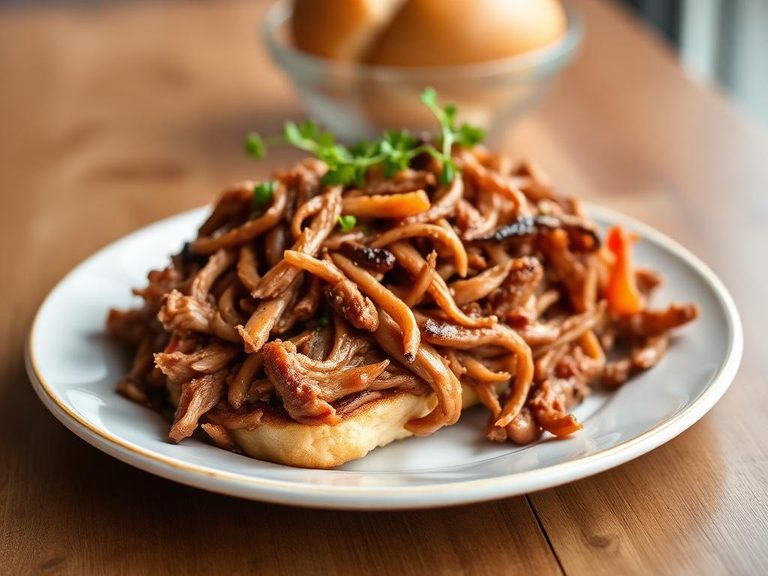


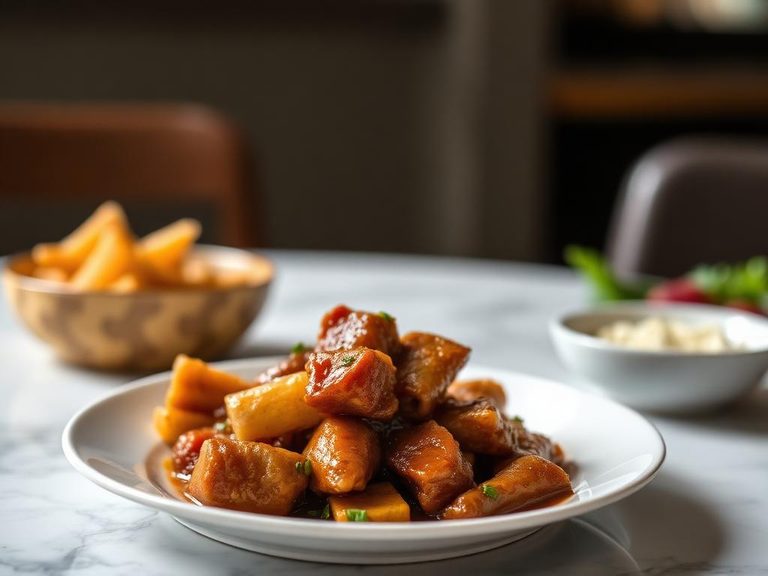
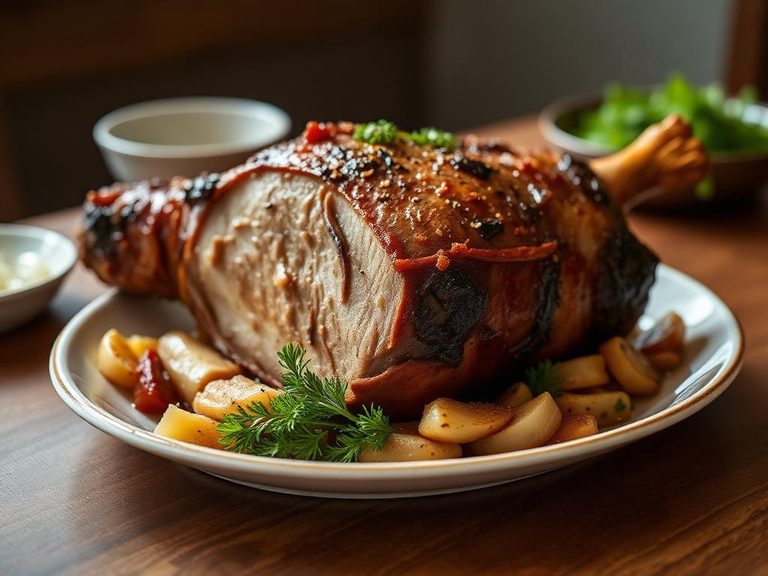
🌍 Where it's eaten
💡 Did you know?
The pork shoulder is anatomically the front leg and shoulder blade area of the pig, and its name 'Boston butt' is a historical artifact from colonial New England, where this cut was packed into barrels called 'butts' for shipping.
Full nutrition (USDA data · scales with serving)
| Water | 64.0 g |
| Energy | 236 kcal |
| Energy | 987 kj |
| Protein | 17.2 g |
| Total lipid (fat) | 18.0 g |
| Ash | 0.88 g |
| Carbohydrate, by difference | 0.00 g |
| Fiber, total dietary | 0.00 g |
| Total Sugars | 0.00 g |
| Calcium, Ca | 15.0 mg |
| Iron, Fe | 1.1 mg |
| Magnesium, Mg | 18.0 mg |
| Phosphorus, P | 182 mg |
| Potassium, K | 302 mg |
| Sodium, Na | 65.0 mg |
| Zinc, Zn | 2.7 mg |
| Copper, Cu | 0.08 mg |
| Manganese, Mn | 0.01 mg |
| Selenium, Se | 25.5 ug |
| Vitamin C, total ascorbic acid | 0.70 mg |
| Thiamin | 0.77 mg |
| Riboflavin | 0.28 mg |
| Niacin | 3.8 mg |
| Pantothenic acid | 0.72 mg |
| Vitamin B-6 | 0.35 mg |
| Folate, total | 5.0 ug |
| Folic acid | 0.00 ug |
| Folate, food | 5.0 ug |
| Folate, DFE | 5.0 ug |
| Choline, total | 60.6 mg |
| Betaine | 2.8 mg |
| Vitamin B-12 | 0.74 ug |
| Vitamin B-12, added | 0.00 ug |
| Vitamin A, RAE | 2.0 ug |
| Retinol | 2.0 ug |
| Carotene, beta | 0.00 ug |
| Carotene, alpha | 0.00 ug |
| Cryptoxanthin, beta | 0.00 ug |
| Vitamin A, IU | 7.0 iu |
| Lycopene | 0.00 ug |
| Lutein + zeaxanthin | 0.00 ug |
| Vitamin E (alpha-tocopherol) | 0.19 mg |
| Vitamin E, added | 0.00 mg |
| Vitamin D (D2 + D3), International Units | 70.0 iu |
| Vitamin D (D2 + D3) | 1.7 ug |
| Vitamin D3 (cholecalciferol) | 1.7 ug |
| Vitamin K (phylloquinone) | 0.00 ug |
| Vitamin K (Dihydrophylloquinone) | 0.00 ug |
| Alcohol, ethyl | 0.00 g |
| Caffeine | 0.00 mg |
| Theobromine | 0.00 mg |
Fat & fatty acid profile (per 100g)
| Fatty acids, total saturated | 6.2 g |
| SFA 4:0 | 0.00 g |
| SFA 6:0 | 0.00 g |
| SFA 8:0 | 0.00 g |
| SFA 10:0 | 0.01 g |
| SFA 12:0 | 0.02 g |
| SFA 14:0 | 0.22 g |
| SFA 16:0 | 3.9 g |
| SFA 18:0 | 2.0 g |
| Fatty acids, total monounsaturated | 8.0 g |
| MUFA 16:1 | 0.51 g |
| MUFA 18:1 | 7.3 g |
| MUFA 20:1 | 0.13 g |
| MUFA 22:1 | 0.00 g |
| Fatty acids, total polyunsaturated | 1.9 g |
| PUFA 18:2 | 1.6 g |
| PUFA 18:3 | 0.13 g |
| PUFA 18:4 | 0.00 g |
| PUFA 20:4 | 0.10 g |
| PUFA 20:5 n-3 (EPA) | 0.00 g |
| PUFA 22:5 n-3 (DPA) | 0.00 g |
| PUFA 22:6 n-3 (DHA) | 0.00 g |
| Cholesterol | 71.0 mg |
Amino acid profile (per 100g)
| Tryptophan | 0.21 g |
| Threonine | 0.77 g |
| Isoleucine | 0.78 g |
| Leucine | 1.4 g |
| Lysine | 1.5 g |
| Methionine | 0.44 g |
| Cystine | 0.21 g |
| Phenylalanine | 0.68 g |
| Tyrosine | 0.58 g |
| Valine | 0.92 g |
| Arginine | 1.1 g |
| Histidine | 0.66 g |
| Alanine | 1.0 g |
| Aspartic acid | 1.6 g |
| Glutamic acid | 2.6 g |
| Glycine | 0.95 g |
| Proline | 0.77 g |
| Serine | 0.71 g |
FAQ
What's the difference between pork shoulder and pork butt?
They are the same primal cut from the pig's shoulder. 'Pork butt' (or Boston butt) specifically refers to the upper portion above the shoulder blade, while 'pork shoulder' (or picnic shoulder) is the lower portion. Both are used interchangeably for slow cooking.
How do I choose between lean and fatty pieces?
For slow-cooked dishes like pulled pork or carnitas, more fat (marbling) equals more flavor and moisture. For grilling or pan-searing smaller pieces, you might prefer a leaner section, but always ensure some fat is present to prevent dryness.
Why does my cooked pork shoulder sometimes turn out dry?
This is usually due to undercooking. The tough collagen in the shoulder needs to fully break down into gelatin, which requires reaching an internal temperature of at least 195-205°F (90-96°C). Use a meat thermometer and don't rush the process.
Nutrient density (calculated · NRF9.3)
Nutrient Rich Foods index: beneficial nutrients (protein, fiber, vitamins, minerals) minus saturated fat, added sugar & sodium, per 100 kcal.
NRF9.3 index — Fulgoni, Keast & Drewnowski, 2009. Computed from USDA nutrients.
Weight-loss friendliness (composite index)
Energy density 2.36 kcal/g · 29% calories from protein · 0.0 g fiber · 0.0 g sugar per 100 g.
Composite of energy density (Rolls et al., 1999), protein & fiber satiety, minus sugar. A calculated heuristic — ranks satiety-per-calorie, not a clinical measure.
Dietary load (calculated from USDA values)
Potential renal acid load. Positive = acid-forming, negative = alkaline-forming.
Sodium-to-potassium ratio: 0.22 (lower is better — aim for ≤ 1)
Sodium:potassium per WHO potassium guidance. Computed from USDA nutrients.