

Pork, fresh, shoulder, whole, separable lean and fat, cooked, roasted
Whole food · Pork Products

Photo: Wikipedia
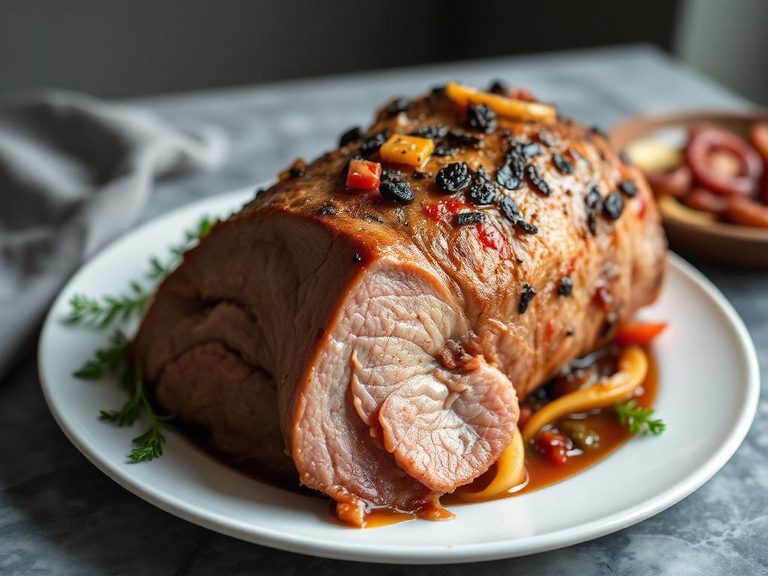
This is a succulent, well-marbled cut from the pork shoulder, roasted to a deep golden-brown with a rich, savory flavor and a tender, juicy texture. With 23.28g of high-quality protein per 100g and zero carbohydrates, it's a powerhouse for muscle maintenance. Its 21.39g of fat per serving provides a satisfying mouthfeel and helps carry the deep, roasted flavors.
Calorie split: 33% protein · 0% carbs · 67% fat
↓ Full nutrition💚 Why it's loved
People adore it for the perfect balance of lean meat and flavorful fat that bastes the roast from within, creating an irresistibly savory and juicy bite. It's a versatile centerpiece for family meals, from Sunday roasts to pulled pork sandwiches, deeply rooted in comfort food traditions worldwide.
⚠️ Watch-outs & how to enjoy it better
The relatively high fat content (21.39g per 100g) means it's calorie-dense, which requires mindful portion control for those managing weight. To counteract this, pair it with large portions of non-starchy vegetables like roasted broccoli or a vinegar-based slaw to add volume and fiber without significant calories.
Key benefits
- Excellent source of complete protein for muscle repair and growth.
- Rich in B vitamins, especially thiamine (B1) and niacin (B3), crucial for energy metabolism.
- Provides essential minerals like zinc and selenium for immune function.
- The fat content aids in the absorption of fat-soluble vitamins (A, D, E, K).
- A naturally carbohydrate-free food, suitable for low-carb and ketogenic diets.
🍽️ Popular dishes
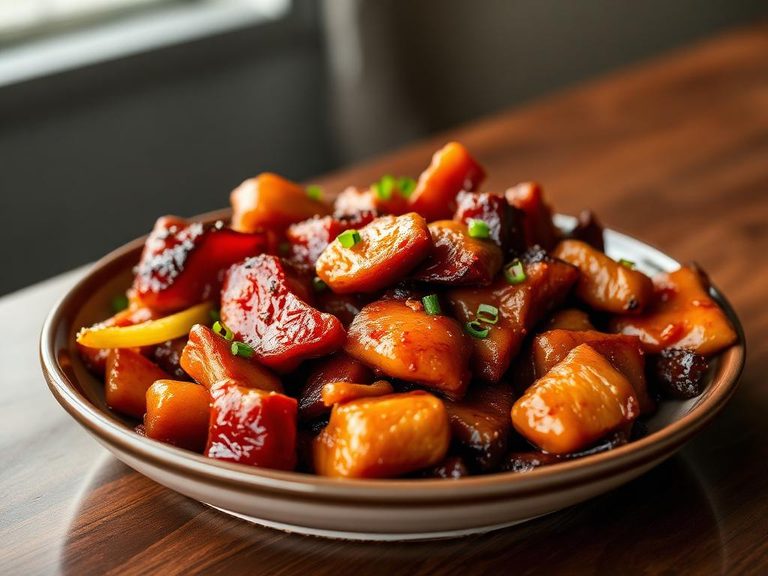
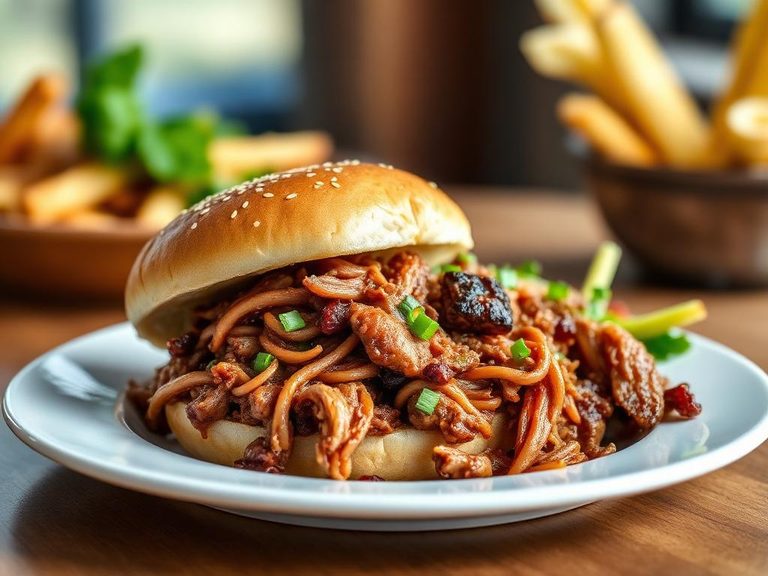
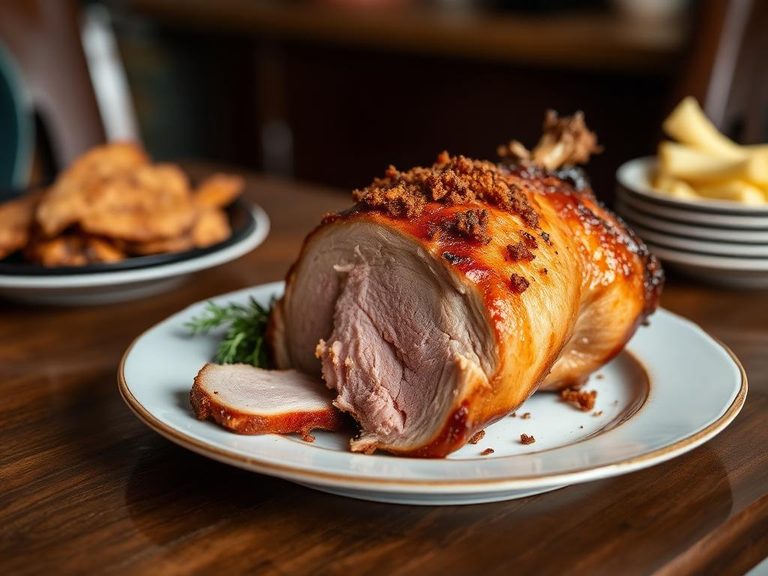
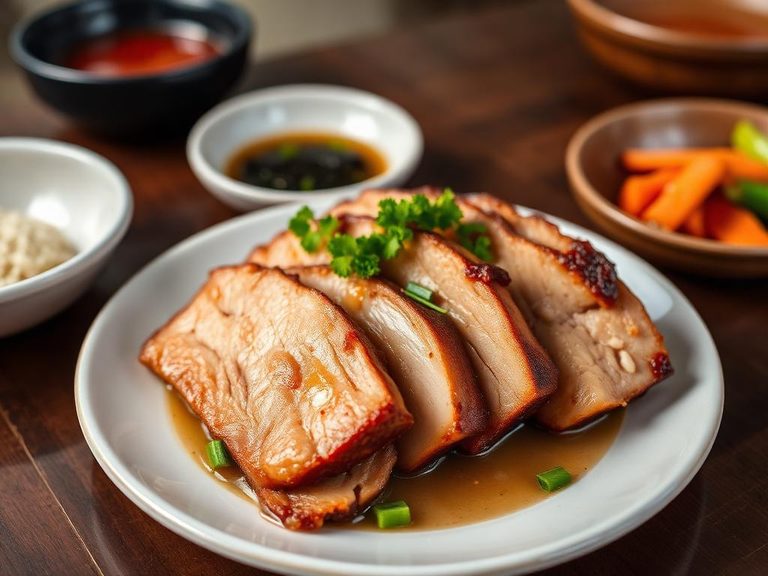
🌍 Where it's eaten
💡 Did you know?
The pork shoulder is anatomically the front leg and shoulder blade area of the pig, a hard-working muscle group that develops deep flavor and connective tissue, which is why it benefits immensely from slow, moist cooking methods like roasting or braising to become tender.
Full nutrition (USDA data · scales with serving)
| Water | 54.8 g |
| Energy | 292 kcal |
| Energy | 1222 kj |
| Protein | 23.3 g |
| Total lipid (fat) | 21.4 g |
| Ash | 1.1 g |
| Carbohydrate, by difference | 0.00 g |
| Fiber, total dietary | 0.00 g |
| Total Sugars | 0.00 g |
| Calcium, Ca | 24.0 mg |
| Iron, Fe | 1.3 mg |
| Magnesium, Mg | 18.0 mg |
| Phosphorus, P | 212 mg |
| Potassium, K | 329 mg |
| Sodium, Na | 68.0 mg |
| Zinc, Zn | 3.7 mg |
| Copper, Cu | 0.11 mg |
| Manganese, Mn | 0.02 mg |
| Selenium, Se | 33.4 ug |
| Vitamin C, total ascorbic acid | 0.50 mg |
| Thiamin | 0.58 mg |
| Riboflavin | 0.33 mg |
| Niacin | 4.0 mg |
| Pantothenic acid | 0.60 mg |
| Vitamin B-6 | 0.29 mg |
| Folate, total | 5.0 ug |
| Folic acid | 0.00 ug |
| Folate, food | 5.0 ug |
| Folate, DFE | 5.0 ug |
| Choline, total | 80.0 mg |
| Betaine | 3.1 mg |
| Vitamin B-12 | 0.80 ug |
| Vitamin B-12, added | 0.00 ug |
| Vitamin A, RAE | 2.0 ug |
| Retinol | 2.0 ug |
| Carotene, beta | 0.00 ug |
| Carotene, alpha | 0.00 ug |
| Cryptoxanthin, beta | 0.00 ug |
| Vitamin A, IU | 8.0 iu |
| Lycopene | 0.00 ug |
| Lutein + zeaxanthin | 0.00 ug |
| Vitamin E (alpha-tocopherol) | 0.19 mg |
| Vitamin E, added | 0.00 mg |
| Vitamin D (D2 + D3), International Units | 61.0 iu |
| Vitamin D (D2 + D3) | 1.5 ug |
| Vitamin D3 (cholecalciferol) | 1.5 ug |
| Vitamin K (phylloquinone) | 0.00 ug |
| Vitamin K (Dihydrophylloquinone) | 0.00 ug |
| Alcohol, ethyl | 0.00 g |
| Caffeine | 0.00 mg |
| Theobromine | 0.00 mg |
Fat & fatty acid profile (per 100g)
| Fatty acids, total saturated | 7.9 g |
| SFA 4:0 | 0.00 g |
| SFA 6:0 | 0.00 g |
| SFA 8:0 | 0.00 g |
| SFA 10:0 | 0.01 g |
| SFA 12:0 | 0.01 g |
| SFA 14:0 | 0.27 g |
| SFA 16:0 | 4.8 g |
| SFA 18:0 | 2.6 g |
| Fatty acids, total monounsaturated | 9.5 g |
| MUFA 16:1 | 0.58 g |
| MUFA 18:1 | 8.6 g |
| MUFA 20:1 | 0.19 g |
| MUFA 22:1 | 0.00 g |
| Fatty acids, total polyunsaturated | 2.0 g |
| PUFA 18:2 | 1.8 g |
| PUFA 18:3 | 0.07 g |
| PUFA 18:4 | 0.00 g |
| PUFA 20:4 | 0.07 g |
| PUFA 20:5 n-3 (EPA) | 0.00 g |
| PUFA 22:5 n-3 (DPA) | 0.00 g |
| PUFA 22:6 n-3 (DHA) | 0.00 g |
| Cholesterol | 90.0 mg |
Amino acid profile (per 100g)
| Tryptophan | 0.28 g |
| Threonine | 1.0 g |
| Isoleucine | 1.1 g |
| Leucine | 1.8 g |
| Lysine | 2.1 g |
| Methionine | 0.59 g |
| Cystine | 0.29 g |
| Phenylalanine | 0.92 g |
| Tyrosine | 0.78 g |
| Valine | 1.2 g |
| Arginine | 1.5 g |
| Histidine | 0.88 g |
| Alanine | 1.4 g |
| Aspartic acid | 2.1 g |
| Glutamic acid | 3.5 g |
| Glycine | 1.3 g |
| Proline | 1.1 g |
| Serine | 0.96 g |
FAQ
Is roasted pork shoulder a lean cut of meat?
No, it's not considered lean. While it has a significant amount of protein (23.28g per 100g), it also contains a substantial portion of fat (21.39g per 100g), which contributes to its rich flavor and juicy texture but also makes it higher in calories.
How does the nutrition of roasted pork shoulder compare to chicken breast?
Per 100g, roasted pork shoulder has slightly more protein (23.28g vs. ~31g for chicken breast) but dramatically more fat (21.39g vs. ~3.6g for chicken breast). This makes pork shoulder much more calorie-dense (292 kcal vs. ~165 kcal). Choose chicken breast for a leaner protein source, and pork shoulder for a richer, more flavorful meal.
Can I eat this on a low-carb or keto diet?
Yes, absolutely. This food contains 0g of carbohydrates, 0g of sugar, and 0g of fiber per 100g. Its high protein and fat content make it a fitting choice for low-carb and ketogenic dietary patterns.
Nutrient density (calculated · NRF9.3)
Nutrient Rich Foods index: beneficial nutrients (protein, fiber, vitamins, minerals) minus saturated fat, added sugar & sodium, per 100 kcal.
NRF9.3 index — Fulgoni, Keast & Drewnowski, 2009. Computed from USDA nutrients.
Weight-loss friendliness (composite index)
Energy density 2.92 kcal/g · 32% calories from protein · 0.0 g fiber · 0.0 g sugar per 100 g.
Composite of energy density (Rolls et al., 1999), protein & fiber satiety, minus sugar. A calculated heuristic — ranks satiety-per-calorie, not a clinical measure.
Dietary load (calculated from USDA values)
Potential renal acid load. Positive = acid-forming, negative = alkaline-forming.
Sodium-to-potassium ratio: 0.21 (lower is better — aim for ≤ 1)
Sodium:potassium per WHO potassium guidance. Computed from USDA nutrients.