

Pork, fresh, shoulder, blade, boston (steaks), separable lean and fat, cooked, broiled
Whole food · Pork Products

Photo: Wikipedia
This is a cut of pork from the upper shoulder, specifically the Boston butt section, known for its rich marbling of lean meat and fat. When broiled, it develops a savory, slightly charred exterior while remaining tender and juicy inside. With a robust 25.58g of protein per 100g and zero carbs, it's a powerhouse for muscle-building and low-carb diets.
Calorie split: 41% protein · 0% carbs · 59% fat
↓ Full nutrition💚 Why it's loved
People adore it for its deep, savory flavor and satisfying texture that strikes a perfect balance between tenderness and chew. Its versatility makes it a staple for everything from simple weeknight grills to slow-cooked comfort meals.
⚠️ Watch-outs & how to enjoy it better
The significant fat content (16.61g per 100g) means it's calorie-dense, which may not suit strict calorie-controlled diets. To counteract this, practice portion control, trim excess external fat before cooking, and pair it with large servings of non-starchy vegetables to increase meal volume without excessive calories.
Key benefits
- Excellent source of high-quality protein for muscle repair and growth.
- Provides essential B vitamins like thiamine (B1) and niacin (B3) for energy metabolism.
- Contains minerals such as zinc and selenium, which support immune function.
- Naturally zero carbohydrates, making it ideal for ketogenic and low-carb diets.
🍽️ Popular dishes
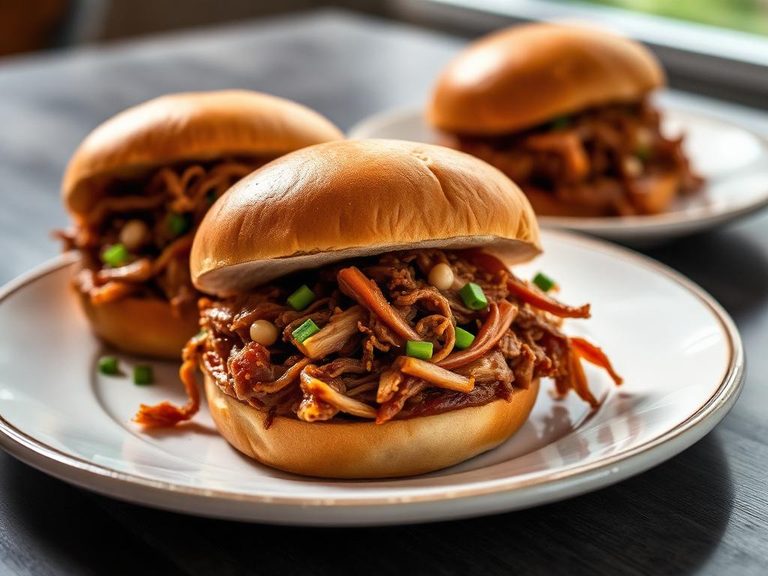
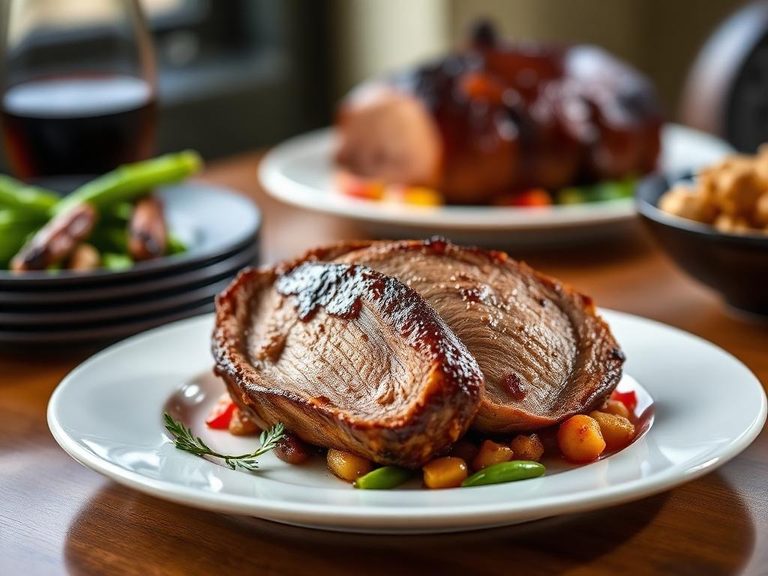
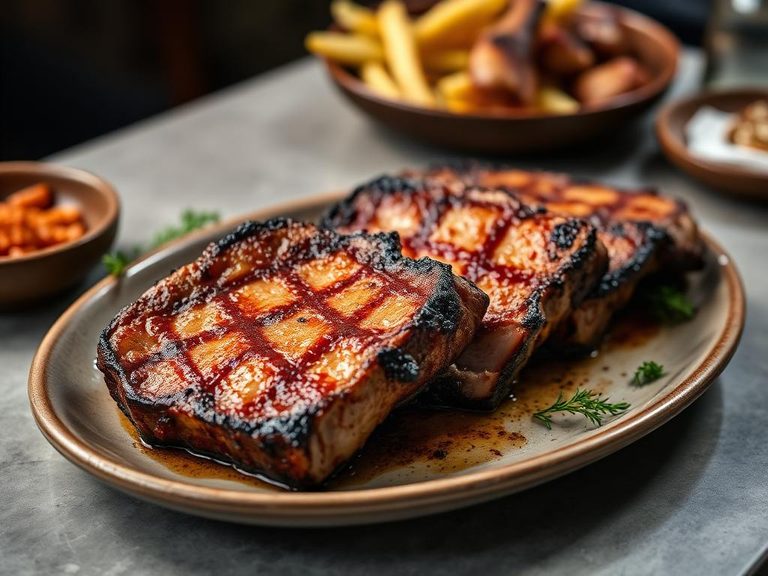

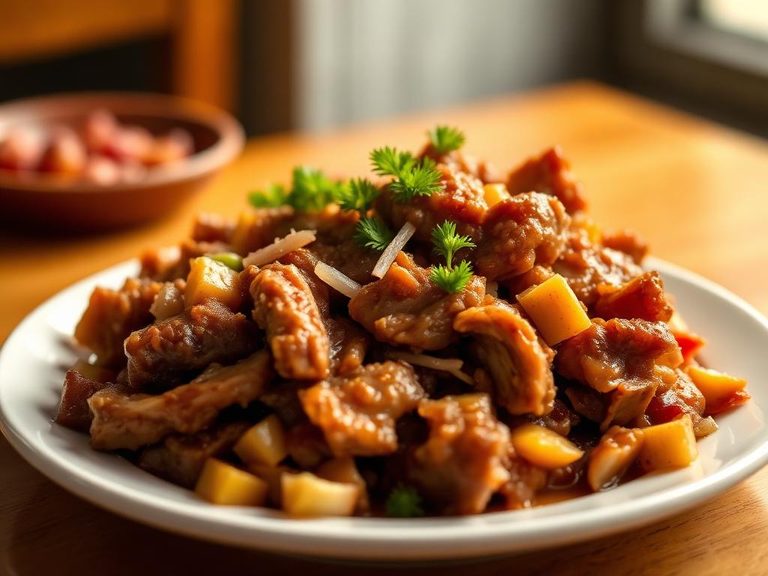
🌍 Where it's eaten
💡 Did you know?
The name 'Boston butt' is a historical artifact from colonial America, when less-prized cuts of pork were packed into barrels called 'butts' for shipping from the port of Boston.
Full nutrition (USDA data · scales with serving)
| Water | 57.3 g |
| Energy | 259 kcal |
| Energy | 1084 kj |
| Protein | 25.6 g |
| Total lipid (fat) | 16.6 g |
| Ash | 1.1 g |
| Carbohydrate, by difference | 0.00 g |
| Fiber, total dietary | 0.00 g |
| Total Sugars | 0.00 g |
| Calcium, Ca | 36.0 mg |
| Iron, Fe | 1.4 mg |
| Magnesium, Mg | 21.0 mg |
| Phosphorus, P | 210 mg |
| Potassium, K | 326 mg |
| Sodium, Na | 69.0 mg |
| Zinc, Zn | 4.5 mg |
| Copper, Cu | 0.06 mg |
| Manganese, Mn | 0.00 mg |
| Selenium, Se | 36.3 ug |
| Vitamin C, total ascorbic acid | 0.30 mg |
| Thiamin | 0.69 mg |
| Riboflavin | 0.40 mg |
| Niacin | 4.1 mg |
| Pantothenic acid | 0.73 mg |
| Vitamin B-6 | 0.28 mg |
| Folate, total | 4.0 ug |
| Folic acid | 0.00 ug |
| Folate, food | 4.0 ug |
| Folate, DFE | 4.0 ug |
| Choline, total | 87.9 mg |
| Betaine | 3.4 mg |
| Vitamin B-12 | 1.1 ug |
| Vitamin B-12, added | 0.00 ug |
| Vitamin A, RAE | 3.0 ug |
| Retinol | 3.0 ug |
| Carotene, beta | 0.00 ug |
| Carotene, alpha | 0.00 ug |
| Cryptoxanthin, beta | 0.00 ug |
| Vitamin A, IU | 9.0 iu |
| Lycopene | 0.00 ug |
| Lutein + zeaxanthin | 0.00 ug |
| Vitamin E (alpha-tocopherol) | 0.29 mg |
| Vitamin E, added | 0.00 mg |
| Vitamin D (D2 + D3), International Units | 63.0 iu |
| Vitamin D (D2 + D3) | 1.6 ug |
| Vitamin D3 (cholecalciferol) | 1.6 ug |
| Vitamin K (phylloquinone) | 0.00 ug |
| Vitamin K (Dihydrophylloquinone) | 0.00 ug |
| Alcohol, ethyl | 0.00 g |
| Caffeine | 0.00 mg |
| Theobromine | 0.00 mg |
Fat & fatty acid profile (per 100g)
| Fatty acids, total saturated | 6.0 g |
| SFA 4:0 | 0.00 g |
| SFA 6:0 | 0.00 g |
| SFA 8:0 | 0.00 g |
| SFA 10:0 | 0.01 g |
| SFA 12:0 | 0.01 g |
| SFA 14:0 | 0.20 g |
| SFA 16:0 | 3.6 g |
| SFA 18:0 | 2.0 g |
| Fatty acids, total monounsaturated | 7.4 g |
| MUFA 16:1 | 0.48 g |
| MUFA 18:1 | 6.7 g |
| MUFA 20:1 | 0.18 g |
| MUFA 22:1 | 0.00 g |
| Fatty acids, total polyunsaturated | 1.5 g |
| PUFA 18:2 | 1.3 g |
| PUFA 18:3 | 0.05 g |
| PUFA 18:4 | 0.00 g |
| PUFA 20:4 | 0.07 g |
| PUFA 20:5 n-3 (EPA) | 0.00 g |
| PUFA 22:5 n-3 (DPA) | 0.00 g |
| PUFA 22:6 n-3 (DHA) | 0.00 g |
| Cholesterol | 95.0 mg |
Amino acid profile (per 100g)
| Tryptophan | 0.33 g |
| Threonine | 1.2 g |
| Isoleucine | 1.2 g |
| Leucine | 2.1 g |
| Lysine | 2.3 g |
| Methionine | 0.68 g |
| Cystine | 0.33 g |
| Phenylalanine | 1.0 g |
| Tyrosine | 0.89 g |
| Valine | 1.4 g |
| Arginine | 1.6 g |
| Histidine | 1.0 g |
| Alanine | 1.5 g |
| Aspartic acid | 2.4 g |
| Glutamic acid | 4.0 g |
| Glycine | 1.2 g |
| Proline | 1.0 g |
| Serine | 1.1 g |
FAQ
What's the difference between pork shoulder and Boston butt?
They come from the same primal cut (the shoulder). 'Boston butt' is the upper portion, which is more uniform in shape and has more internal marbling, making it ideal for slow roasting and pulling. 'Pork shoulder' or 'picnic shoulder' is the lower, more irregular portion with more connective tissue.
How do I prevent broiled pork shoulder from drying out?
The key is not to overcook it. Use a meat thermometer and pull it from the heat when the internal temperature reaches 145°F (63°C) for medium, then let it rest for 3-5 minutes. The residual heat will continue cooking it, and the juices will redistribute.
Is this a fatty cut? How can I reduce the fat?
Yes, it's a marbled cut with 16.61g of fat per 100g. To reduce fat, you can trim the thick external fat cap before cooking. Broiling allows some fat to render and drip away. You can also chill the cooked meat and skim solidified fat from the surface before reheating.
Nutrient density (calculated · NRF9.3)
Nutrient Rich Foods index: beneficial nutrients (protein, fiber, vitamins, minerals) minus saturated fat, added sugar & sodium, per 100 kcal.
NRF9.3 index — Fulgoni, Keast & Drewnowski, 2009. Computed from USDA nutrients.
Weight-loss friendliness (composite index)
Energy density 2.59 kcal/g · 40% calories from protein · 0.0 g fiber · 0.0 g sugar per 100 g.
Composite of energy density (Rolls et al., 1999), protein & fiber satiety, minus sugar. A calculated heuristic — ranks satiety-per-calorie, not a clinical measure.
Dietary load (calculated from USDA values)
Potential renal acid load. Positive = acid-forming, negative = alkaline-forming.
Sodium-to-potassium ratio: 0.21 (lower is better — aim for ≤ 1)
Sodium:potassium per WHO potassium guidance. Computed from USDA nutrients.