

PIZZA HUT 12" Cheese Pizza, Pan Crust
Whole food · Fast Foods

Photo: Wikipedia
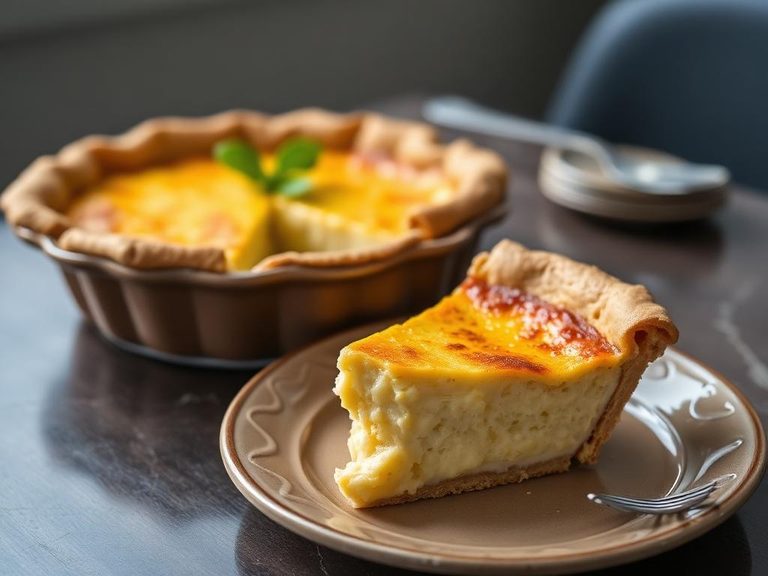
A single, satisfying slice of Pizza Hut's 12-inch Cheese Pizza on a golden, pillowy pan crust offers a classic, comforting bite. The crust is thick and airy with a slightly crisp, buttery exterior, while the melted mozzarella provides a savory, stretchy pull. Nutritionally, it delivers a solid protein punch (11.73g per 100g) to balance its carbohydrate-rich, energy-dense profile.
Calorie split: 17% protein · 43% carbs · 40% fat
↓ Full nutrition💚 Why it's loved
People adore it for its nostalgic, crowd-pleasing flavor—the perfect blend of savory cheese, tangy tomato sauce, and a rich, bready crust. It's a versatile staple for gatherings, late-night cravings, and customizable with countless toppings.
⚠️ Watch-outs & how to enjoy it better
The refined carbs and fat can lead to blood sugar spikes and are calorie-dense, making portion control key for those monitoring intake. To counteract, pair a slice with a side salad or lean protein to slow digestion, and be mindful of the sodium content common in cheese and sauce.
Key benefits
- Good source of protein for muscle maintenance
- Provides quick energy from carbohydrates
- Contains calcium from the cheese
- Pan crust offers a satisfying, filling texture
- Convenient and widely available meal option
🍽️ Popular dishes
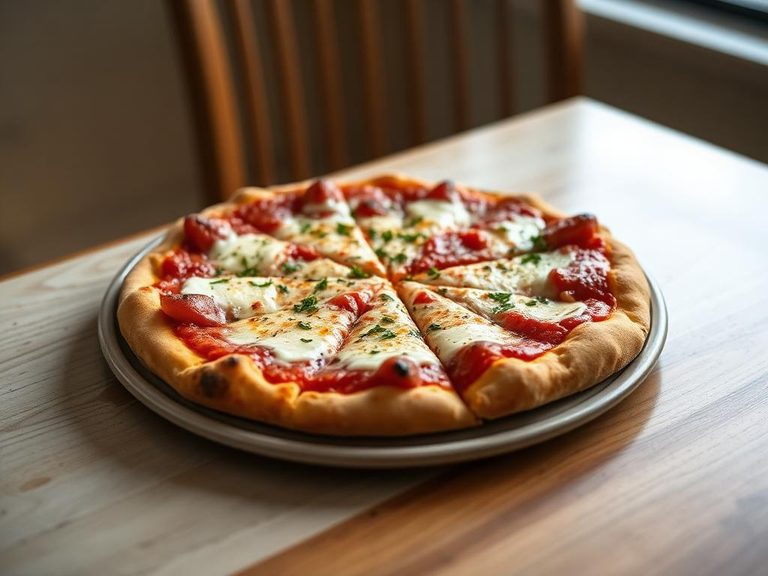
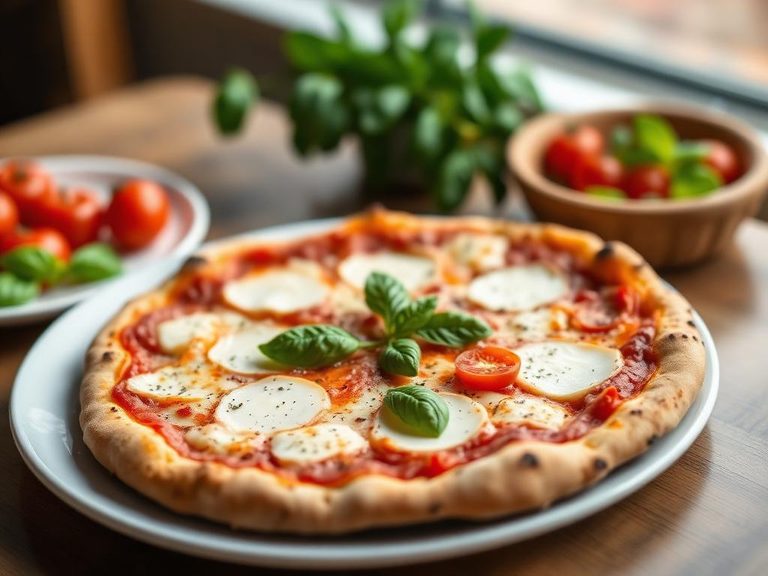
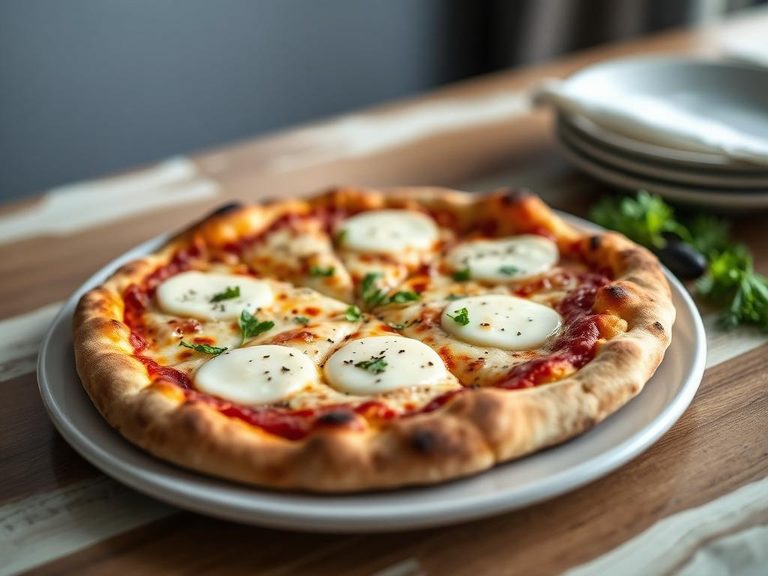
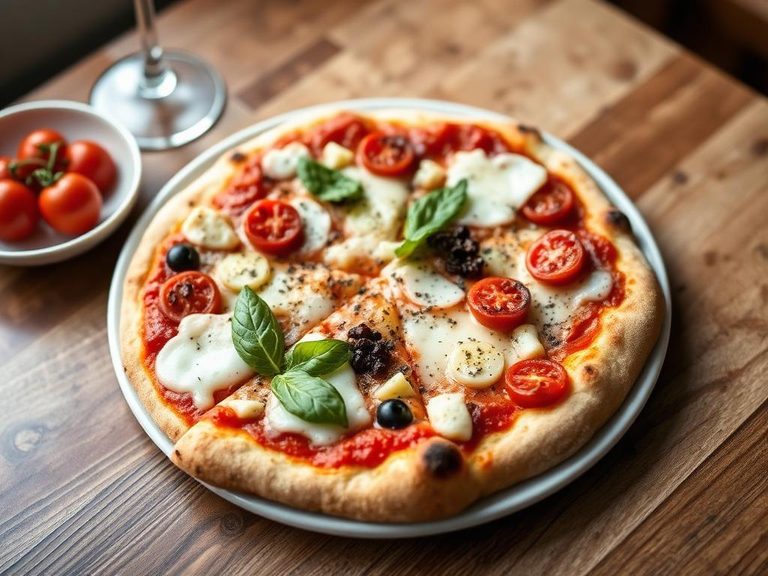
🌍 Where it's eaten
💡 Did you know?
The 'pan' crust style was popularized in the U.S. in the 1960s by Pizza Hut, which patented a method for baking pizza in a deep, oiled pan to create a signature fried, crispy bottom.
Full nutrition (USDA data · scales with serving)
| Water | 43.4 g |
| Energy | 280 kcal |
| Energy | 1170 kj |
| Protein | 11.7 g |
| Total lipid (fat) | 12.6 g |
| Ash | 2.4 g |
| Carbohydrate, by difference | 29.9 g |
| Fiber, total dietary | 1.7 g |
| Total Sugars | 3.2 g |
| Sucrose | 0.00 g |
| Glucose | 0.41 g |
| Fructose | 0.42 g |
| Lactose | 0.47 g |
| Maltose | 1.8 g |
| Galactose | 0.07 g |
| Starch | 21.2 g |
| Calcium, Ca | 208 mg |
| Iron, Fe | 1.9 mg |
| Magnesium, Mg | 21.0 mg |
| Phosphorus, P | 241 mg |
| Potassium, K | 168 mg |
| Sodium, Na | 624 mg |
| Zinc, Zn | 1.6 mg |
| Copper, Cu | 0.10 mg |
| Manganese, Mn | 0.30 mg |
| Selenium, Se | 19.4 ug |
| Vitamin C, total ascorbic acid | 0.00 mg |
| Thiamin | 0.24 mg |
| Riboflavin | 0.25 mg |
| Niacin | 3.9 mg |
| Pantothenic acid | 0.28 mg |
| Vitamin B-6 | 0.11 mg |
| Vitamin B-12 | 0.64 ug |
| Vitamin A, RAE | 73.0 ug |
| Retinol | 73.0 ug |
| Vitamin A, IU | 260 iu |
| Vitamin E (alpha-tocopherol) | 1.1 mg |
| Tocopherol, beta | 0.05 mg |
| Tocopherol, gamma | 3.5 mg |
| Tocopherol, delta | 1.1 mg |
| Tocotrienol, alpha | 0.05 mg |
| Tocotrienol, beta | 0.00 mg |
| Tocotrienol, gamma | 0.00 mg |
| Tocotrienol, delta | 0.00 mg |
| Vitamin K (phylloquinone) | 15.5 ug |
| Vitamin K (Dihydrophylloquinone) | 0.00 ug |
Fat & fatty acid profile (per 100g)
| Fatty acids, total saturated | 5.2 g |
| SFA 8:0 | 0.08 g |
| SFA 10:0 | 0.19 g |
| SFA 12:0 | 0.21 g |
| SFA 14:0 | 0.72 g |
| SFA 15:0 | 0.07 g |
| SFA 16:0 | 2.6 g |
| SFA 17:0 | 0.05 g |
| SFA 18:0 | 1.2 g |
| SFA 20:0 | 0.03 g |
| SFA 22:0 | 0.02 g |
| Fatty acids, total monounsaturated | 3.2 g |
| MUFA 14:1 | 0.05 g |
| MUFA 15:1 | 0.00 g |
| MUFA 16:1 | 0.12 g |
| MUFA 17:1 | 0.01 g |
| MUFA 18:1 | 3.0 g |
| MUFA 20:1 | 0.03 g |
| Fatty acids, total polyunsaturated | 2.8 g |
| PUFA 18:2 | 2.4 g |
| PUFA 18:3 | 0.30 g |
| PUFA 18:3 n-3 c,c,c (ALA) | 0.30 g |
| PUFA 18:3 n-6 c,c,c | 0.00 g |
| PUFA 20:2 n-6 c,c | 0.00 g |
| PUFA 20:3 | 0.00 g |
| PUFA 20:4 | 0.01 g |
| Cholesterol | 21.0 mg |
Amino acid profile (per 100g)
| Tryptophan | 0.13 g |
| Threonine | 0.38 g |
| Isoleucine | 0.52 g |
| Leucine | 1.0 g |
| Lysine | 0.69 g |
| Methionine | 0.27 g |
| Cystine | 0.16 g |
| Phenylalanine | 0.61 g |
| Tyrosine | 0.48 g |
| Valine | 0.66 g |
| Arginine | 0.45 g |
| Histidine | 0.33 g |
| Alanine | 0.39 g |
| Aspartic acid | 0.75 g |
| Glutamic acid | 3.3 g |
| Glycine | 0.32 g |
| Proline | 1.3 g |
| Serine | 0.65 g |
FAQ
How does the pan crust differ from other pizza crusts?
The pan crust is baked in a deep, oiled pan, which fries the bottom and sides, resulting in a thicker, softer interior with a crispy, golden-brown exterior, unlike thinner, crispier, or chewier styles.
Is this a good post-workout meal?
It can be part of recovery due to its protein and carbs, but the high fat and sodium may slow digestion. Opting for a slice with added vegetables or pairing it with a protein shake would be more ideal.
What's the main nutritional concern with this food?
The primary concerns are its high calorie density, refined carbohydrates, and saturated fat from the cheese and pan preparation, which can impact blood sugar and heart health if consumed frequently in large portions.
Nutrient density (calculated · NRF9.3)
Nutrient Rich Foods index: beneficial nutrients (protein, fiber, vitamins, minerals) minus saturated fat, added sugar & sodium, per 100 kcal.
NRF9.3 index — Fulgoni, Keast & Drewnowski, 2009. Computed from USDA nutrients.
Weight-loss friendliness (composite index)
Energy density 2.80 kcal/g · 17% calories from protein · 1.7 g fiber · 3.2 g sugar per 100 g.
Composite of energy density (Rolls et al., 1999), protein & fiber satiety, minus sugar. A calculated heuristic — ranks satiety-per-calorie, not a clinical measure.
Dietary load (calculated from USDA values)
Potential renal acid load. Positive = acid-forming, negative = alkaline-forming.
Sodium-to-potassium ratio: 3.71 (lower is better — aim for ≤ 1)
Sodium:potassium per WHO potassium guidance. Computed from USDA nutrients.