

Peppers, sweet, red, frozen, chopped, boiled, drained, without salt
Whole food · Vegetables and Vegetable Products

Photo: Wikipedia
These are vibrant red bell peppers, frozen at peak ripeness, then boiled and drained, resulting in a tender, slightly sweet, and mild vegetable. They are exceptionally low in calories (16 kcal per 100g) and provide a good source of fiber (0.8g) and natural sugars (2.86g) with virtually no fat. Their soft texture makes them a convenient, ready-to-use ingredient that retains a bright, sweet flavor.
Calorie split: 20% protein · 71% carbs · 9% fat
↓ Full nutrition💚 Why it's loved
People love them for their sweet, mild flavor that enhances dishes without overpowering other ingredients. Their soft, tender texture and vibrant red color make them a versatile and visually appealing addition to many meals, from stir-fries to salads.
⚠️ Watch-outs & how to enjoy it better
The boiling process can leach out some water-soluble vitamins (like Vitamin C) and result in a softer, less crisp texture than fresh peppers. To counteract this, consider using the cooking water in soups or sauces to retain nutrients, or briefly sauté them after boiling to restore some texture. They are also a nightshade vegetable, which some individuals with specific inflammatory conditions may wish to limit.
Key benefits
- Excellent source of Vitamin C (though some is lost in boiling)
- Very low in calories and fat, suitable for weight management
- Provides dietary fiber (0.8g) to support digestive health
- Rich in antioxidants like beta-carotene and lycopene
- Convenient, pre-chopped, and ready for quick cooking
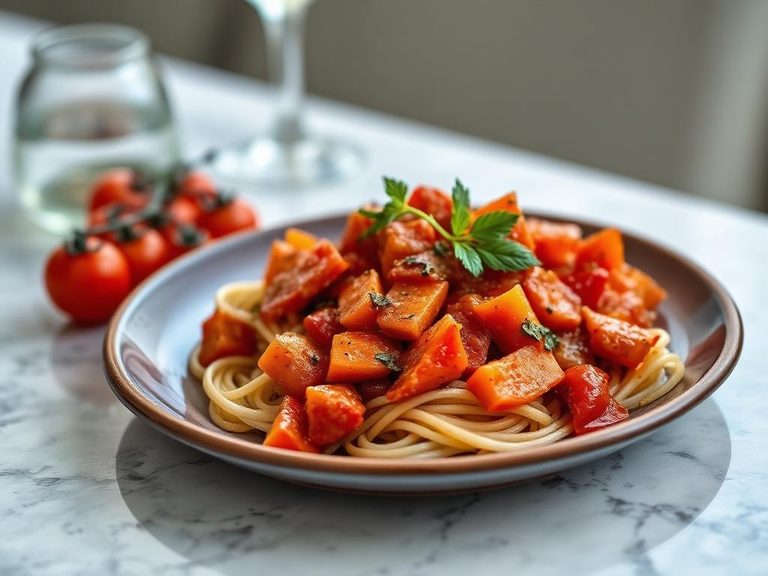
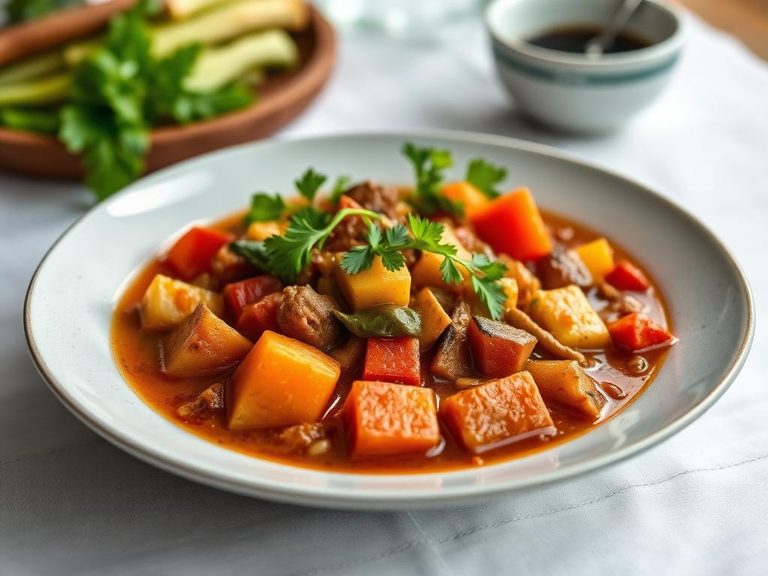
🍽️ Popular dishes
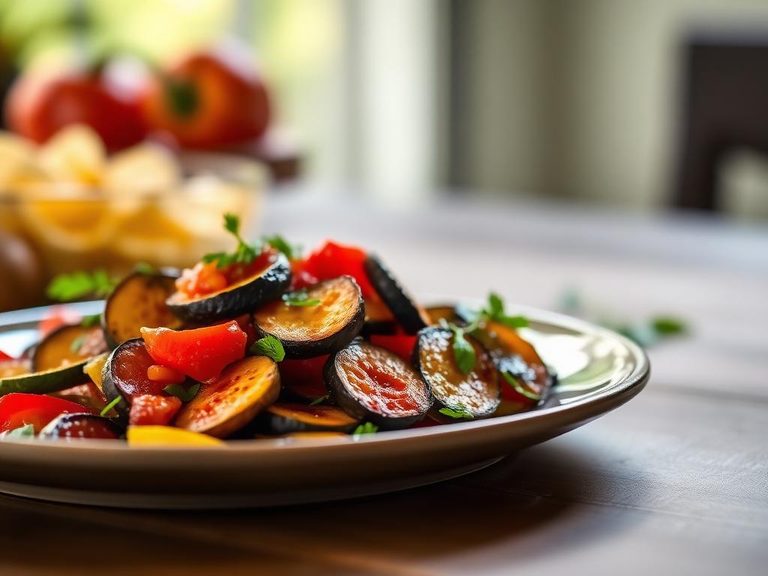
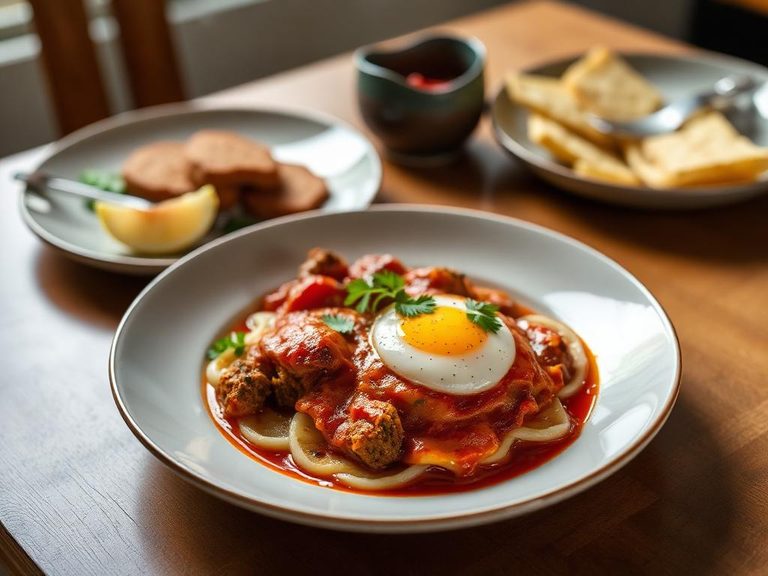
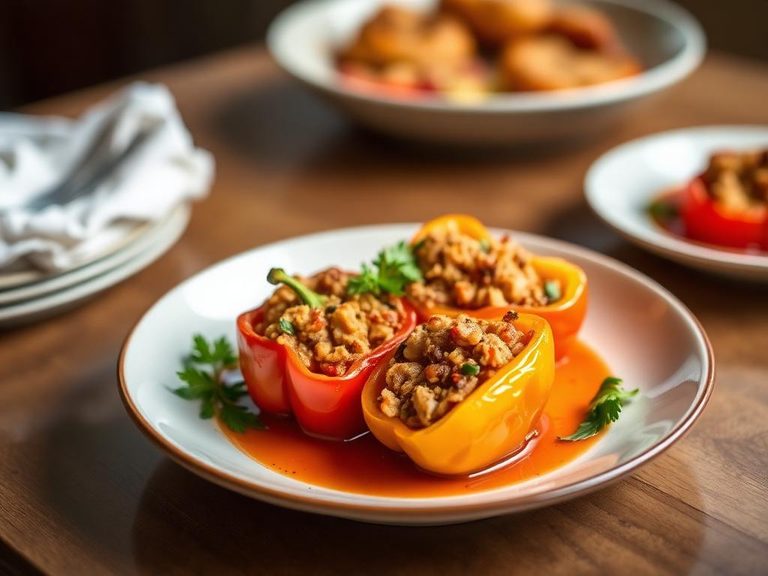
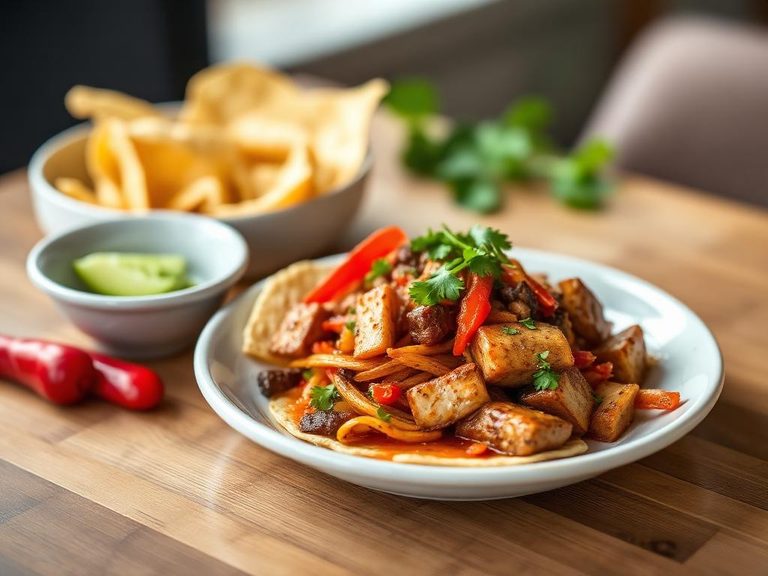
🌍 Where it's eaten
💡 Did you know?
The red bell pepper is actually a fully ripe green pepper, and its sweetness increases as it ripens and its chlorophyll breaks down, revealing the red pigments (carotenoids).
Full nutrition (USDA data · scales with serving)
| Water | 94.7 g |
| Energy | 16.0 kcal |
| Energy | 65.0 kj |
| Protein | 0.95 g |
| Total lipid (fat) | 0.18 g |
| Ash | 0.86 g |
| Carbohydrate, by difference | 3.3 g |
| Fiber, total dietary | 0.80 g |
| Total Sugars | 2.9 g |
| Calcium, Ca | 8.0 mg |
| Iron, Fe | 0.52 mg |
| Magnesium, Mg | 7.0 mg |
| Phosphorus, P | 13.0 mg |
| Potassium, K | 72.0 mg |
| Sodium, Na | 4.0 mg |
| Zinc, Zn | 0.05 mg |
| Copper, Cu | 0.04 mg |
| Manganese, Mn | 0.10 mg |
| Selenium, Se | 0.20 ug |
| Vitamin C, total ascorbic acid | 41.2 mg |
| Thiamin | 0.05 mg |
| Riboflavin | 0.03 mg |
| Niacin | 1.1 mg |
| Pantothenic acid | 0.02 mg |
| Vitamin B-6 | 0.11 mg |
| Folate, total | 10.0 ug |
| Folic acid | 0.00 ug |
| Folate, food | 10.0 ug |
| Folate, DFE | 10.0 ug |
| Choline, total | 3.8 mg |
| Vitamin B-12 | 0.00 ug |
| Vitamin A, RAE | 96.0 ug |
| Retinol | 0.00 ug |
| Carotene, beta | 994 ug |
| Carotene, alpha | 12.0 ug |
| Cryptoxanthin, beta | 300 ug |
| Vitamin A, IU | 1917 iu |
| Lycopene | 0.00 ug |
| Lutein + zeaxanthin | 31.0 ug |
| Vitamin E (alpha-tocopherol) | 1.1 mg |
| Vitamin D (D2 + D3), International Units | 0.00 iu |
| Vitamin D (D2 + D3) | 0.00 ug |
| Vitamin K (phylloquinone) | 3.4 ug |
| Alcohol, ethyl | 0.00 g |
| Caffeine | 0.00 mg |
| Theobromine | 0.00 mg |
Fat & fatty acid profile (per 100g)
| Fatty acids, total saturated | 0.03 g |
| SFA 4:0 | 0.00 g |
| SFA 6:0 | 0.00 g |
| SFA 8:0 | 0.00 g |
| SFA 10:0 | 0.00 g |
| SFA 12:0 | 0.00 g |
| SFA 14:0 | 0.00 g |
| SFA 16:0 | 0.02 g |
| SFA 18:0 | 0.01 g |
| Fatty acids, total monounsaturated | 0.01 g |
| MUFA 16:1 | 0.00 g |
| MUFA 18:1 | 0.01 g |
| MUFA 20:1 | 0.00 g |
| MUFA 22:1 | 0.00 g |
| Fatty acids, total polyunsaturated | 0.10 g |
| PUFA 18:2 | 0.09 g |
| PUFA 18:3 | 0.01 g |
| PUFA 18:4 | 0.00 g |
| PUFA 20:4 | 0.00 g |
| PUFA 20:5 n-3 (EPA) | 0.00 g |
| PUFA 22:5 n-3 (DPA) | 0.00 g |
| PUFA 22:6 n-3 (DHA) | 0.00 g |
| Fatty acids, total trans | 0.00 g |
| Cholesterol | 0.00 mg |
Amino acid profile (per 100g)
| Tryptophan | 0.01 g |
| Threonine | 0.04 g |
| Isoleucine | 0.02 g |
| Leucine | 0.03 g |
| Lysine | 0.03 g |
| Methionine | 0.01 g |
| Cystine | 0.02 g |
| Phenylalanine | 0.05 g |
| Tyrosine | 0.01 g |
| Valine | 0.03 g |
| Arginine | 0.03 g |
| Histidine | 0.02 g |
| Alanine | 0.03 g |
| Aspartic acid | 0.27 g |
| Glutamic acid | 0.20 g |
| Glycine | 0.03 g |
| Proline | 0.02 g |
| Serine | 0.05 g |
FAQ
Are frozen red peppers as nutritious as fresh?
Frozen red peppers retain most of their nutrients, especially if blanched before freezing. However, boiling can cause some loss of water-soluble vitamins like Vitamin C. They are still a healthy and convenient option.
How should I store frozen boiled red peppers?
Once thawed, they should be used within 1-2 days and stored in the refrigerator in an airtight container. Do not refreeze them after thawing.
Can I use these in salads?
Yes, but their texture will be softer than fresh peppers. They work well in cooked salads, grain bowls, or mixed into pasta salads where a tender texture is desired.
Nutrient density (calculated · NRF9.3)
Nutrient Rich Foods index: beneficial nutrients (protein, fiber, vitamins, minerals) minus saturated fat, added sugar & sodium, per 100 kcal.
NRF9.3 index — Fulgoni, Keast & Drewnowski, 2009. Computed from USDA nutrients.
Weight-loss friendliness (composite index)
Energy density 0.16 kcal/g · 24% calories from protein · 0.8 g fiber · 2.9 g sugar per 100 g.
Composite of energy density (Rolls et al., 1999), protein & fiber satiety, minus sugar. A calculated heuristic — ranks satiety-per-calorie, not a clinical measure.
Dietary load (calculated from USDA values)
Potential renal acid load. Positive = acid-forming, negative = alkaline-forming.
Sodium-to-potassium ratio: 0.06 (lower is better — aim for ≤ 1)
Sodium:potassium per WHO potassium guidance. Computed from USDA nutrients.