

Oil, sunflower, linoleic, (partially hydrogenated)
Whole food · Fats and Oils

Photo: Wikipedia
This is a highly refined, neutral-tasting cooking oil with a very high smoke point, created by partially hydrogenating sunflower oil to improve its stability and shelf life. It has a pale, clear appearance and a smooth, liquid texture at room temperature. Nutritionally, it is a dense source of energy, providing 884 kcal per 100g, composed almost entirely of fat.
Calorie split: 0% protein · 0% carbs · 100% fat
↓ Full nutrition💚 Why it's loved
Food manufacturers and home cooks value it for its clean, neutral taste that lets other flavors shine, and its stability makes it ideal for deep-frying and creating crisp textures in baked goods.
⚠️ Watch-outs & how to enjoy it better
Partial hydrogenation can create trans fats, which are linked to increased heart disease risk. To mitigate this, use it sparingly, choose products labeled '0g trans fat' (which may contain up to 0.5g per serving), and prioritize oils like canola or avocado oil for regular use.
Key benefits
- High smoke point suitable for frying and sautéing
- Neutral flavor that doesn't overpower other ingredients
- Long shelf life due to partial hydrogenation
- Cost-effective for large-scale food production
- Provides essential fatty acids and vitamin E
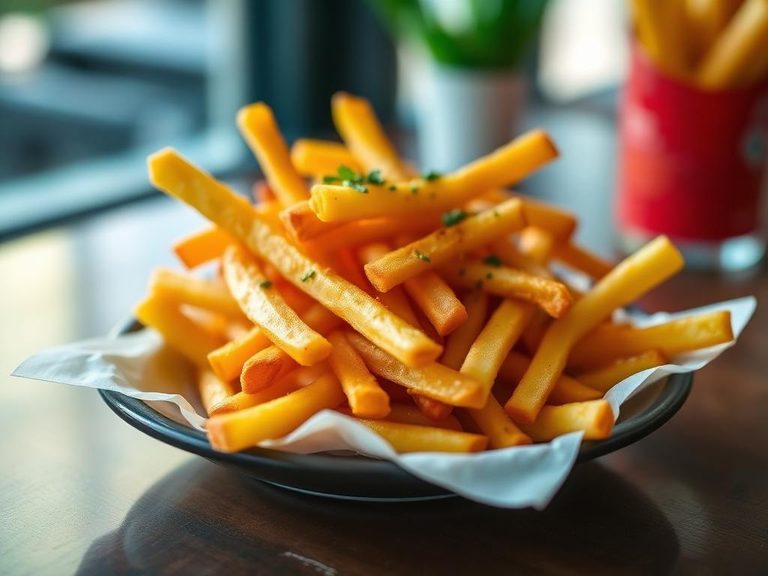
🍽️ Popular dishes

🌍 Where it's eaten
💡 Did you know?
The partial hydrogenation process, developed in the early 20th century, was once hailed as a 'miracle' for turning liquid vegetable oils into solid, shelf-stable fats, revolutionizing the processed food industry before health concerns about trans fats emerged.
Full nutrition (USDA data · scales with serving)
| Water | 0.00 g |
| Energy | 884 kcal |
| Energy | 3699 kj |
| Protein | 0.00 g |
| Total lipid (fat) | 100 g |
| Ash | 0.00 g |
| Carbohydrate, by difference | 0.00 g |
| Fiber, total dietary | 0.00 g |
| Total Sugars | 0.00 g |
| Calcium, Ca | 0.00 mg |
| Iron, Fe | 0.00 mg |
| Magnesium, Mg | 0.00 mg |
| Phosphorus, P | 0.00 mg |
| Potassium, K | 0.00 mg |
| Sodium, Na | 0.00 mg |
| Zinc, Zn | 0.00 mg |
| Copper, Cu | 0.00 mg |
| Manganese, Mn | 0.00 mg |
| Selenium, Se | 0.00 ug |
| Vitamin C, total ascorbic acid | 0.00 mg |
| Thiamin | 0.00 mg |
| Riboflavin | 0.00 mg |
| Niacin | 0.00 mg |
| Pantothenic acid | 0.00 mg |
| Vitamin B-6 | 0.00 mg |
| Folate, total | 0.00 ug |
| Folic acid | 0.00 ug |
| Folate, food | 0.00 ug |
| Folate, DFE | 0.00 ug |
| Vitamin B-12 | 0.00 ug |
| Vitamin B-12, added | 0.00 ug |
| Vitamin A, RAE | 0.00 ug |
| Retinol | 0.00 ug |
| Carotene, beta | 0.00 ug |
| Carotene, alpha | 0.00 ug |
| Cryptoxanthin, beta | 0.00 ug |
| Vitamin A, IU | 0.00 iu |
| Lycopene | 0.00 ug |
| Lutein + zeaxanthin | 0.00 ug |
| Vitamin E (alpha-tocopherol) | 41.1 mg |
| Vitamin E, added | 0.00 mg |
| Tocopherol, beta | 1.7 mg |
| Tocopherol, gamma | 9.1 mg |
| Tocopherol, delta | 2.0 mg |
| Tocotrienol, alpha | 0.00 mg |
| Tocotrienol, beta | 0.00 mg |
| Tocotrienol, gamma | 0.00 mg |
| Tocotrienol, delta | 0.00 mg |
| Vitamin K (phylloquinone) | 5.4 ug |
| Alcohol, ethyl | 0.00 g |
| Caffeine | 0.00 mg |
| Theobromine | 0.00 mg |
Fat & fatty acid profile (per 100g)
| Fatty acids, total saturated | 13.0 g |
| SFA 4:0 | 0.00 g |
| SFA 6:0 | 0.00 g |
| SFA 8:0 | 0.00 g |
| SFA 10:0 | 0.00 g |
| SFA 12:0 | 0.00 g |
| SFA 14:0 | 0.00 g |
| SFA 16:0 | 7.1 g |
| SFA 18:0 | 5.5 g |
| Fatty acids, total monounsaturated | 46.2 g |
| MUFA 16:1 | 0.00 g |
| MUFA 18:1 | 46.0 g |
| MUFA 20:1 | 0.00 g |
| MUFA 22:1 | 0.00 g |
| Fatty acids, total polyunsaturated | 36.4 g |
| PUFA 18:2 | 35.3 g |
| PUFA 18:3 | 0.90 g |
| PUFA 18:4 | 0.00 g |
| PUFA 20:4 | 0.00 g |
| PUFA 20:5 n-3 (EPA) | 0.00 g |
| PUFA 22:5 n-3 (DPA) | 0.00 g |
| PUFA 22:6 n-3 (DHA) | 0.00 g |
| Cholesterol | 0.00 mg |
| Phytosterols | 10.0 mg |
Amino acid profile (per 100g)
| Tryptophan | 0.00 g |
| Threonine | 0.00 g |
| Isoleucine | 0.00 g |
| Leucine | 0.00 g |
| Lysine | 0.00 g |
| Methionine | 0.00 g |
| Cystine | 0.00 g |
| Phenylalanine | 0.00 g |
| Tyrosine | 0.00 g |
| Valine | 0.00 g |
| Arginine | 0.00 g |
| Histidine | 0.00 g |
| Alanine | 0.00 g |
| Aspartic acid | 0.00 g |
| Glutamic acid | 0.00 g |
| Glycine | 0.00 g |
| Proline | 0.00 g |
| Serine | 0.00 g |
FAQ
What is the difference between this and regular sunflower oil?
Regular sunflower oil is unhydrogenated, liquid, and high in polyunsaturated fats. Partially hydrogenated sunflower oil is processed to be more saturated and solid at cooler temperatures, with a higher smoke point but potentially containing trans fats.
Is it safe for high-heat cooking?
Yes, its high smoke point (around 410°F / 210°C) makes it stable for frying. However, for health reasons, consider using oils with a similar smoke point but no trans fats, like refined avocado or safflower oil.
Why is it used in so many processed foods?
It's inexpensive, extends shelf life, provides a consistent texture, and has a neutral flavor, making it a versatile ingredient for mass-produced snacks, baked goods, and fried items.
Nutrient density (calculated · NRF9.3)
Nutrient Rich Foods index: beneficial nutrients (protein, fiber, vitamins, minerals) minus saturated fat, added sugar & sodium, per 100 kcal.
NRF9.3 index — Fulgoni, Keast & Drewnowski, 2009. Computed from USDA nutrients.
Weight-loss friendliness (composite index)
Energy density 8.84 kcal/g · 0% calories from protein · 0.0 g fiber · 0.0 g sugar per 100 g.
Composite of energy density (Rolls et al., 1999), protein & fiber satiety, minus sugar. A calculated heuristic — ranks satiety-per-calorie, not a clinical measure.
Dietary load (calculated from USDA values)
Potential renal acid load. Positive = acid-forming, negative = alkaline-forming.
Sodium:potassium per WHO potassium guidance. Computed from USDA nutrients.