

Gelatin desserts, dry mix, reduced calorie, with aspartame
Whole food · Sweets

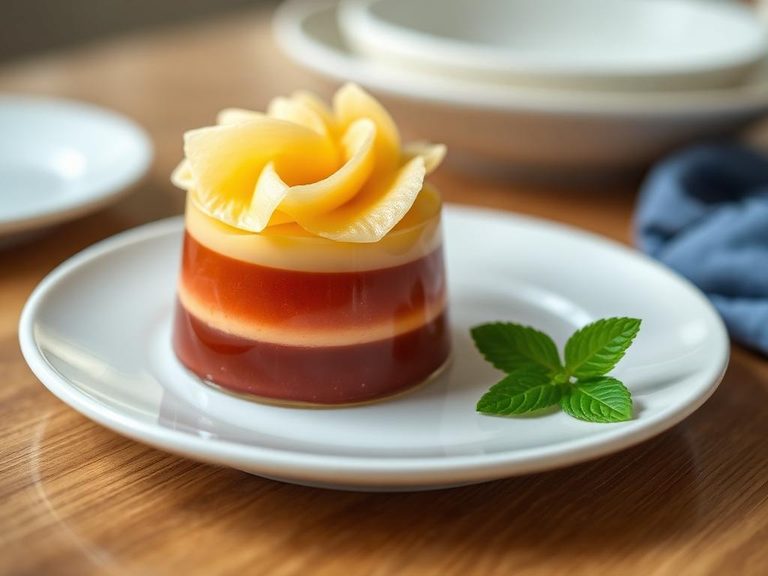
Photo: Wikipedia
A powdered, low-calorie base for wobbly, translucent desserts, this mix delivers a clean, sweet flavor (often with a distinct aspartame aftertaste) and a firm, bouncy texture when set. Nutritionally, it is a concentrated source of protein (15.67g per 100g) and carbohydrates (80.21g), but contains zero fat and negligible fiber. It's the classic, convenient foundation for creating colorful, jiggly treats without the sugar load.
Calorie split: 16% protein · 84% carbs · 0% fat
↓ Full nutrition💚 Why it's loved
People love it for its nostalgic, fun texture and the ability to create vibrant, flavored desserts with minimal effort. It's a staple for quick, no-bake treats and a playful way to incorporate protein into snacks.
⚠️ Watch-outs & how to enjoy it better
The artificial sweetener (aspartame) can leave a bitter or metallic aftertaste for some, and the high carb content (mostly from the mix's starches) can still impact blood sugar. To counteract, pair the dessert with a source of fat or fiber (like a dollop of whipped cream or berries) to slow sugar absorption, and practice portion control by sticking to the recommended serving size.
Key benefits
- High protein content from gelatin
- Very low fat and zero sugar
- Quick-setting and easy to prepare
- Versatile base for various flavors and add-ins
- Low calorie per serving
🍽️ Popular dishes
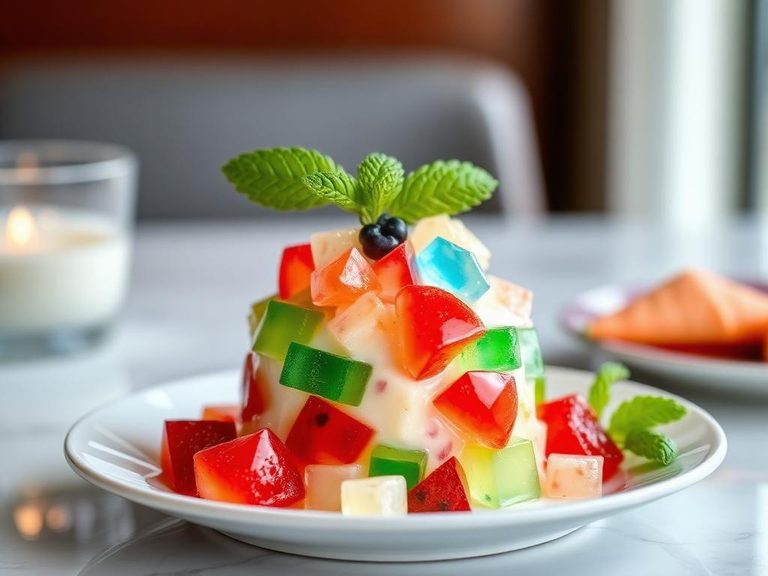
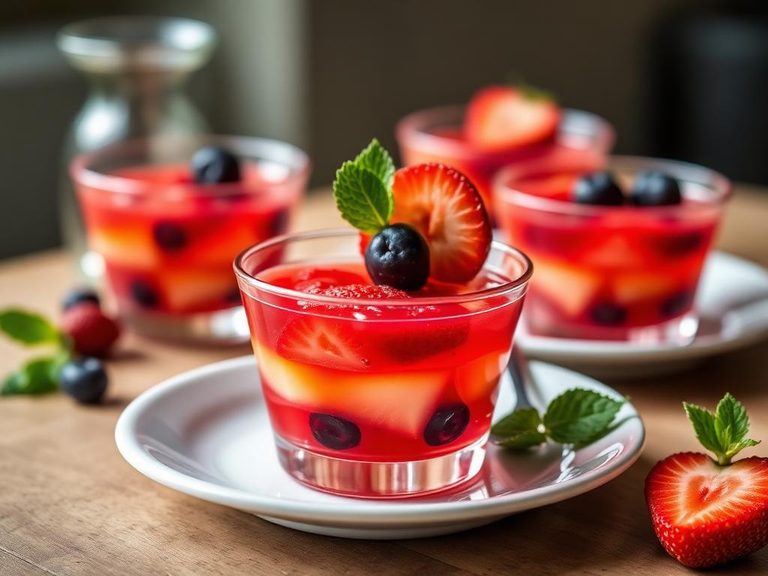
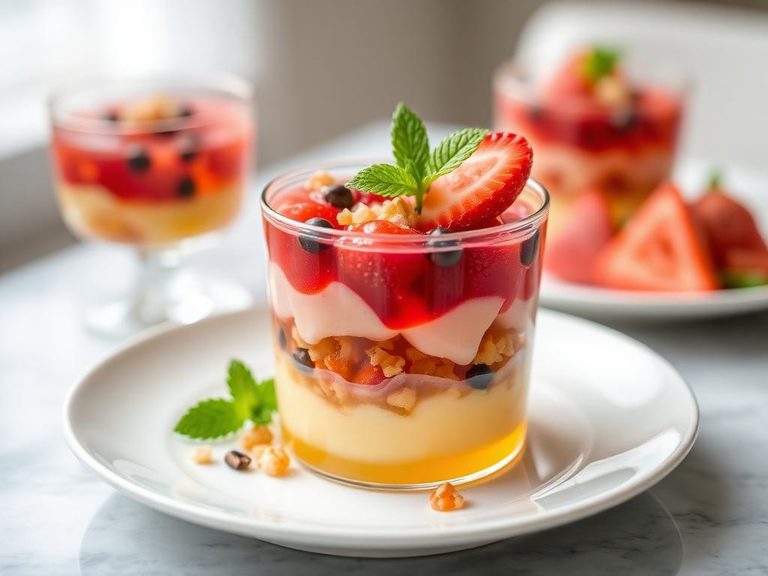
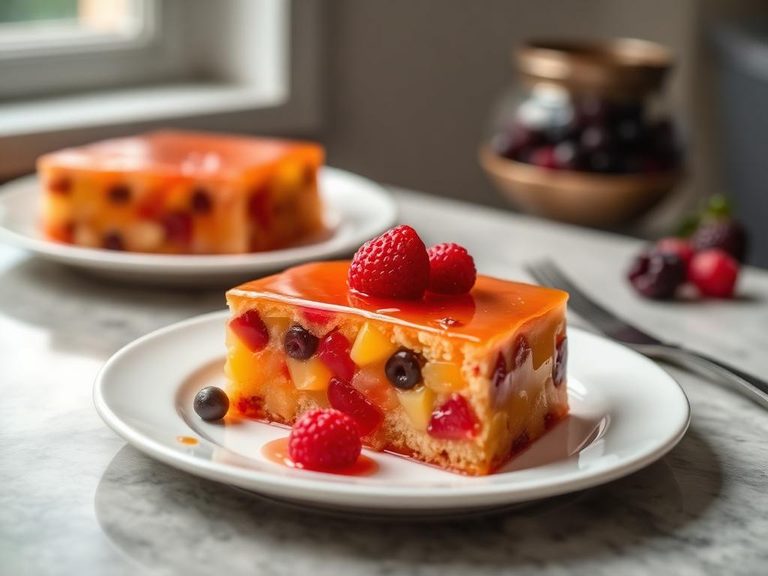
🌍 Where it's eaten
💡 Did you know?
The first commercial gelatin dessert was created in 1897 by Pearle Bixby Wait, who trademarked the name 'Jell-O' and sold it as a powdered mix.
Full nutrition (USDA data · scales with serving)
| Water | 1.9 g |
| Energy | 198 kcal |
| Energy | 829 kj |
| Protein | 15.7 g |
| Total lipid (fat) | 0.00 g |
| Ash | 2.2 g |
| Carbohydrate, by difference | 80.2 g |
| Fiber, total dietary | 0.10 g |
| Total Sugars | 0.00 g |
| Calcium, Ca | 8.0 mg |
| Iron, Fe | 0.06 mg |
| Magnesium, Mg | 2.0 mg |
| Phosphorus, P | 1293 mg |
| Potassium, K | 14.0 mg |
| Sodium, Na | 862 mg |
| Zinc, Zn | 0.00 mg |
| Copper, Cu | 0.00 mg |
| Manganese, Mn | 0.00 mg |
| Selenium, Se | 0.00 ug |
| Vitamin C, total ascorbic acid | 0.00 mg |
| Thiamin | 0.00 mg |
| Riboflavin | 0.00 mg |
| Niacin | 0.00 mg |
| Pantothenic acid | 0.00 mg |
| Vitamin B-6 | 0.00 mg |
| Folate, total | 0.00 ug |
| Folic acid | 0.00 ug |
| Folate, food | 0.00 ug |
| Folate, DFE | 0.00 ug |
| Choline, total | 0.00 mg |
| Vitamin B-12 | 0.00 ug |
| Vitamin B-12, added | 0.00 ug |
| Vitamin A, RAE | 0.00 ug |
| Retinol | 0.00 ug |
| Carotene, beta | 0.00 ug |
| Carotene, alpha | 0.00 ug |
| Cryptoxanthin, beta | 0.00 ug |
| Vitamin A, IU | 0.00 iu |
| Lycopene | 0.00 ug |
| Lutein + zeaxanthin | 0.00 ug |
| Vitamin E (alpha-tocopherol) | 0.00 mg |
| Vitamin E, added | 0.00 mg |
| Vitamin D (D2 + D3), International Units | 0.00 iu |
| Vitamin D (D2 + D3) | 0.00 ug |
| Vitamin K (phylloquinone) | 0.00 ug |
| Alcohol, ethyl | 0.00 g |
| Caffeine | 0.00 mg |
| Theobromine | 0.00 mg |
Fat & fatty acid profile (per 100g)
| Fatty acids, total saturated | 0.00 g |
| SFA 4:0 | 0.00 g |
| SFA 6:0 | 0.00 g |
| SFA 8:0 | 0.00 g |
| SFA 10:0 | 0.00 g |
| SFA 12:0 | 0.00 g |
| SFA 14:0 | 0.00 g |
| SFA 16:0 | 0.00 g |
| SFA 18:0 | 0.00 g |
| Fatty acids, total monounsaturated | 0.00 g |
| MUFA 16:1 | 0.00 g |
| MUFA 18:1 | 0.00 g |
| MUFA 20:1 | 0.00 g |
| MUFA 22:1 | 0.00 g |
| Fatty acids, total polyunsaturated | 0.00 g |
| PUFA 18:2 | 0.00 g |
| PUFA 18:3 | 0.00 g |
| PUFA 18:4 | 0.00 g |
| PUFA 20:4 | 0.00 g |
| PUFA 20:5 n-3 (EPA) | 0.00 g |
| PUFA 22:5 n-3 (DPA) | 0.00 g |
| PUFA 22:6 n-3 (DHA) | 0.00 g |
| Cholesterol | 0.00 mg |
Amino acid profile (per 100g)
Estimated from Gelatin desserts, dry mix — USDA does not publish this profile for Gelatin desserts.
| Tryptophan | 0.00 g |
| Threonine | 0.15 g |
| Isoleucine | 0.12 g |
| Leucine | 0.25 g |
| Lysine | 0.35 g |
| Methionine | 0.06 g |
| Cystine | 0.00 g |
| Phenylalanine | 0.18 g |
| Tyrosine | 0.03 g |
| Valine | 0.21 g |
| Arginine | 0.68 g |
| Histidine | 0.07 g |
| Alanine | 0.82 g |
| Aspartic acid | 0.54 g |
| Glutamic acid | 0.89 g |
| Glycine | 1.9 g |
| Proline | 1.3 g |
| Serine | 0.27 g |
FAQ
Is gelatin dessert a good source of protein?
Yes, the dry mix is quite high in protein (about 15.67g per 100g), as gelatin is derived from collagen. However, it's not a complete protein, lacking the essential amino acid tryptophan.
Can I use this mix for savory dishes?
While typically used for sweet desserts, unflavored gelatin can be used to clarify stocks or create savory aspics. However, this specific mix is pre-flavored and sweetened, making it unsuitable for savory applications.
How does aspartame affect the taste and who should avoid it?
Aspartame provides sweetness without sugar but can leave a bitter or metallic aftertaste, especially in hot liquids. People with phenylketonuria (PKU) must avoid it, as they cannot metabolize phenylalanine, an amino acid in aspartame.
Nutrient density (calculated · NRF9.3)
Nutrient Rich Foods index: beneficial nutrients (protein, fiber, vitamins, minerals) minus saturated fat, added sugar & sodium, per 100 kcal.
NRF9.3 index — Fulgoni, Keast & Drewnowski, 2009. Computed from USDA nutrients.
Weight-loss friendliness (composite index)
Energy density 1.98 kcal/g · 32% calories from protein · 0.1 g fiber · 0.0 g sugar per 100 g.
Composite of energy density (Rolls et al., 1999), protein & fiber satiety, minus sugar. A calculated heuristic — ranks satiety-per-calorie, not a clinical measure.
Dietary load (calculated from USDA values)
Potential renal acid load. Positive = acid-forming, negative = alkaline-forming.
Sodium-to-potassium ratio: 61.57 (lower is better — aim for ≤ 1)
Sodium:potassium per WHO potassium guidance. Computed from USDA nutrients.