Fruit Gelatin Cups
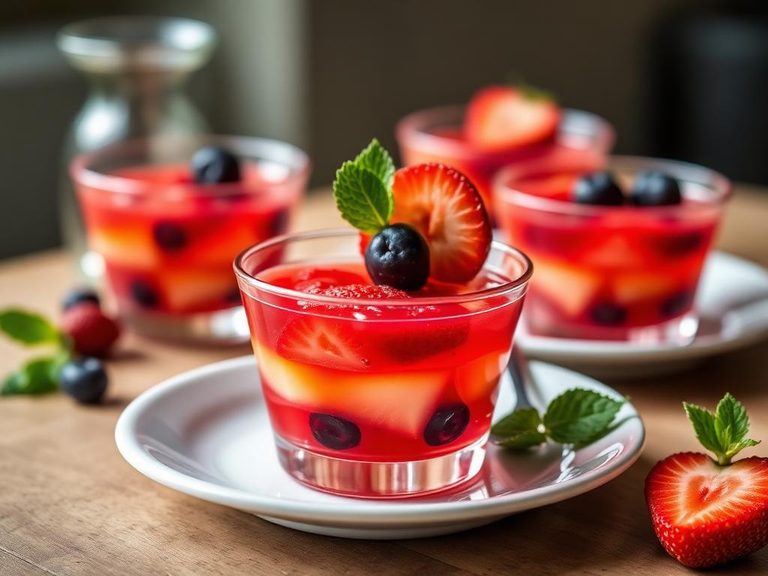
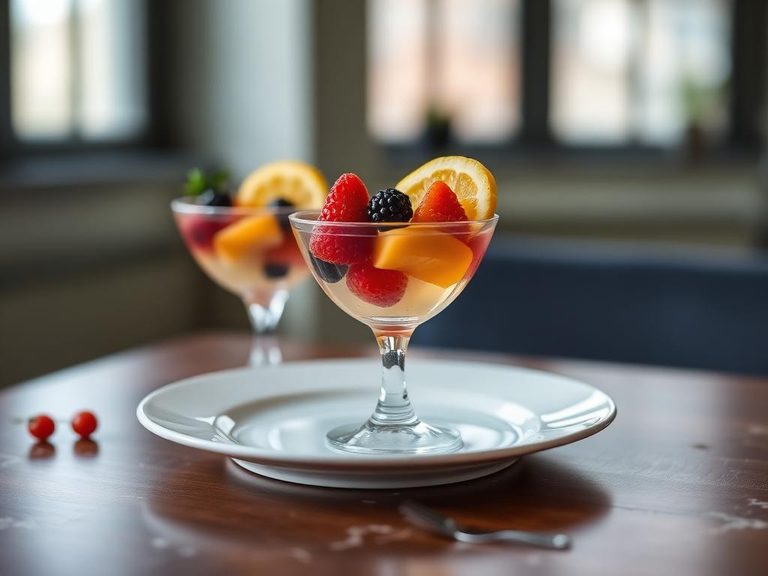
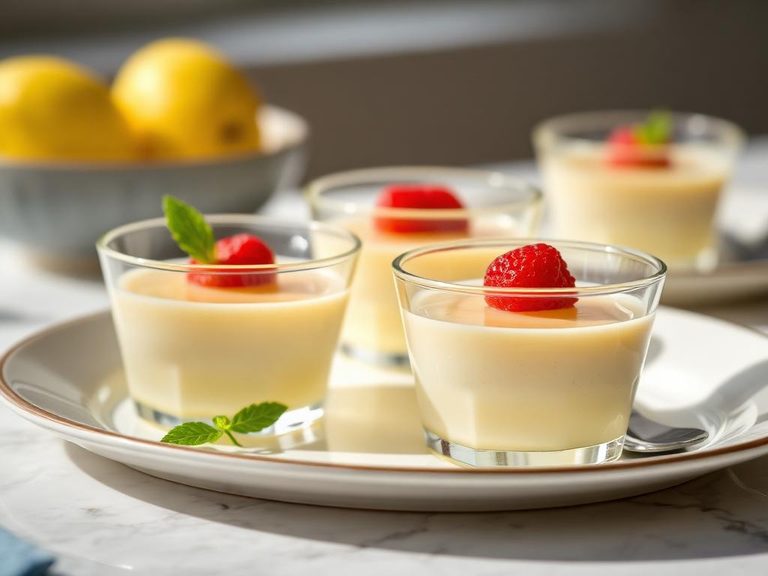
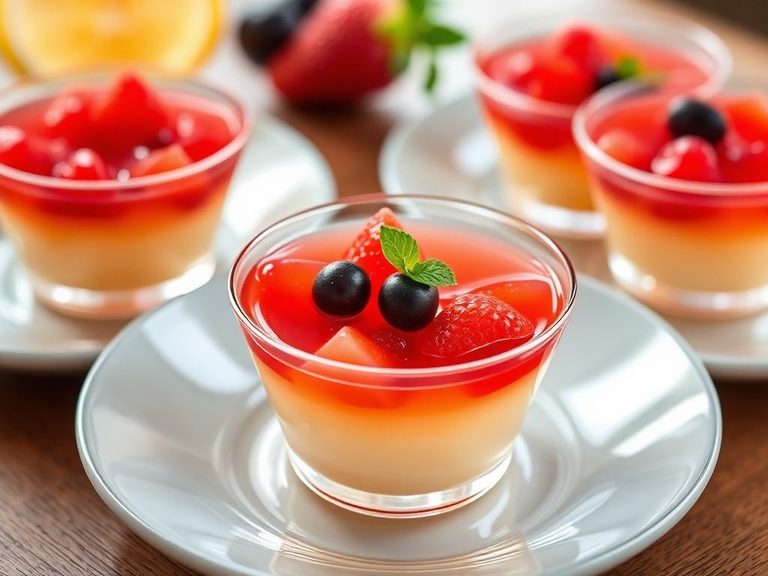
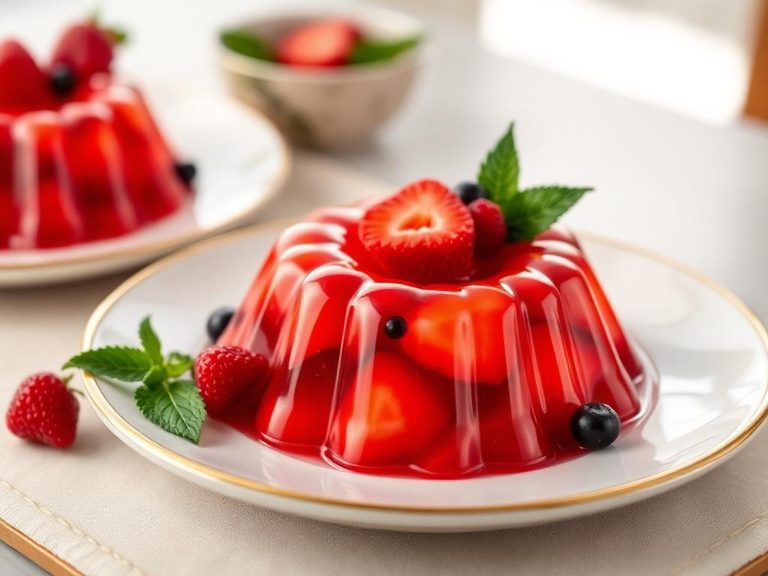
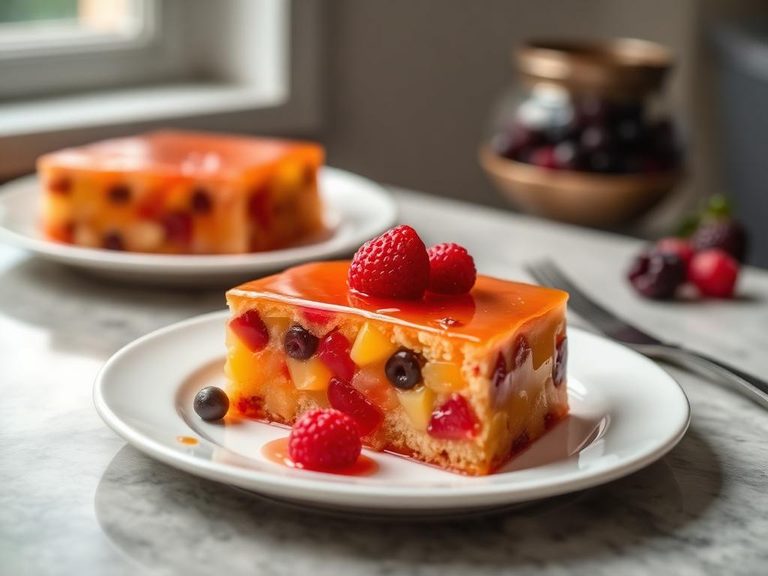
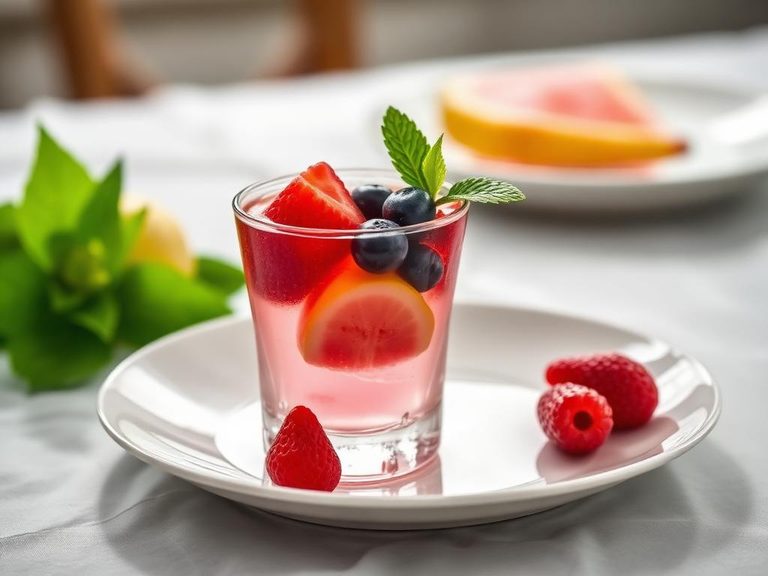
Fruit Gelatin Cups are a popular, refreshing dessert made by suspending colorful pieces of fresh or canned fruit in sweetened gelatin that has been set in individual cups or molds. The base typically consists of flavored gelatin powder, water, and often a dairy component like yogurt or whipped topping for creaminess, with fruits such as strawberries, peaches, or pineapple being common additions. This playful, no-bake treat is a staple at potlucks, parties, and children's gatherings, particularly in North American and European home cooking.
🍽️ Nutrition at a glance
This dish is primarily a source of simple carbohydrates from the sugar in the gelatin and any added fruit, with minimal fat and protein unless dairy ingredients are incorporated. It provides a quick energy boost and small amounts of vitamins from the fruit, with a typical serving containing roughly 100-150 calories.
Nutrition breakdown
| Calories | 140 kcal |
| Protein | 1 g |
| Carbs | 34 g |
| Fat | 0 g |
| Fiber | 0 g |
| Sugar | 32 g |
| Sodium | 60 mg |
| Vitamin C | 15 mg |
| Potassium | 80 mg |
| Calcium | 20 mg |
| Iron | 0.5 mg |
| Vitamin A | 100 IU |
| Magnesium | 10 mg |
| Phosphorus | 15 mg |
| Zinc | 0.2 mg |
Per 1 cup (240 g) · estimated, varies by recipe
💡 What's interesting
Culturally, Fruit Gelatin Cups are a nostalgic symbol of mid-20th century convenience cooking, representing the rise of packaged, easy-to-prepare foods. Nutritionally, the gelatin itself is a source of collagen-derived protein, though the overall dish is more of a fun, hydrating treat than a significant nutrient source.