Frankfurter, beef, unheated
Whole food · Sausages and Luncheon Meats
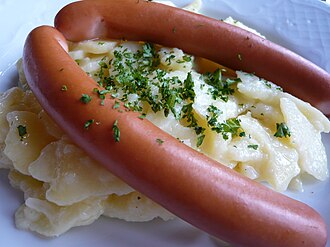
Photo: Wikipedia
A classic German sausage, the unheated beef frankfurter is a pre-cooked, finely emulsified link with a smooth, springy texture and a mild, smoky, savory flavor. Nutritionally, it's a dense source of protein and fat, delivering a substantial 314 calories per 100g with virtually no carbohydrates or fiber.
💚 Why it's loved
People love it for its iconic, comforting smoky flavor and satisfying snap, which forms the base of countless quick, casual meals from hot dogs to bean stews. Its cultural nostalgia and role in classic comfort food make it a beloved staple.
⚠️ Watch-outs & how to enjoy it better
As a processed meat, it is typically high in sodium and saturated fat, which those monitoring heart health or blood pressure should consider. To counteract, pair it with high-fiber vegetables (like sauerkraut or a fresh salad) and opt for smaller portions, using it as a flavor accent rather than the main protein.
Key benefits
- High-quality complete protein for muscle maintenance.
- Provides essential B vitamins, particularly B12.
- Source of minerals like zinc and selenium.
- Convenient, pre-cooked protein source for quick meals.
- Long shelf life when refrigerated or frozen.
🍽️ Popular dishes
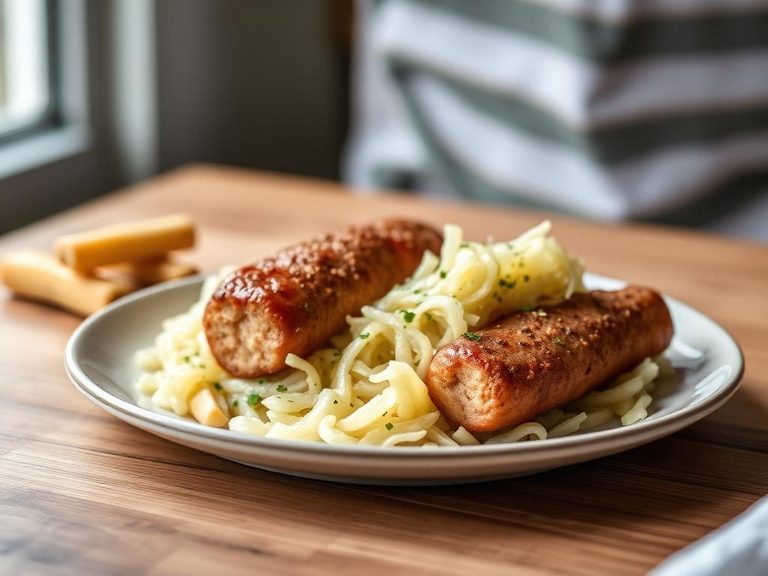

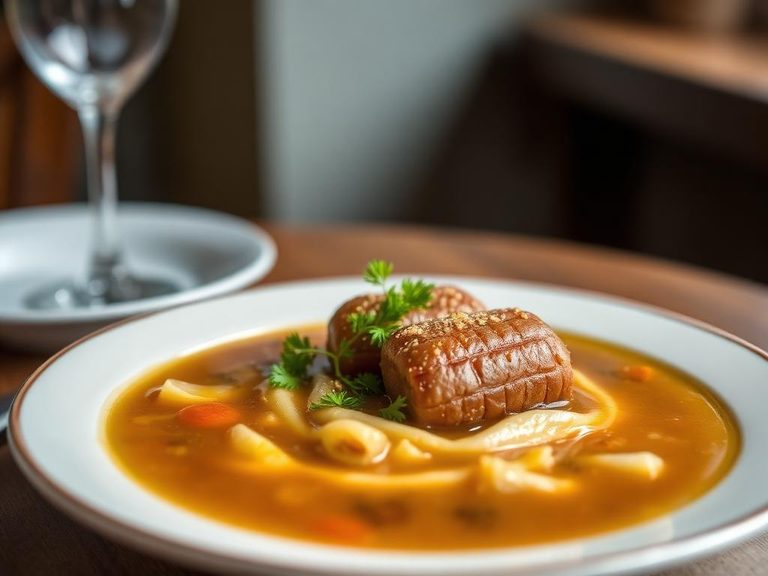
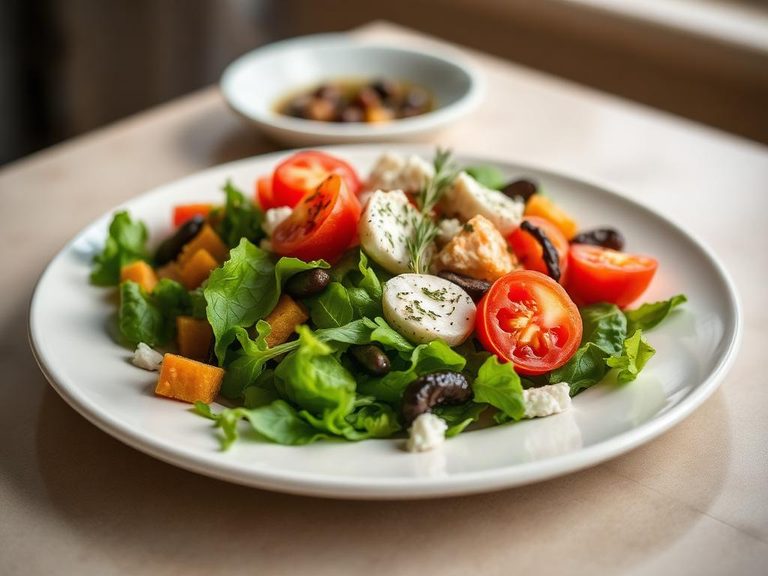
🌍 Where it's eaten
💡 Did you know?
The name 'frankfurter' comes from Frankfurt, Germany, where the sausage was allegedly first served at the coronation of Emperor Maximilian II in 1562.
Full nutrition (scales with serving)
| Water | 54.6 g |
| Energy (Atwater General Factors) | 310 kcal |
| Energy (Atwater Specific Factors) | 314 kcal |
| Energy | 314 kcal |
| Energy | 1310 kj |
| Nitrogen | 1.9 g |
| Protein | 11.7 g |
| Total lipid (fat) | 28.0 g |
| Total fat (NLEA) | 26.0 g |
| Ash | 2.7 g |
| Carbohydrate, by difference | 2.9 g |
| Sugars, Total | 1.3 g |
| Sucrose | 0.00 g |
| Glucose | 1.2 g |
| Fructose | 0.00 g |
| Lactose | 0.00 g |
| Maltose | 0.09 g |
| Galactose | 0.00 g |
| Calcium, Ca | 15.0 mg |
| Iron, Fe | 1.1 mg |
| Magnesium, Mg | 11.5 mg |
| Phosphorus, P | 128 mg |
| Potassium, K | 343 mg |
| Sodium, Na | 872 mg |
| Zinc, Zn | 2.1 mg |
| Copper, Cu | 0.05 mg |
| Manganese, Mn | 0.03 mg |
| Thiamin | 0.03 mg |
| Riboflavin | 0.15 mg |
| Niacin | 2.3 mg |
| Pantothenic acid | 0.26 mg |
| Vitamin B-6 | 0.13 mg |
| Folate, total | 0.00 ug |
| Vitamin B-12 | 0.97 ug |
| Vitamin A, RAE | 3.0 ug |
| Retinol | 3.0 ug |
| Vitamin E (alpha-tocopherol) | 0.51 mg |
| Tocopherol, beta | 0.00 mg |
| Tocopherol, gamma | 0.17 mg |
| Tocopherol, delta | 0.00 mg |
| Tocotrienol, alpha | 0.00 mg |
| Tocotrienol, beta | 0.00 mg |
| Tocotrienol, gamma | 0.00 mg |
| Tocotrienol, delta | 0.00 mg |
| Fatty acids, total saturated | 11.4 g |
| SFA 4:0 | 0.00 g |
| SFA 6:0 | 0.00 g |
| SFA 8:0 | 0.01 g |
| SFA 10:0 | 0.01 g |
| SFA 11:0 | 0.00 g |
| SFA 12:0 | 0.02 g |
| SFA 14:0 | 0.84 g |
| SFA 15:0 | 0.14 g |
| SFA 16:0 | 6.3 g |
| SFA 17:0 | 0.35 g |
| SFA 18:0 | 3.7 g |
| SFA 20:0 | 0.03 g |
| SFA 22:0 | 0.01 g |
| SFA 24:0 | 0.00 g |
| Fatty acids, total monounsaturated | 12.1 g |
| MUFA 14:1 c | 0.27 g |
| MUFA 15:1 | 0.00 g |
| MUFA 16:1 c | 0.98 g |
| MUFA 17:1 | 0.26 g |
| MUFA 17:1 c | 0.26 g |
| MUFA 18:1 c | 10.4 g |
| MUFA 20:1 c | 0.12 g |
| MUFA 22:1 c | 0.06 g |
| MUFA 22:1 n-9 | 0.06 g |
| MUFA 24:1 c | 0.01 g |
| Fatty acids, total polyunsaturated | 0.95 g |
| PUFA 18:2 c | 0.79 g |
| PUFA 18:2 n-6 c,c | 0.63 g |
| PUFA 18:2 CLAs | 0.17 g |
| PUFA 18:3 c | 0.08 g |
| PUFA 18:3 n-3 c,c,c (ALA) | 0.08 g |
| PUFA 18:3 n-6 c,c,c | 0.01 g |
| PUFA 18:4 | 0.00 g |
| PUFA 20:2 c | 0.01 g |
| PUFA 20:2 n-6 c,c | 0.01 g |
| PUFA 20:3 c | 0.02 g |
| PUFA 20:3 n-3 | 0.00 g |
| PUFA 20:3 n-6 | 0.02 g |
| PUFA 20:3 n-9 | 0.00 g |
| PUFA 20:4 | 0.03 g |
| PUFA 20:4c | 0.03 g |
| PUFA 20:5c | 0.00 g |
| PUFA 20:5 n-3 (EPA) | 0.00 g |
| PUFA 22:2 | 0.00 g |
| PUFA 22:5 c | 0.01 g |
| PUFA 22:4 | 0.01 g |
| PUFA 22:5 n-3 (DPA) | 0.01 g |
| PUFA 22:6 c | 0.00 g |
| PUFA 22:6 n-3 (DHA) | 0.00 g |
| Fatty acids, total trans | 1.6 g |
| Fatty acids, total trans-monoenoic | 1.5 g |
| TFA 16:1 t | 0.09 g |
| TFA 18:1 t | 1.4 g |
| TFA 22:1 t | 0.00 g |
| Fatty acids, total trans-dienoic | 0.13 g |
| TFA 18:2 t not further defined | 0.13 g |
| Fatty acids, total trans-polyenoic | 0.00 g |
| TFA 18:3 t | 0.00 g |
FAQ
What's the difference between a frankfurter and a wiener?
Traditionally, a frankfurter is made from pure beef, while a wiener (from Vienna) is a blend of pork and beef. In modern usage, especially in the U.S., the terms are often used interchangeably for similar emulsified sausages.
Is it safe to eat unheated?
Yes, frankfurters are pre-cooked during manufacturing and are safe to eat cold. However, heating (boiling, grilling, pan-frying) is common to enhance flavor, texture, and food safety by killing any potential surface bacteria from handling.
How can I reduce the sodium content?
While you can't change the sausage itself, you can balance the meal. Avoid adding extra salt to sides like sauerkraut or potatoes, and pair it with fresh, unsalted vegetables and fruits to increase potassium intake, which helps counteract sodium's effects.