

Fish, salmon, coho, wild, cooked, dry heat
Whole food · Finfish and Shellfish Products

Photo: Wikipedia
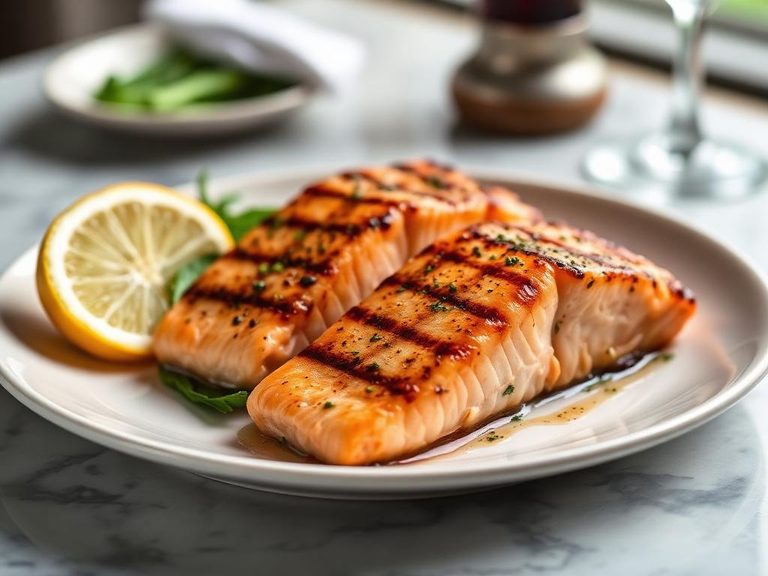
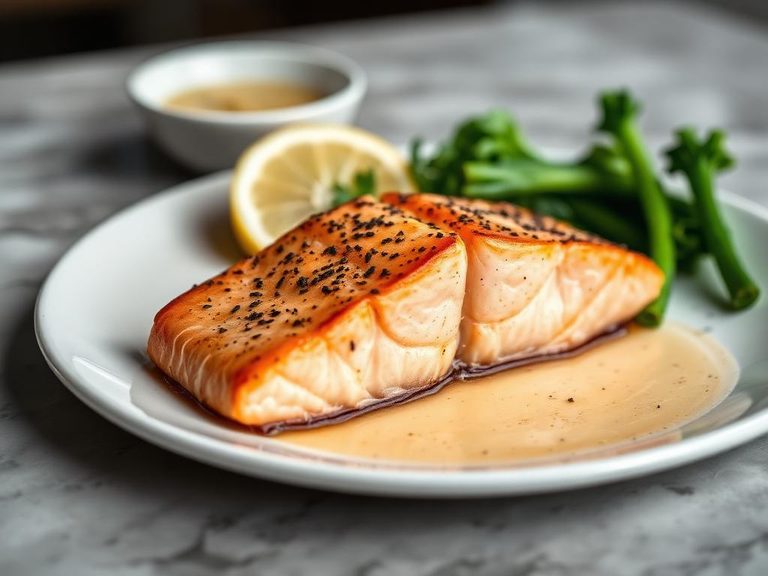
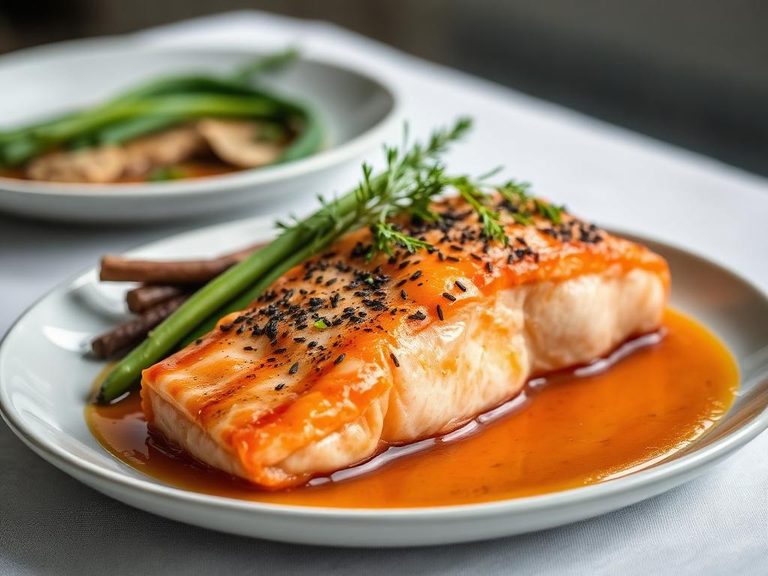
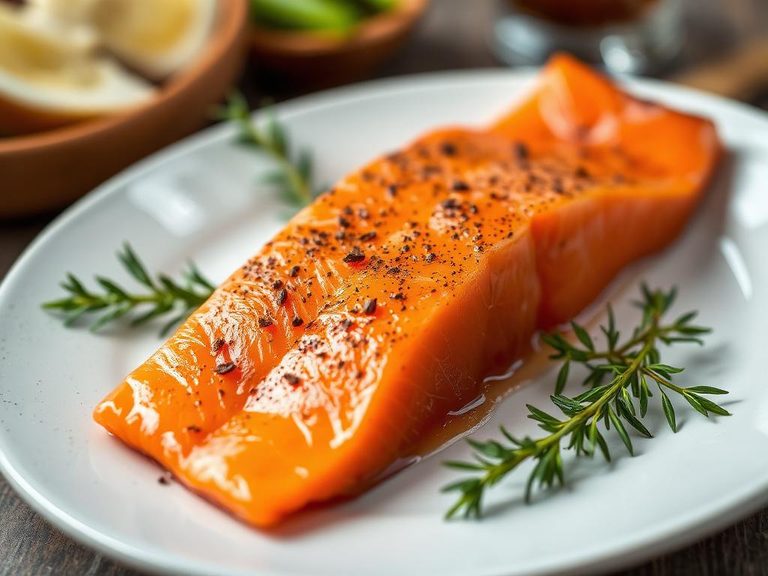
Wild-caught coho salmon, cooked with dry heat, offers a rich, meaty texture with a deep orange-red hue and a robust, clean flavor that's less fatty than farmed varieties. It's a nutritional powerhouse, delivering over 23 grams of high-quality protein per 100-gram serving with virtually no carbohydrates, making it an excellent choice for low-carb and high-protein diets.
Calorie split: 71% protein · 0% carbs · 29% fat
↓ Full nutrition💚 Why it's loved
People cherish wild coho for its firm, flaky texture and a flavor that's distinctly oceanic and slightly sweet, which holds up beautifully to grilling, broiling, or pan-searing. Its versatility in both simple preparations and complex dishes, coupled with its status as a sustainable wild catch, makes it a favorite among chefs and home cooks.
⚠️ Watch-outs & how to enjoy it better
As a common fish allergen, it must be avoided by those with specific allergies. Its lean, dry-heat cooking method can lead to overcooking, resulting in a dry texture. To counteract this, use a meat thermometer to pull it at 125°F (52°C) for medium-rare, or baste with olive oil or butter during cooking. For allergens, ensure complete separation from other foods during preparation.
Key benefits
- Excellent source of complete protein for muscle maintenance.
- Provides heart-healthy omega-3 fatty acids (EPA and DHA).
- Naturally zero-carb and sugar-free.
- Rich in B vitamins, especially niacin and B12.
- Contains selenium, an important antioxidant mineral.
🍽️ Popular dishes
🌍 Where it's eaten
💡 Did you know?
Coho salmon are known for their dramatic spawning transformation, where males develop a pronounced hooked jaw (kype) and a dark maroon back, a stark contrast to their silver ocean phase.
Full nutrition (USDA data · scales with serving)
| Water | 71.5 g |
| Energy | 139 kcal |
| Energy | 582 kj |
| Protein | 23.4 g |
| Total lipid (fat) | 4.3 g |
| Ash | 1.3 g |
| Carbohydrate, by difference | 0.00 g |
| Fiber, total dietary | 0.00 g |
| Total Sugars | 0.00 g |
| Calcium, Ca | 45.0 mg |
| Iron, Fe | 0.61 mg |
| Magnesium, Mg | 33.0 mg |
| Phosphorus, P | 322 mg |
| Potassium, K | 434 mg |
| Sodium, Na | 58.0 mg |
| Zinc, Zn | 0.56 mg |
| Copper, Cu | 0.07 mg |
| Manganese, Mn | 0.02 mg |
| Selenium, Se | 38.0 ug |
| Vitamin C, total ascorbic acid | 1.4 mg |
| Thiamin | 0.07 mg |
| Riboflavin | 0.14 mg |
| Niacin | 8.0 mg |
| Pantothenic acid | 0.81 mg |
| Vitamin B-6 | 0.57 mg |
| Folate, total | 13.0 ug |
| Folic acid | 0.00 ug |
| Folate, food | 13.0 ug |
| Folate, DFE | 13.0 ug |
| Choline, total | 72.0 mg |
| Vitamin B-12 | 5.0 ug |
| Vitamin B-12, added | 0.00 ug |
| Vitamin A, RAE | 51.0 ug |
| Retinol | 51.0 ug |
| Carotene, beta | 0.00 ug |
| Carotene, alpha | 0.00 ug |
| Cryptoxanthin, beta | 0.00 ug |
| Vitamin A, IU | 169 iu |
| Lycopene | 0.00 ug |
| Lutein + zeaxanthin | 0.00 ug |
| Vitamin E (alpha-tocopherol) | 0.92 mg |
| Vitamin E, added | 0.00 mg |
| Vitamin D (D2 + D3), International Units | 451 iu |
| Vitamin D (D2 + D3) | 11.3 ug |
| Vitamin D3 (cholecalciferol) | 11.3 ug |
| Vitamin K (phylloquinone) | 0.10 ug |
| Alcohol, ethyl | 0.00 g |
| Caffeine | 0.00 mg |
| Theobromine | 0.00 mg |
Fat & fatty acid profile (per 100g)
| Fatty acids, total saturated | 1.1 g |
| SFA 4:0 | 0.00 g |
| SFA 6:0 | 0.00 g |
| SFA 8:0 | 0.00 g |
| SFA 10:0 | 0.00 g |
| SFA 12:0 | 0.00 g |
| SFA 14:0 | 0.15 g |
| SFA 16:0 | 0.68 g |
| SFA 18:0 | 0.16 g |
| Fatty acids, total monounsaturated | 1.6 g |
| MUFA 16:1 | 0.27 g |
| MUFA 18:1 | 0.86 g |
| MUFA 20:1 | 0.28 g |
| MUFA 22:1 | 0.15 g |
| Fatty acids, total polyunsaturated | 1.3 g |
| PUFA 18:2 | 0.06 g |
| PUFA 18:3 | 0.06 g |
| PUFA 18:4 | 0.05 g |
| PUFA 20:4 | 0.02 g |
| PUFA 20:5 n-3 (EPA) | 0.40 g |
| PUFA 22:5 n-3 (DPA) | 0.00 g |
| PUFA 22:6 n-3 (DHA) | 0.66 g |
| Cholesterol | 55.0 mg |
Amino acid profile (per 100g)
| Tryptophan | 0.26 g |
| Threonine | 1.0 g |
| Isoleucine | 1.1 g |
| Leucine | 1.9 g |
| Lysine | 2.2 g |
| Methionine | 0.69 g |
| Cystine | 0.25 g |
| Phenylalanine | 0.92 g |
| Tyrosine | 0.79 g |
| Valine | 1.2 g |
| Arginine | 1.4 g |
| Histidine | 0.69 g |
| Alanine | 1.4 g |
| Aspartic acid | 2.4 g |
| Glutamic acid | 3.5 g |
| Glycine | 1.1 g |
| Proline | 0.83 g |
| Serine | 0.96 g |
FAQ
How does wild coho differ nutritionally from farmed Atlantic salmon?
Wild coho is significantly leaner, with about half the total fat and calories of farmed Atlantic salmon. It still provides beneficial omega-3s, but in a lower-fat package. Farmed salmon has a higher fat content, which increases calories and omega-3s per serving but also total fat.
What's the best way to cook it to avoid dryness?
Due to its low fat content, quick, high-heat methods like grilling or broiling work best. Marinate briefly, oil the fish well, and cook to an internal temperature of 125-130°F (52-54°C). Let it rest for a few minutes after cooking, as residual heat will finish the process.
Is the 0g of fat listed accurate?
The 4.3g of fat per 100g is accurate for cooked coho. The '0g' in the provided data likely refers to a rounded or simplified label. Wild salmon is not fat-free; its fat is primarily the healthy unsaturated kind, including omega-3s.
Nutrient density (calculated · NRF9.3)
Nutrient Rich Foods index: beneficial nutrients (protein, fiber, vitamins, minerals) minus saturated fat, added sugar & sodium, per 100 kcal.
NRF9.3 index — Fulgoni, Keast & Drewnowski, 2009. Computed from USDA nutrients.
Weight-loss friendliness (composite index)
Energy density 1.39 kcal/g · 67% calories from protein · 0.0 g fiber · 0.0 g sugar per 100 g.
Composite of energy density (Rolls et al., 1999), protein & fiber satiety, minus sugar. A calculated heuristic — ranks satiety-per-calorie, not a clinical measure.
Dietary load (calculated from USDA values)
Potential renal acid load. Positive = acid-forming, negative = alkaline-forming.
Sodium-to-potassium ratio: 0.13 (lower is better — aim for ≤ 1)
Sodium:potassium per WHO potassium guidance. Computed from USDA nutrients.