

Fish, mackerel, Atlantic, raw
Whole food · Finfish and Shellfish Products

Photo: Wikipedia
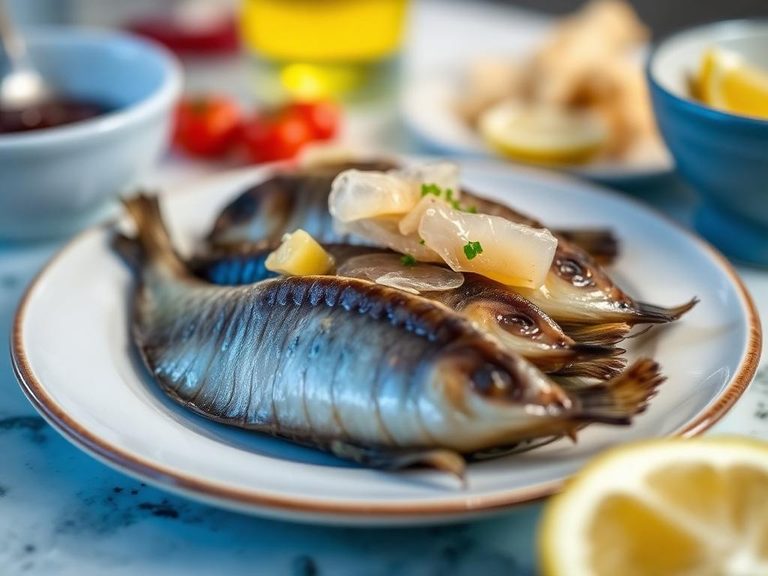
Atlantic mackerel is a sleek, oily fish with a rich, pronounced flavor and a firm, meaty texture. Its deep blue-green back and silver belly are hallmarks of this fast-swimming pelagic species. Nutritionally, it's a powerhouse of protein and heart-healthy omega-3 fatty acids, with virtually no carbohydrates.
Calorie split: 37% protein · 0% carbs · 63% fat
↓ Full nutrition💚 Why it's loved
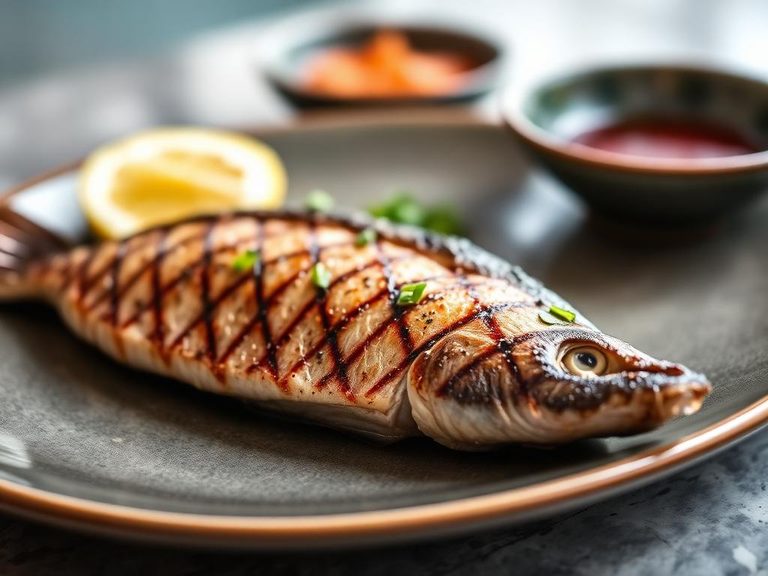
People love mackerel for its bold, savory flavor that stands up to grilling, smoking, and strong marinades. It's a staple in many coastal cuisines, celebrated for its affordability and nutritional density.
⚠️ Watch-outs & how to enjoy it better
Its strong, oily flavor can be off-putting to those who prefer milder fish, and it is a common allergen. As a larger predatory fish, it can contain higher levels of histamine if not stored perfectly, so freshness is critical. To counteract, always buy from a trusted source, keep it very cold, and cook it thoroughly.
Key benefits
- Excellent source of long-chain omega-3 fatty acids (EPA & DHA)
- High in complete protein for muscle maintenance
- Rich in vitamin B12 for nerve function and energy
- Provides selenium, an important antioxidant mineral
- Contains vitamin D, especially in wild-caught specimens
🍽️ Popular dishes
🌍 Where it's eaten
💡 Did you know?
Atlantic mackerel are so sensitive to water temperature that their populations have shifted hundreds of miles northward in the Atlantic Ocean due to warming waters over the past few decades.
Full nutrition (USDA data · scales with serving)
| Water | 63.5 g |
| Energy | 205 kcal |
| Energy | 858 kj |
| Protein | 18.6 g |
| Total lipid (fat) | 13.9 g |
| Ash | 1.4 g |
| Carbohydrate, by difference | 0.00 g |
| Fiber, total dietary | 0.00 g |
| Total Sugars | 0.00 g |
| Calcium, Ca | 12.0 mg |
| Iron, Fe | 1.6 mg |
| Magnesium, Mg | 76.0 mg |
| Phosphorus, P | 217 mg |
| Potassium, K | 314 mg |
| Sodium, Na | 90.0 mg |
| Zinc, Zn | 0.63 mg |
| Copper, Cu | 0.07 mg |
| Manganese, Mn | 0.01 mg |
| Selenium, Se | 44.1 ug |
| Vitamin C, total ascorbic acid | 0.40 mg |
| Thiamin | 0.18 mg |
| Riboflavin | 0.31 mg |
| Niacin | 9.1 mg |
| Pantothenic acid | 0.86 mg |
| Vitamin B-6 | 0.40 mg |
| Folate, total | 1.0 ug |
| Folic acid | 0.00 ug |
| Folate, food | 1.0 ug |
| Folate, DFE | 1.0 ug |
| Choline, total | 65.0 mg |
| Vitamin B-12 | 8.7 ug |
| Vitamin B-12, added | 0.00 ug |
| Vitamin A, RAE | 50.0 ug |
| Retinol | 50.0 ug |
| Carotene, beta | 0.00 ug |
| Carotene, alpha | 0.00 ug |
| Cryptoxanthin, beta | 0.00 ug |
| Vitamin A, IU | 167 iu |
| Lycopene | 0.00 ug |
| Lutein + zeaxanthin | 0.00 ug |
| Vitamin E (alpha-tocopherol) | 1.5 mg |
| Vitamin E, added | 0.00 mg |
| Vitamin D (D2 + D3), International Units | 643 iu |
| Vitamin D (D2 + D3) | 16.1 ug |
| Vitamin D3 (cholecalciferol) | 16.1 ug |
| Vitamin K (phylloquinone) | 5.0 ug |
| Alcohol, ethyl | 0.00 g |
| Caffeine | 0.00 mg |
| Theobromine | 0.00 mg |
Fat & fatty acid profile (per 100g)
| Fatty acids, total saturated | 3.3 g |
| SFA 4:0 | 0.00 g |
| SFA 6:0 | 0.00 g |
| SFA 8:0 | 0.00 g |
| SFA 10:0 | 0.00 g |
| SFA 12:0 | 0.02 g |
| SFA 14:0 | 0.67 g |
| SFA 16:0 | 2.1 g |
| SFA 18:0 | 0.42 g |
| Fatty acids, total monounsaturated | 5.5 g |
| MUFA 16:1 | 0.73 g |
| MUFA 18:1 | 2.3 g |
| MUFA 20:1 | 1.0 g |
| MUFA 22:1 | 1.4 g |
| Fatty acids, total polyunsaturated | 3.4 g |
| PUFA 18:2 | 0.22 g |
| PUFA 18:3 | 0.16 g |
| PUFA 18:4 | 0.28 g |
| PUFA 20:4 | 0.18 g |
| PUFA 20:5 n-3 (EPA) | 0.90 g |
| PUFA 22:5 n-3 (DPA) | 0.21 g |
| PUFA 22:6 n-3 (DHA) | 1.4 g |
| Cholesterol | 70.0 mg |
Amino acid profile (per 100g)
| Tryptophan | 0.21 g |
| Threonine | 0.81 g |
| Isoleucine | 0.86 g |
| Leucine | 1.5 g |
| Lysine | 1.7 g |
| Methionine | 0.55 g |
| Cystine | 0.20 g |
| Phenylalanine | 0.73 g |
| Tyrosine | 0.63 g |
| Valine | 0.96 g |
| Arginine | 1.1 g |
| Histidine | 0.55 g |
| Alanine | 1.1 g |
| Aspartic acid | 1.9 g |
| Glutamic acid | 2.8 g |
| Glycine | 0.89 g |
| Proline | 0.66 g |
| Serine | 0.76 g |
FAQ
Is mackerel high in mercury?
Atlantic mackerel is generally considered a low-mercury fish, making it a safer choice for regular consumption compared to larger predators like swordfish or king mackerel (a different species).
How do I reduce the strong 'fishy' taste?
Soaking fillets in milk for 20-30 minutes before cooking can help mellow the flavor. Using acidic marinades (lemon, vinegar) or bold spices also complements and balances its richness.
What's the difference between Atlantic and Spanish mackerel?
They are different species. Atlantic mackerel is smaller, with a more pronounced flavor and higher fat content. Spanish mackerel is larger, milder, and has a different fat distribution.
Nutrient density (calculated · NRF9.3)
Nutrient Rich Foods index: beneficial nutrients (protein, fiber, vitamins, minerals) minus saturated fat, added sugar & sodium, per 100 kcal.
NRF9.3 index — Fulgoni, Keast & Drewnowski, 2009. Computed from USDA nutrients.
Weight-loss friendliness (composite index)
Energy density 2.05 kcal/g · 36% calories from protein · 0.0 g fiber · 0.0 g sugar per 100 g.
Composite of energy density (Rolls et al., 1999), protein & fiber satiety, minus sugar. A calculated heuristic — ranks satiety-per-calorie, not a clinical measure.
Dietary load (calculated from USDA values)
Potential renal acid load. Positive = acid-forming, negative = alkaline-forming.
Sodium-to-potassium ratio: 0.29 (lower is better — aim for ≤ 1)
Sodium:potassium per WHO potassium guidance. Computed from USDA nutrients.