

Fish, herring, Atlantic, raw
Whole food · Finfish and Shellfish Products
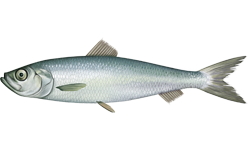
Photo: Wikipedia
Atlantic herring is a sleek, oily fish with a rich, pronounced flavor and a firm, meaty texture. Its high fat content makes it succulent and satisfying, while its deep blue-silver skin hints at its robust nutritional profile. It's a powerhouse of omega-3 fatty acids and high-quality protein.
Calorie split: 47% protein · 0% carbs · 53% fat
↓ Full nutrition💚 Why it's loved
People cherish herring for its bold, savory umami flavor that stands up well to strong preparations like pickling or smoking. It's a cultural staple in Northern European and Scandinavian cuisines, often enjoyed as a communal food during festivals and holidays.
⚠️ Watch-outs & how to enjoy it better
Its strong, oily flavor can be overpowering for those used to milder fish. As a large, long-lived predatory fish, it can accumulate environmental contaminants like mercury, so pregnant women and young children should consult dietary guidelines. To minimize this, source herring from well-managed fisheries and vary your seafood choices.
Key benefits
- Excellent source of heart-healthy omega-3 fatty acids (EPA & DHA)
- Very high in vitamin D, crucial for bone health and immunity
- Provides a complete, high-quality protein for muscle maintenance
- Rich in vitamin B12, essential for nerve function and red blood cell formation
- Contains selenium, a key antioxidant mineral
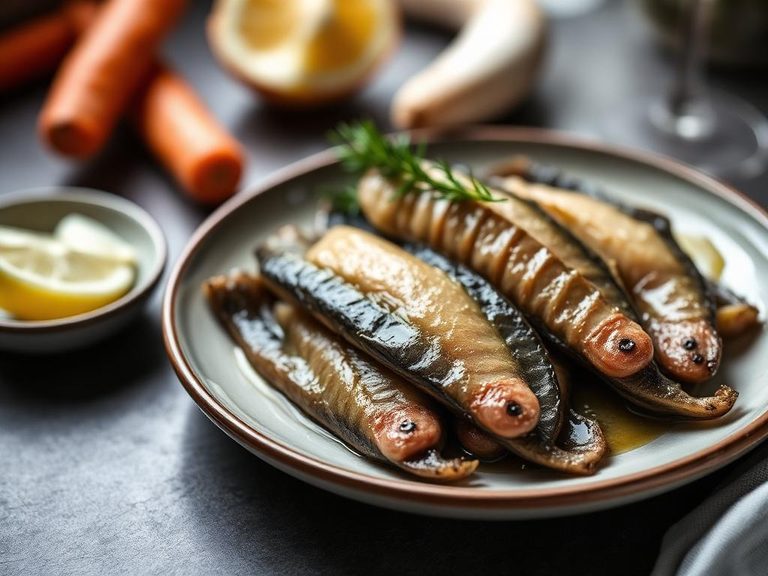
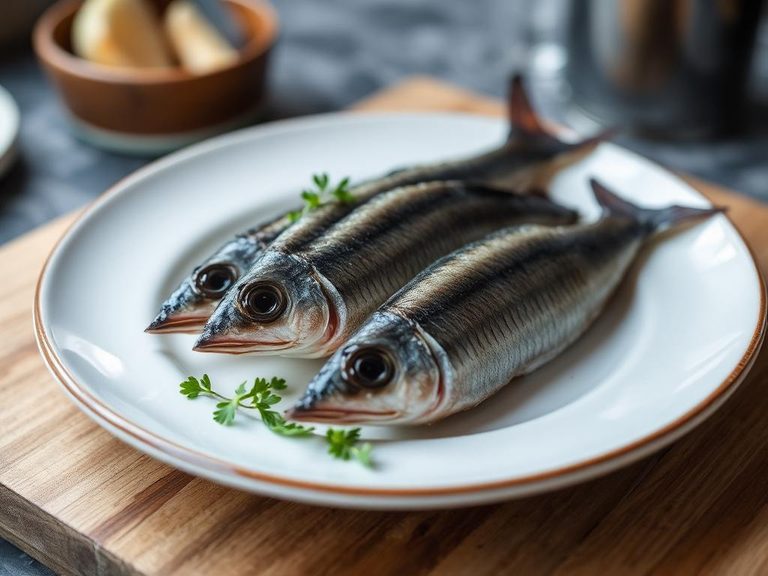
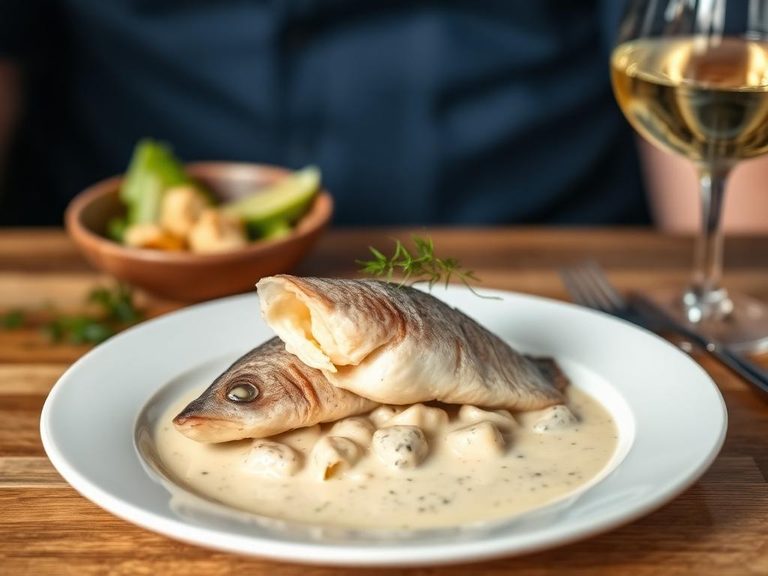
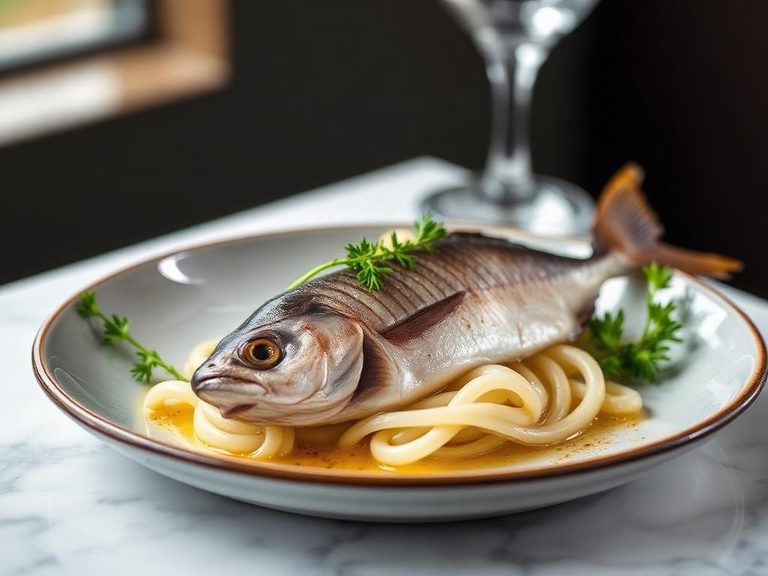
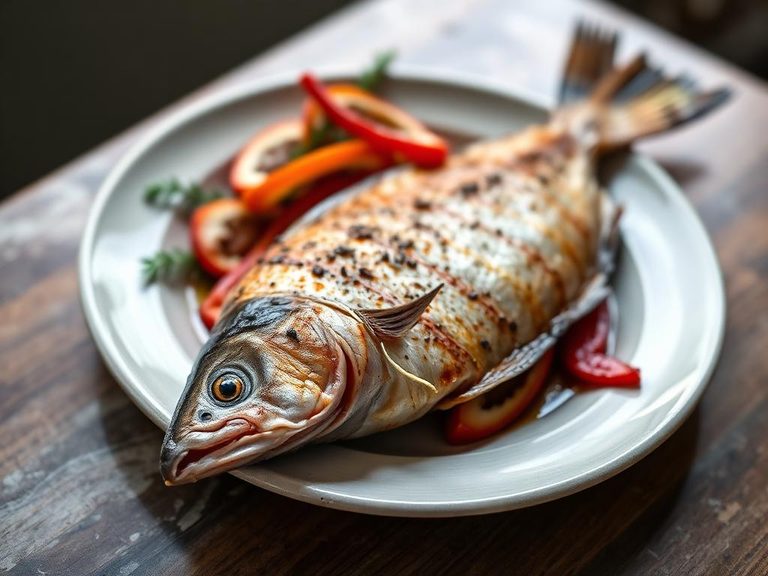
🍽️ Popular dishes
🌍 Where it's eaten
💡 Did you know?
Atlantic herring are a keystone species in the ocean; their massive schools can be so dense they temporarily change the color of the sea and are a primary food source for whales, seals, and seabirds.
Full nutrition (USDA data · scales with serving)
| Water | 72.0 g |
| Energy | 158 kcal |
| Energy | 661 kj |
| Protein | 18.0 g |
| Total lipid (fat) | 9.0 g |
| Ash | 1.5 g |
| Carbohydrate, by difference | 0.00 g |
| Fiber, total dietary | 0.00 g |
| Total Sugars | 0.00 g |
| Calcium, Ca | 57.0 mg |
| Iron, Fe | 1.1 mg |
| Magnesium, Mg | 32.0 mg |
| Phosphorus, P | 236 mg |
| Potassium, K | 327 mg |
| Sodium, Na | 90.0 mg |
| Zinc, Zn | 0.99 mg |
| Copper, Cu | 0.09 mg |
| Manganese, Mn | 0.04 mg |
| Selenium, Se | 36.5 ug |
| Vitamin C, total ascorbic acid | 0.70 mg |
| Thiamin | 0.09 mg |
| Riboflavin | 0.23 mg |
| Niacin | 3.2 mg |
| Pantothenic acid | 0.65 mg |
| Vitamin B-6 | 0.30 mg |
| Folate, total | 10.0 ug |
| Folic acid | 0.00 ug |
| Folate, food | 10.0 ug |
| Folate, DFE | 10.0 ug |
| Choline, total | 65.0 mg |
| Vitamin B-12 | 13.7 ug |
| Vitamin B-12, added | 0.00 ug |
| Vitamin A, RAE | 28.0 ug |
| Retinol | 28.0 ug |
| Carotene, beta | 0.00 ug |
| Carotene, alpha | 0.00 ug |
| Cryptoxanthin, beta | 0.00 ug |
| Vitamin A, IU | 93.0 iu |
| Lycopene | 0.00 ug |
| Lutein + zeaxanthin | 0.00 ug |
| Vitamin E (alpha-tocopherol) | 1.1 mg |
| Vitamin E, added | 0.00 mg |
| Vitamin D (D2 + D3), International Units | 167 iu |
| Vitamin D (D2 + D3) | 4.2 ug |
| Vitamin D3 (cholecalciferol) | 4.2 ug |
| Vitamin K (phylloquinone) | 0.10 ug |
| Alcohol, ethyl | 0.00 g |
| Caffeine | 0.00 mg |
| Theobromine | 0.00 mg |
Fat & fatty acid profile (per 100g)
| Fatty acids, total saturated | 2.0 g |
| SFA 4:0 | 0.00 g |
| SFA 6:0 | 0.00 g |
| SFA 8:0 | 0.00 g |
| SFA 10:0 | 0.01 g |
| SFA 12:0 | 0.01 g |
| SFA 14:0 | 0.55 g |
| SFA 16:0 | 1.4 g |
| SFA 18:0 | 0.11 g |
| Fatty acids, total monounsaturated | 3.7 g |
| MUFA 16:1 | 0.62 g |
| MUFA 18:1 | 1.5 g |
| MUFA 20:1 | 0.72 g |
| MUFA 22:1 | 0.84 g |
| Fatty acids, total polyunsaturated | 2.1 g |
| PUFA 18:2 | 0.13 g |
| PUFA 18:3 | 0.10 g |
| PUFA 18:4 | 0.21 g |
| PUFA 20:4 | 0.06 g |
| PUFA 20:5 n-3 (EPA) | 0.71 g |
| PUFA 22:5 n-3 (DPA) | 0.06 g |
| PUFA 22:6 n-3 (DHA) | 0.86 g |
| Cholesterol | 60.0 mg |
Amino acid profile (per 100g)
| Tryptophan | 0.20 g |
| Threonine | 0.79 g |
| Isoleucine | 0.83 g |
| Leucine | 1.5 g |
| Lysine | 1.6 g |
| Methionine | 0.53 g |
| Cystine | 0.19 g |
| Phenylalanine | 0.70 g |
| Tyrosine | 0.61 g |
| Valine | 0.93 g |
| Arginine | 1.1 g |
| Histidine | 0.53 g |
| Alanine | 1.1 g |
| Aspartic acid | 1.8 g |
| Glutamic acid | 2.7 g |
| Glycine | 0.86 g |
| Proline | 0.64 g |
| Serine | 0.73 g |
FAQ
What's the difference between Atlantic herring and Pacific herring?
They are distinct species. Atlantic herring (Clupea harengus) is generally larger, fattier, and more prized for its rich flavor, especially in European markets. Pacific herring (Clupea pallasii) is slightly smaller and leaner, common in North American and Asian cuisines.
How should I store fresh herring?
Use it the day of purchase if possible. Otherwise, store it wrapped tightly in plastic or in an airtight container on the coldest part of your fridge for 1-2 days. For longer storage, freeze it in a vacuum-sealed bag for up to 3 months.
Is herring safe to eat raw?
Fresh, sushi-grade herring can be eaten raw (e.g., in Dutch 'Hollandse Nieuwe' style). It must be very fresh and handled under strict hygienic conditions to avoid parasites or bacteria. When in doubt, cook it thoroughly.
Nutrient density (calculated · NRF9.3)
Nutrient Rich Foods index: beneficial nutrients (protein, fiber, vitamins, minerals) minus saturated fat, added sugar & sodium, per 100 kcal.
NRF9.3 index — Fulgoni, Keast & Drewnowski, 2009. Computed from USDA nutrients.
Weight-loss friendliness (composite index)
Energy density 1.58 kcal/g · 45% calories from protein · 0.0 g fiber · 0.0 g sugar per 100 g.
Composite of energy density (Rolls et al., 1999), protein & fiber satiety, minus sugar. A calculated heuristic — ranks satiety-per-calorie, not a clinical measure.
Dietary load (calculated from USDA values)
Potential renal acid load. Positive = acid-forming, negative = alkaline-forming.
Sodium-to-potassium ratio: 0.28 (lower is better — aim for ≤ 1)
Sodium:potassium per WHO potassium guidance. Computed from USDA nutrients.