

Fish, eel, mixed species, raw
Whole food · Finfish and Shellfish Products

Photo: Wikipedia
This is the raw flesh of mixed eel species, prized for its firm, almost steak-like texture and a rich, buttery flavor with a clean, oceanic sweetness. Nutritionally, it's a powerhouse of high-quality protein and healthy fats, completely devoid of carbohydrates, making it a staple in protein-focused diets.
Calorie split: 41% protein · 0% carbs · 59% fat
↓ Full nutrition💚 Why it's loved
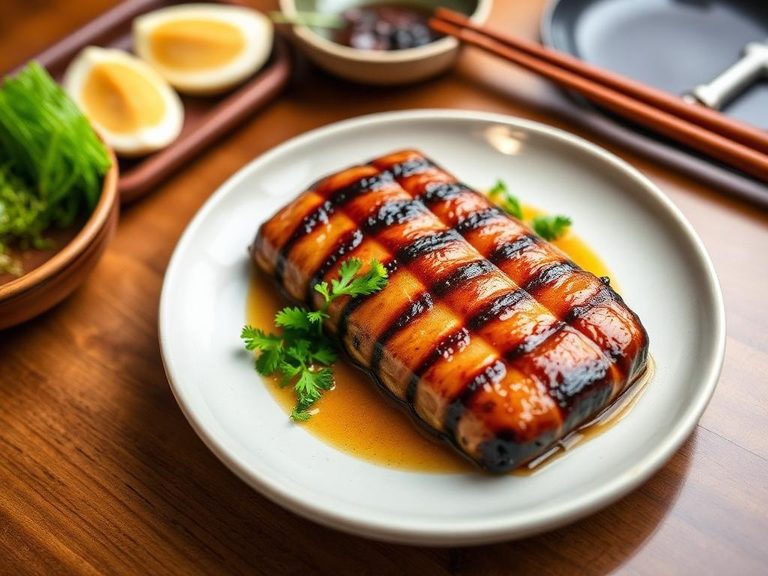
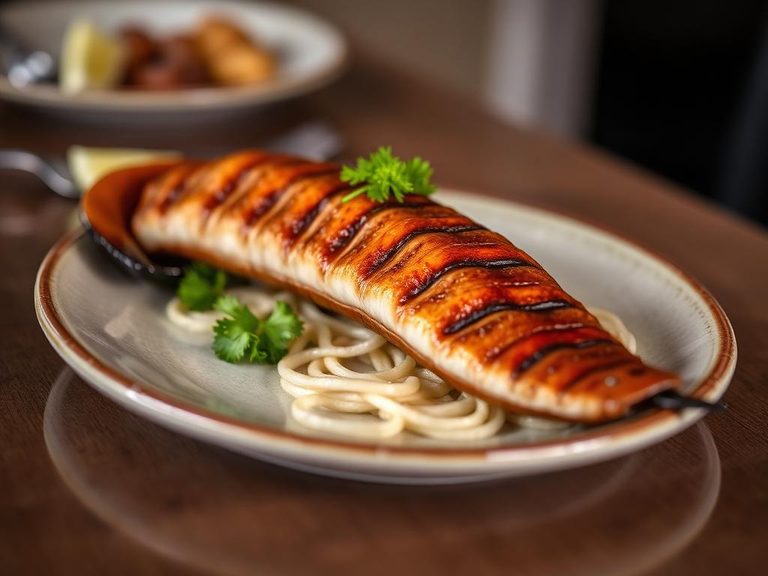
People love eel for its unique, luxurious texture that holds up beautifully to grilling and broiling, and its deep, savory umami flavor that forms the backbone of iconic dishes like Japanese unagi. Its versatility allows it to be the star in everything from delicate sashimi to hearty, caramelized glazes.
⚠️ Watch-outs & how to enjoy it better
Eel is a common allergen and contains purines, which may be a concern for individuals with gout or certain kidney conditions. To mitigate, ensure it's cooked thoroughly to reduce allergenic potential, and those with purine sensitivities should practice strict portion control and avoid pairing it with other high-purine foods like organ meats or certain seafood.
Key benefits
- Excellent source of complete protein for muscle repair
- Rich in heart-healthy omega-3 fatty acids
- Provides essential vitamins like B12 and A
- Naturally zero-carb, suitable for ketogenic diets
- Good source of minerals like phosphorus and selenium
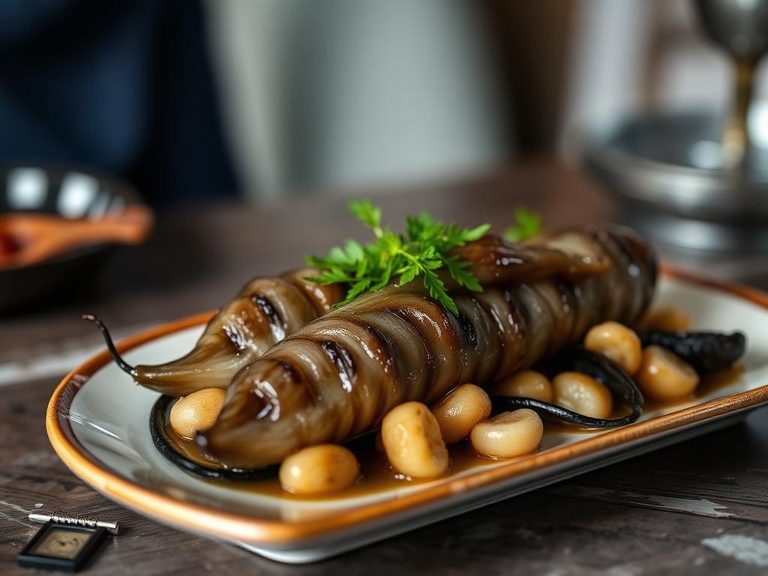
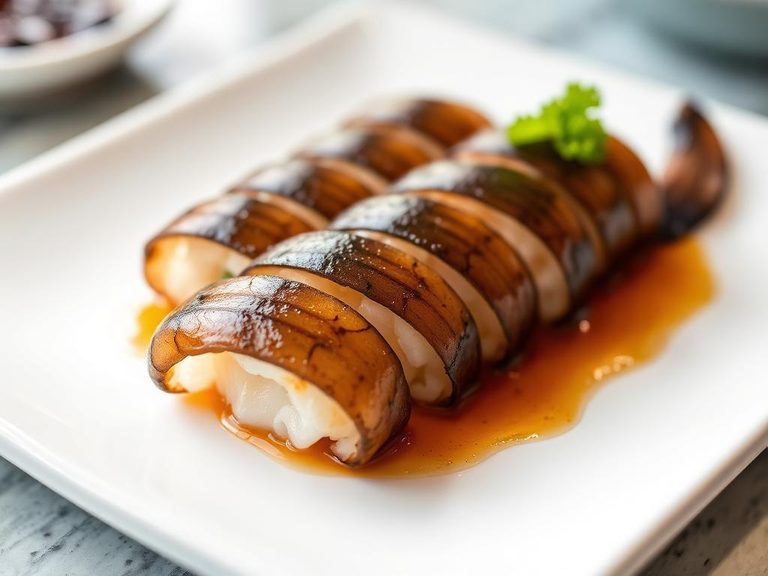
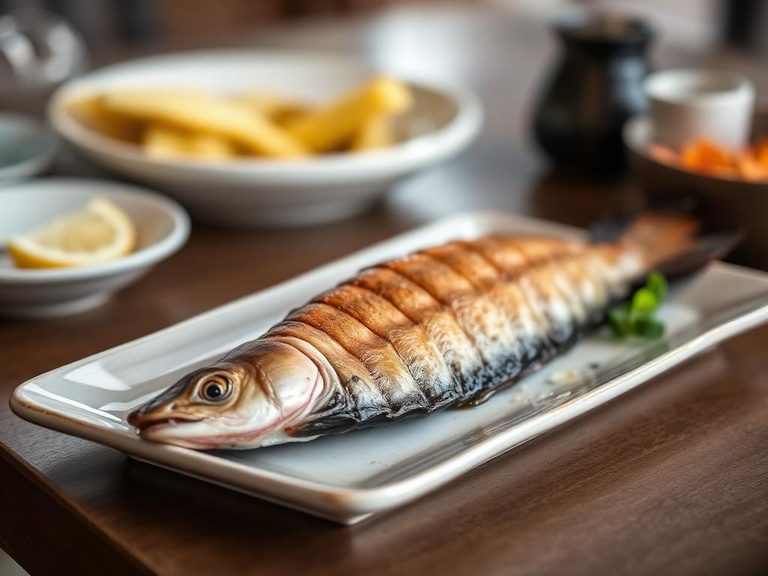
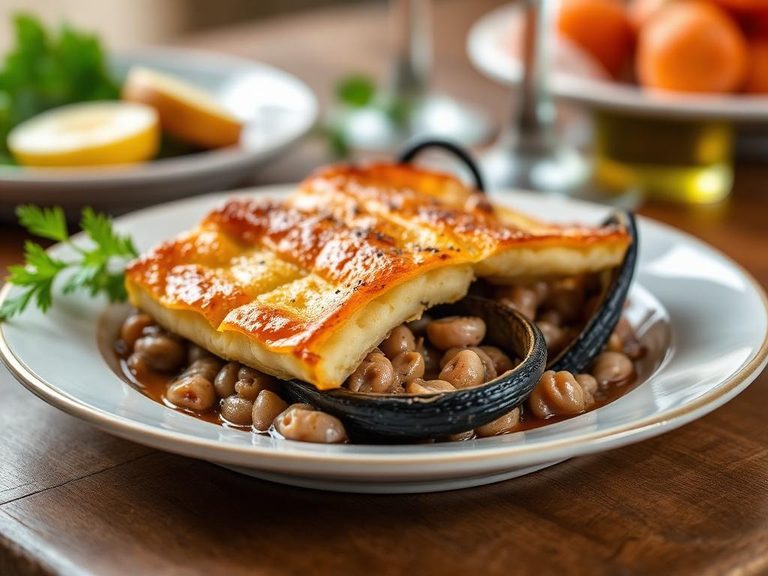
🍽️ Popular dishes
🌍 Where it's eaten
💡 Did you know?
Despite their snake-like appearance, eels are actually fish, and the European eel has one of the most mysterious life cycles in nature, migrating thousands of miles from European rivers to the Sargasso Sea to spawn.
Full nutrition (USDA data · scales with serving)
| Water | 68.3 g |
| Energy | 184 kcal |
| Energy | 770 kj |
| Protein | 18.4 g |
| Total lipid (fat) | 11.7 g |
| Ash | 1.4 g |
| Carbohydrate, by difference | 0.00 g |
| Fiber, total dietary | 0.00 g |
| Total Sugars | 0.00 g |
| Calcium, Ca | 20.0 mg |
| Iron, Fe | 0.50 mg |
| Magnesium, Mg | 20.0 mg |
| Phosphorus, P | 216 mg |
| Potassium, K | 272 mg |
| Sodium, Na | 51.0 mg |
| Zinc, Zn | 1.6 mg |
| Copper, Cu | 0.02 mg |
| Manganese, Mn | 0.04 mg |
| Selenium, Se | 6.5 ug |
| Vitamin C, total ascorbic acid | 1.8 mg |
| Thiamin | 0.15 mg |
| Riboflavin | 0.04 mg |
| Niacin | 3.5 mg |
| Pantothenic acid | 0.24 mg |
| Vitamin B-6 | 0.07 mg |
| Folate, total | 15.0 ug |
| Folic acid | 0.00 ug |
| Folate, food | 15.0 ug |
| Folate, DFE | 15.0 ug |
| Choline, total | 65.0 mg |
| Vitamin B-12 | 3.0 ug |
| Vitamin B-12, added | 0.00 ug |
| Vitamin A, RAE | 1043 ug |
| Retinol | 1043 ug |
| Carotene, beta | 0.00 ug |
| Carotene, alpha | 0.00 ug |
| Cryptoxanthin, beta | 0.00 ug |
| Vitamin A, IU | 3477 iu |
| Lycopene | 0.00 ug |
| Lutein + zeaxanthin | 0.00 ug |
| Vitamin E (alpha-tocopherol) | 4.0 mg |
| Vitamin E, added | 0.00 mg |
| Vitamin D (D2 + D3), International Units | 932 iu |
| Vitamin D (D2 + D3) | 23.3 ug |
| Vitamin D3 (cholecalciferol) | 23.3 ug |
| Vitamin K (phylloquinone) | 0.00 ug |
| Alcohol, ethyl | 0.00 g |
| Caffeine | 0.00 mg |
| Theobromine | 0.00 mg |
Fat & fatty acid profile (per 100g)
| Fatty acids, total saturated | 2.4 g |
| SFA 4:0 | 0.00 g |
| SFA 6:0 | 0.00 g |
| SFA 8:0 | 0.00 g |
| SFA 10:0 | 0.00 g |
| SFA 12:0 | 0.00 g |
| SFA 14:0 | 0.58 g |
| SFA 16:0 | 1.6 g |
| SFA 18:0 | 0.19 g |
| Fatty acids, total monounsaturated | 7.2 g |
| MUFA 16:1 | 1.3 g |
| MUFA 18:1 | 2.8 g |
| MUFA 20:1 | 3.0 g |
| MUFA 22:1 | 0.00 g |
| Fatty acids, total polyunsaturated | 0.95 g |
| PUFA 18:2 | 0.20 g |
| PUFA 18:3 | 0.43 g |
| PUFA 18:4 | 0.00 g |
| PUFA 20:4 | 0.10 g |
| PUFA 20:5 n-3 (EPA) | 0.08 g |
| PUFA 22:5 n-3 (DPA) | 0.07 g |
| PUFA 22:6 n-3 (DHA) | 0.06 g |
| Cholesterol | 126 mg |
Amino acid profile (per 100g)
| Tryptophan | 0.21 g |
| Threonine | 0.81 g |
| Isoleucine | 0.85 g |
| Leucine | 1.5 g |
| Lysine | 1.7 g |
| Methionine | 0.55 g |
| Cystine | 0.20 g |
| Phenylalanine | 0.72 g |
| Tyrosine | 0.62 g |
| Valine | 0.95 g |
| Arginine | 1.1 g |
| Histidine | 0.54 g |
| Alanine | 1.1 g |
| Aspartic acid | 1.9 g |
| Glutamic acid | 2.8 g |
| Glycine | 0.89 g |
| Proline | 0.65 g |
| Serine | 0.75 g |
FAQ
Is raw eel safe to eat?
Raw eel blood is toxic and must be cooked to be safe. However, 'raw' in a food database context typically refers to the uncooked state of the flesh before preparation. In culinary practice, eel is almost always cooked (grilled, broiled, steamed) before consumption.
How does the nutrition change when cooked?
Cooking, especially with sauces like the sweet soy-based tare used in Japanese cuisine, will add carbohydrates and sodium. The protein and fat content remain relatively stable, but the total calorie count will increase depending on the preparation method.
What's the difference between freshwater and saltwater eel nutrition?
The provided data is for mixed species. Generally, both are high in protein and fat. Saltwater eels may have a slightly different fatty acid profile, but the core nutritional benefits of high protein and omega-3s are consistent across most edible species.
Nutrient density (calculated · NRF9.3)
Nutrient Rich Foods index: beneficial nutrients (protein, fiber, vitamins, minerals) minus saturated fat, added sugar & sodium, per 100 kcal.
NRF9.3 index — Fulgoni, Keast & Drewnowski, 2009. Computed from USDA nutrients.
Weight-loss friendliness (composite index)
Energy density 1.84 kcal/g · 40% calories from protein · 0.0 g fiber · 0.0 g sugar per 100 g.
Composite of energy density (Rolls et al., 1999), protein & fiber satiety, minus sugar. A calculated heuristic — ranks satiety-per-calorie, not a clinical measure.
Dietary load (calculated from USDA values)
Potential renal acid load. Positive = acid-forming, negative = alkaline-forming.
Sodium-to-potassium ratio: 0.19 (lower is better — aim for ≤ 1)
Sodium:potassium per WHO potassium guidance. Computed from USDA nutrients.