

Fish, cod, Pacific, cooked
Whole food · Finfish and Shellfish Products

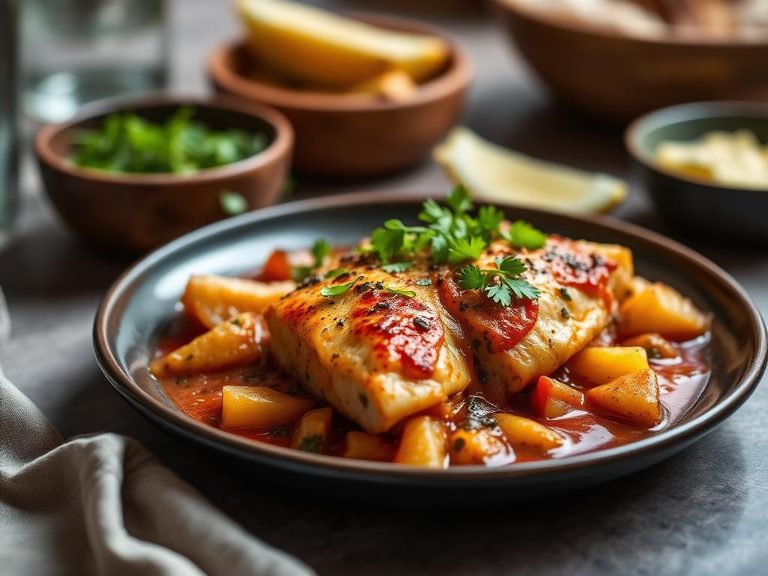
Photo: Wikipedia
Pacific cod is a lean, mild white fish that becomes beautifully flaky and tender when cooked. Its clean, slightly sweet flavor and snow-white flesh make it a canvas for bold seasonings or simple preparations. Nutritionally, it's a powerhouse of high-quality protein with virtually no fat or carbohydrates.
Calorie split: 97% protein · 0% carbs · 3% fat
↓ Full nutrition💚 Why it's loved
People love its delicate, non-fishy taste and versatile texture that absorbs sauces and spices wonderfully. It's a reliable, crowd-pleasing protein that's quick to cook for weeknight meals.
⚠️ Watch-outs & how to enjoy it better
Its very low fat content means it can dry out quickly if overcooked, leading to a chalky texture. As a common fish allergen, it must be avoided by those with fish allergies. To counteract dryness, cook it just until it flakes and consider pairing it with a flavorful sauce, salsa, or a drizzle of olive oil.
Key benefits
- Excellent source of complete protein for muscle maintenance.
- Extremely low in fat and calories, ideal for weight management.
- Provides important minerals like selenium and phosphorus.
- Naturally free of carbohydrates and sugars.
🍽️ Popular dishes
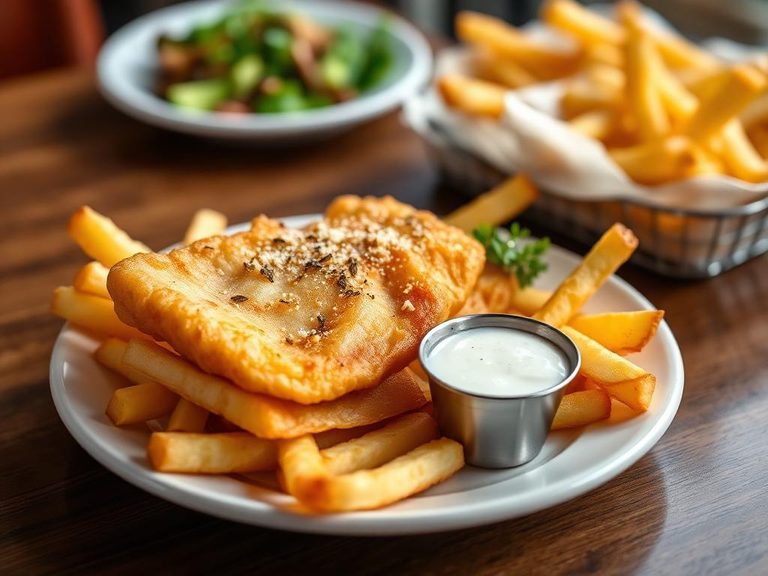
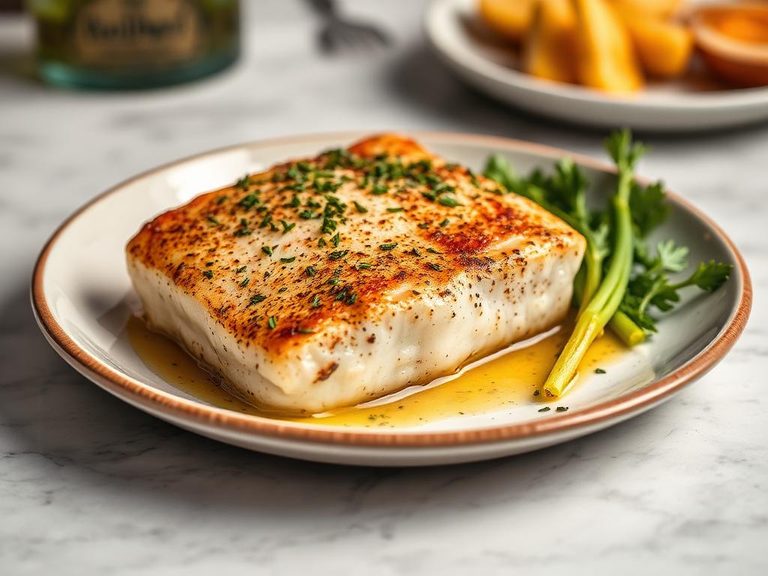
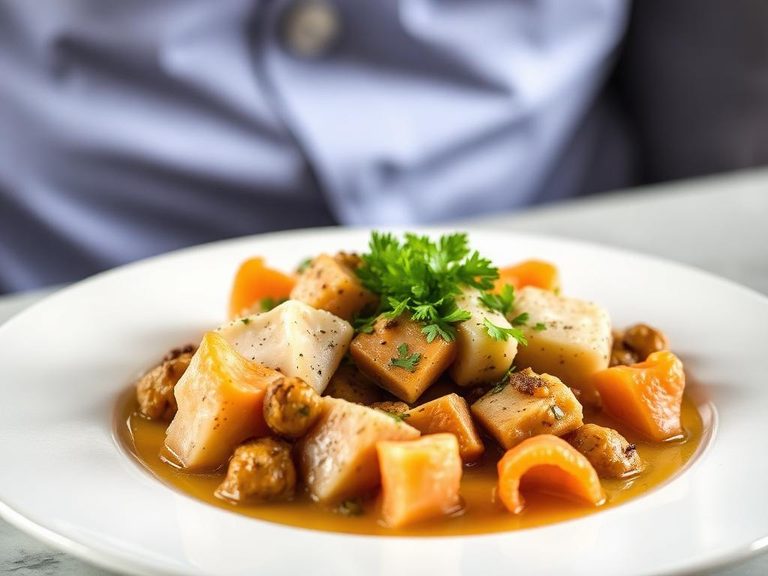
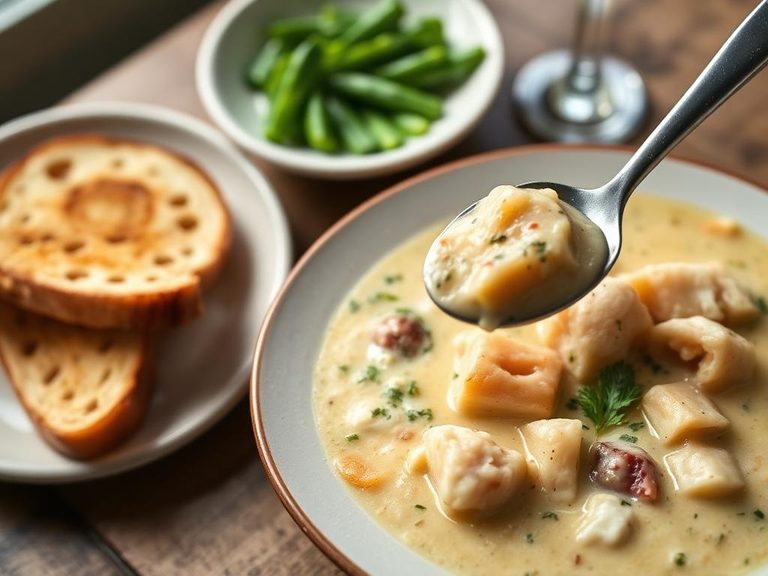
🌍 Where it's eaten
💡 Did you know?
Pacific cod is a key species in the 'fish' part of the classic British dish fish and chips, and its stocks are carefully managed under international agreements in the Bering Sea.
Full nutrition (USDA data · scales with serving)
| Water | 78.4 g |
| Energy | 84.0 kcal |
| Energy | 351 kj |
| Protein | 20.4 g |
| Total lipid (fat) | 0.25 g |
| Ash | 1.3 g |
| Carbohydrate, by difference | 0.00 g |
| Calcium, Ca | 17.0 mg |
| Iron, Fe | 0.16 mg |
| Magnesium, Mg | 35.0 mg |
| Phosphorus, P | 205 mg |
| Potassium, K | 372 mg |
| Sodium, Na | 134 mg |
| Zinc, Zn | 0.43 mg |
| Copper, Cu | 0.02 mg |
| Manganese, Mn | 0.01 mg |
Fat & fatty acid profile (per 100g)
| Fatty acids, total saturated | 0.05 g |
| SFA 4:0 | 0.00 g |
| SFA 6:0 | 0.00 g |
| SFA 8:0 | 0.00 g |
| SFA 10:0 | 0.00 g |
| SFA 12:0 | 0.00 g |
| SFA 14:0 | 0.00 g |
| SFA 15:0 | 0.00 g |
| SFA 16:0 | 0.04 g |
| SFA 17:0 | 0.00 g |
| SFA 18:0 | 0.01 g |
| SFA 20:0 | 0.00 g |
| SFA 22:0 | 0.00 g |
| SFA 24:0 | 0.00 g |
| Fatty acids, total monounsaturated | 0.06 g |
| MUFA 14:1 | 0.00 g |
| MUFA 15:1 | 0.00 g |
| MUFA 16:1 | 0.00 g |
| MUFA 16:1 c | 0.00 g |
| MUFA 17:1 | 0.00 g |
| MUFA 18:1 | 0.02 g |
| MUFA 18:1 c | 0.02 g |
| MUFA 20:1 | 0.00 g |
| MUFA 22:1 | 0.00 g |
| MUFA 22:1 c | 0.00 g |
| MUFA 24:1 c | 0.00 g |
| Fatty acids, total polyunsaturated | 0.11 g |
| PUFA 18:2 | 0.01 g |
| PUFA 18:2 n-6 c,c | 0.01 g |
| PUFA 18:2 CLAs | 0.00 g |
| PUFA 18:3 | 0.00 g |
| PUFA 18:3 n-3 c,c,c (ALA) | 0.00 g |
| PUFA 18:3 n-6 c,c,c | 0.00 g |
| PUFA 18:4 | 0.00 g |
| PUFA 20:2 n-6 c,c | 0.00 g |
| PUFA 20:3 | 0.00 g |
| PUFA 20:3 n-3 | 0.00 g |
| PUFA 20:3 n-6 | 0.00 g |
| PUFA 20:4 | 0.01 g |
| PUFA 20:5 n-3 (EPA) | 0.02 g |
| PUFA 22:4 | 0.00 g |
| PUFA 22:5 n-3 (DPA) | 0.00 g |
| PUFA 22:6 n-3 (DHA) | 0.06 g |
| Fatty acids, total trans | 0.00 g |
| Fatty acids, total trans-monoenoic | 0.00 g |
| TFA 16:1 t | 0.00 g |
| TFA 18:1 t | 0.00 g |
| TFA 22:1 t | 0.00 g |
| TFA 18:2 t not further defined | 0.00 g |
| Fatty acids, total trans-polyenoic | 0.00 g |
| Cholesterol | 61.0 mg |
Amino acid profile (per 100g)
Estimated from Fish, fish sticks, frozen, prepared — USDA does not publish this profile for Fish.
| Tryptophan | 0.12 g |
| Threonine | 0.37 g |
| Isoleucine | 0.43 g |
| Leucine | 0.85 g |
| Lysine | 0.80 g |
| Methionine | 0.30 g |
| Phenylalanine | 0.47 g |
| Tyrosine | 0.29 g |
| Valine | 0.50 g |
| Arginine | 0.59 g |
| Histidine | 0.23 g |
| Alanine | 0.55 g |
| Aspartic acid | 0.82 g |
| Glutamic acid | 2.3 g |
| Glycine | 0.47 g |
| Proline | 0.78 g |
| Serine | 0.49 g |
| Hydroxyproline | 0.00 g |
FAQ
How do I know when Pacific cod is cooked through?
It's done when the flesh turns opaque and flakes easily when prodded with a fork. The internal temperature should reach 145°F (63°C).
Is Pacific cod the same as Atlantic cod?
They are different species from different oceans. Pacific cod is generally smaller with a milder flavor and slightly softer texture than its Atlantic counterpart.
What's the best way to store leftover cooked cod?
Place it in an airtight container and refrigerate for up to 2 days. It's best enjoyed fresh but can be gently reheated in a low oven to prevent further drying.
Nutrient density (calculated · NRF9.3)
Nutrient Rich Foods index: beneficial nutrients (protein, fiber, vitamins, minerals) minus saturated fat, added sugar & sodium, per 100 kcal.
NRF9.3 index — Fulgoni, Keast & Drewnowski, 2009. Computed from USDA nutrients.
Weight-loss friendliness (composite index)
Energy density 0.84 kcal/g · 97% calories from protein · 0.0 g fiber · 0.0 g sugar per 100 g.
Composite of energy density (Rolls et al., 1999), protein & fiber satiety, minus sugar. A calculated heuristic — ranks satiety-per-calorie, not a clinical measure.
Dietary load (calculated from USDA values)
Potential renal acid load. Positive = acid-forming, negative = alkaline-forming.
Sodium-to-potassium ratio: 0.36 (lower is better — aim for ≤ 1)
Sodium:potassium per WHO potassium guidance. Computed from USDA nutrients.