

Fish, caviar, black and red, granular
Whole food · Finfish and Shellfish Products

Photo: Wikipedia
Caviar consists of salt-cured roe (eggs) from sturgeon fish, prized for its glossy, jewel-like appearance and distinctive 'pop' texture. The granular pearls release a rich, briny, and buttery flavor with a subtle oceanic finish. Nutritionally, it's a potent source of protein and healthy fats, including omega-3 fatty acids.
Calorie split: 36% protein · 6% carbs · 58% fat
↓ Full nutrition💚 Why it's loved
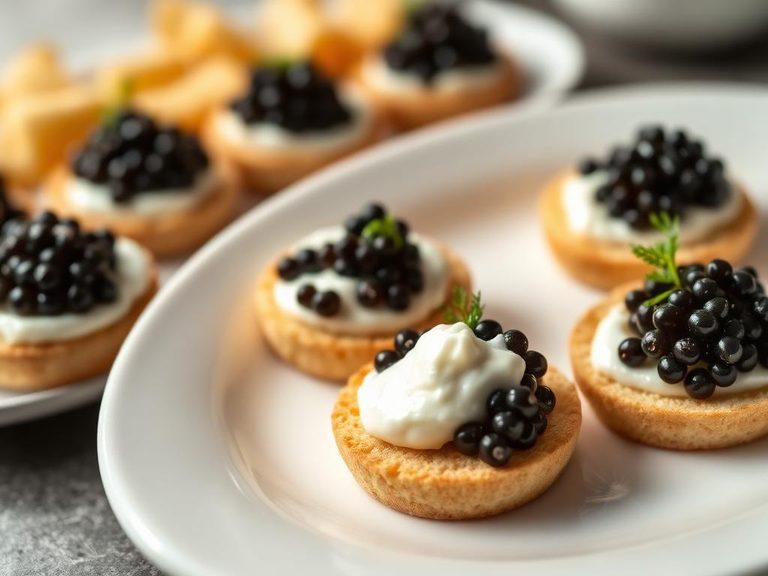
People cherish caviar for its complex umami flavor and luxurious, celebratory status in gastronomy. Its versatility as a garnish or centerpiece elevates simple dishes like blinis or toast points to extraordinary.
⚠️ Watch-outs & how to enjoy it better
Its high sodium content (from the curing salt) can be a concern for those monitoring blood pressure. As a fish product, it is a common allergen for those with fish allergies. Concrete tip: Pair with unsalted butter, crème fraîche, or plain potatoes to balance the saltiness, and consume in small, intentional portions.
Key benefits
- Excellent source of complete protein (24.6g per 100g).
- Rich in omega-3 fatty acids (EPA & DHA) for heart and brain health.
- Contains high levels of vitamin B12, essential for nerve function.
- Provides selenium, an important antioxidant mineral.
- Naturally low in carbohydrates and sugar.
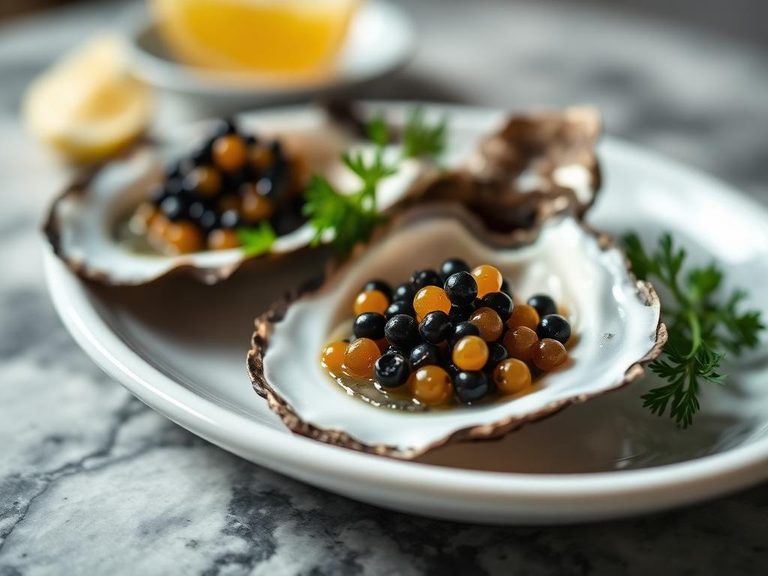
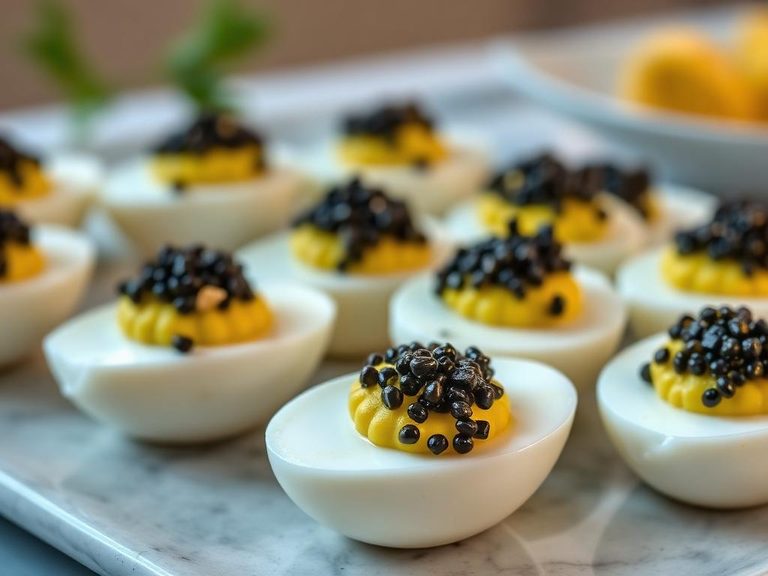
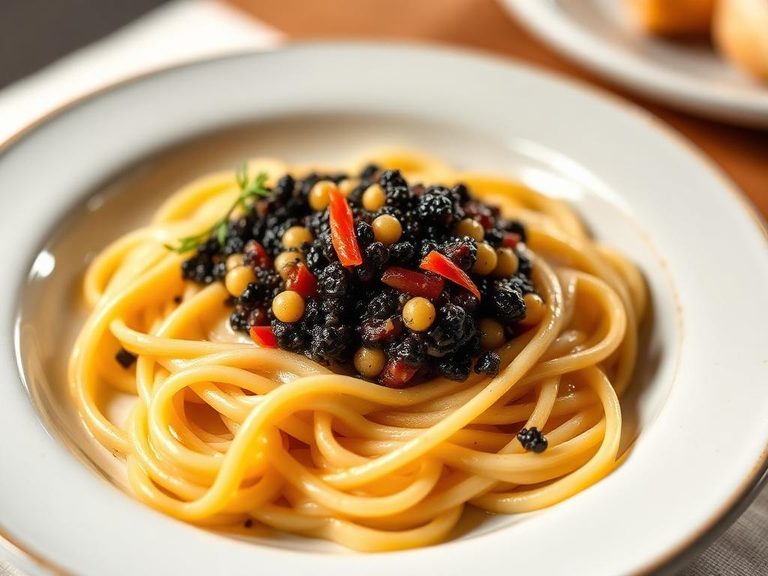
🍽️ Popular dishes
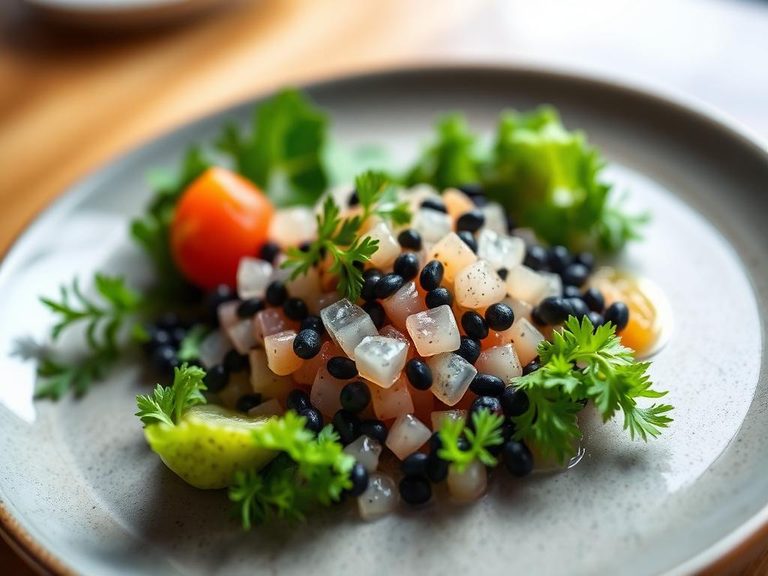
🌍 Where it's eaten
💡 Did you know?
The most prized and expensive caviar, Beluga, comes from the critically endangered Huso huso sturgeon, which can live over 100 years and produce eggs the size of a marble.
Full nutrition (USDA data · scales with serving)
| Water | 47.5 g |
| Energy | 264 kcal |
| Energy | 1105 kj |
| Protein | 24.6 g |
| Total lipid (fat) | 17.9 g |
| Ash | 6.5 g |
| Carbohydrate, by difference | 4.0 g |
| Fiber, total dietary | 0.00 g |
| Total Sugars | 0.00 g |
| Calcium, Ca | 275 mg |
| Iron, Fe | 11.9 mg |
| Magnesium, Mg | 300 mg |
| Phosphorus, P | 356 mg |
| Potassium, K | 181 mg |
| Sodium, Na | 1500 mg |
| Zinc, Zn | 0.95 mg |
| Copper, Cu | 0.11 mg |
| Manganese, Mn | 0.05 mg |
| Selenium, Se | 65.5 ug |
| Vitamin C, total ascorbic acid | 0.00 mg |
| Thiamin | 0.19 mg |
| Riboflavin | 0.62 mg |
| Niacin | 0.12 mg |
| Pantothenic acid | 3.5 mg |
| Vitamin B-6 | 0.32 mg |
| Folate, total | 50.0 ug |
| Folic acid | 0.00 ug |
| Folate, food | 50.0 ug |
| Folate, DFE | 50.0 ug |
| Choline, total | 491 mg |
| Vitamin B-12 | 20.0 ug |
| Vitamin B-12, added | 0.00 ug |
| Vitamin A, RAE | 271 ug |
| Retinol | 271 ug |
| Carotene, beta | 0.00 ug |
| Carotene, alpha | 0.00 ug |
| Cryptoxanthin, beta | 0.00 ug |
| Vitamin A, IU | 905 iu |
| Lycopene | 0.00 ug |
| Lutein + zeaxanthin | 648 ug |
| Vitamin E (alpha-tocopherol) | 1.9 mg |
| Vitamin E, added | 0.00 mg |
| Vitamin D (D2 + D3), International Units | 117 iu |
| Vitamin D (D2 + D3) | 2.9 ug |
| Vitamin D3 (cholecalciferol) | 2.9 ug |
| Vitamin K (phylloquinone) | 0.60 ug |
| Alcohol, ethyl | 0.00 g |
| Caffeine | 0.00 mg |
| Theobromine | 0.00 mg |
Fat & fatty acid profile (per 100g)
| Fatty acids, total saturated | 4.1 g |
| SFA 4:0 | 0.00 g |
| SFA 6:0 | 0.00 g |
| SFA 8:0 | 0.00 g |
| SFA 10:0 | 0.00 g |
| SFA 12:0 | 0.00 g |
| SFA 14:0 | 0.21 g |
| SFA 16:0 | 3.6 g |
| SFA 18:0 | 0.29 g |
| Fatty acids, total monounsaturated | 4.6 g |
| MUFA 16:1 | 1.0 g |
| MUFA 18:1 | 3.2 g |
| MUFA 20:1 | 0.31 g |
| MUFA 22:1 | 0.11 g |
| Fatty acids, total polyunsaturated | 7.4 g |
| PUFA 18:2 | 0.08 g |
| PUFA 18:3 | 0.02 g |
| PUFA 18:4 | 0.03 g |
| PUFA 20:4 | 0.51 g |
| PUFA 20:5 n-3 (EPA) | 2.7 g |
| PUFA 22:5 n-3 (DPA) | 0.23 g |
| PUFA 22:6 n-3 (DHA) | 3.8 g |
| Cholesterol | 588 mg |
Amino acid profile (per 100g)
| Tryptophan | 0.32 g |
| Threonine | 1.3 g |
| Isoleucine | 1.0 g |
| Leucine | 2.1 g |
| Lysine | 1.8 g |
| Methionine | 0.65 g |
| Cystine | 0.45 g |
| Phenylalanine | 1.1 g |
| Tyrosine | 0.97 g |
| Valine | 1.3 g |
| Arginine | 1.6 g |
| Histidine | 0.65 g |
| Alanine | 1.7 g |
| Aspartic acid | 2.4 g |
| Glutamic acid | 3.6 g |
| Glycine | 0.74 g |
| Proline | 1.2 g |
| Serine | 1.9 g |
FAQ
What's the difference between black and red caviar?
Black caviar comes from sturgeon species (like Beluga, Osetra) and is generally more expensive with a complex, buttery flavor. Red caviar typically comes from salmon or trout roe, is more affordable, and has a brighter, more pronounced fishy taste and larger grains.
How should I store and serve caviar?
Store unopened in the coldest part of your refrigerator. Once opened, consume within 3-5 days. Serve chilled, ideally on a non-metallic spoon (mother-of-pearl, bone, or plastic) to avoid a metallic taste transfer.
Is caviar sustainable?
Wild sturgeon populations are severely threatened. Look for caviar from certified sustainable farms (e.g., Aquaculture Stewardship Council) or from non-sturgeon species like salmon roe (red caviar) for a more sustainable choice.
Nutrient density (calculated · NRF9.3)
Nutrient Rich Foods index: beneficial nutrients (protein, fiber, vitamins, minerals) minus saturated fat, added sugar & sodium, per 100 kcal.
NRF9.3 index — Fulgoni, Keast & Drewnowski, 2009. Computed from USDA nutrients.
Weight-loss friendliness (composite index)
Energy density 2.64 kcal/g · 37% calories from protein · 0.0 g fiber · 0.0 g sugar per 100 g.
Composite of energy density (Rolls et al., 1999), protein & fiber satiety, minus sugar. A calculated heuristic — ranks satiety-per-calorie, not a clinical measure.
Dietary load (calculated from USDA values)
Potential renal acid load. Positive = acid-forming, negative = alkaline-forming.
Sodium-to-potassium ratio: 8.29 (lower is better — aim for ≤ 1)
Sodium:potassium per WHO potassium guidance. Computed from USDA nutrients.