

Endive, raw
Whole food · Vegetables and Vegetable Products

Photo: Wikipedia
Endive is a crisp, leafy vegetable with a distinctive, pleasantly bitter flavor that mellows when paired with rich or sweet ingredients. Its pale, tightly packed leaves offer a satisfying crunch and a refreshing, slightly nutty taste. Nutritionally, it is exceptionally low in calories (just 17 per 100g) while providing a good source of dietary fiber (3.1g per 100g).
Calorie split: 25% protein · 66% carbs · 9% fat
↓ Full nutrition💚 Why it's loved
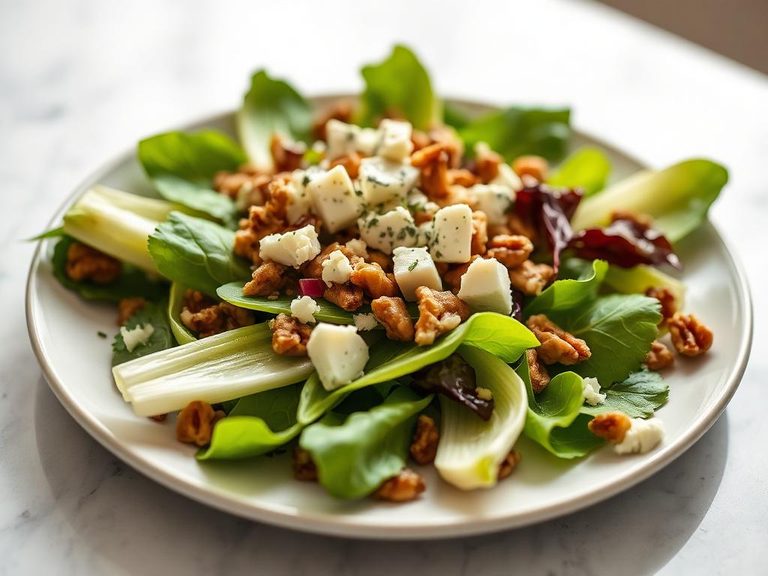
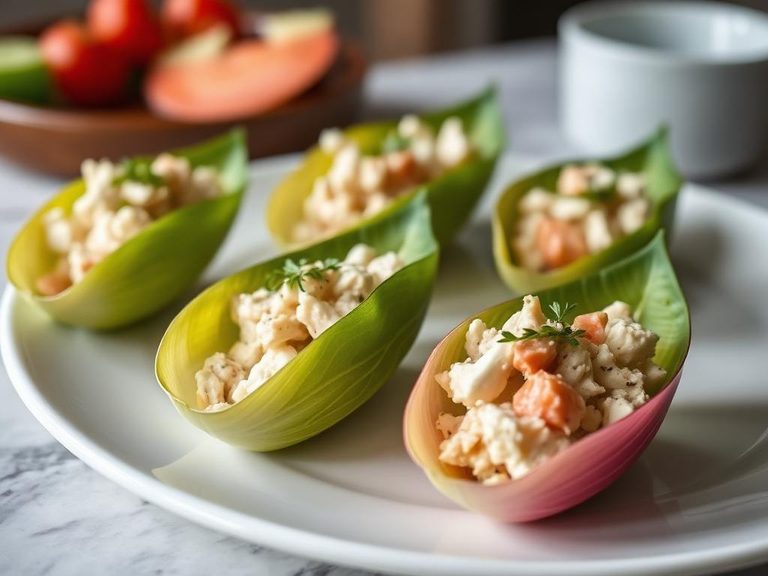
People love endive for its elegant, slightly bitter bite that adds a sophisticated edge to salads and appetizers. Its sturdy, cup-shaped leaves make it a perfect, edible vessel for dips, cheeses, and other fillings, offering both texture and visual appeal.
⚠️ Watch-outs & how to enjoy it better
The pronounced bitterness can be off-putting to some palates, especially those sensitive to bitter flavors. To counteract this, balance it with sweet elements like fruit (apples, pears), creamy cheeses (blue cheese, goat cheese), or a slightly sweet vinaigrette. Pairing it with a protein or healthy fat can also help mellow the bitterness and create a more rounded flavor profile.
Key benefits
- Very low in calories, ideal for weight management
- Good source of dietary fiber for digestive health
- Contains vitamins A and K, supporting vision and bone health
- High water content aids in hydration
- Provides antioxidants like kaempferol
🍽️ Popular dishes
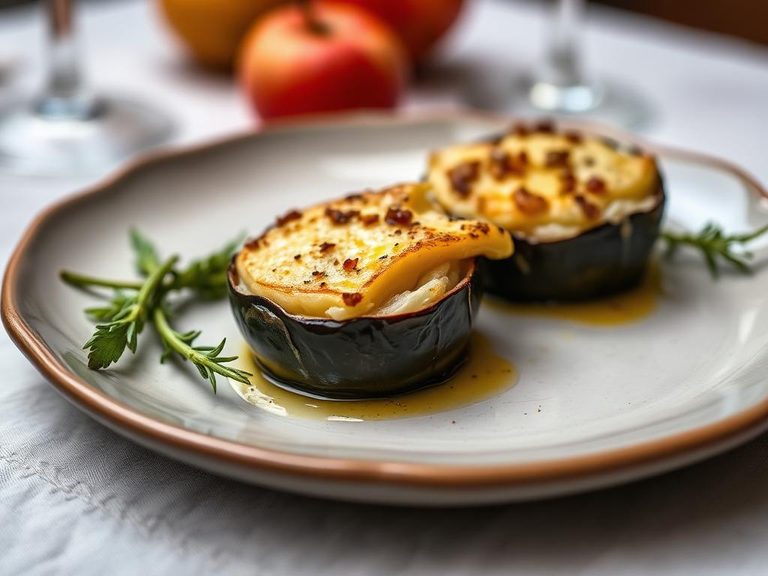
🌍 Where it's eaten
💡 Did you know?
Endive is a type of chicory, and its pale, blanched leaves are achieved by growing the plant in complete darkness to prevent chlorophyll formation, a process called forcing.
Full nutrition (USDA data · scales with serving)
| Water | 93.8 g |
| Energy | 17.0 kcal |
| Energy | 71.0 kj |
| Protein | 1.3 g |
| Total lipid (fat) | 0.20 g |
| Ash | 1.4 g |
| Carbohydrate, by difference | 3.4 g |
| Fiber, total dietary | 3.1 g |
| Total Sugars | 0.25 g |
| Calcium, Ca | 52.0 mg |
| Iron, Fe | 0.83 mg |
| Magnesium, Mg | 15.0 mg |
| Phosphorus, P | 28.0 mg |
| Potassium, K | 314 mg |
| Sodium, Na | 22.0 mg |
| Zinc, Zn | 0.79 mg |
| Copper, Cu | 0.10 mg |
| Manganese, Mn | 0.42 mg |
| Selenium, Se | 0.20 ug |
| Vitamin C, total ascorbic acid | 6.5 mg |
| Thiamin | 0.08 mg |
| Riboflavin | 0.07 mg |
| Niacin | 0.40 mg |
| Pantothenic acid | 0.90 mg |
| Vitamin B-6 | 0.02 mg |
| Folate, total | 142 ug |
| Folic acid | 0.00 ug |
| Folate, food | 142 ug |
| Folate, DFE | 142 ug |
| Choline, total | 16.8 mg |
| Vitamin B-12 | 0.00 ug |
| Vitamin B-12, added | 0.00 ug |
| Vitamin A, RAE | 108 ug |
| Retinol | 0.00 ug |
| Carotene, beta | 1300 ug |
| Carotene, alpha | 0.00 ug |
| Cryptoxanthin, beta | 0.00 ug |
| Vitamin A, IU | 2167 iu |
| Lycopene | 0.00 ug |
| Lutein + zeaxanthin | 0.00 ug |
| Vitamin E (alpha-tocopherol) | 0.44 mg |
| Vitamin E, added | 0.00 mg |
| Vitamin D (D2 + D3), International Units | 0.00 iu |
| Vitamin D (D2 + D3) | 0.00 ug |
| Vitamin K (phylloquinone) | 231 ug |
| Alcohol, ethyl | 0.00 g |
| Caffeine | 0.00 mg |
| Theobromine | 0.00 mg |
Fat & fatty acid profile (per 100g)
| Fatty acids, total saturated | 0.05 g |
| SFA 4:0 | 0.00 g |
| SFA 6:0 | 0.00 g |
| SFA 8:0 | 0.00 g |
| SFA 10:0 | 0.00 g |
| SFA 12:0 | 0.00 g |
| SFA 14:0 | 0.00 g |
| SFA 16:0 | 0.04 g |
| SFA 18:0 | 0.00 g |
| Fatty acids, total monounsaturated | 0.00 g |
| MUFA 16:1 | 0.00 g |
| MUFA 18:1 | 0.00 g |
| MUFA 20:1 | 0.00 g |
| MUFA 22:1 | 0.00 g |
| Fatty acids, total polyunsaturated | 0.09 g |
| PUFA 18:2 | 0.07 g |
| PUFA 18:3 | 0.01 g |
| PUFA 18:4 | 0.00 g |
| PUFA 20:4 | 0.00 g |
| PUFA 20:5 n-3 (EPA) | 0.00 g |
| PUFA 22:5 n-3 (DPA) | 0.00 g |
| PUFA 22:6 n-3 (DHA) | 0.00 g |
| Fatty acids, total trans | 0.00 g |
| Cholesterol | 0.00 mg |
Amino acid profile (per 100g)
| Tryptophan | 0.01 g |
| Threonine | 0.05 g |
| Isoleucine | 0.07 g |
| Leucine | 0.10 g |
| Lysine | 0.06 g |
| Methionine | 0.01 g |
| Cystine | 0.01 g |
| Phenylalanine | 0.05 g |
| Tyrosine | 0.04 g |
| Valine | 0.06 g |
| Arginine | 0.06 g |
| Histidine | 0.02 g |
| Alanine | 0.06 g |
| Aspartic acid | 0.13 g |
| Glutamic acid | 0.17 g |
| Glycine | 0.06 g |
| Proline | 0.06 g |
| Serine | 0.05 g |
FAQ
What is the difference between endive and chicory?
Endive (specifically Belgian endive) is a variety of chicory (Cichorium intybus). The term 'chicory' can also refer to the root used as a coffee substitute or the wild leafy plant. In culinary terms, 'endive' often refers to the blanched, torpedo-shaped Belgian endive, while 'chicory' can refer to the curly, green-leafed variety.
How should I store endive to keep it fresh?
Store endive in the crisper drawer of your refrigerator, wrapped in a damp paper towel or in a perforated plastic bag. It is sensitive to ethylene gas, so keep it away from fruits like apples and bananas. Properly stored, it can last for up to two weeks.
Can I cook endive, or is it only eaten raw?
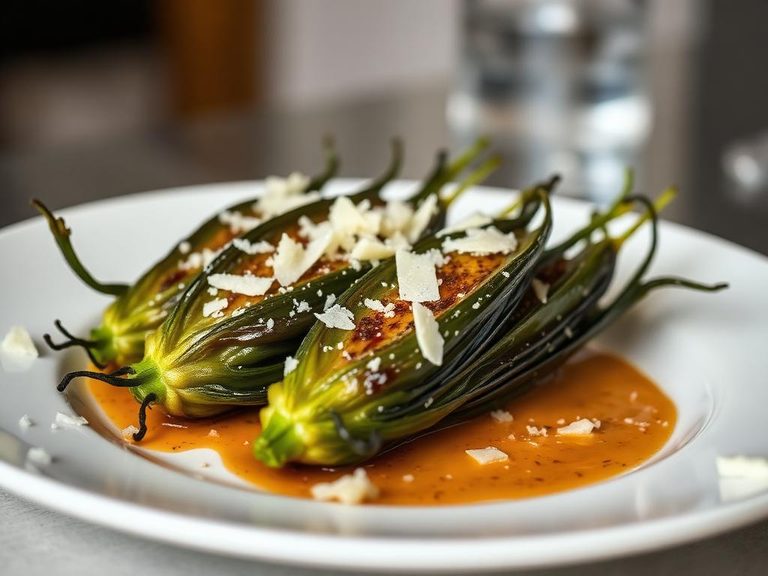
While endive is famously used raw in salads and as a vehicle for dips, it is also excellent when cooked. Braising, grilling, or sautéing endive mellows its bitterness and brings out a subtle sweetness. It can be used in gratins, soups, or as a side dish.
Nutrient density (calculated · NRF9.3)
Nutrient Rich Foods index: beneficial nutrients (protein, fiber, vitamins, minerals) minus saturated fat, added sugar & sodium, per 100 kcal.
NRF9.3 index — Fulgoni, Keast & Drewnowski, 2009. Computed from USDA nutrients.
Weight-loss friendliness (composite index)
Energy density 0.17 kcal/g · 29% calories from protein · 3.1 g fiber · 0.3 g sugar per 100 g.
Composite of energy density (Rolls et al., 1999), protein & fiber satiety, minus sugar. A calculated heuristic — ranks satiety-per-calorie, not a clinical measure.
Dietary load (calculated from USDA values)
Potential renal acid load. Positive = acid-forming, negative = alkaline-forming.
Sodium-to-potassium ratio: 0.07 (lower is better — aim for ≤ 1)
Sodium:potassium per WHO potassium guidance. Computed from USDA nutrients.