

Eggplant, cooked, boiled, drained, without salt
Whole food · Vegetables and Vegetable Products

Photo: Wikipedia
Boiled and drained eggplant is a soft, spongy, and mild-flavored vegetable that acts as a culinary blank canvas, readily absorbing the flavors of sauces and spices. Nutritionally, it is exceptionally low in calories, providing only 35 kcal per 100g, and is a good source of dietary fiber (2.5g) and antioxidants like nasunin, which is found in its purple skin.
Calorie split: 8% protein · 87% carbs · 5% fat
↓ Full nutrition💚 Why it's loved
People love it for its incredible versatility and ability to soak up flavors, transforming from bland to bold in dishes like curries and stews. Its tender, melt-in-the-mouth texture when cooked is also a key appeal in many comfort foods.
⚠️ Watch-outs & how to enjoy it better
Some find its texture can become watery or spongy if overcooked, and it can be bland without proper seasoning. For those monitoring blood sugar, its carbohydrate content (8.73g) should be considered, though its fiber helps mitigate spikes. To counteract sogginess, salting and draining before cooking or using dry-heat methods like grilling is effective; pairing with protein or healthy fats can also create a more balanced meal.
Key benefits
- Very low in calories, supporting weight management.
- Good source of dietary fiber for digestive health.
- Contains antioxidants like nasunin and chlorogenic acid.
- Low in fat and naturally cholesterol-free.
- Provides essential minerals like manganese and potassium.
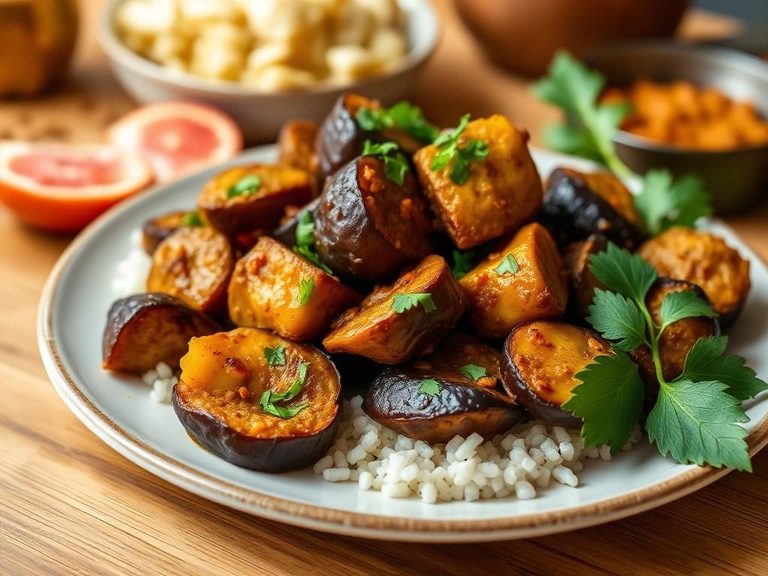
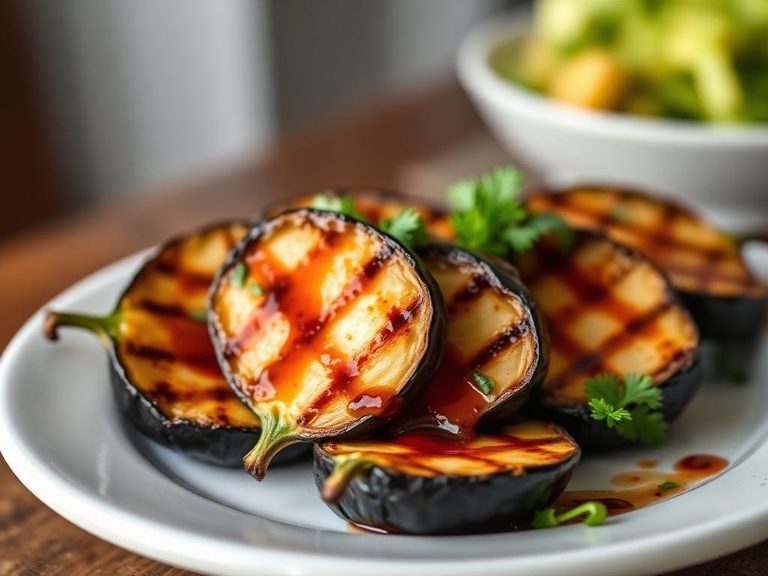
🍽️ Popular dishes
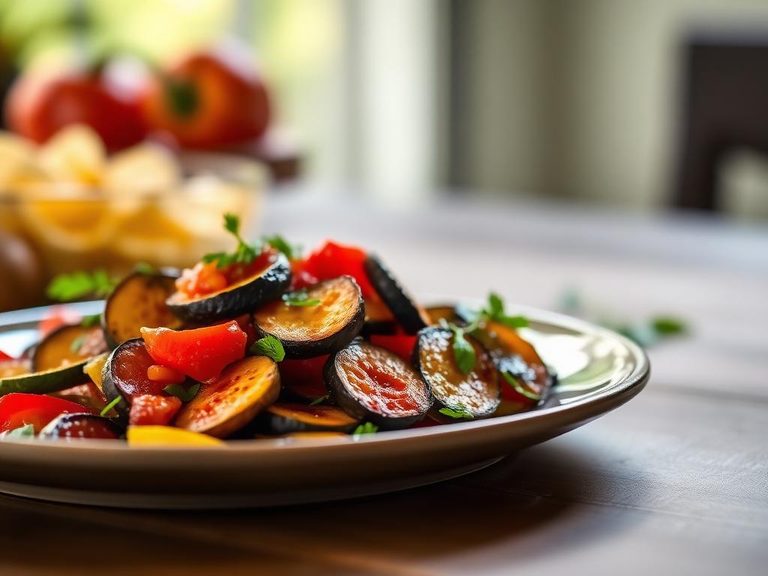
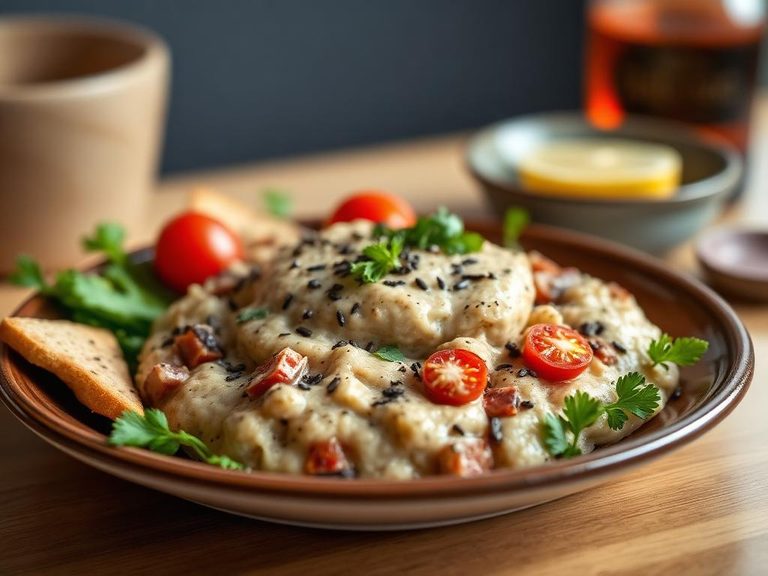
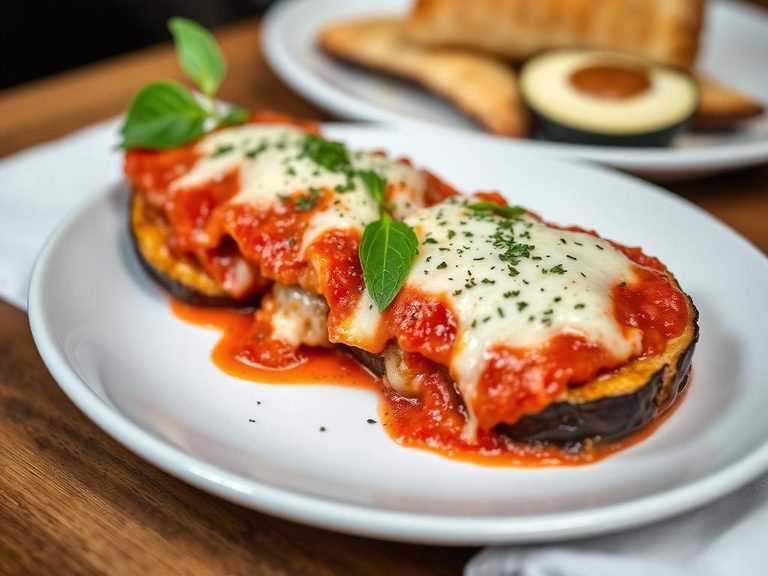
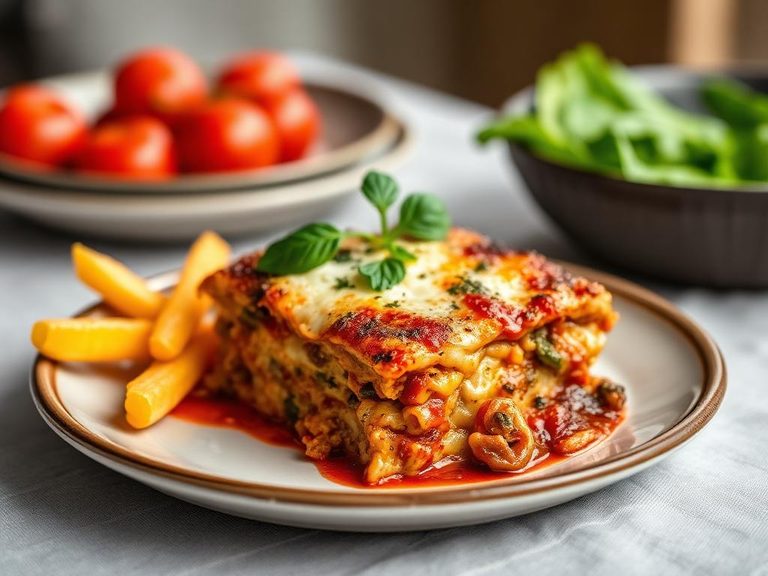
🌍 Where it's eaten
💡 Did you know?
The name 'eggplant' comes from early European varieties that were small, white, and shaped like eggs, leading to the botanical name *Solanum melongena*.
Full nutrition (USDA data · scales with serving)
| Water | 89.7 g |
| Energy | 35.0 kcal |
| Energy | 147 kj |
| Protein | 0.83 g |
| Total lipid (fat) | 0.23 g |
| Ash | 0.54 g |
| Carbohydrate, by difference | 8.7 g |
| Fiber, total dietary | 2.5 g |
| Total Sugars | 3.2 g |
| Calcium, Ca | 6.0 mg |
| Iron, Fe | 0.25 mg |
| Magnesium, Mg | 11.0 mg |
| Phosphorus, P | 15.0 mg |
| Potassium, K | 123 mg |
| Sodium, Na | 1.0 mg |
| Zinc, Zn | 0.12 mg |
| Copper, Cu | 0.06 mg |
| Manganese, Mn | 0.11 mg |
| Selenium, Se | 0.10 ug |
| Vitamin C, total ascorbic acid | 1.3 mg |
| Thiamin | 0.08 mg |
| Riboflavin | 0.02 mg |
| Niacin | 0.60 mg |
| Pantothenic acid | 0.07 mg |
| Vitamin B-6 | 0.09 mg |
| Folate, total | 14.0 ug |
| Folic acid | 0.00 ug |
| Folate, food | 14.0 ug |
| Folate, DFE | 14.0 ug |
| Choline, total | 9.4 mg |
| Vitamin B-12 | 0.00 ug |
| Vitamin B-12, added | 0.00 ug |
| Vitamin A, RAE | 2.0 ug |
| Retinol | 0.00 ug |
| Carotene, beta | 22.0 ug |
| Carotene, alpha | 0.00 ug |
| Cryptoxanthin, beta | 0.00 ug |
| Vitamin A, IU | 37.0 iu |
| Lycopene | 0.00 ug |
| Lutein + zeaxanthin | 0.00 ug |
| Vitamin E (alpha-tocopherol) | 0.41 mg |
| Vitamin E, added | 0.00 mg |
| Vitamin D (D2 + D3), International Units | 0.00 iu |
| Vitamin D (D2 + D3) | 0.00 ug |
| Vitamin K (phylloquinone) | 2.9 ug |
| Alcohol, ethyl | 0.00 g |
| Caffeine | 0.00 mg |
| Theobromine | 0.00 mg |
Fat & fatty acid profile (per 100g)
| Fatty acids, total saturated | 0.04 g |
| SFA 4:0 | 0.00 g |
| SFA 6:0 | 0.00 g |
| SFA 8:0 | 0.00 g |
| SFA 10:0 | 0.00 g |
| SFA 12:0 | 0.00 g |
| SFA 14:0 | 0.00 g |
| SFA 16:0 | 0.03 g |
| SFA 18:0 | 0.01 g |
| Fatty acids, total monounsaturated | 0.02 g |
| MUFA 16:1 | 0.00 g |
| MUFA 18:1 | 0.02 g |
| MUFA 20:1 | 0.00 g |
| MUFA 22:1 | 0.00 g |
| Fatty acids, total polyunsaturated | 0.09 g |
| PUFA 18:2 | 0.08 g |
| PUFA 18:3 | 0.01 g |
| PUFA 18:4 | 0.00 g |
| PUFA 20:4 | 0.00 g |
| PUFA 20:5 n-3 (EPA) | 0.00 g |
| PUFA 22:5 n-3 (DPA) | 0.00 g |
| PUFA 22:6 n-3 (DHA) | 0.00 g |
| Fatty acids, total trans | 0.00 g |
| Cholesterol | 0.00 mg |
Amino acid profile (per 100g)
| Tryptophan | 0.01 g |
| Threonine | 0.03 g |
| Isoleucine | 0.04 g |
| Leucine | 0.05 g |
| Lysine | 0.04 g |
| Methionine | 0.01 g |
| Cystine | 0.00 g |
| Phenylalanine | 0.04 g |
| Tyrosine | 0.02 g |
| Valine | 0.04 g |
| Arginine | 0.05 g |
| Histidine | 0.02 g |
| Alanine | 0.04 g |
| Aspartic acid | 0.13 g |
| Glutamic acid | 0.15 g |
| Glycine | 0.03 g |
| Proline | 0.03 g |
| Serine | 0.03 g |
FAQ
Why should I salt eggplant before cooking?
Salting (or 'sweating') draws out excess moisture and can reduce bitterness, resulting in a firmer texture and better flavor absorption, especially for frying or grilling.
Is boiled eggplant healthy?
Yes, it's very low in calories and fat, and retains most of its fiber and antioxidants. Boiling without added salt keeps its sodium content minimal.
How can I prevent boiled eggplant from being mushy?
Avoid overcooking; boil just until tender (about 10-15 minutes). You can also cut it into larger pieces or use it in dishes where a soft texture is desired, like dips or sauces.
Does eggplant have any common allergens?
Eggplant is not a common allergen, but it belongs to the nightshade family (Solanaceae), which includes tomatoes and peppers. Some individuals with nightshade sensitivity may need to avoid it.
Nutrient density (calculated · NRF9.3)
Nutrient Rich Foods index: beneficial nutrients (protein, fiber, vitamins, minerals) minus saturated fat, added sugar & sodium, per 100 kcal.
NRF9.3 index — Fulgoni, Keast & Drewnowski, 2009. Computed from USDA nutrients.
Weight-loss friendliness (composite index)
Energy density 0.35 kcal/g · 9% calories from protein · 2.5 g fiber · 3.2 g sugar per 100 g.
Composite of energy density (Rolls et al., 1999), protein & fiber satiety, minus sugar. A calculated heuristic — ranks satiety-per-calorie, not a clinical measure.
Dietary load (calculated from USDA values)
Potential renal acid load. Positive = acid-forming, negative = alkaline-forming.
Sodium-to-potassium ratio: 0.01 (lower is better — aim for ≤ 1)
Sodium:potassium per WHO potassium guidance. Computed from USDA nutrients.