

Duck, domesticated, meat and skin, cooked, roasted
Whole food · Poultry Products

Photo: Wikipedia
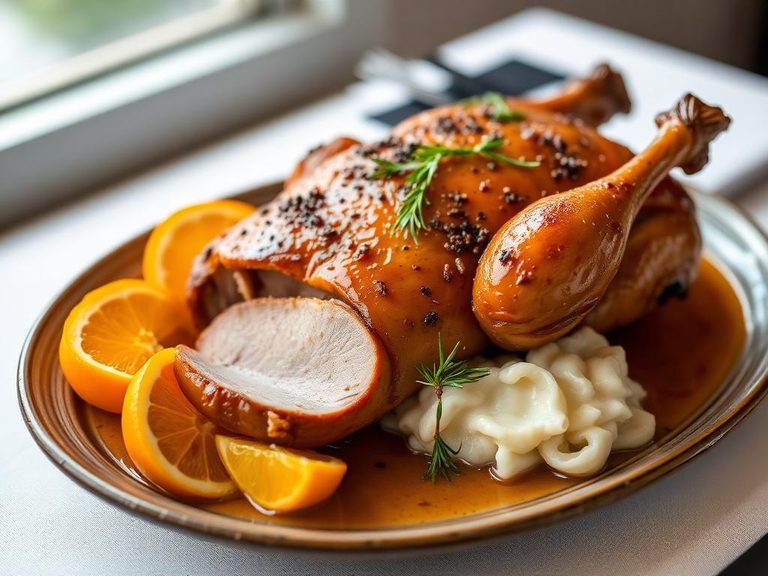
Roasted domestic duck, with its skin crisped to a golden, shattering layer, offers a rich, deeply savory flavor and a tender, succulent meat that is distinctly more flavorful than chicken. This preparation is a powerhouse of protein and energy-dense fat, delivering a luxurious mouthfeel without any carbohydrates.
Calorie split: 23% protein · 0% carbs · 77% fat
↓ Full nutrition💚 Why it's loved
People adore roasted duck for its unparalleled combination of crispy, salty skin and rich, gamey meat, which offers a more complex flavor profile than poultry like chicken. It's a centerpiece of celebratory meals and comfort food across many cultures, prized for its ability to feel both rustic and elegant.
⚠️ Watch-outs & how to enjoy it better
The high fat content, particularly from the skin, makes it a very calorie-dense choice that may not suit low-fat diets. Individuals monitoring saturated fat intake or with certain heart conditions should enjoy it in moderation. To counteract this, consider removing the skin before eating, pair it with a large portion of steamed or roasted vegetables to add volume and fiber, and practice portion control by treating it as a featured protein rather than the sole main dish.
Key benefits
- Excellent source of high-quality protein for muscle maintenance.
- Rich in iron and B vitamins, particularly niacin and B12.
- Contains healthy monounsaturated fats, especially from the skin.
- Provides essential minerals like selenium and zinc.
- A calorie-dense food useful for high-energy needs.
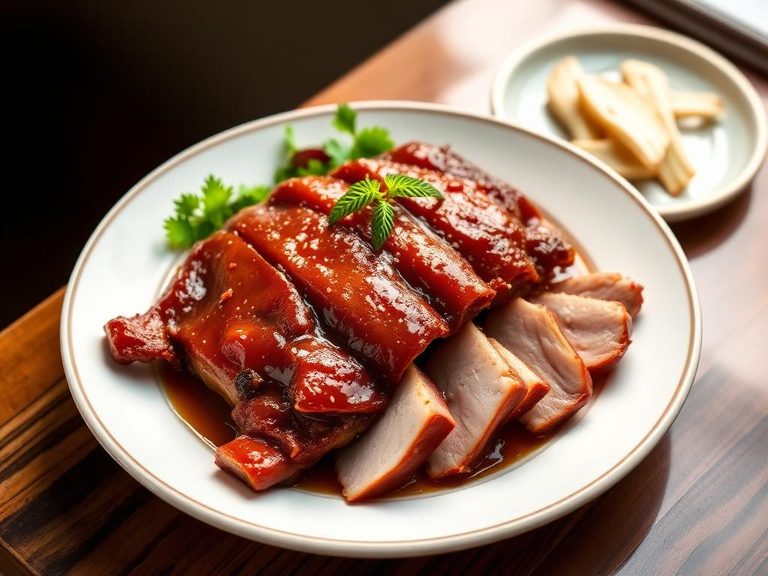
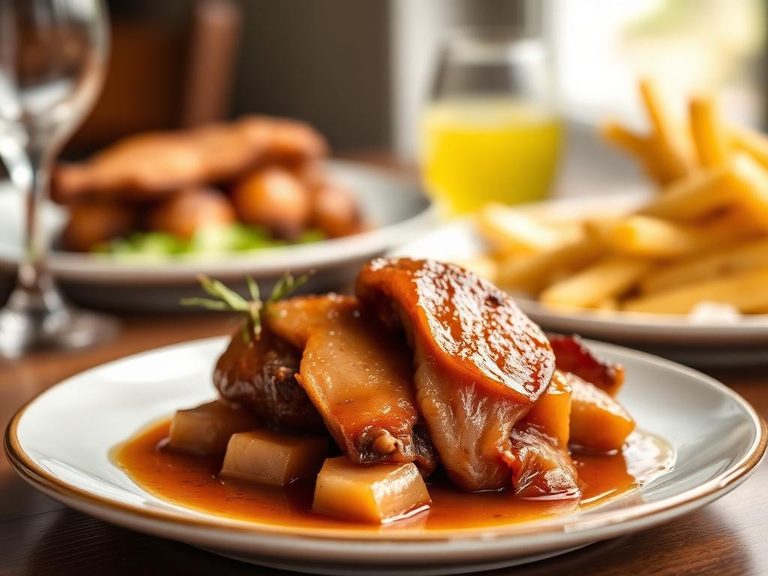
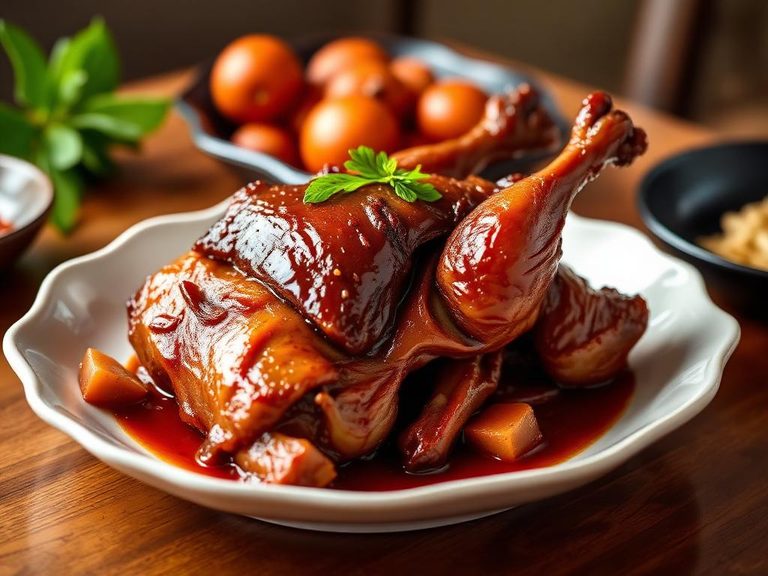
🍽️ Popular dishes
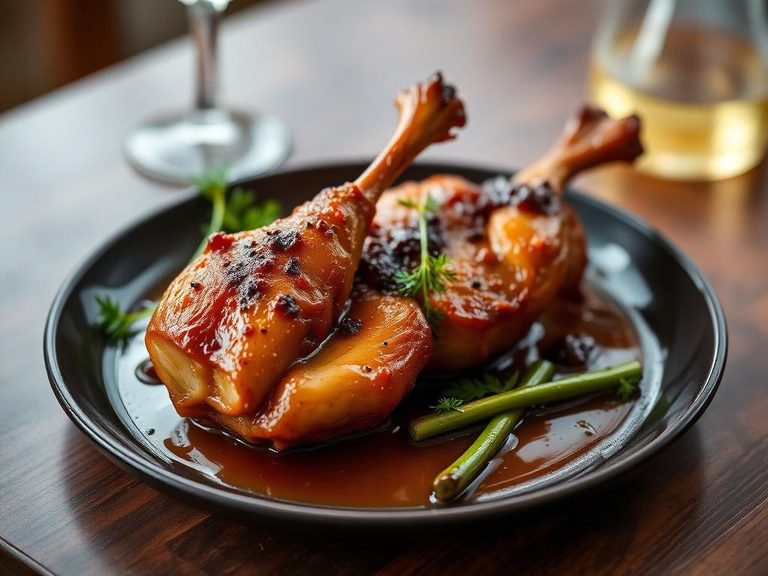
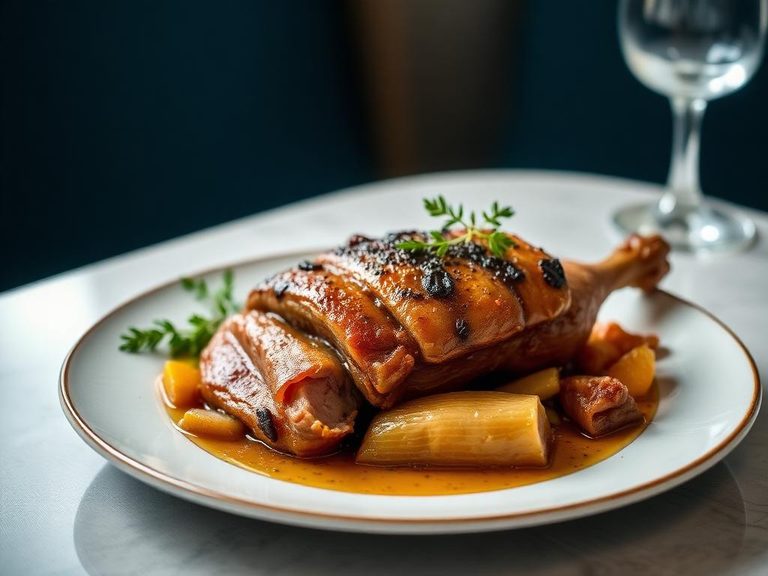
🌍 Where it's eaten
💡 Did you know?
The process of making Peking Duck involves inflating the bird with air to separate the skin from the fat, allowing the skin to become incredibly crispy when roasted.
Full nutrition (USDA data · scales with serving)
| Water | 51.8 g |
| Energy | 337 kcal |
| Energy | 1410 kj |
| Protein | 19.0 g |
| Total lipid (fat) | 28.4 g |
| Ash | 0.82 g |
| Carbohydrate, by difference | 0.00 g |
| Fiber, total dietary | 0.00 g |
| Total Sugars | 0.00 g |
| Calcium, Ca | 11.0 mg |
| Iron, Fe | 2.7 mg |
| Magnesium, Mg | 16.0 mg |
| Phosphorus, P | 156 mg |
| Potassium, K | 204 mg |
| Sodium, Na | 59.0 mg |
| Zinc, Zn | 1.9 mg |
| Copper, Cu | 0.23 mg |
| Manganese, Mn | 0.02 mg |
| Selenium, Se | 20.0 ug |
| Vitamin C, total ascorbic acid | 0.00 mg |
| Thiamin | 0.17 mg |
| Riboflavin | 0.27 mg |
| Niacin | 4.8 mg |
| Pantothenic acid | 1.1 mg |
| Vitamin B-6 | 0.18 mg |
| Folate, total | 6.0 ug |
| Folic acid | 0.00 ug |
| Folate, food | 6.0 ug |
| Folate, DFE | 6.0 ug |
| Choline, total | 50.4 mg |
| Betaine | 7.0 mg |
| Vitamin B-12 | 0.30 ug |
| Vitamin B-12, added | 0.00 ug |
| Vitamin A, RAE | 63.0 ug |
| Retinol | 63.0 ug |
| Carotene, beta | 0.00 ug |
| Carotene, alpha | 0.00 ug |
| Cryptoxanthin, beta | 0.00 ug |
| Vitamin A, IU | 210 iu |
| Lycopene | 0.00 ug |
| Lutein + zeaxanthin | 0.00 ug |
| Vitamin E (alpha-tocopherol) | 0.70 mg |
| Vitamin E, added | 0.00 mg |
| Vitamin D (D2 + D3), International Units | 3.0 iu |
| Vitamin D (D2 + D3) | 0.10 ug |
| Vitamin D3 (cholecalciferol) | 0.10 ug |
| Vitamin K (phylloquinone) | 5.1 ug |
| Vitamin K (Dihydrophylloquinone) | 0.00 ug |
| Alcohol, ethyl | 0.00 g |
| Caffeine | 0.00 mg |
| Theobromine | 0.00 mg |
Fat & fatty acid profile (per 100g)
| Fatty acids, total saturated | 9.7 g |
| SFA 4:0 | 0.00 g |
| SFA 6:0 | 0.00 g |
| SFA 8:0 | 0.00 g |
| SFA 10:0 | 0.00 g |
| SFA 12:0 | 0.04 g |
| SFA 14:0 | 0.17 g |
| SFA 16:0 | 6.8 g |
| SFA 18:0 | 2.4 g |
| Fatty acids, total monounsaturated | 12.9 g |
| MUFA 16:1 | 1.1 g |
| MUFA 18:1 | 11.5 g |
| MUFA 20:1 | 0.26 g |
| MUFA 22:1 | 0.00 g |
| Fatty acids, total polyunsaturated | 3.6 g |
| PUFA 18:2 | 3.4 g |
| PUFA 18:3 | 0.29 g |
| PUFA 18:4 | 0.00 g |
| PUFA 20:4 | 0.00 g |
| PUFA 20:5 n-3 (EPA) | 0.00 g |
| PUFA 22:5 n-3 (DPA) | 0.00 g |
| PUFA 22:6 n-3 (DHA) | 0.00 g |
| Cholesterol | 84.0 mg |
Amino acid profile (per 100g)
| Tryptophan | 0.23 g |
| Threonine | 0.77 g |
| Isoleucine | 0.87 g |
| Leucine | 1.5 g |
| Lysine | 1.5 g |
| Methionine | 0.47 g |
| Cystine | 0.30 g |
| Phenylalanine | 0.75 g |
| Tyrosine | 0.64 g |
| Valine | 0.94 g |
| Arginine | 1.3 g |
| Histidine | 0.46 g |
| Alanine | 1.3 g |
| Aspartic acid | 1.8 g |
| Glutamic acid | 2.8 g |
| Glycine | 1.6 g |
| Proline | 1.2 g |
| Serine | 0.80 g |
FAQ
How is domestic duck different from wild duck?
Domestic duck is typically raised for meat, has a higher fat content for tenderness, and a milder flavor. Wild duck is leaner, has a more pronounced gamey flavor, and is often darker in color.
Is the skin meant to be eaten?
Yes, especially when roasted, the skin is a prized part for its flavor and texture. However, it is also the fattiest part, so it can be removed if you prefer a leaner meal.
How should I store and reheat leftovers?
Store cooked duck in an airtight container in the refrigerator for up to 3-4 days. Reheat slices gently in a skillet over medium heat to re-crisp the skin, or warm in a 350°F (175°C) oven for about 10 minutes.
Nutrient density (calculated · NRF9.3)
Nutrient Rich Foods index: beneficial nutrients (protein, fiber, vitamins, minerals) minus saturated fat, added sugar & sodium, per 100 kcal.
NRF9.3 index — Fulgoni, Keast & Drewnowski, 2009. Computed from USDA nutrients.
Weight-loss friendliness (composite index)
Energy density 3.37 kcal/g · 23% calories from protein · 0.0 g fiber · 0.0 g sugar per 100 g.
Composite of energy density (Rolls et al., 1999), protein & fiber satiety, minus sugar. A calculated heuristic — ranks satiety-per-calorie, not a clinical measure.
Dietary load (calculated from USDA values)
Potential renal acid load. Positive = acid-forming, negative = alkaline-forming.
Sodium-to-potassium ratio: 0.29 (lower is better — aim for ≤ 1)
Sodium:potassium per WHO potassium guidance. Computed from USDA nutrients.