

Chicken, meatless
Whole food · Legumes and Legume Products

Photo: Wikipedia
Meatless chicken is a plant-based protein designed to mimic the texture and mild flavor of real poultry, often made from soy, wheat gluten, or pea protein. It typically has a fibrous, chewy texture that absorbs marinades and seasonings well. Nutritionally, it's a lean protein source with minimal carbs and no sugar.
Calorie split: 42% protein · 7% carbs · 51% fat
↓ Full nutrition💚 Why it's loved
People love it for its remarkable ability to replicate the satisfying chew and neutral taste of chicken, making it an easy swap in familiar recipes. Its versatility allows it to be grilled, fried, or simmered in countless dishes.
⚠️ Watch-outs & how to enjoy it better
Some products can be high in sodium for flavor, and those made from wheat gluten (seitan) are not suitable for people with celiac disease or gluten sensitivity. To counteract sodium, rinse the product before cooking or choose low-sodium brands, and always check the ingredient list for allergens.
Key benefits
- High in protein for muscle maintenance.
- Low in carbohydrates and sugar.
- Contains dietary fiber.
- Cholesterol-free.
- A versatile meat substitute for various diets.
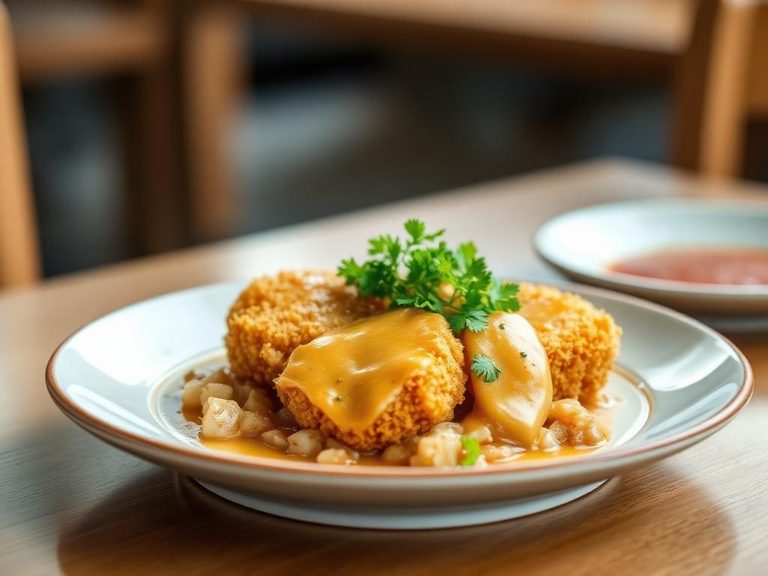
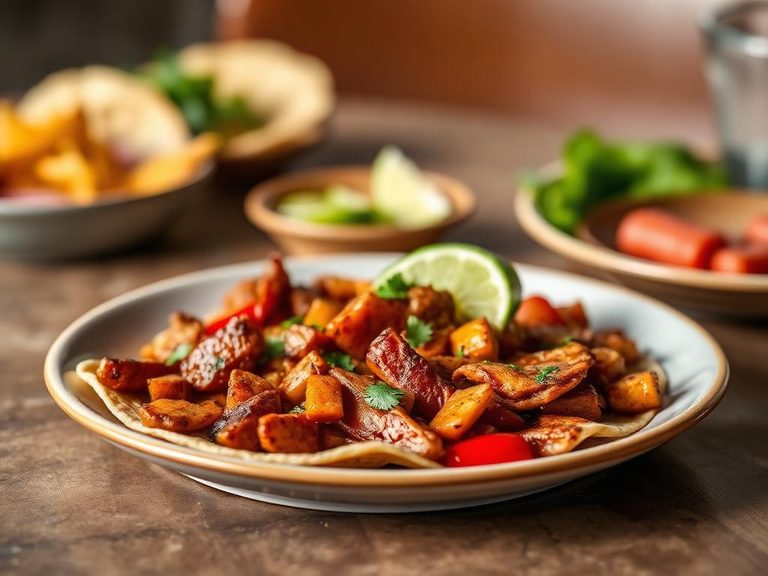
🍽️ Popular dishes
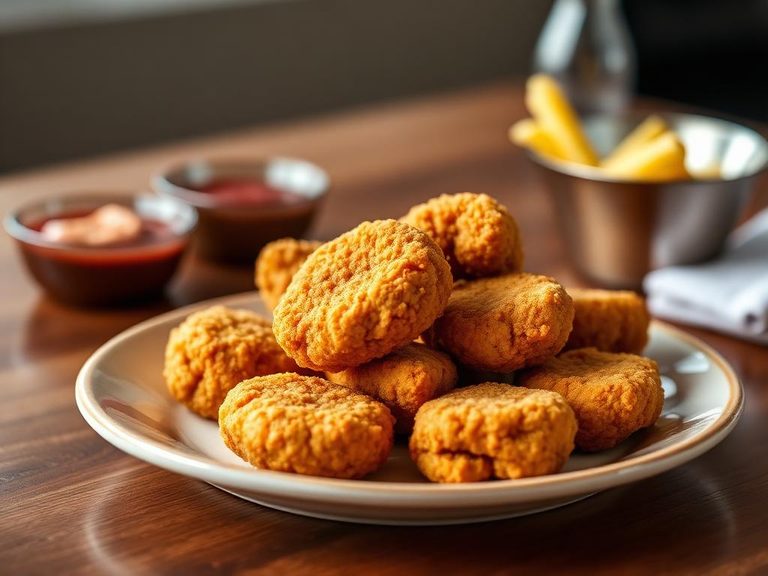
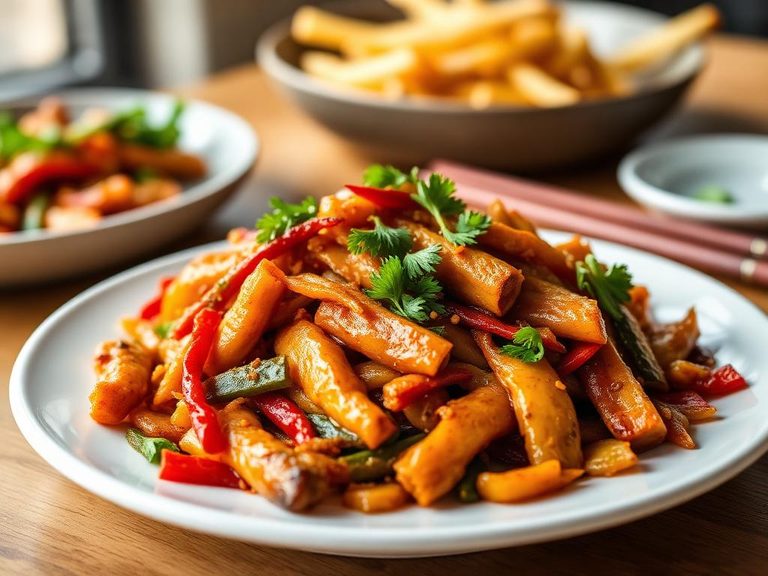
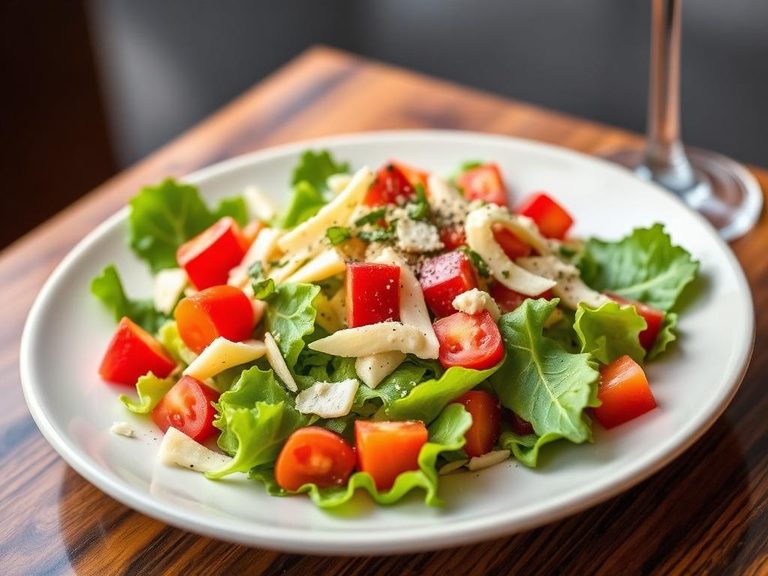
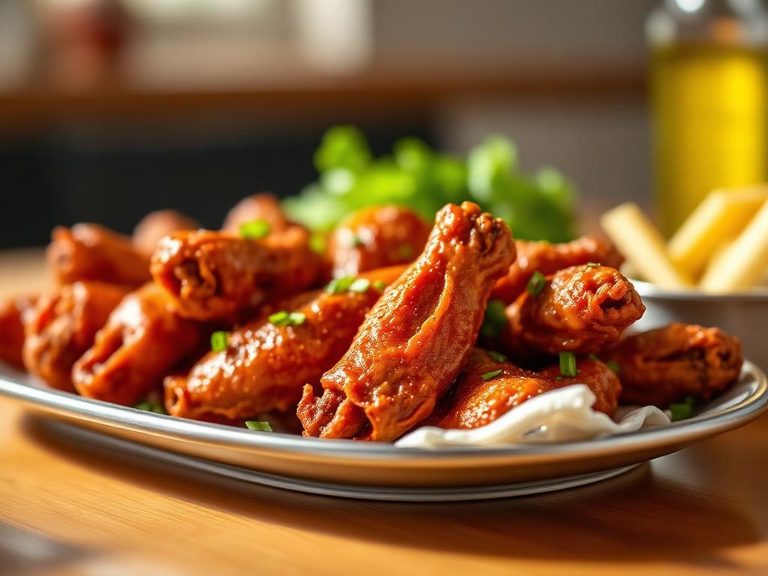
🌍 Where it's eaten
💡 Did you know?
The earliest known commercial meatless chicken product, 'Mock Chicken Legs,' was patented in the United States in 1917.
Full nutrition (USDA data · scales with serving)
| Water | 58.8 g |
| Energy | 224 kcal |
| Energy | 936 kj |
| Protein | 23.6 g |
| Total lipid (fat) | 12.7 g |
| Ash | 1.1 g |
| Carbohydrate, by difference | 3.6 g |
| Fiber, total dietary | 3.6 g |
| Total Sugars | 0.00 g |
| Calcium, Ca | 35.0 mg |
| Iron, Fe | 3.3 mg |
| Magnesium, Mg | 17.0 mg |
| Phosphorus, P | 335 mg |
| Potassium, K | 54.0 mg |
| Sodium, Na | 709 mg |
| Zinc, Zn | 0.70 mg |
| Copper, Cu | 0.69 mg |
| Manganese, Mn | 1.2 mg |
| Selenium, Se | 7.4 ug |
| Vitamin C, total ascorbic acid | 0.00 mg |
| Thiamin | 0.06 mg |
| Riboflavin | 0.25 mg |
| Niacin | 1.5 mg |
| Pantothenic acid | 0.58 mg |
| Vitamin B-6 | 0.70 mg |
| Folate, total | 76.0 ug |
| Folic acid | 0.00 ug |
| Folate, food | 76.0 ug |
| Folate, DFE | 76.0 ug |
| Choline, total | 71.6 mg |
| Vitamin B-12 | 2.2 ug |
| Vitamin B-12, added | 2.2 ug |
| Vitamin A, RAE | 0.00 ug |
| Retinol | 0.00 ug |
| Carotene, beta | 0.00 ug |
| Carotene, alpha | 0.00 ug |
| Cryptoxanthin, beta | 0.00 ug |
| Vitamin A, IU | 0.00 iu |
| Lycopene | 0.00 ug |
| Lutein + zeaxanthin | 0.00 ug |
| Vitamin E (alpha-tocopherol) | 2.7 mg |
| Vitamin E, added | 0.00 mg |
| Vitamin D (D2 + D3), International Units | 0.00 iu |
| Vitamin D (D2 + D3) | 0.00 ug |
| Vitamin K (phylloquinone) | 0.00 ug |
| Alcohol, ethyl | 0.00 g |
| Caffeine | 0.00 mg |
| Theobromine | 0.00 mg |
Fat & fatty acid profile (per 100g)
| Fatty acids, total saturated | 1.5 g |
| SFA 4:0 | 0.00 g |
| SFA 6:0 | 0.00 g |
| SFA 8:0 | 0.00 g |
| SFA 10:0 | 0.00 g |
| SFA 12:0 | 0.09 g |
| SFA 14:0 | 0.05 g |
| SFA 16:0 | 0.99 g |
| SFA 18:0 | 0.40 g |
| Fatty acids, total monounsaturated | 2.4 g |
| MUFA 16:1 | 0.00 g |
| MUFA 18:1 | 2.4 g |
| MUFA 20:1 | 0.00 g |
| MUFA 22:1 | 0.00 g |
| Fatty acids, total polyunsaturated | 5.0 g |
| PUFA 18:2 | 4.5 g |
| PUFA 18:3 | 0.56 g |
| PUFA 18:4 | 0.00 g |
| PUFA 20:4 | 0.00 g |
| PUFA 20:5 n-3 (EPA) | 0.00 g |
| PUFA 22:5 n-3 (DPA) | 0.00 g |
| PUFA 22:6 n-3 (DHA) | 0.00 g |
| Cholesterol | 0.00 mg |
Amino acid profile (per 100g)
Estimated from Restaurant, Latino, chicken and rice, entree, prepared — USDA does not publish this profile for Chicken.
| Tryptophan | 0.16 g |
| Threonine | 0.50 g |
| Isoleucine | 0.55 g |
| Leucine | 0.93 g |
| Lysine | 0.93 g |
| Methionine | 0.31 g |
| Cystine | 0.15 g |
| Phenylalanine | 0.51 g |
| Tyrosine | 0.35 g |
| Valine | 0.62 g |
| Arginine | 0.80 g |
| Histidine | 0.40 g |
| Alanine | 0.68 g |
| Aspartic acid | 1.1 g |
| Glutamic acid | 1.9 g |
| Glycine | 0.58 g |
| Proline | 0.51 g |
| Serine | 0.47 g |
FAQ
What is meatless chicken typically made from?
Common bases include soy protein, wheat gluten (seitan), or pea protein, which are processed to create a fibrous, meat-like texture.
Is it healthier than real chicken?
It's often lower in saturated fat and cholesterol but can be higher in sodium. Its healthiness depends on the specific product and preparation method.
How do I get the best texture when cooking?
For a crispier exterior, pan-fry or bake it with a light coating of oil. Avoid overcooking, which can make it rubbery.
Nutrient density (calculated · NRF9.3)
Nutrient Rich Foods index: beneficial nutrients (protein, fiber, vitamins, minerals) minus saturated fat, added sugar & sodium, per 100 kcal.
NRF9.3 index — Fulgoni, Keast & Drewnowski, 2009. Computed from USDA nutrients.
Weight-loss friendliness (composite index)
Energy density 2.24 kcal/g · 42% calories from protein · 3.6 g fiber · 0.0 g sugar per 100 g.
Composite of energy density (Rolls et al., 1999), protein & fiber satiety, minus sugar. A calculated heuristic — ranks satiety-per-calorie, not a clinical measure.
Dietary load (calculated from USDA values)
Potential renal acid load. Positive = acid-forming, negative = alkaline-forming.
Sodium-to-potassium ratio: 13.13 (lower is better — aim for ≤ 1)
Sodium:potassium per WHO potassium guidance. Computed from USDA nutrients.