

Cheese spread, pasteurized process, American
Whole food · Dairy and Egg Products
This is a smooth, creamy, and mild cheese product, typically sold in blocks or jars, known for its excellent melting properties and salty, savory flavor. Its texture is soft and spreadable when cold, becoming gooey and stretchy when heated, making it a staple for quick, comforting meals. Nutritionally, it's a dense source of protein and fat, providing significant energy in a small serving.
Calorie split: 23% protein · 12% carbs · 66% fat
↓ Full nutrition💚 Why it's loved
People love it for its unmatched convenience and nostalgic, comforting flavor that defines classic American grilled cheese and cheeseburgers. Its reliable melt and salty punch make it a versatile, crowd-pleasing ingredient for quick family meals and snacks.
⚠️ Watch-outs & how to enjoy it better
It is high in sodium and saturated fat, which should be monitored by those managing heart health or blood pressure. The pasteurized process also removes some of the complexity and probiotics found in natural cheeses. To counteract, pair it with fiber-rich vegetables (like in a veggie melt) or lean protein, and practice strict portion control by using it as a flavor accent rather than the main event.
Key benefits
- Excellent source of complete protein for muscle maintenance.
- High in calcium for bone and dental health.
- Provides vitamin A for vision and immune function.
- Convenient, shelf-stable, and requires no preparation.
- Melts smoothly without separating, ideal for sauces.
🍽️ Popular dishes
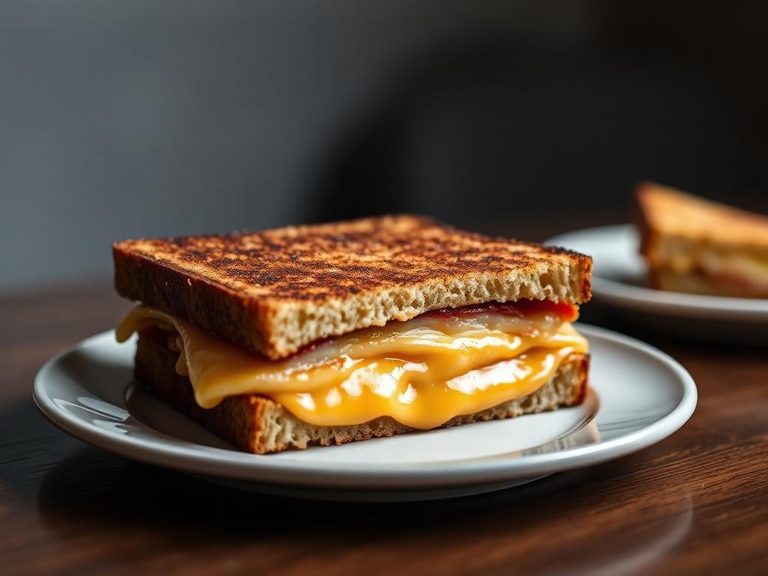
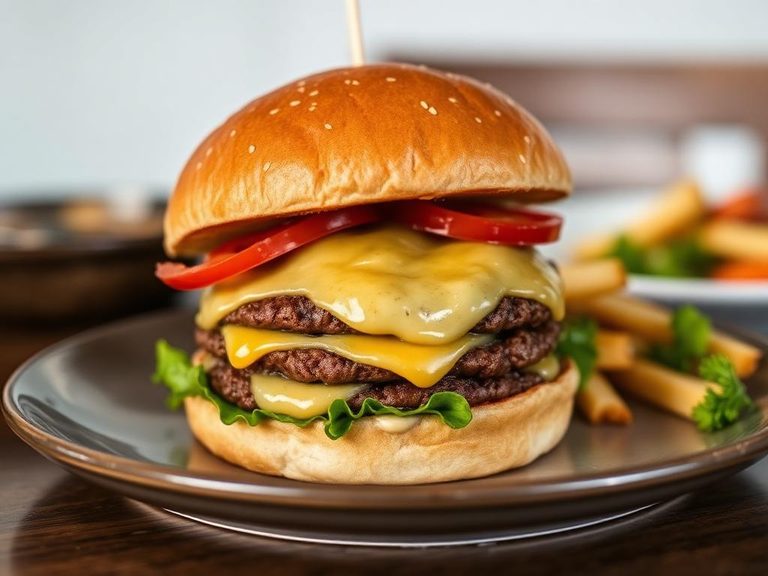
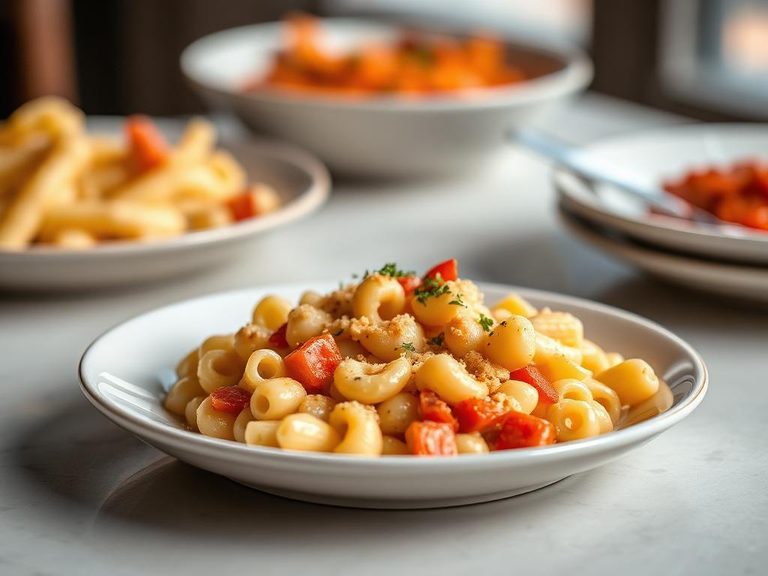
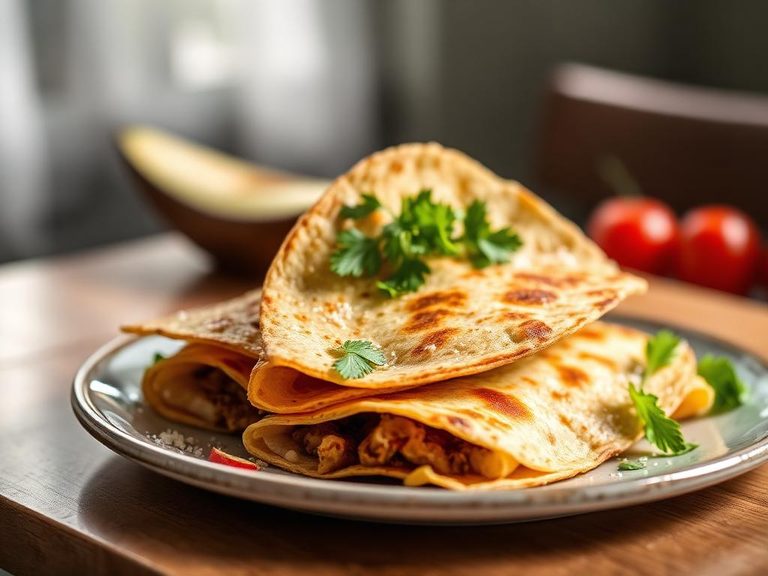
🌍 Where it's eaten
💡 Did you know?
The U.S. government has a formal standard of identity for 'Pasteurized Process Cheese Food,' specifying exactly how much cheese, moisture, and other ingredients it must contain to be sold under that name.
Full nutrition (USDA data · scales with serving)
| Water | 47.6 g |
| Energy | 290 kcal |
| Energy | 1215 kj |
| Protein | 16.4 g |
| Total lipid (fat) | 21.2 g |
| Ash | 6.0 g |
| Carbohydrate, by difference | 8.7 g |
| Fiber, total dietary | 0.00 g |
| Total Sugars | 7.3 g |
| Calcium, Ca | 562 mg |
| Iron, Fe | 0.33 mg |
| Magnesium, Mg | 29.0 mg |
| Phosphorus, P | 875 mg |
| Potassium, K | 242 mg |
| Sodium, Na | 1625 mg |
| Zinc, Zn | 2.6 mg |
| Copper, Cu | 0.03 mg |
| Manganese, Mn | 0.02 mg |
| Selenium, Se | 11.3 ug |
| Fluoride, F | 35.0 ug |
| Vitamin C, total ascorbic acid | 0.00 mg |
| Thiamin | 0.05 mg |
| Riboflavin | 0.43 mg |
| Niacin | 0.13 mg |
| Pantothenic acid | 0.69 mg |
| Vitamin B-6 | 0.12 mg |
| Folate, total | 7.0 ug |
| Folic acid | 0.00 ug |
| Folate, food | 7.0 ug |
| Folate, DFE | 7.0 ug |
| Choline, total | 36.2 mg |
| Vitamin B-12 | 0.40 ug |
| Vitamin B-12, added | 0.00 ug |
| Vitamin A, RAE | 173 ug |
| Retinol | 168 ug |
| Carotene, beta | 55.0 ug |
| Carotene, alpha | 0.00 ug |
| Cryptoxanthin, beta | 0.00 ug |
| Vitamin A, IU | 653 iu |
| Lycopene | 0.00 ug |
| Lutein + zeaxanthin | 0.00 ug |
| Vitamin E (alpha-tocopherol) | 0.19 mg |
| Vitamin E, added | 0.00 mg |
| Vitamin D (D2 + D3), International Units | 16.0 iu |
| Vitamin D (D2 + D3) | 0.40 ug |
| Vitamin D3 (cholecalciferol) | 0.40 ug |
| Vitamin K (phylloquinone) | 1.8 ug |
| Alcohol, ethyl | 0.00 g |
| Caffeine | 0.00 mg |
| Theobromine | 0.00 mg |
Fat & fatty acid profile (per 100g)
| Fatty acids, total saturated | 13.3 g |
| SFA 4:0 | 0.69 g |
| SFA 6:0 | 0.41 g |
| SFA 8:0 | 0.31 g |
| SFA 10:0 | 0.51 g |
| SFA 12:0 | 0.63 g |
| SFA 14:0 | 2.2 g |
| SFA 16:0 | 5.9 g |
| SFA 18:0 | 2.4 g |
| Fatty acids, total monounsaturated | 6.2 g |
| MUFA 16:1 | 0.56 g |
| MUFA 18:1 | 5.2 g |
| MUFA 20:1 | 0.00 g |
| MUFA 22:1 | 0.00 g |
| Fatty acids, total polyunsaturated | 0.62 g |
| PUFA 18:2 | 0.40 g |
| PUFA 18:3 | 0.22 g |
| PUFA 18:4 | 0.00 g |
| PUFA 20:4 | 0.00 g |
| PUFA 20:5 n-3 (EPA) | 0.00 g |
| PUFA 22:5 n-3 (DPA) | 0.00 g |
| PUFA 22:6 n-3 (DHA) | 0.00 g |
| Cholesterol | 55.0 mg |
Amino acid profile (per 100g)
| Tryptophan | 0.24 g |
| Threonine | 0.63 g |
| Isoleucine | 0.83 g |
| Leucine | 1.8 g |
| Lysine | 1.5 g |
| Methionine | 0.54 g |
| Cystine | 0.10 g |
| Phenylalanine | 0.93 g |
| Tyrosine | 0.89 g |
| Valine | 1.4 g |
| Arginine | 0.55 g |
| Histidine | 0.51 g |
| Alanine | 0.60 g |
| Aspartic acid | 1.1 g |
| Glutamic acid | 3.5 g |
| Glycine | 0.31 g |
| Proline | 2.3 g |
| Serine | 1.0 g |
FAQ
What's the difference between American cheese and pasteurized process cheese?
Pasteurized process cheese is the legal term for what's commonly called 'American cheese.' It's made by blending natural cheeses (like cheddar) with emulsifying salts and other ingredients, then heating and pasteurizing the mixture for a uniform texture and long shelf life.
Is it real cheese?
Yes, it's a cheese product. The primary ingredient is cheese, but it's combined with milk, emulsifiers, and salt. It's legally defined as 'pasteurized process cheese' or 'cheese food' depending on the exact formulation.
Why does it melt so perfectly without getting oily?
The emulsifying salts (like sodium citrate) added during processing prevent the fats and proteins from separating when heated. This creates the smooth, creamy melt that's ideal for sauces and sandwiches.
Nutrient density (calculated · NRF9.3)
Nutrient Rich Foods index: beneficial nutrients (protein, fiber, vitamins, minerals) minus saturated fat, added sugar & sodium, per 100 kcal.
NRF9.3 index — Fulgoni, Keast & Drewnowski, 2009. Computed from USDA nutrients.
Weight-loss friendliness (composite index)
Energy density 2.90 kcal/g · 23% calories from protein · 0.0 g fiber · 7.3 g sugar per 100 g.
Composite of energy density (Rolls et al., 1999), protein & fiber satiety, minus sugar. A calculated heuristic — ranks satiety-per-calorie, not a clinical measure.
Dietary load (calculated from USDA values)
Potential renal acid load. Positive = acid-forming, negative = alkaline-forming.
Sodium-to-potassium ratio: 6.71 (lower is better — aim for ≤ 1)
Sodium:potassium per WHO potassium guidance. Computed from USDA nutrients.