

Cheese, port de salut
Whole food · Dairy and Egg Products

Photo: Wikipedia
Port Salut is a semi-soft, mild cheese from France with a smooth, creamy texture and a thin, edible orange rind. Its flavor is buttery and slightly tangy, often described as a more approachable cousin to stronger washed-rind cheeses. Nutritionally, it's a dense source of high-quality protein and fat, with virtually no carbohydrates.
Calorie split: 27% protein · 1% carbs · 72% fat
↓ Full nutrition💚 Why it's loved
People adore its velvety, sliceable texture that melts beautifully and its universally appealing, mild flavor that doesn't overpower other ingredients. It's a cultural staple in French bistro cooking and a reliable crowd-pleaser on cheese boards.
⚠️ Watch-outs & how to enjoy it better
Its high saturated fat content means it should be enjoyed in moderation, especially by those monitoring heart health. The sodium level, while moderate for cheese, can add up in processed dishes. To counteract, pair thin slices with fiber-rich vegetables or whole-grain crackers, and use it as a flavor accent rather than the main component.
Key benefits
- Excellent source of complete protein for muscle maintenance.
- Rich in calcium for bone health.
- Provides fat-soluble vitamins like Vitamin A and K2.
- Contains conjugated linoleic acid (CLA) from grass-fed sources.
- Low in lactose, often tolerated by sensitive individuals.
🍽️ Popular dishes
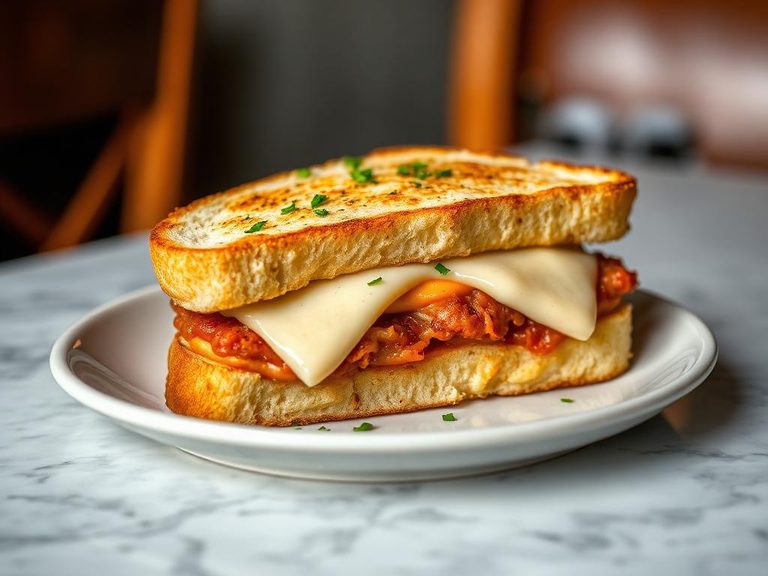
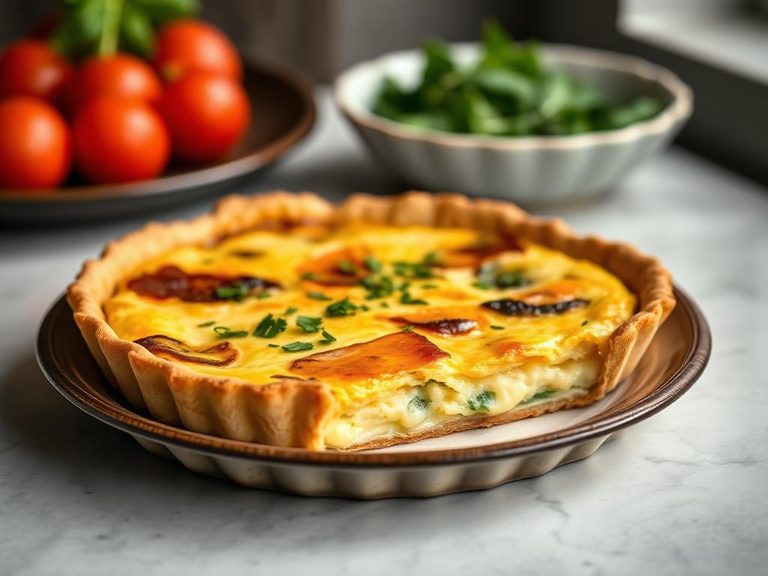
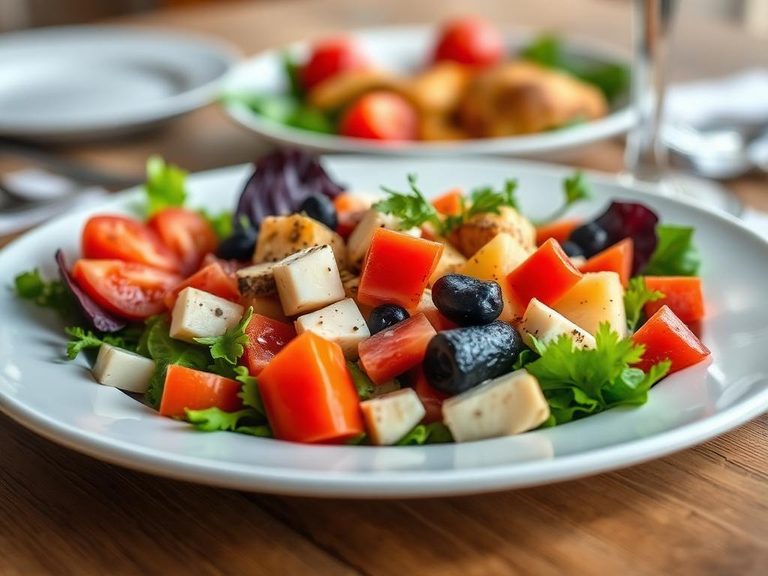
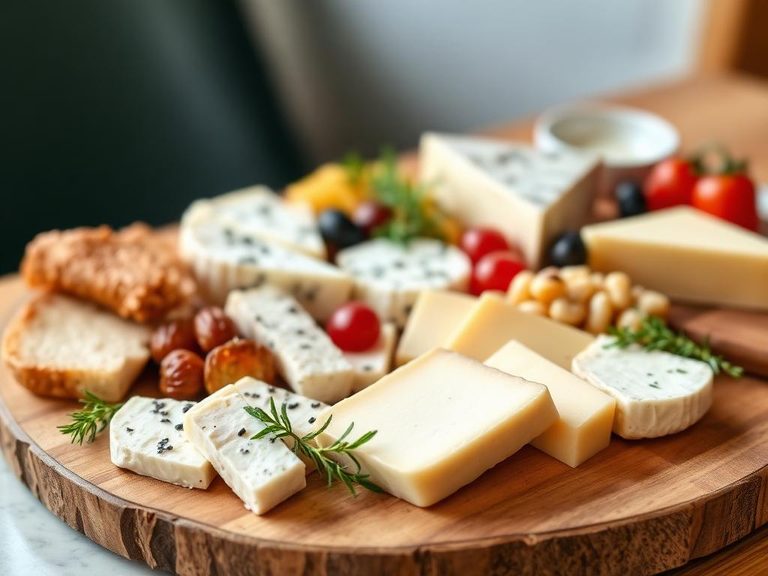
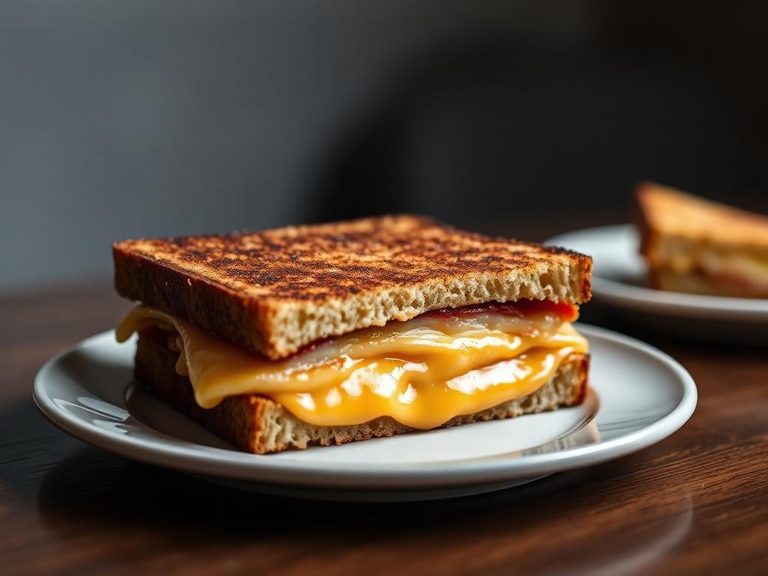
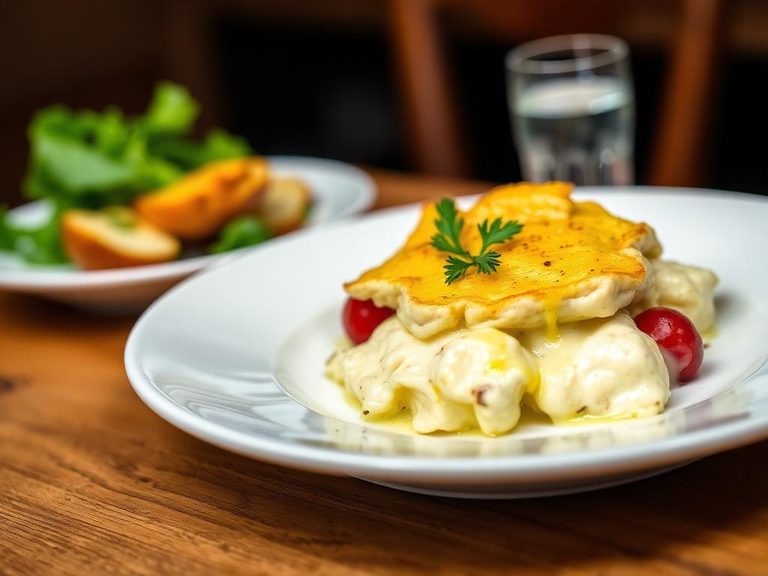
🌍 Where it's eaten
💡 Did you know?
Despite its name, Port Salut cheese does not originate from a port; it was created by Trappist monks in the village of Port-Salut in the 19th century.
Full nutrition (USDA data · scales with serving)
| Water | 45.5 g |
| Energy | 352 kcal |
| Energy | 1471 kj |
| Protein | 23.8 g |
| Total lipid (fat) | 28.2 g |
| Ash | 2.0 g |
| Carbohydrate, by difference | 0.57 g |
| Fiber, total dietary | 0.00 g |
| Total Sugars | 0.57 g |
| Calcium, Ca | 650 mg |
| Iron, Fe | 0.43 mg |
| Magnesium, Mg | 24.0 mg |
| Phosphorus, P | 360 mg |
| Potassium, K | 136 mg |
| Sodium, Na | 534 mg |
| Zinc, Zn | 2.6 mg |
| Copper, Cu | 0.02 mg |
| Manganese, Mn | 0.01 mg |
| Selenium, Se | 14.5 ug |
| Vitamin C, total ascorbic acid | 0.00 mg |
| Thiamin | 0.01 mg |
| Riboflavin | 0.24 mg |
| Niacin | 0.06 mg |
| Pantothenic acid | 0.21 mg |
| Vitamin B-6 | 0.05 mg |
| Folate, total | 18.0 ug |
| Folic acid | 0.00 ug |
| Folate, food | 18.0 ug |
| Folate, DFE | 18.0 ug |
| Choline, total | 15.4 mg |
| Vitamin B-12 | 1.5 ug |
| Vitamin B-12, added | 0.00 ug |
| Vitamin A, RAE | 315 ug |
| Retinol | 313 ug |
| Carotene, beta | 29.0 ug |
| Carotene, alpha | 0.00 ug |
| Cryptoxanthin, beta | 0.00 ug |
| Vitamin A, IU | 1092 iu |
| Lycopene | 0.00 ug |
| Lutein + zeaxanthin | 0.00 ug |
| Vitamin E (alpha-tocopherol) | 0.24 mg |
| Vitamin E, added | 0.00 mg |
| Vitamin D (D2 + D3), International Units | 21.0 iu |
| Vitamin D (D2 + D3) | 0.50 ug |
| Vitamin D3 (cholecalciferol) | 0.50 ug |
| Vitamin K (phylloquinone) | 2.4 ug |
| Alcohol, ethyl | 0.00 g |
| Caffeine | 0.00 mg |
| Theobromine | 0.00 mg |
Fat & fatty acid profile (per 100g)
| Fatty acids, total saturated | 16.7 g |
| SFA 4:0 | 1.0 g |
| SFA 6:0 | 0.56 g |
| SFA 8:0 | 0.34 g |
| SFA 10:0 | 0.68 g |
| SFA 12:0 | 0.77 g |
| SFA 14:0 | 2.7 g |
| SFA 16:0 | 6.6 g |
| SFA 18:0 | 3.4 g |
| Fatty acids, total monounsaturated | 9.3 g |
| MUFA 16:1 | 0.83 g |
| MUFA 18:1 | 8.1 g |
| MUFA 20:1 | 0.00 g |
| MUFA 22:1 | 0.00 g |
| Fatty acids, total polyunsaturated | 0.73 g |
| PUFA 18:2 | 0.38 g |
| PUFA 18:3 | 0.35 g |
| PUFA 18:4 | 0.00 g |
| PUFA 20:4 | 0.00 g |
| PUFA 20:5 n-3 (EPA) | 0.00 g |
| PUFA 22:5 n-3 (DPA) | 0.00 g |
| PUFA 22:6 n-3 (DHA) | 0.00 g |
| Cholesterol | 123 mg |
Amino acid profile (per 100g)
| Tryptophan | 0.34 g |
| Threonine | 0.88 g |
| Isoleucine | 1.4 g |
| Leucine | 2.5 g |
| Lysine | 2.0 g |
| Methionine | 0.73 g |
| Cystine | 0.13 g |
| Phenylalanine | 1.3 g |
| Tyrosine | 1.4 g |
| Valine | 1.7 g |
| Arginine | 0.83 g |
| Histidine | 0.69 g |
| Alanine | 0.79 g |
| Aspartic acid | 1.8 g |
| Glutamic acid | 5.3 g |
| Glycine | 0.48 g |
| Proline | 2.9 g |
| Serine | 1.4 g |
FAQ
What does Port Salut taste like?
It has a mild, buttery, and slightly tangy flavor with a smooth, creamy texture. The thin orange rind is edible but can be slightly more pungent.
Is Port Salut a good melting cheese?
Yes, it's excellent for melting. It becomes smooth and gooey without becoming oily, making it perfect for grilled sandwiches, quiches, and gratins.
How is Port Salut different from other cheeses?
It's a semi-soft, washed-rind cheese that is milder and creamier than stronger washed-rind varieties like Limburger, but richer than fresh cheeses like mozzarella.
Can I eat the rind?
Yes, the thin, orange rind is completely edible and is part of the cheese's character, though some prefer to trim it off.
Nutrient density (calculated · NRF9.3)
Nutrient Rich Foods index: beneficial nutrients (protein, fiber, vitamins, minerals) minus saturated fat, added sugar & sodium, per 100 kcal.
NRF9.3 index — Fulgoni, Keast & Drewnowski, 2009. Computed from USDA nutrients.
Weight-loss friendliness (composite index)
Energy density 3.52 kcal/g · 27% calories from protein · 0.0 g fiber · 0.6 g sugar per 100 g.
Composite of energy density (Rolls et al., 1999), protein & fiber satiety, minus sugar. A calculated heuristic — ranks satiety-per-calorie, not a clinical measure.
Dietary load (calculated from USDA values)
Potential renal acid load. Positive = acid-forming, negative = alkaline-forming.
Sodium-to-potassium ratio: 3.93 (lower is better — aim for ≤ 1)
Sodium:potassium per WHO potassium guidance. Computed from USDA nutrients.