

Cheese, limburger
Whole food · Dairy and Egg Products

Photo: Wikipedia
Limburger is a semi-soft, surface-ripened cheese famous for its pungent, barnyard aroma and surprisingly mild, tangy, and slightly meaty flavor. Its creamy, spreadable texture and thin, edible rind are a result of the same bacterium that gives human feet their characteristic smell. Nutritionally, it's a dense source of high-quality protein and fat, with virtually no carbohydrates.
Calorie split: 24% protein · 1% carbs · 75% fat
↓ Full nutrition💚 Why it's loved
People love Limburger for its bold, complex flavor that mellows into a rich, savory taste when aged, making it a prized component of hearty, rustic dishes. It's a cornerstone of German and Belgian beer culture, where its robust character stands up to strong brews.
⚠️ Watch-outs & how to enjoy it better
Its infamous smell can be off-putting to the uninitiated, and its high sodium and saturated fat content mean it should be consumed in moderation by those monitoring blood pressure or heart health. To counteract, pair it with potassium-rich foods like dark leafy greens or a crisp apple, and use it as a flavorful accent rather than the main event.
Key benefits
- Excellent source of complete protein for muscle maintenance
- High in fat-soluble vitamins like Vitamin A and B12
- Contains calcium and phosphorus for bone health
- Provides conjugated linoleic acid (CLA) from grass-fed sources
🍽️ Popular dishes
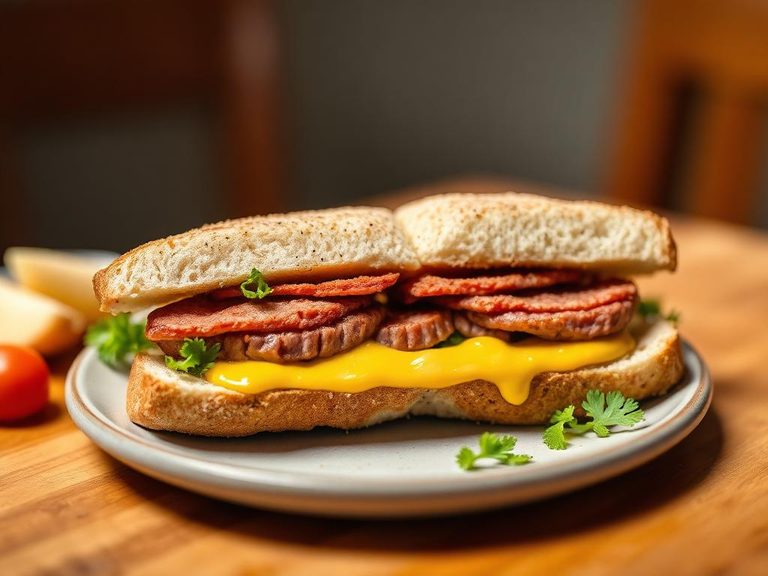

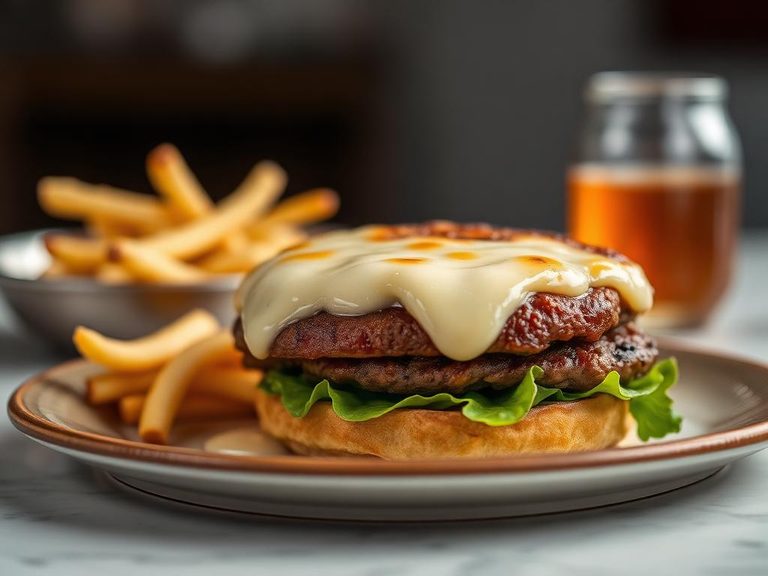
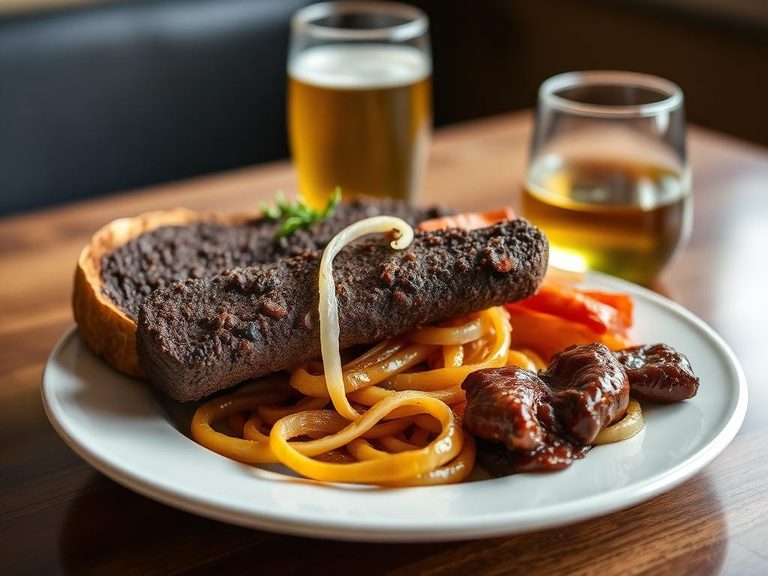
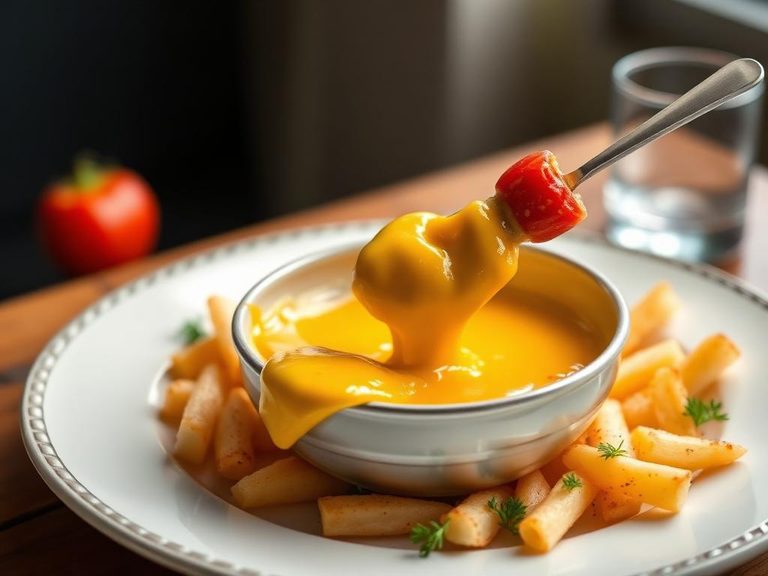
🌍 Where it's eaten
💡 Did you know?
The bacterium used to ripen Limburger, *Brevibacterium linens*, is the same species found on human skin and is responsible for both the cheese's aroma and foot odor.
Full nutrition (USDA data · scales with serving)
| Water | 48.4 g |
| Energy | 327 kcal |
| Energy | 1368 kj |
| Protein | 20.1 g |
| Total lipid (fat) | 27.3 g |
| Ash | 3.8 g |
| Carbohydrate, by difference | 0.49 g |
| Fiber, total dietary | 0.00 g |
| Total Sugars | 0.49 g |
| Calcium, Ca | 497 mg |
| Iron, Fe | 0.13 mg |
| Magnesium, Mg | 21.0 mg |
| Phosphorus, P | 393 mg |
| Potassium, K | 128 mg |
| Sodium, Na | 800 mg |
| Zinc, Zn | 2.1 mg |
| Copper, Cu | 0.02 mg |
| Manganese, Mn | 0.04 mg |
| Selenium, Se | 14.5 ug |
| Vitamin C, total ascorbic acid | 0.00 mg |
| Thiamin | 0.08 mg |
| Riboflavin | 0.50 mg |
| Niacin | 0.16 mg |
| Pantothenic acid | 1.2 mg |
| Vitamin B-6 | 0.09 mg |
| Folate, total | 58.0 ug |
| Folic acid | 0.00 ug |
| Folate, food | 58.0 ug |
| Folate, DFE | 58.0 ug |
| Choline, total | 15.4 mg |
| Vitamin B-12 | 1.0 ug |
| Vitamin B-12, added | 0.00 ug |
| Vitamin A, RAE | 340 ug |
| Retinol | 339 ug |
| Carotene, beta | 15.0 ug |
| Carotene, alpha | 0.00 ug |
| Cryptoxanthin, beta | 0.00 ug |
| Vitamin A, IU | 1155 iu |
| Lycopene | 0.00 ug |
| Lutein + zeaxanthin | 0.00 ug |
| Vitamin E (alpha-tocopherol) | 0.23 mg |
| Vitamin E, added | 0.00 mg |
| Vitamin D (D2 + D3), International Units | 20.0 iu |
| Vitamin D (D2 + D3) | 0.50 ug |
| Vitamin D3 (cholecalciferol) | 0.50 ug |
| Vitamin K (phylloquinone) | 2.3 ug |
| Alcohol, ethyl | 0.00 g |
| Caffeine | 0.00 mg |
| Theobromine | 0.00 mg |
Fat & fatty acid profile (per 100g)
| Fatty acids, total saturated | 16.7 g |
| SFA 4:0 | 0.80 g |
| SFA 6:0 | 0.49 g |
| SFA 8:0 | 0.28 g |
| SFA 10:0 | 0.48 g |
| SFA 12:0 | 0.87 g |
| SFA 14:0 | 2.8 g |
| SFA 16:0 | 7.4 g |
| SFA 18:0 | 3.1 g |
| Fatty acids, total monounsaturated | 8.6 g |
| MUFA 16:1 | 1.0 g |
| MUFA 18:1 | 7.2 g |
| MUFA 20:1 | 0.00 g |
| MUFA 22:1 | 0.00 g |
| Fatty acids, total polyunsaturated | 0.49 g |
| PUFA 18:2 | 0.34 g |
| PUFA 18:3 | 0.16 g |
| PUFA 18:4 | 0.00 g |
| PUFA 20:4 | 0.00 g |
| PUFA 20:5 n-3 (EPA) | 0.00 g |
| PUFA 22:5 n-3 (DPA) | 0.00 g |
| PUFA 22:6 n-3 (DHA) | 0.00 g |
| Cholesterol | 90.0 mg |
Amino acid profile (per 100g)
| Tryptophan | 0.29 g |
| Threonine | 0.74 g |
| Isoleucine | 1.2 g |
| Leucine | 2.1 g |
| Lysine | 1.7 g |
| Methionine | 0.62 g |
| Cystine | 0.11 g |
| Phenylalanine | 1.1 g |
| Tyrosine | 1.2 g |
| Valine | 1.4 g |
| Arginine | 0.70 g |
| Histidine | 0.58 g |
| Alanine | 0.67 g |
| Aspartic acid | 1.5 g |
| Glutamic acid | 4.5 g |
| Glycine | 0.41 g |
| Proline | 2.4 g |
| Serine | 1.1 g |
FAQ
Why does Limburger cheese smell so bad?
The strong aroma comes from *Brevibacterium linens*, a bacterium applied to the rind during aging. It breaks down proteins, creating sulfur compounds similar to those in smelly feet. The flavor inside is much milder.
How should I store Limburger cheese?
Wrap it in cheese paper or wax paper, then place it in a loose plastic bag in the refrigerator. The rind needs to breathe. It will keep for 1-2 weeks and the smell will intensify.
What drinks pair well with Limburger?
It's a classic match for strong, malty beers like Bock, Doppelbock, or Belgian Dubbel. The beer's sweetness and carbonation cut through the cheese's richness and complement its tang.
Nutrient density (calculated · NRF9.3)
Nutrient Rich Foods index: beneficial nutrients (protein, fiber, vitamins, minerals) minus saturated fat, added sugar & sodium, per 100 kcal.
NRF9.3 index — Fulgoni, Keast & Drewnowski, 2009. Computed from USDA nutrients.
Weight-loss friendliness (composite index)
Energy density 3.27 kcal/g · 25% calories from protein · 0.0 g fiber · 0.5 g sugar per 100 g.
Composite of energy density (Rolls et al., 1999), protein & fiber satiety, minus sugar. A calculated heuristic — ranks satiety-per-calorie, not a clinical measure.
Dietary load (calculated from USDA values)
Potential renal acid load. Positive = acid-forming, negative = alkaline-forming.
Sodium-to-potassium ratio: 6.25 (lower is better — aim for ≤ 1)
Sodium:potassium per WHO potassium guidance. Computed from USDA nutrients.