

Cauliflower, green, raw
Whole food · Vegetables and Vegetable Products

Photo: Wikipedia
Green cauliflower, often called Romanesco broccoli, is a striking cruciferous vegetable with a fractal-like, spiraling head and a vibrant lime-green hue. Its texture is firm and crisp when raw, with a nutty, slightly earthy flavor that's milder and sweeter than common white cauliflower. Nutritionally, it's a low-calorie powerhouse, providing over 3 grams of fiber and nearly 3 grams of protein per 100 grams.
Calorie split: 30% protein · 63% carbs · 7% fat
↓ Full nutrition💚 Why it's loved
People love it for its unique, beautiful appearance that makes any dish visually stunning, and its versatile, nutty flavor that holds up well to roasting, steaming, or raw preparations. It's a favorite in health-conscious and gourmet cooking for adding texture and color.
⚠️ Watch-outs & how to enjoy it better
Like other cruciferous vegetables, it contains goitrogens, which can interfere with thyroid function in very large amounts if consumed raw, especially by those with existing thyroid conditions. To counteract this, cooking it thoroughly (steaming or roasting) significantly reduces goitrogen content. Its high fiber can also cause digestive discomfort in some; starting with smaller portions and ensuring adequate water intake can help.
Key benefits
- Excellent source of dietary fiber for digestive health.
- Provides vitamin C, an antioxidant that supports immune function.
- Contains sulforaphane, a compound studied for its potential health benefits.
- Low in calories and carbohydrates, suitable for weight management.
- Offers plant-based protein and essential minerals like potassium.
🍽️ Popular dishes
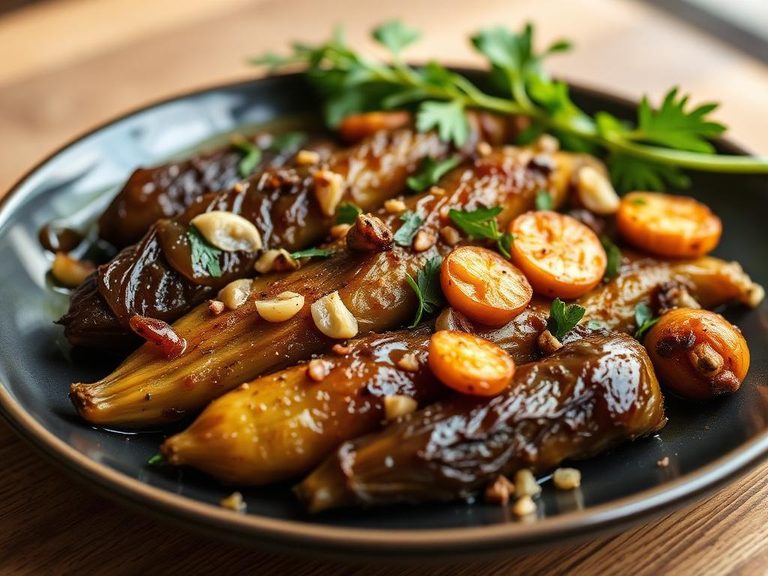
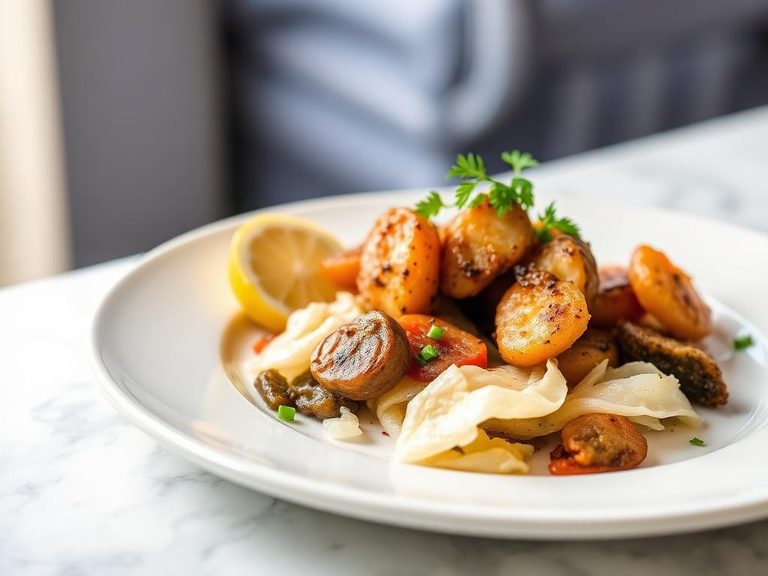
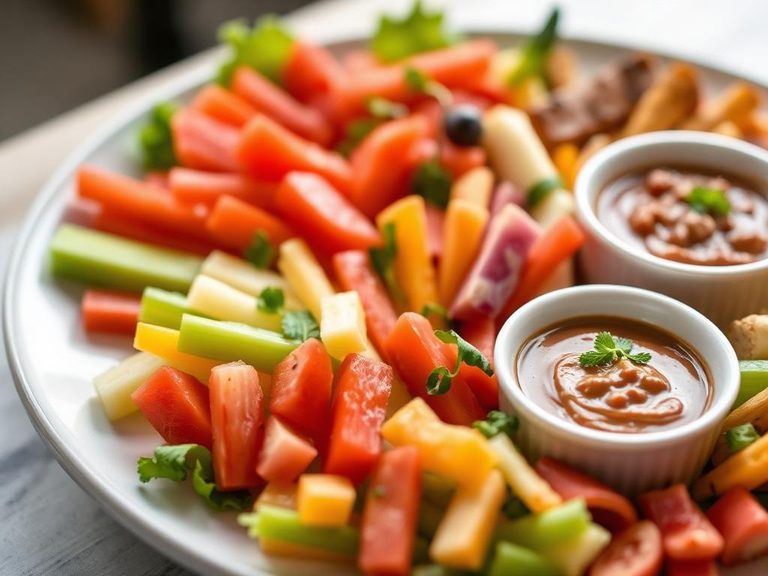
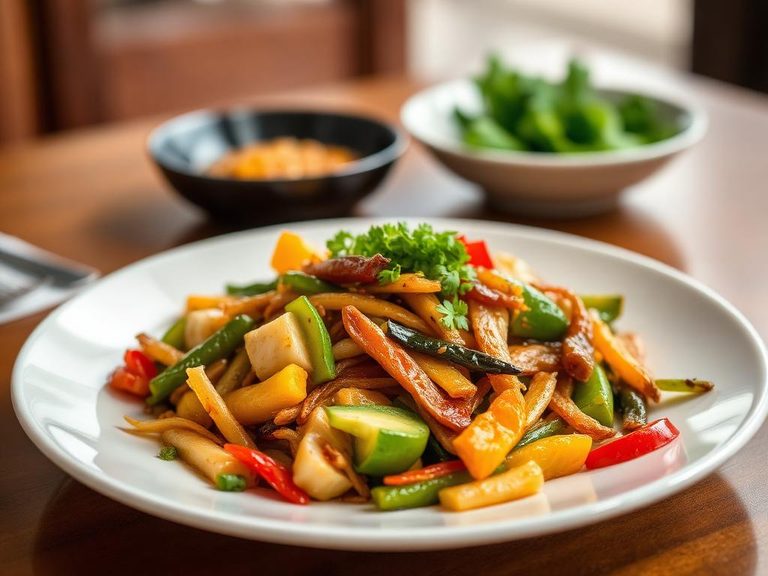
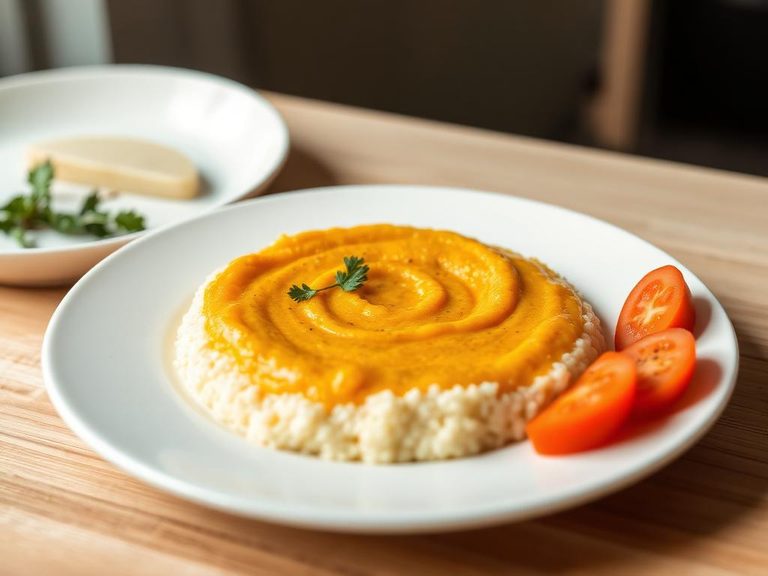
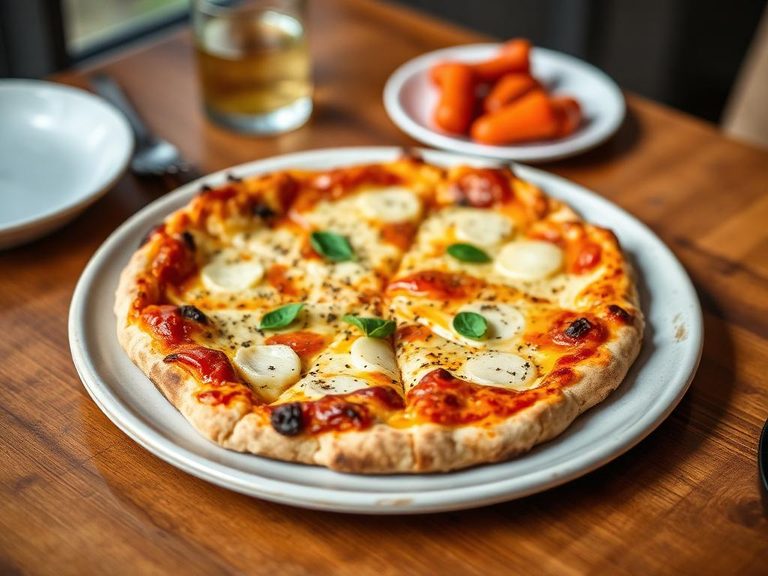
🌍 Where it's eaten
💡 Did you know?
Its mesmerizing, self-similar spiral pattern is a natural example of a Fibonacci sequence, where each bud is composed of smaller buds arranged in a logarithmic spiral.
Full nutrition (USDA data · scales with serving)
| Water | 89.8 g |
| Energy | 31.0 kcal |
| Energy | 130 kj |
| Protein | 3.0 g |
| Total lipid (fat) | 0.30 g |
| Ash | 0.88 g |
| Carbohydrate, by difference | 6.1 g |
| Fiber, total dietary | 3.2 g |
| Total Sugars | 3.0 g |
| Calcium, Ca | 33.0 mg |
| Iron, Fe | 0.73 mg |
| Magnesium, Mg | 20.0 mg |
| Phosphorus, P | 62.0 mg |
| Potassium, K | 300 mg |
| Sodium, Na | 23.0 mg |
| Zinc, Zn | 0.64 mg |
| Copper, Cu | 0.04 mg |
| Manganese, Mn | 0.25 mg |
| Selenium, Se | 0.60 ug |
| Vitamin C, total ascorbic acid | 88.1 mg |
| Thiamin | 0.08 mg |
| Riboflavin | 0.10 mg |
| Niacin | 0.73 mg |
| Pantothenic acid | 0.70 mg |
| Vitamin B-6 | 0.22 mg |
| Folate, total | 57.0 ug |
| Folic acid | 0.00 ug |
| Folate, food | 57.0 ug |
| Folate, DFE | 57.0 ug |
| Choline, total | 57.1 mg |
| Vitamin B-12 | 0.00 ug |
| Vitamin B-12, added | 0.00 ug |
| Vitamin A, RAE | 8.0 ug |
| Retinol | 0.00 ug |
| Carotene, beta | 93.0 ug |
| Carotene, alpha | 0.00 ug |
| Cryptoxanthin, beta | 0.00 ug |
| Vitamin A, IU | 155 iu |
| Lycopene | 0.00 ug |
| Lutein + zeaxanthin | 42.0 ug |
| Vitamin E (alpha-tocopherol) | 0.04 mg |
| Vitamin E, added | 0.00 mg |
| Vitamin D (D2 + D3), International Units | 0.00 iu |
| Vitamin D (D2 + D3) | 0.00 ug |
| Vitamin K (phylloquinone) | 20.2 ug |
| Alcohol, ethyl | 0.00 g |
| Caffeine | 0.00 mg |
| Theobromine | 0.00 mg |
Fat & fatty acid profile (per 100g)
| Fatty acids, total saturated | 0.05 g |
| SFA 4:0 | 0.00 g |
| SFA 6:0 | 0.00 g |
| SFA 8:0 | 0.00 g |
| SFA 10:0 | 0.00 g |
| SFA 12:0 | 0.00 g |
| SFA 14:0 | 0.00 g |
| SFA 16:0 | 0.04 g |
| SFA 18:0 | 0.00 g |
| Fatty acids, total monounsaturated | 0.03 g |
| MUFA 16:1 | 0.00 g |
| MUFA 18:1 | 0.02 g |
| MUFA 20:1 | 0.00 g |
| MUFA 22:1 | 0.00 g |
| Fatty acids, total polyunsaturated | 0.13 g |
| PUFA 18:2 | 0.03 g |
| PUFA 18:3 | 0.10 g |
| PUFA 18:4 | 0.00 g |
| PUFA 20:4 | 0.00 g |
| PUFA 20:5 n-3 (EPA) | 0.00 g |
| PUFA 22:5 n-3 (DPA) | 0.00 g |
| PUFA 22:6 n-3 (DHA) | 0.00 g |
| Fatty acids, total trans | 0.00 g |
| Cholesterol | 0.00 mg |
Amino acid profile (per 100g)
| Tryptophan | 0.04 g |
| Threonine | 0.11 g |
| Isoleucine | 0.11 g |
| Leucine | 0.17 g |
| Lysine | 0.16 g |
| Methionine | 0.04 g |
| Cystine | 0.03 g |
| Phenylalanine | 0.10 g |
| Tyrosine | 0.06 g |
| Valine | 0.15 g |
| Arginine | 0.14 g |
| Histidine | 0.06 g |
| Alanine | 0.16 g |
| Aspartic acid | 0.34 g |
| Glutamic acid | 0.39 g |
| Glycine | 0.10 g |
| Proline | 0.13 g |
| Serine | 0.15 g |
FAQ
What's the difference between green cauliflower and broccoli?
While both are cruciferous, green cauliflower (Romanesco) has a distinct conical, fractal shape and a milder, nuttier flavor. Broccoli has a more tree-like structure with a denser, more bitter floret taste.
How do I keep it from turning yellow?
Store it unwashed in a perforated plastic bag in the refrigerator's crisper drawer. Use it within 3-5 days for best color and flavor, as chlorophyll can degrade over time.
Is it safe to eat raw?
Yes, it's safe and delicious raw in salads or with dips. However, cooking it makes its nutrients more bioavailable and reduces compounds like goitrogens, which is a consideration for those with thyroid concerns.
Nutrient density (calculated · NRF9.3)
Nutrient Rich Foods index: beneficial nutrients (protein, fiber, vitamins, minerals) minus saturated fat, added sugar & sodium, per 100 kcal.
NRF9.3 index — Fulgoni, Keast & Drewnowski, 2009. Computed from USDA nutrients.
Weight-loss friendliness (composite index)
Energy density 0.31 kcal/g · 38% calories from protein · 3.2 g fiber · 3.0 g sugar per 100 g.
Composite of energy density (Rolls et al., 1999), protein & fiber satiety, minus sugar. A calculated heuristic — ranks satiety-per-calorie, not a clinical measure.
Dietary load (calculated from USDA values)
Potential renal acid load. Positive = acid-forming, negative = alkaline-forming.
Sodium-to-potassium ratio: 0.08 (lower is better — aim for ≤ 1)
Sodium:potassium per WHO potassium guidance. Computed from USDA nutrients.