

Bread, kneel down (Navajo)
Whole food · American Indian/Alaska Native Foods

Photo: Wikipedia
Navajo bread, often called frybread, is a golden, puffy, and slightly chewy bread with a crisp exterior and a soft, airy interior. Its flavor is mildly sweet and yeasty, with a rich, satisfying mouthfeel from being fried in oil. Nutritionally, it is a dense source of carbohydrates, providing quick energy with minimal protein or fat.
Calorie split: 9% protein · 81% carbs · 10% fat
↓ Full nutrition💚 Why it's loved
People love it for its comforting, warm, and slightly greasy indulgence, which evokes a strong sense of nostalgia and community. Its versatility allows it to be a simple side or the foundation for a hearty meal, making it a beloved staple at gatherings and family tables.
⚠️ Watch-outs & how to enjoy it better
Due to its high carbohydrate content and preparation method (deep-frying), it can cause rapid blood-sugar spikes and is calorie-dense. To counteract this, pair it with protein-rich toppings like beans or meat, or consume it in moderation as part of a balanced meal.
Key benefits
- Excellent source of quick energy from carbohydrates
- Simple preparation with basic pantry staples
- Cultural staple in many Native American communities
- Versatile base for both sweet and savory dishes
- Provides a comforting, warm, and filling meal
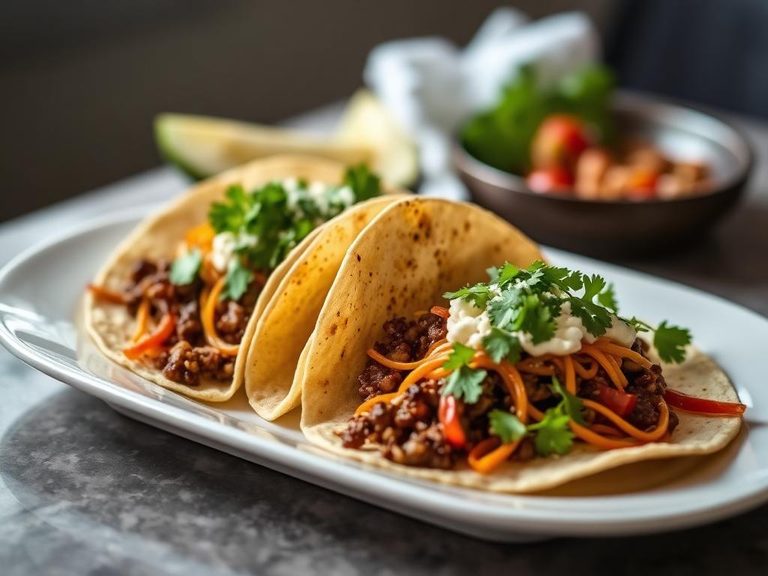
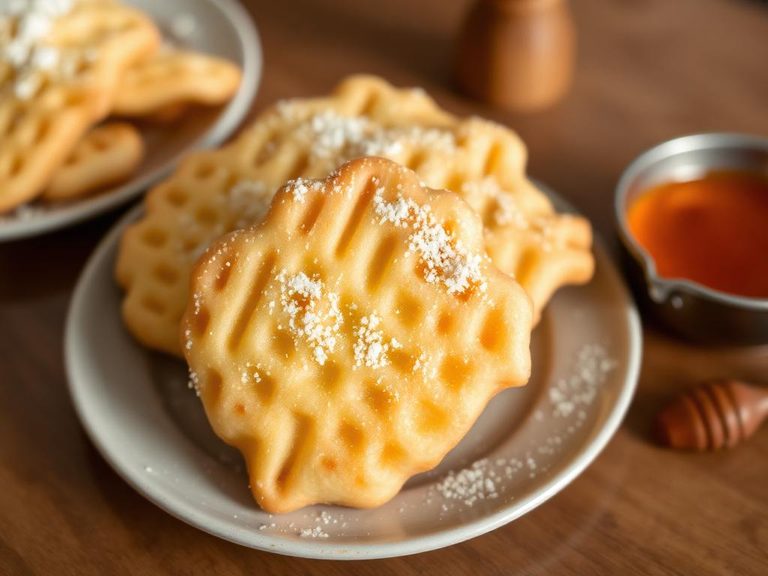
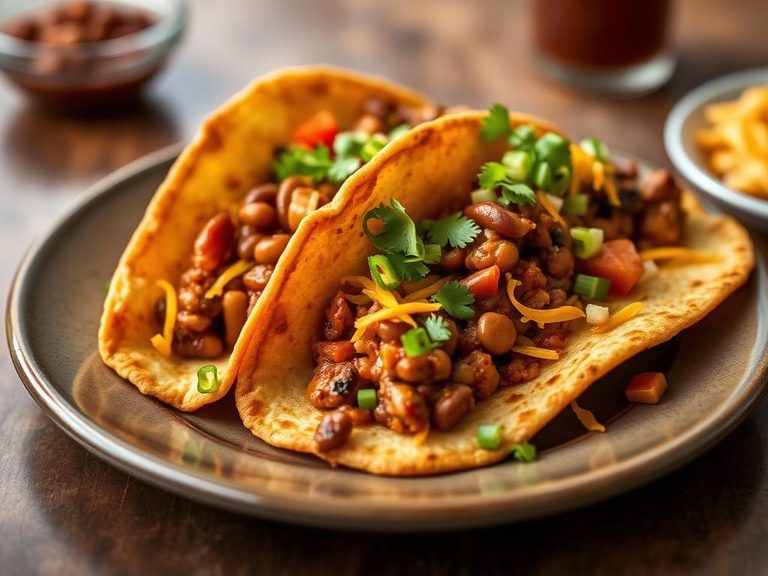
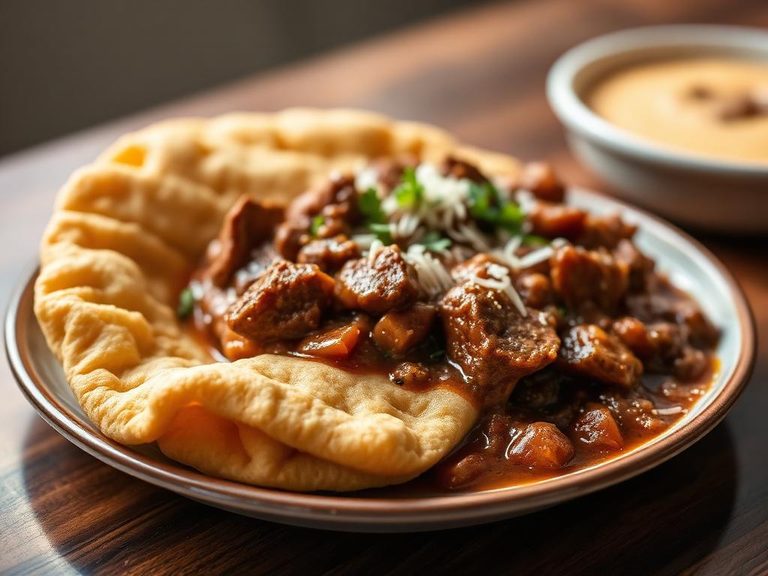
🍽️ Popular dishes
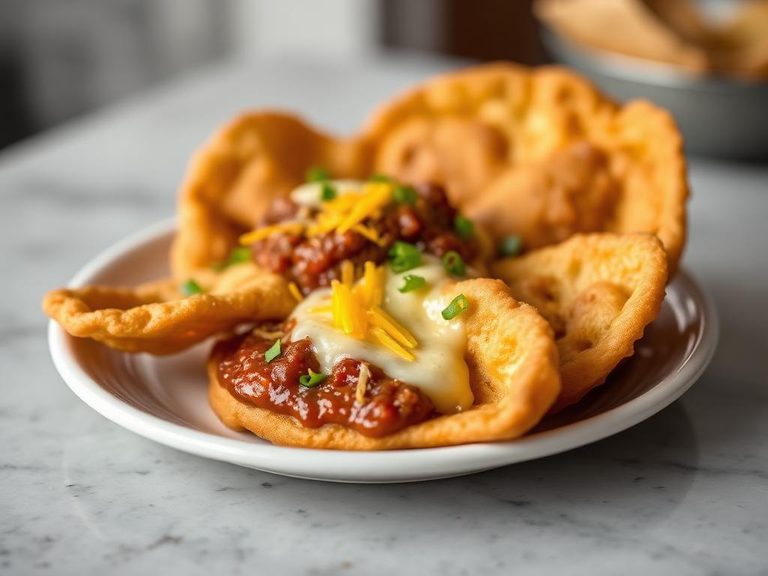
🌍 Where it's eaten
💡 Did you know?
Frybread was created in the 19th century using government commodity rations (flour, lard, sugar) given to displaced Native American tribes, making it a complex symbol of both resilience and historical hardship.
Full nutrition (USDA data · scales with serving)
| Water | 53.0 g |
| Energy | 195 kcal |
| Energy | 816 kj |
| Protein | 4.3 g |
| Total lipid (fat) | 2.2 g |
| Ash | 1.1 g |
| Carbohydrate, by difference | 39.5 g |
| Total Sugars | 3.7 g |
| Sucrose | 2.2 g |
| Glucose | 0.82 g |
| Fructose | 0.70 g |
| Lactose | 0.00 g |
| Maltose | 0.00 g |
| Galactose | 0.00 g |
| Starch | 28.3 g |
| Calcium, Ca | 5.0 mg |
| Iron, Fe | 1.1 mg |
| Magnesium, Mg | 55.0 mg |
| Phosphorus, P | 164 mg |
| Potassium, K | 320 mg |
| Sodium, Na | 126 mg |
| Zinc, Zn | 1.5 mg |
| Copper, Cu | 0.10 mg |
| Manganese, Mn | 0.30 mg |
| Selenium, Se | 11.9 ug |
| Thiamin | 0.12 mg |
| Riboflavin | 0.13 mg |
| Niacin | 2.5 mg |
| Pantothenic acid | 0.35 mg |
| Folate, total | 98.0 ug |
| Folate, food | 98.0 ug |
| Vitamin E (alpha-tocopherol) | 0.00 mg |
| Tocopherol, beta | 0.00 mg |
| Tocopherol, gamma | 1.3 mg |
| Tocopherol, delta | 0.00 mg |
| Tocotrienol, alpha | 0.00 mg |
| Tocotrienol, beta | 0.00 mg |
| Tocotrienol, gamma | 0.71 mg |
| Tocotrienol, delta | 0.00 mg |
| Vitamin K (phylloquinone) | 0.30 ug |
| Vitamin K (Dihydrophylloquinone) | 0.50 ug |
Fat & fatty acid profile (per 100g)
| Fatty acids, total saturated | 0.35 g |
| SFA 8:0 | 0.00 g |
| SFA 10:0 | 0.00 g |
| SFA 12:0 | 0.00 g |
| SFA 14:0 | 0.00 g |
| SFA 15:0 | 0.00 g |
| SFA 16:0 | 0.29 g |
| SFA 17:0 | 0.00 g |
| SFA 18:0 | 0.05 g |
| SFA 20:0 | 0.01 g |
| SFA 22:0 | 0.01 g |
| Fatty acids, total monounsaturated | 0.60 g |
| MUFA 14:1 | 0.00 g |
| MUFA 15:1 | 0.00 g |
| MUFA 16:1 | 0.00 g |
| MUFA 17:1 | 0.00 g |
| MUFA 18:1 | 0.59 g |
| MUFA 20:1 | 0.01 g |
| Fatty acids, total polyunsaturated | 0.85 g |
| PUFA 18:2 | 0.82 g |
| PUFA 18:3 | 0.03 g |
| PUFA 18:3 n-3 c,c,c (ALA) | 0.03 g |
| PUFA 18:3 n-6 c,c,c | 0.00 g |
| PUFA 20:2 n-6 c,c | 0.00 g |
| PUFA 20:3 | 0.00 g |
| PUFA 20:4 | 0.00 g |
Amino acid profile (per 100g)
Estimated from Bread, salvadoran sweet cheese (quesadilla salvadorena) — USDA does not publish this profile for Bread.
| Tryptophan | 0.07 g |
| Threonine | 0.21 g |
| Isoleucine | 0.30 g |
| Leucine | 0.65 g |
| Lysine | 0.50 g |
| Methionine | 0.28 g |
| Cystine | 0.06 g |
| Phenylalanine | 0.37 g |
| Tyrosine | 0.23 g |
| Valine | 0.43 g |
| Arginine | 0.25 g |
| Histidine | 0.15 g |
| Alanine | 0.36 g |
| Aspartic acid | 0.59 g |
| Glutamic acid | 1.3 g |
| Glycine | 0.20 g |
| Proline | 0.83 g |
| Serine | 0.45 g |
| Hydroxyproline | 0.00 g |
FAQ
What is the difference between frybread and bannock?
Frybread is a specific type of Native American frybread, while bannock is a broader term for a simple fried or baked flatbread found in many Indigenous cuisines across North America. They are very similar in preparation and ingredients.
Can frybread be baked instead of fried?
While traditional frybread is deep-fried, it can be baked for a less greasy version, though it will lose some of its characteristic puff and crisp texture.
Why is frybread sometimes considered controversial?
It is a symbol of both cultural survival and the trauma of forced relocation, as it was born from limited government rations. Its high calorie and carb content also raises health discussions within communities.
Nutrient density (calculated · NRF9.3)
Nutrient Rich Foods index: beneficial nutrients (protein, fiber, vitamins, minerals) minus saturated fat, added sugar & sodium, per 100 kcal.
NRF9.3 index — Fulgoni, Keast & Drewnowski, 2009. Computed from USDA nutrients.
Weight-loss friendliness (composite index)
Energy density 1.95 kcal/g · 9% calories from protein · 0.0 g fiber · 3.7 g sugar per 100 g.
Composite of energy density (Rolls et al., 1999), protein & fiber satiety, minus sugar. A calculated heuristic — ranks satiety-per-calorie, not a clinical measure.
Dietary load (calculated from USDA values)
Potential renal acid load. Positive = acid-forming, negative = alkaline-forming.
Sodium-to-potassium ratio: 0.39 (lower is better — aim for ≤ 1)
Sodium:potassium per WHO potassium guidance. Computed from USDA nutrients.