

Beverages, Energy drink, RED BULL
Whole food · Beverages

Photo: Wikipedia
Red Bull is a carbonated, taurine-and-caffeine fortified energy drink with a distinctively sharp, sweet, and slightly medicinal citrus flavor. Its thin, watery texture delivers a quick jolt, packing about 11g of sugar and 80mg of caffeine per standard 250ml can. Nutritionally, it's essentially liquid sugar water with added stimulants, offering no significant vitamins, minerals, or macronutrients.
Calorie split: 4% protein · 96% carbs · 0% fat
↓ Full nutrition💚 Why it's loved
People love it for the immediate, predictable surge of energy and focus, especially during long drives, study sessions, or pre-workout. Its iconic silver-blue can and association with extreme sports and high-energy culture have made it a global lifestyle symbol.
⚠️ Watch-outs & how to enjoy it better
The high sugar content can lead to a rapid blood-spike followed by a crash, and the caffeine may cause jitters or disrupt sleep. Those with heart conditions, anxiety, or caffeine sensitivity should be cautious. To counteract, pair it with a protein-rich snack to slow sugar absorption, limit to one can, and avoid consumption late in the day.
Key benefits
- Provides a rapid mental and physical energy boost via caffeine.
- Enhances alertness and concentration in the short term.
- Convenient, portable source of quick calories from sugar.
- Widely available and consistent in taste and effect.
🍽️ Popular dishes
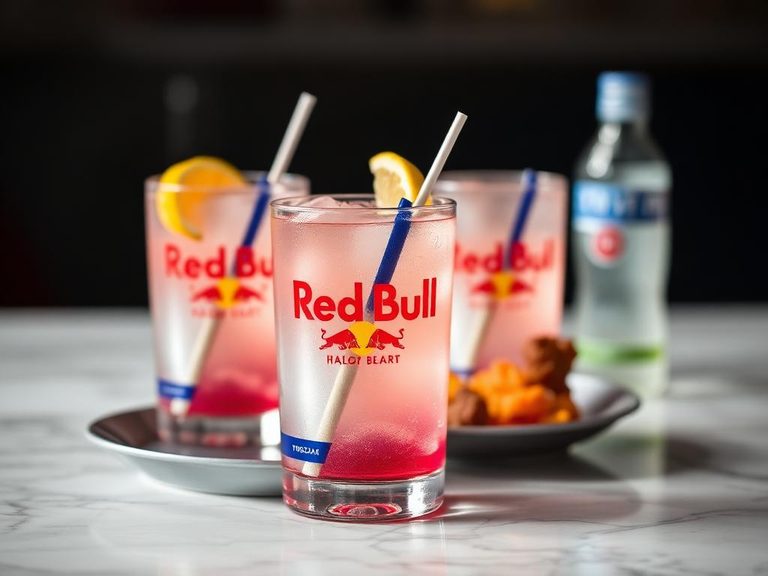
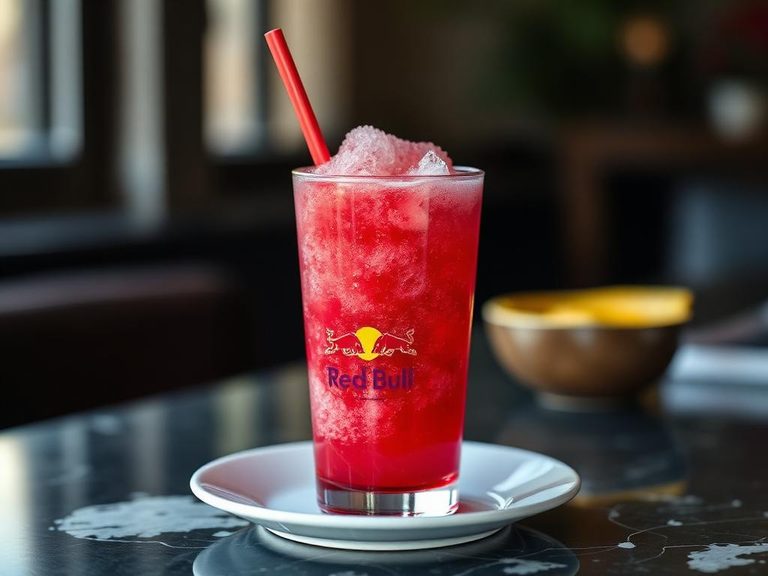
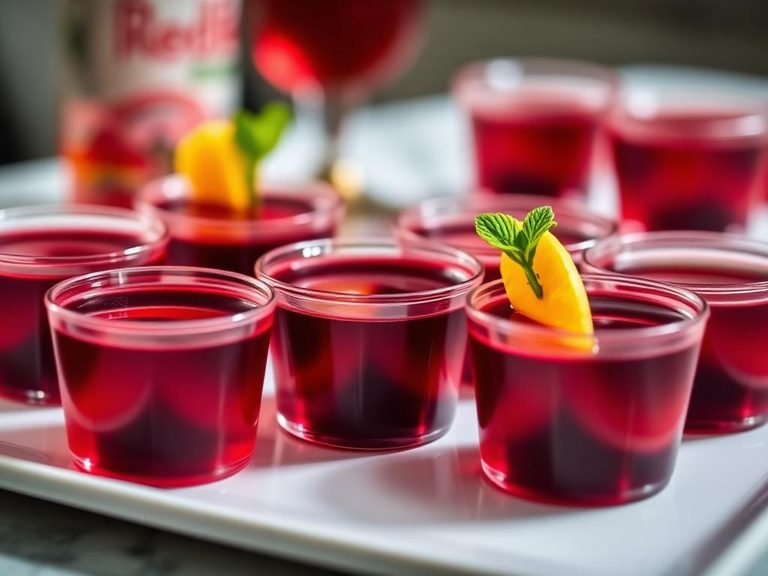
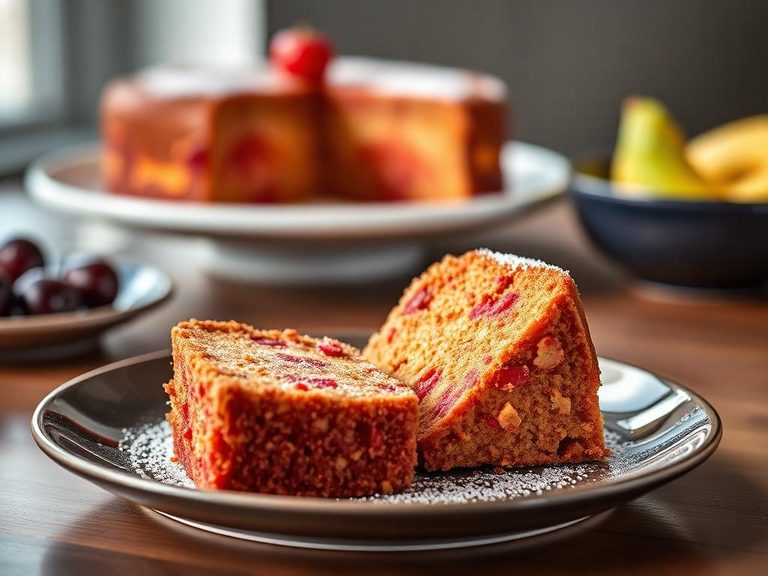
🌍 Where it's eaten
💡 Did you know?
The formula was originally developed in Thailand by mixing a sweetened carbonated syrup with caffeine from local coffee beans, sold to truck drivers and laborers to combat fatigue.
Full nutrition (USDA data · scales with serving)
| Water | 89.2 g |
| Energy | 43.0 kcal |
| Energy | 179 kj |
| Protein | 0.46 g |
| Total lipid (fat) | 0.00 g |
| Ash | 0.10 g |
| Carbohydrate, by difference | 10.2 g |
| Fiber, total dietary | 0.00 g |
| Total Sugars | 10.2 g |
| Sucrose | 5.2 g |
| Glucose | 3.4 g |
| Fructose | 1.6 g |
| Lactose | 0.00 g |
| Maltose | 0.00 g |
| Galactose | 0.00 g |
| Calcium, Ca | 6.0 mg |
| Iron, Fe | 0.06 mg |
| Magnesium, Mg | 19.0 mg |
| Phosphorus, P | 0.00 mg |
| Potassium, K | 3.0 mg |
| Sodium, Na | 39.0 mg |
| Zinc, Zn | 0.01 mg |
| Copper, Cu | 0.00 mg |
| Manganese, Mn | 0.01 mg |
| Selenium, Se | 0.20 ug |
| Vitamin C, total ascorbic acid | 0.00 mg |
| Thiamin | 0.04 mg |
| Riboflavin | 0.10 mg |
| Niacin | 9.8 mg |
| Pantothenic acid | 1.5 mg |
| Vitamin B-6 | 2.2 mg |
| Folate, total | 0.00 ug |
| Folic acid | 0.00 ug |
| Folate, food | 0.00 ug |
| Folate, DFE | 0.00 ug |
| Choline, total | 0.30 mg |
| Vitamin B-12 | 2.0 ug |
| Vitamin B-12, added | 2.0 ug |
| Vitamin A, RAE | 0.00 ug |
| Retinol | 0.00 ug |
| Carotene, beta | 0.00 ug |
| Carotene, alpha | 0.00 ug |
| Cryptoxanthin, beta | 0.00 ug |
| Vitamin A, IU | 0.00 iu |
| Lycopene | 0.00 ug |
| Lutein + zeaxanthin | 0.00 ug |
| Vitamin E (alpha-tocopherol) | 0.00 mg |
| Vitamin E, added | 0.00 mg |
| Vitamin D (D2 + D3), International Units | 0.00 iu |
| Vitamin D (D2 + D3) | 0.00 ug |
| Vitamin K (phylloquinone) | 0.00 ug |
| Alcohol, ethyl | 0.00 g |
| Caffeine | 29.0 mg |
| Theobromine | 0.00 mg |
Fat & fatty acid profile (per 100g)
| Fatty acids, total saturated | 0.00 g |
| SFA 4:0 | 0.00 g |
| SFA 6:0 | 0.00 g |
| SFA 8:0 | 0.00 g |
| SFA 10:0 | 0.00 g |
| SFA 12:0 | 0.00 g |
| SFA 14:0 | 0.00 g |
| SFA 16:0 | 0.00 g |
| SFA 18:0 | 0.00 g |
| Fatty acids, total monounsaturated | 0.00 g |
| MUFA 16:1 | 0.00 g |
| MUFA 18:1 | 0.00 g |
| MUFA 20:1 | 0.00 g |
| MUFA 22:1 | 0.00 g |
| Fatty acids, total polyunsaturated | 0.00 g |
| PUFA 18:2 | 0.00 g |
| PUFA 18:3 | 0.00 g |
| PUFA 18:4 | 0.00 g |
| PUFA 20:4 | 0.00 g |
| PUFA 20:5 n-3 (EPA) | 0.00 g |
| PUFA 22:5 n-3 (DPA) | 0.00 g |
| PUFA 22:6 n-3 (DHA) | 0.00 g |
| Fatty acids, total trans | 0.00 g |
| Cholesterol | 0.00 mg |
Amino acid profile (per 100g)
Estimated from Beverages, carbonated, tonic water — USDA does not publish this profile for Beverages.
| Tryptophan | 0.00 g |
| Threonine | 0.00 g |
| Isoleucine | 0.00 g |
| Leucine | 0.00 g |
| Lysine | 0.00 g |
| Methionine | 0.00 g |
| Cystine | 0.00 g |
| Phenylalanine | 0.00 g |
| Tyrosine | 0.00 g |
| Valine | 0.00 g |
| Arginine | 0.00 g |
| Histidine | 0.00 g |
| Alanine | 0.00 g |
| Aspartic acid | 0.00 g |
| Glutamic acid | 0.00 g |
| Glycine | 0.00 g |
| Proline | 0.00 g |
| Serine | 0.00 g |
FAQ
How much caffeine is in a Red Bull?
A standard 250ml (8.4 oz) can contains 80mg of caffeine, which is roughly equivalent to a cup of coffee.
Is Red Bull vegan?
Yes, Red Bull's ingredients are considered vegan-friendly, as they contain no animal-derived products.
Why does Red Bull come in such a small can?
The original 250ml can size was designed to deliver a precise, measured dose of caffeine and sugar for functional energy, not for casual refreshment.
Nutrient density (calculated · NRF9.3)
Nutrient Rich Foods index: beneficial nutrients (protein, fiber, vitamins, minerals) minus saturated fat, added sugar & sodium, per 100 kcal.
NRF9.3 index — Fulgoni, Keast & Drewnowski, 2009. Computed from USDA nutrients.
Weight-loss friendliness (composite index)
Energy density 0.43 kcal/g · 4% calories from protein · 0.0 g fiber · 10.2 g sugar per 100 g.
Composite of energy density (Rolls et al., 1999), protein & fiber satiety, minus sugar. A calculated heuristic — ranks satiety-per-calorie, not a clinical measure.
Dietary load (calculated from USDA values)
Potential renal acid load. Positive = acid-forming, negative = alkaline-forming.
Sodium-to-potassium ratio: 13.00 (lower is better — aim for ≤ 1)
Sodium:potassium per WHO potassium guidance. Computed from USDA nutrients.