

Beef, round, tip round, roast, separable lean only, trimmed to 0" fat, select, raw
Whole food · Beef Products
This is the lean, boneless cut from the beef round, specifically the tip section, prized for its deep red color and firm, fine-grained texture. When roasted whole, it develops a savory, beefy flavor with a satisfyingly tender bite if not overcooked. Nutritionally, it's a powerhouse of high-quality protein with minimal fat, making it a staple for high-protein, low-fat diets.
Calorie split: 74% protein · 0% carbs · 26% fat
↓ Full nutrition💚 Why it's loved
People love it for its clean, pronounced beef flavor and remarkable versatility—it can be the centerpiece of a Sunday roast or sliced thin for stir-fries and sandwiches. Its leanness also makes it a go-to for health-conscious cooks who don't want to sacrifice the satisfying taste of red meat.
⚠️ Watch-outs & how to enjoy it better
Its very low fat content means it can become dry, tough, and chewy if overcooked, which is a common pitfall. To counteract this, use a meat thermometer to pull it from the oven at 130-135°F (54-57°C) for medium-rare, and always let it rest for 10-15 minutes before slicing against the grain. For even more moisture, consider marinating or basting.
Key benefits
- Excellent source of complete protein for muscle maintenance and growth.
- Very low in fat, especially saturated fat, compared to other beef cuts.
- Rich in essential minerals like iron, zinc, and selenium.
- Contains B vitamins, particularly B12, crucial for nerve function and energy metabolism.
- A versatile base for both hearty roasts and quick-cooking preparations.
🍽️ Popular dishes
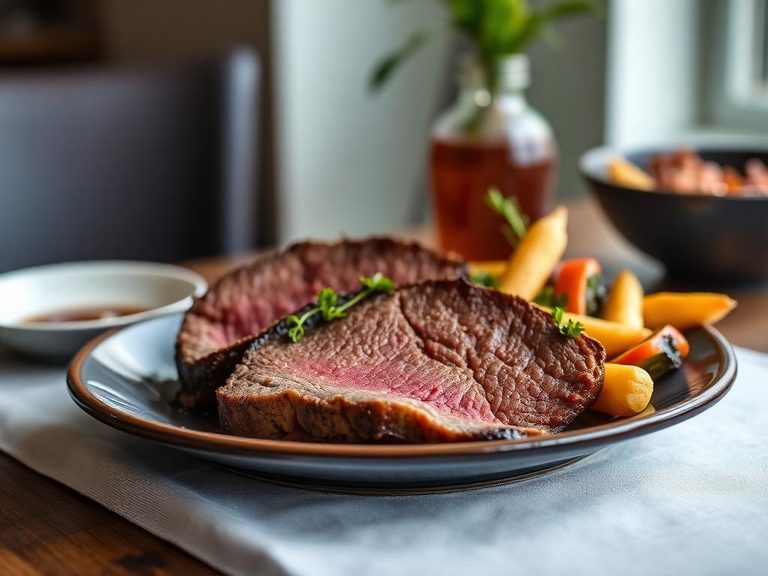
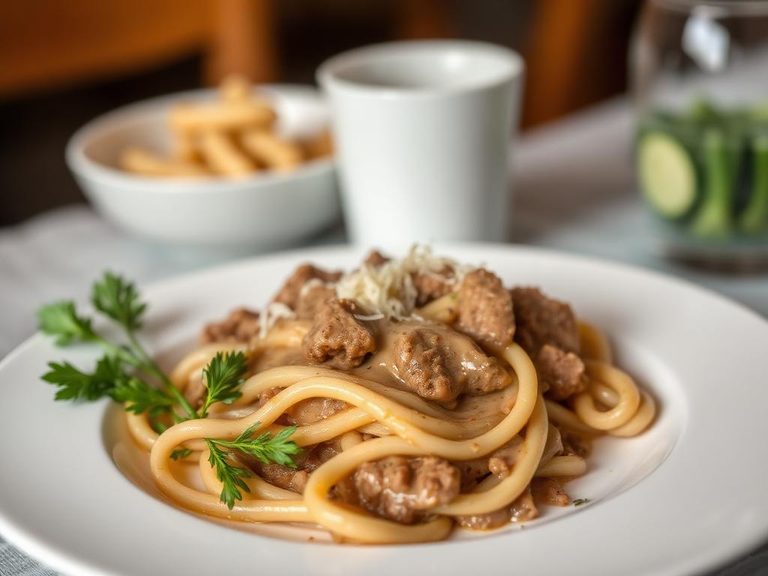
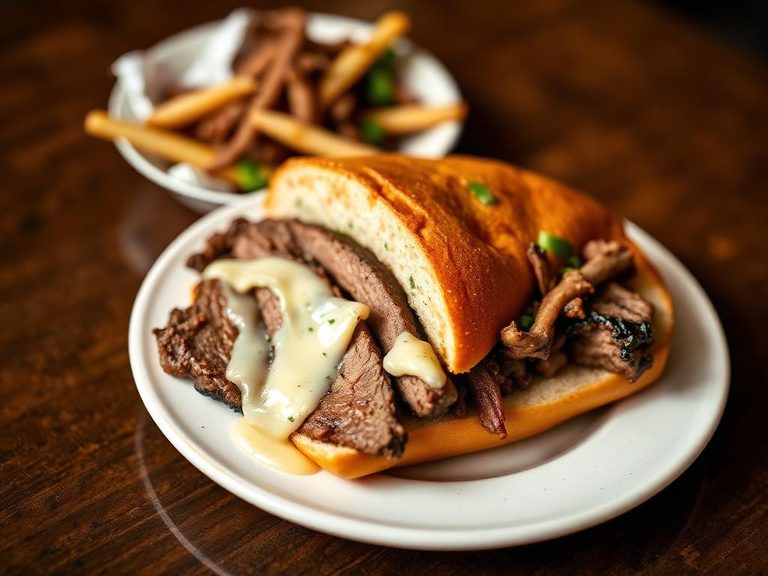
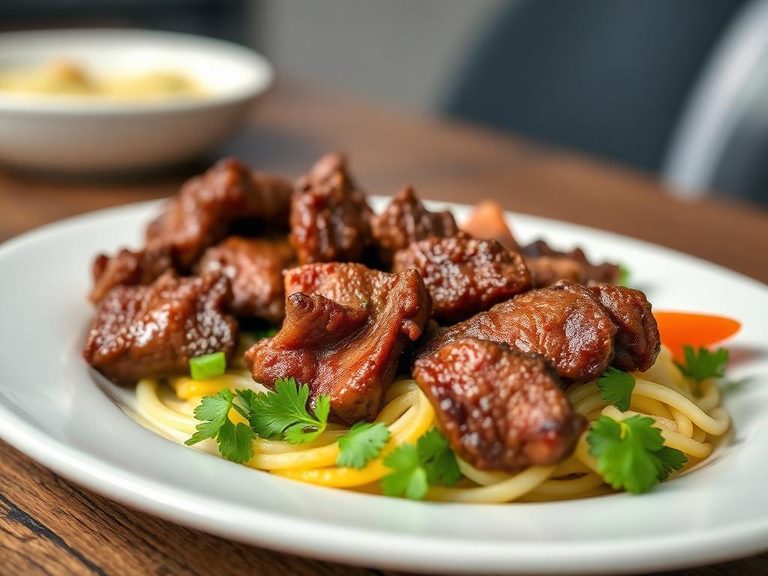
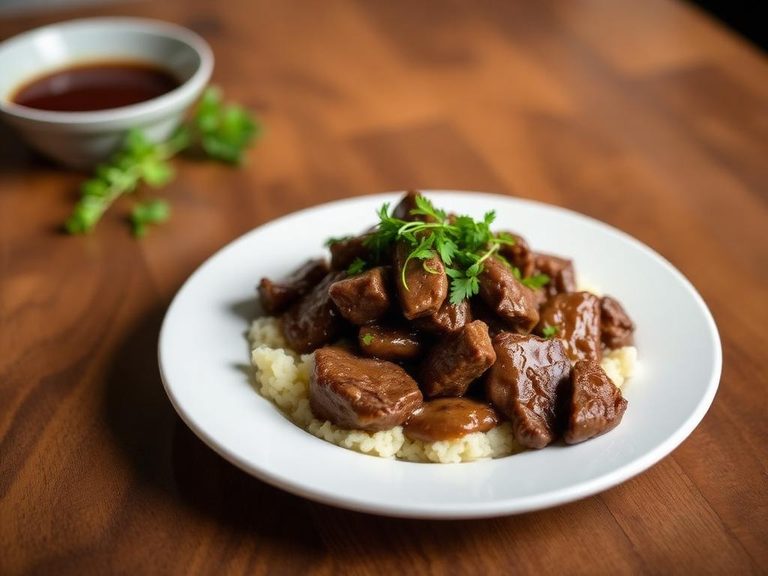
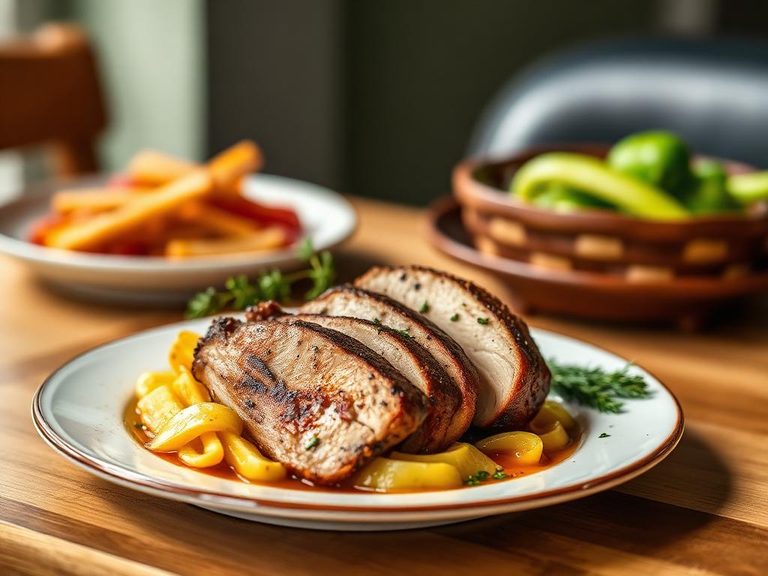
🌍 Where it's eaten
💡 Did you know?
The 'tip' in tip round comes from its location at the triangular tip of the round primal, near the hind leg, which is a well-exercised muscle group, contributing to its lean, fibrous nature.
Full nutrition (USDA data · scales with serving)
| Water | 75.0 g |
| Energy | 122 kcal |
| Energy | 508 kj |
| Protein | 21.4 g |
| Total lipid (fat) | 3.4 g |
| Ash | 1.0 g |
| Carbohydrate, by difference | 0.00 g |
| Fiber, total dietary | 0.00 g |
| Total Sugars | 0.00 g |
| Calcium, Ca | 20.0 mg |
| Iron, Fe | 1.8 mg |
| Magnesium, Mg | 23.0 mg |
| Phosphorus, P | 203 mg |
| Potassium, K | 337 mg |
| Sodium, Na | 58.0 mg |
| Zinc, Zn | 4.1 mg |
| Copper, Cu | 0.10 mg |
| Manganese, Mn | 0.01 mg |
| Selenium, Se | 28.8 ug |
| Vitamin C, total ascorbic acid | 0.00 mg |
| Thiamin | 0.09 mg |
| Riboflavin | 0.14 mg |
| Niacin | 6.4 mg |
| Pantothenic acid | 0.63 mg |
| Vitamin B-6 | 0.63 mg |
| Folate, total | 12.0 ug |
| Folic acid | 0.00 ug |
| Folate, food | 12.0 ug |
| Folate, DFE | 12.0 ug |
| Choline, total | 89.3 mg |
| Vitamin B-12 | 1.3 ug |
| Vitamin B-12, added | 0.00 ug |
| Vitamin A, RAE | 0.00 ug |
| Retinol | 0.00 ug |
| Carotene, beta | 0.00 ug |
| Carotene, alpha | 0.00 ug |
| Cryptoxanthin, beta | 0.00 ug |
| Vitamin A, IU | 0.00 iu |
| Lycopene | 0.00 ug |
| Lutein + zeaxanthin | 0.00 ug |
| Vitamin E (alpha-tocopherol) | 0.27 mg |
| Vitamin E, added | 0.00 mg |
| Tocopherol, beta | 0.00 mg |
| Tocopherol, gamma | 0.00 mg |
| Tocopherol, delta | 0.00 mg |
| Vitamin K (phylloquinone) | 1.1 ug |
| Alcohol, ethyl | 0.00 g |
| Caffeine | 0.00 mg |
| Theobromine | 0.00 mg |
Fat & fatty acid profile (per 100g)
| Fatty acids, total saturated | 1.1 g |
| SFA 4:0 | 0.00 g |
| SFA 6:0 | 0.00 g |
| SFA 8:0 | 0.00 g |
| SFA 10:0 | 0.00 g |
| SFA 12:0 | 0.00 g |
| SFA 14:0 | 0.08 g |
| SFA 16:0 | 0.70 g |
| SFA 18:0 | 0.37 g |
| Fatty acids, total monounsaturated | 1.4 g |
| MUFA 16:1 | 0.12 g |
| MUFA 18:1 | 1.3 g |
| MUFA 20:1 | 0.00 g |
| MUFA 22:1 | 0.00 g |
| Fatty acids, total polyunsaturated | 0.17 g |
| PUFA 18:2 | 0.13 g |
| PUFA 18:3 | 0.01 g |
| PUFA 18:4 | 0.00 g |
| PUFA 20:4 | 0.03 g |
| PUFA 20:5 n-3 (EPA) | 0.00 g |
| PUFA 22:5 n-3 (DPA) | 0.00 g |
| PUFA 22:6 n-3 (DHA) | 0.00 g |
| Cholesterol | 55.0 mg |
Amino acid profile (per 100g)
| Tryptophan | 0.14 g |
| Threonine | 0.85 g |
| Isoleucine | 0.97 g |
| Leucine | 1.7 g |
| Lysine | 1.8 g |
| Methionine | 0.56 g |
| Cystine | 0.28 g |
| Phenylalanine | 0.84 g |
| Tyrosine | 0.68 g |
| Valine | 1.1 g |
| Arginine | 1.4 g |
| Histidine | 0.68 g |
| Alanine | 1.3 g |
| Aspartic acid | 1.9 g |
| Glutamic acid | 3.2 g |
| Glycine | 1.3 g |
| Proline | 1.0 g |
| Serine | 0.84 g |
| Hydroxyproline | 0.29 g |
FAQ
What's the best cooking method for tip round roast?
Dry-heat methods like roasting or grilling are ideal. For maximum tenderness, roast at a high temperature (450°F/230°C) to sear the outside, then lower the heat (325°F/165°C) to finish cooking gently to your desired doneness.
Is this a good cut for slow cooking or stewing?
It can be used, but it's not the top choice. Its leanness means it doesn't have the internal fat or connective tissue that breaks down and creates succulence in long braises. If you do braise it, add extra liquid and cook only until just tender to prevent it from becoming stringy.
How does it differ from a sirloin tip roast?
While both are from the round, the sirloin tip comes from the front of the round primal and is slightly more marbled and tender. The tip round is leaner, denser, and more economical, making it better suited for precise, shorter cooking times.
Nutrient density (calculated · NRF9.3)
Nutrient Rich Foods index: beneficial nutrients (protein, fiber, vitamins, minerals) minus saturated fat, added sugar & sodium, per 100 kcal.
NRF9.3 index — Fulgoni, Keast & Drewnowski, 2009. Computed from USDA nutrients.
Weight-loss friendliness (composite index)
Energy density 1.22 kcal/g · 70% calories from protein · 0.0 g fiber · 0.0 g sugar per 100 g.
Composite of energy density (Rolls et al., 1999), protein & fiber satiety, minus sugar. A calculated heuristic — ranks satiety-per-calorie, not a clinical measure.
Dietary load (calculated from USDA values)
Potential renal acid load. Positive = acid-forming, negative = alkaline-forming.
Sodium-to-potassium ratio: 0.17 (lower is better — aim for ≤ 1)
Sodium:potassium per WHO potassium guidance. Computed from USDA nutrients.