

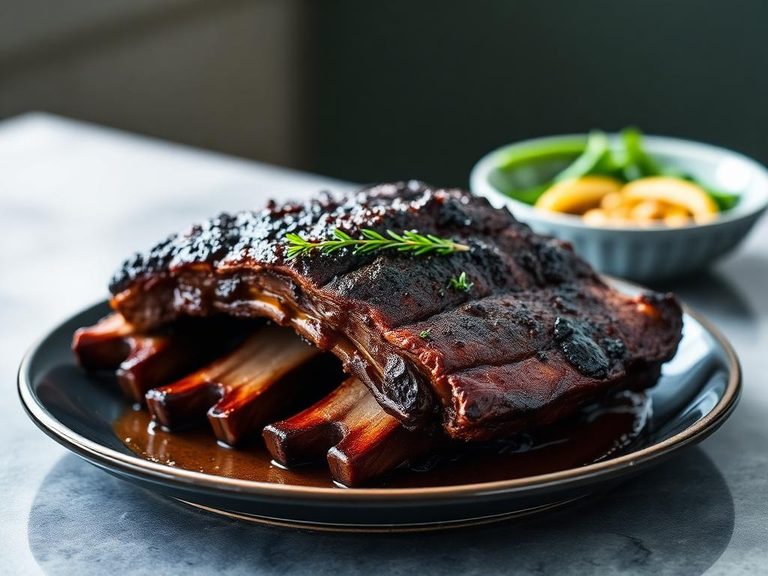
Beef, rib, whole (ribs 6-12), separable lean and fat, trimmed to 1/8" fat, choice, cooked, roasted
Whole food · Beef Products

Photo: Wikipedia
This is a hearty, well-marbled cut from the rib section, prized for its rich, beefy flavor and tender, juicy texture when roasted. With nearly 30g of fat per 100g, it delivers a satisfying mouthfeel and a robust, savory profile. Nutritionally, it's a powerhouse of high-quality protein and essential fats, making it a substantial, energy-dense choice.
Calorie split: 25% protein · 0% carbs · 75% fat
↓ Full nutrition💚 Why it's loved
People adore this cut for its deep, savory flavor and the melt-in-your-mouth tenderness that comes from the marbling. It's a centerpiece of celebratory meals and comfort food, offering a sense of indulgence and tradition.
⚠️ Watch-outs & how to enjoy it better
The high fat content can be a concern for those monitoring saturated fat intake or managing cholesterol. To mitigate this, trim excess fat before cooking, opt for leaner portions, and pair it with fiber-rich vegetables and whole grains to balance the meal. Those with specific dietary restrictions should consult a nutritionist.
Key benefits
- Excellent source of high-quality protein for muscle maintenance and repair.
- Rich in iron and zinc, essential minerals for immune function and energy metabolism.
- Provides B vitamins, particularly B12 and niacin, crucial for nerve health and energy production.
- High in conjugated linoleic acid (CLA), a fatty acid studied for potential health benefits.
- Offers a dense source of calories, ideal for those needing high energy intake.
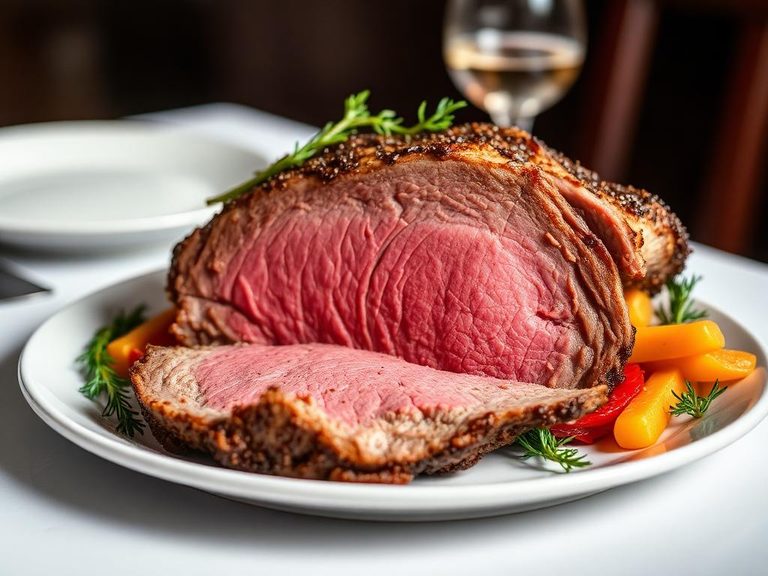
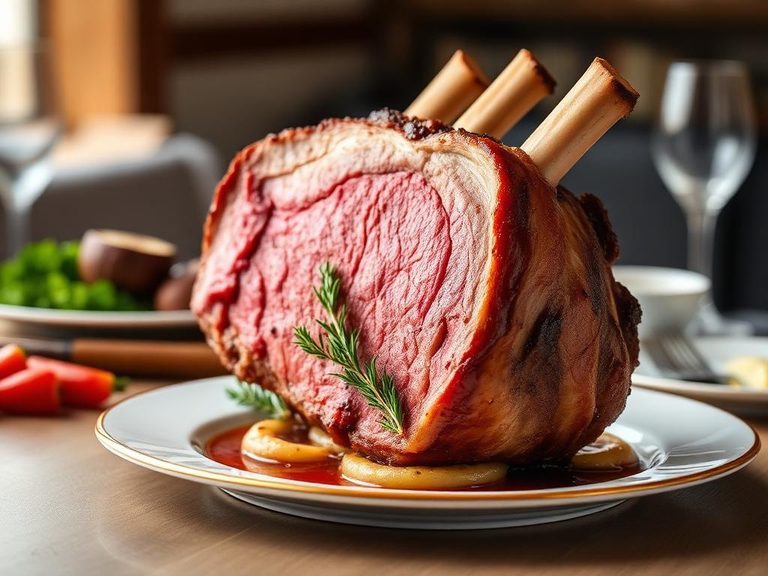
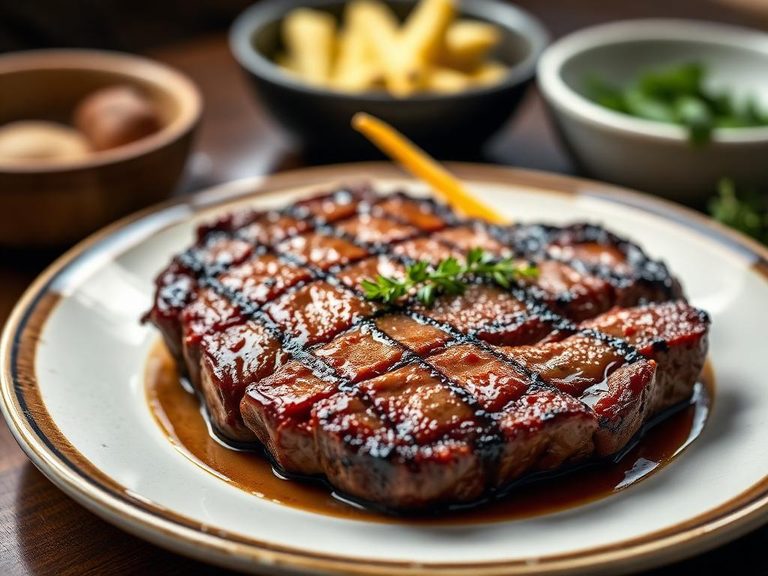
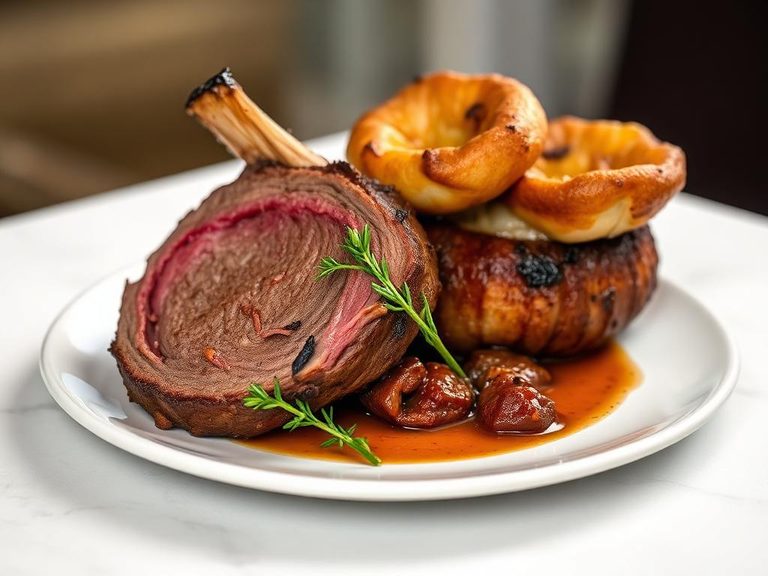
🍽️ Popular dishes
🌍 Where it's eaten
💡 Did you know?
The rib section of the cow (ribs 6-12) is where the prized ribeye steak originates, and the marbling in this cut is what gives it the 'choice' grade, indicating high quality and flavor.
Full nutrition (USDA data · scales with serving)
| Water | 46.9 g |
| Energy | 365 kcal |
| Energy | 1527 kj |
| Protein | 22.6 g |
| Total lipid (fat) | 29.8 g |
| Ash | 0.98 g |
| Carbohydrate, by difference | 0.00 g |
| Fiber, total dietary | 0.00 g |
| Total Sugars | 0.00 g |
| Calcium, Ca | 11.0 mg |
| Iron, Fe | 2.4 mg |
| Magnesium, Mg | 20.0 mg |
| Phosphorus, P | 176 mg |
| Potassium, K | 302 mg |
| Sodium, Na | 64.0 mg |
| Zinc, Zn | 5.4 mg |
| Copper, Cu | 0.08 mg |
| Manganese, Mn | 0.01 mg |
| Selenium, Se | 22.4 ug |
| Vitamin C, total ascorbic acid | 0.00 mg |
| Thiamin | 0.07 mg |
| Riboflavin | 0.17 mg |
| Niacin | 3.4 mg |
| Pantothenic acid | 0.31 mg |
| Vitamin B-6 | 0.23 mg |
| Folate, total | 7.0 ug |
| Folic acid | 0.00 ug |
| Folate, food | 7.0 ug |
| Folate, DFE | 7.0 ug |
| Choline, total | 86.1 mg |
| Vitamin B-12 | 2.5 ug |
| Vitamin B-12, added | 0.00 ug |
| Vitamin A, RAE | 0.00 ug |
| Retinol | 0.00 ug |
| Carotene, beta | 0.00 ug |
| Carotene, alpha | 0.00 ug |
| Cryptoxanthin, beta | 0.00 ug |
| Vitamin A, IU | 0.00 iu |
| Lycopene | 0.00 ug |
| Lutein + zeaxanthin | 0.00 ug |
| Vitamin E (alpha-tocopherol) | 0.24 mg |
| Vitamin E, added | 0.00 mg |
| Vitamin D (D2 + D3), International Units | 19.0 iu |
| Vitamin D (D2 + D3) | 0.50 ug |
| Vitamin D3 (cholecalciferol) | 0.50 ug |
| Vitamin K (phylloquinone) | 2.0 ug |
| Alcohol, ethyl | 0.00 g |
| Caffeine | 0.00 mg |
| Theobromine | 0.00 mg |
Fat & fatty acid profile (per 100g)
| Fatty acids, total saturated | 12.0 g |
| SFA 4:0 | 0.00 g |
| SFA 6:0 | 0.00 g |
| SFA 8:0 | 0.00 g |
| SFA 10:0 | 0.09 g |
| SFA 12:0 | 0.08 g |
| SFA 14:0 | 0.97 g |
| SFA 16:0 | 7.4 g |
| SFA 18:0 | 3.5 g |
| Fatty acids, total monounsaturated | 12.8 g |
| MUFA 16:1 | 1.3 g |
| MUFA 18:1 | 11.5 g |
| MUFA 20:1 | 0.06 g |
| MUFA 22:1 | 0.00 g |
| Fatty acids, total polyunsaturated | 1.1 g |
| PUFA 18:2 | 0.70 g |
| PUFA 18:3 | 0.33 g |
| PUFA 18:4 | 0.00 g |
| PUFA 20:4 | 0.02 g |
| PUFA 20:5 n-3 (EPA) | 0.00 g |
| PUFA 22:5 n-3 (DPA) | 0.02 g |
| PUFA 22:6 n-3 (DHA) | 0.00 g |
| Cholesterol | 84.0 mg |
Amino acid profile (per 100g)
| Tryptophan | 0.25 g |
| Threonine | 0.99 g |
| Isoleucine | 1.0 g |
| Leucine | 1.8 g |
| Lysine | 1.9 g |
| Methionine | 0.58 g |
| Cystine | 0.25 g |
| Phenylalanine | 0.88 g |
| Tyrosine | 0.76 g |
| Valine | 1.1 g |
| Arginine | 1.4 g |
| Histidine | 0.77 g |
| Alanine | 1.4 g |
| Aspartic acid | 2.1 g |
| Glutamic acid | 3.4 g |
| Glycine | 1.2 g |
| Proline | 1.00 g |
| Serine | 0.86 g |
FAQ
What makes this cut 'choice' grade?
The 'choice' grade is a USDA designation indicating high quality with moderate marbling, which contributes to tenderness and flavor, sitting between 'prime' and 'select' grades.
How does the fat content affect cooking?
The high fat content means the meat bastes itself during roasting, resulting in a juicy, flavorful result. However, it requires careful temperature control to prevent the fat from rendering too quickly or burning.
Is this cut suitable for low-fat diets?
Due to its high fat content (nearly 30g per 100g), it's not ideal for strict low-fat diets. However, trimming the fat before cooking and controlling portion sizes can make it a more moderate option.
Nutrient density (calculated · NRF9.3)
Nutrient Rich Foods index: beneficial nutrients (protein, fiber, vitamins, minerals) minus saturated fat, added sugar & sodium, per 100 kcal.
NRF9.3 index — Fulgoni, Keast & Drewnowski, 2009. Computed from USDA nutrients.
Weight-loss friendliness (composite index)
Energy density 3.65 kcal/g · 25% calories from protein · 0.0 g fiber · 0.0 g sugar per 100 g.
Composite of energy density (Rolls et al., 1999), protein & fiber satiety, minus sugar. A calculated heuristic — ranks satiety-per-calorie, not a clinical measure.
Dietary load (calculated from USDA values)
Potential renal acid load. Positive = acid-forming, negative = alkaline-forming.
Sodium-to-potassium ratio: 0.21 (lower is better — aim for ≤ 1)
Sodium:potassium per WHO potassium guidance. Computed from USDA nutrients.