Slow-Roasted Beef Ribs
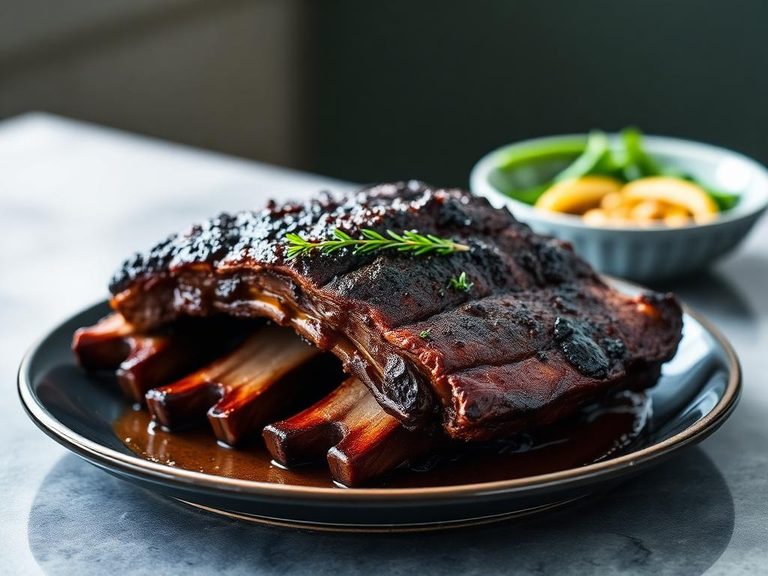
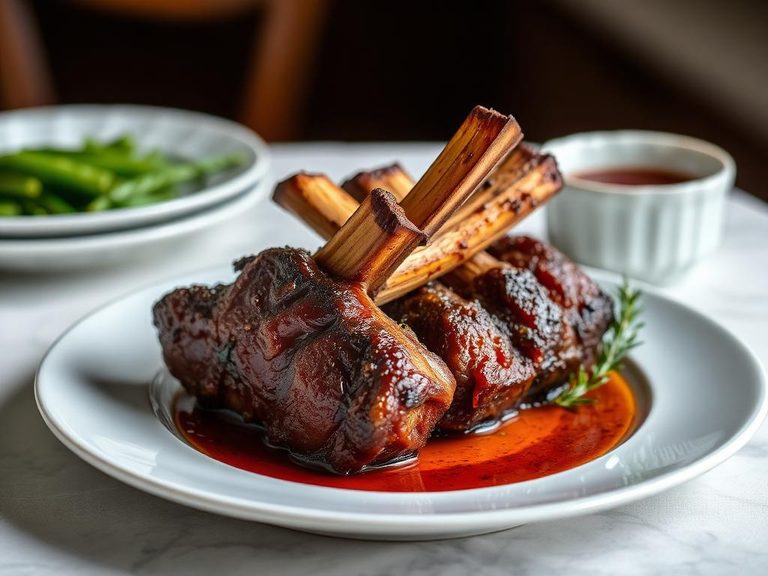
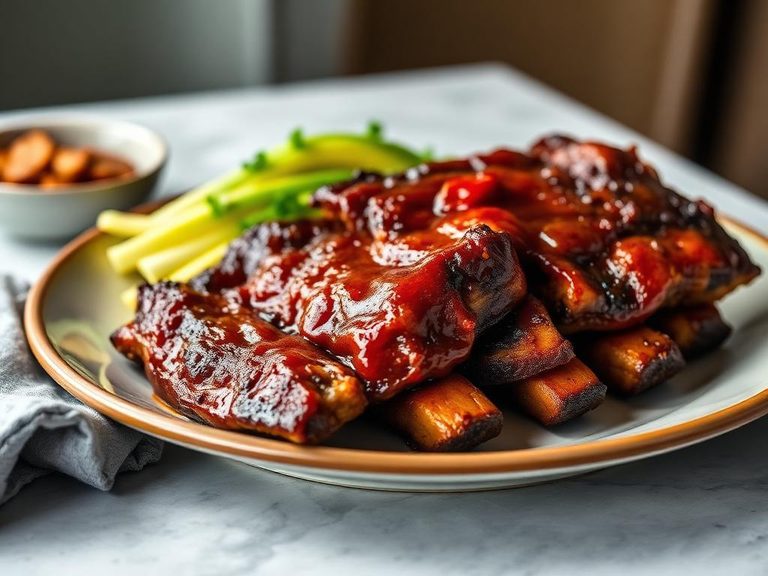
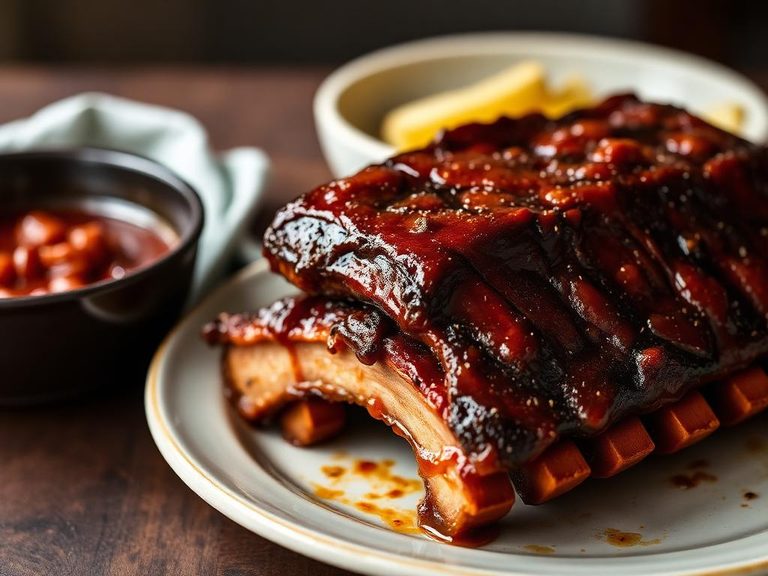
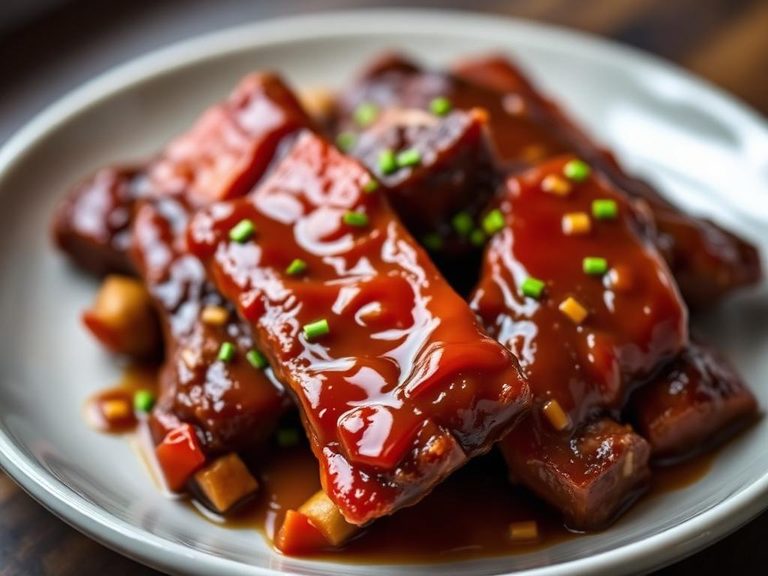
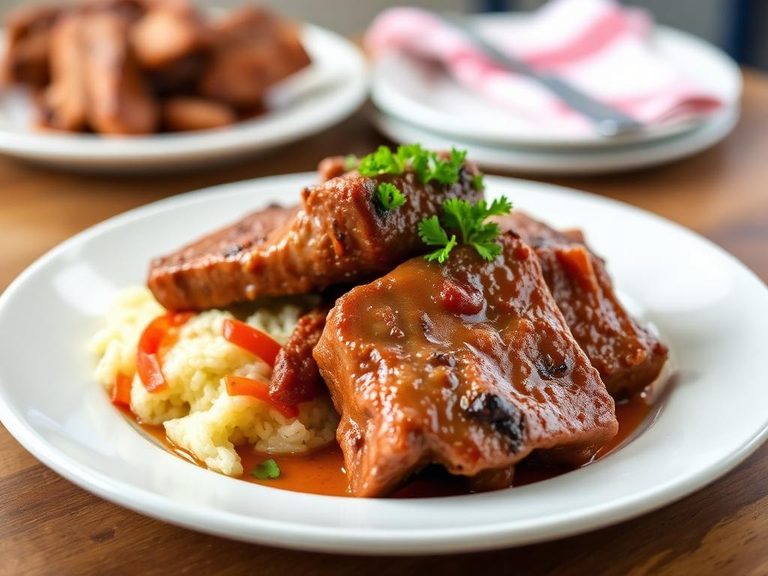
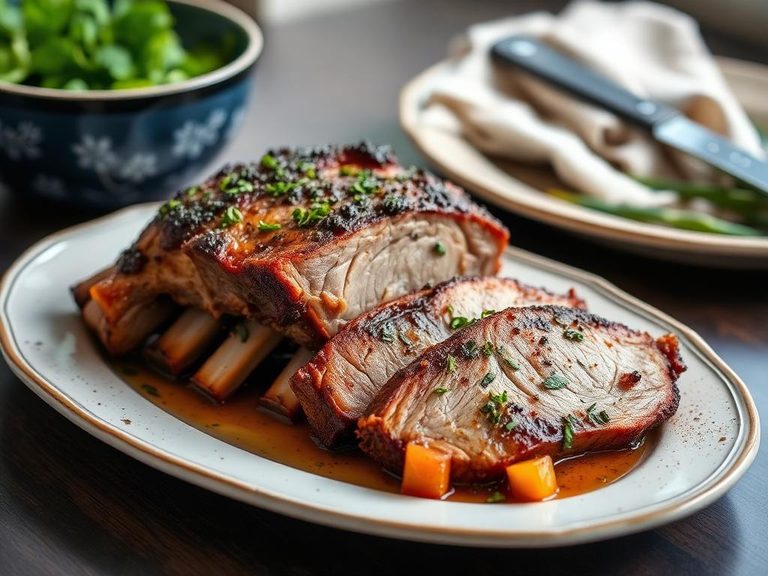
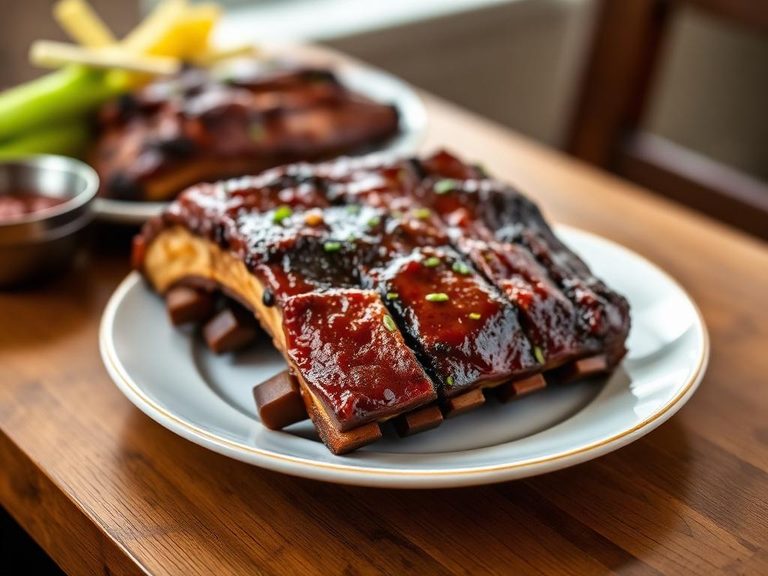
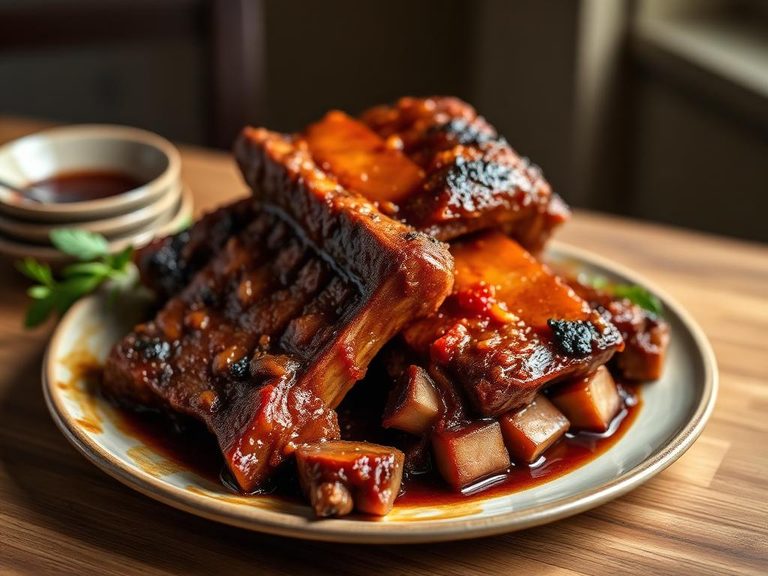
Slow-Roasted Beef Ribs are a hearty dish where beef ribs are cooked at a low temperature for several hours, resulting in incredibly tender, fall-off-the-bone meat. The process typically involves a dry rub or marinade with herbs, spices, and sometimes a smoky element, and the ribs are often finished with a glaze or sauce. This cooking method is popular in various cuisines, notably American barbecue and European roasting traditions.
🍽️ Nutrition at a glance
This dish is very high in protein and fat, with minimal carbohydrates unless a sugary glaze is used. It provides significant amounts of iron, zinc, and B vitamins, particularly B12. A typical serving (around 200-250g of meat) can range from 500 to 800 calories, depending on the cut and preparation.
Nutrition breakdown
| Calories | 680 kcal |
| Protein | 48 g |
| Carbs | 2 g |
| Fat | 54 g |
| Fiber | 0 g |
| Sugar | 0 g |
| Sodium | 850 mg |
| Iron | 4.5 mg |
| Zinc | 12 mg |
| Vitamin B12 | 5.5 mcg |
| Niacin (B3) | 15 mg |
| Phosphorus | 380 mg |
| Selenium | 45 mcg |
| Potassium | 420 mg |
| Vitamin B6 | 0.7 mg |
Per 1 serving (about 225 g, 8 oz, bone-in meat) · estimated, varies by recipe
💡 What's interesting
Culturally, slow-roasting beef ribs is a hallmark of barbecue traditions in the United States, where it's often associated with communal gatherings and patience. Nutritionally, the slow cooking process helps break down tough connective tissues into gelatin, which can improve digestibility and add a rich, satisfying texture to the meat.