

Beef, cured, breakfast strips, cooked
Whole food · Beef Products
Cured and pan-fried beef breakfast strips are a savory, salty, and smoky staple, delivering a satisfying chew with a crisp, caramelized edge. They are a powerhouse of protein and fat, providing a dense, energy-rich start to the day with virtually no carbohydrates.
Calorie split: 28% protein · 1% carbs · 70% fat
↓ Full nutrition💚 Why it's loved
People adore them for their intense, savory umami flavor and the satisfying textural contrast between the crispy edges and tender interior. They are a versatile breakfast component, easily paired with eggs, toast, or pancakes, and are deeply embedded in American diner culture.
⚠️ Watch-outs & how to enjoy it better
The high sodium content from curing can contribute to water retention and is a concern for those monitoring blood pressure. The significant saturated fat content is a consideration for heart health, and the processing involves nitrates. Counteract this by pairing with potassium-rich foods like spinach or avocado, controlling portion size, and balancing with fresh, low-sodium sides.
Key benefits
- Excellent source of high-quality protein for muscle maintenance.
- Provides a significant amount of dietary fat for sustained energy.
- Very low in carbohydrates, making it suitable for low-carb diets.
- Offers key nutrients like iron, zinc, and B vitamins, especially B12.
- Shelf-stable and convenient due to the curing process.
🍽️ Popular dishes


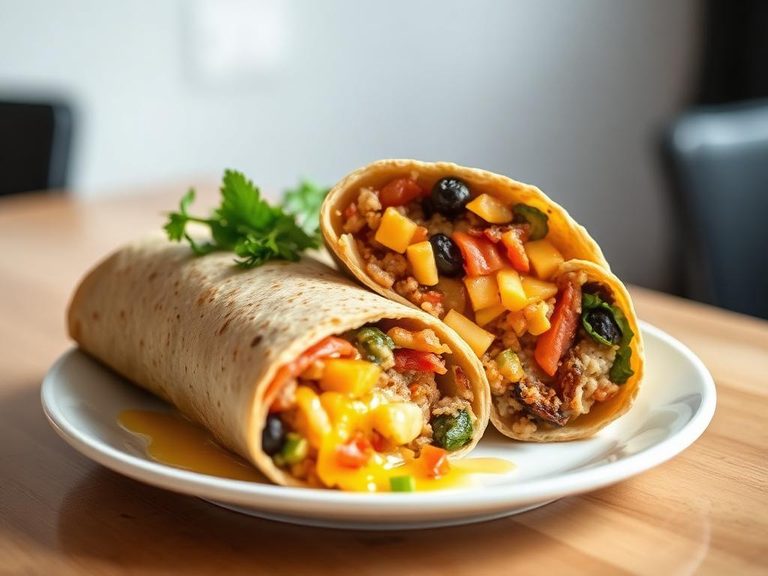
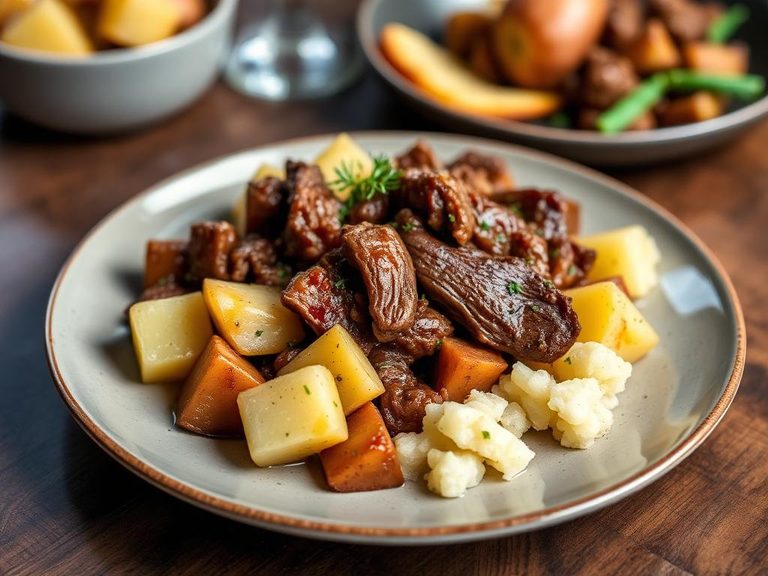
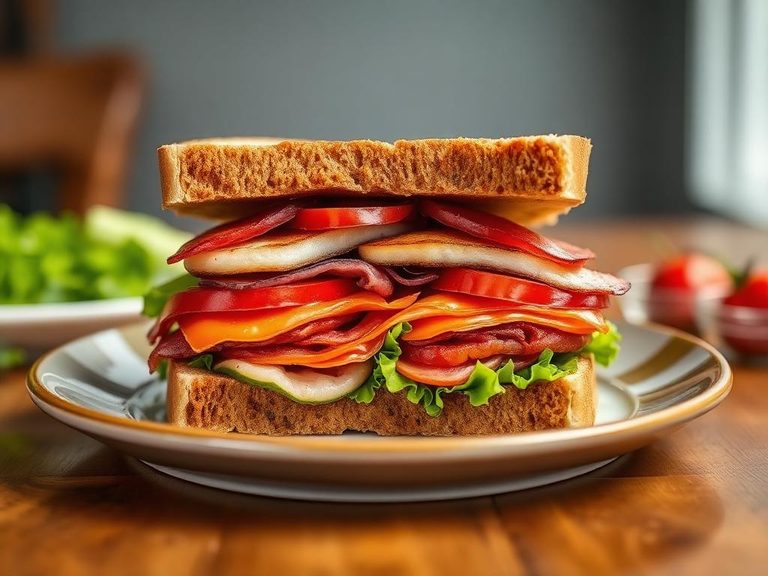
🌍 Where it's eaten
💡 Did you know?
The specific cut used for breakfast strips is often the beef plate (from the belly), which is the same primal cut used to make pastrami.
Full nutrition (USDA data · scales with serving)
| Water | 26.2 g |
| Energy | 449 kcal |
| Energy | 1879 kj |
| Protein | 31.3 g |
| Total lipid (fat) | 34.4 g |
| Ash | 6.7 g |
| Carbohydrate, by difference | 1.4 g |
| Fiber, total dietary | 0.00 g |
| Total Sugars | 0.00 g |
| Calcium, Ca | 9.0 mg |
| Iron, Fe | 3.1 mg |
| Magnesium, Mg | 27.0 mg |
| Phosphorus, P | 236 mg |
| Potassium, K | 412 mg |
| Sodium, Na | 2253 mg |
| Zinc, Zn | 6.4 mg |
| Copper, Cu | 0.12 mg |
| Manganese, Mn | 0.02 mg |
| Selenium, Se | 26.8 ug |
| Vitamin C, total ascorbic acid | 0.00 mg |
| Thiamin | 0.09 mg |
| Riboflavin | 0.26 mg |
| Niacin | 6.5 mg |
| Pantothenic acid | 0.34 mg |
| Vitamin B-6 | 0.31 mg |
| Folate, total | 8.0 ug |
| Folic acid | 0.00 ug |
| Folate, food | 8.0 ug |
| Folate, DFE | 8.0 ug |
| Choline, total | 119 mg |
| Betaine | 15.7 mg |
| Vitamin B-12 | 3.5 ug |
| Vitamin B-12, added | 0.00 ug |
| Vitamin A, RAE | 0.00 ug |
| Retinol | 0.00 ug |
| Carotene, beta | 0.00 ug |
| Carotene, alpha | 0.00 ug |
| Cryptoxanthin, beta | 0.00 ug |
| Vitamin A, IU | 0.00 iu |
| Lycopene | 0.00 ug |
| Lutein + zeaxanthin | 0.00 ug |
| Vitamin E (alpha-tocopherol) | 0.29 mg |
| Vitamin E, added | 0.00 mg |
| Vitamin D (D2 + D3), International Units | 7.0 iu |
| Vitamin D (D2 + D3) | 0.20 ug |
| Vitamin D3 (cholecalciferol) | 0.20 ug |
| Vitamin K (phylloquinone) | 2.8 ug |
| Alcohol, ethyl | 0.00 g |
| Caffeine | 0.00 mg |
| Theobromine | 0.00 mg |
Fat & fatty acid profile (per 100g)
| Fatty acids, total saturated | 14.3 g |
| SFA 4:0 | 0.00 g |
| SFA 6:0 | 0.00 g |
| SFA 8:0 | 0.00 g |
| SFA 10:0 | 0.13 g |
| SFA 12:0 | 0.10 g |
| SFA 14:0 | 1.2 g |
| SFA 16:0 | 7.7 g |
| SFA 18:0 | 4.5 g |
| Fatty acids, total monounsaturated | 16.9 g |
| MUFA 16:1 | 2.3 g |
| MUFA 18:1 | 14.6 g |
| MUFA 20:1 | 0.00 g |
| MUFA 22:1 | 0.00 g |
| Fatty acids, total polyunsaturated | 1.6 g |
| PUFA 18:2 | 1.3 g |
| PUFA 18:3 | 0.33 g |
| PUFA 18:4 | 0.00 g |
| PUFA 20:4 | 0.00 g |
| PUFA 20:5 n-3 (EPA) | 0.00 g |
| PUFA 22:5 n-3 (DPA) | 0.00 g |
| PUFA 22:6 n-3 (DHA) | 0.00 g |
| Cholesterol | 119 mg |
| Phytosterols | 0.00 mg |
Amino acid profile (per 100g)
| Tryptophan | 0.28 g |
| Threonine | 1.2 g |
| Isoleucine | 1.4 g |
| Leucine | 2.3 g |
| Lysine | 2.4 g |
| Methionine | 0.73 g |
| Cystine | 0.40 g |
| Phenylalanine | 1.1 g |
| Tyrosine | 1.0 g |
| Valine | 1.4 g |
| Arginine | 1.9 g |
| Histidine | 1.00 g |
| Alanine | 2.3 g |
| Aspartic acid | 3.1 g |
| Glutamic acid | 5.1 g |
| Glycine | 2.6 g |
| Proline | 2.3 g |
| Serine | 1.3 g |
FAQ
How is this different from bacon?
While both are cured and fried, beef breakfast strips are made from beef (often plate or brisket), giving them a denser, chewier texture and a distinct, beefy flavor compared to the pork-based, fattier, and often smokier profile of bacon.
Can I eat this on a low-carb or keto diet?
Yes, it's an excellent choice. With 1.4g of carbs per 100g and high fat and protein content, it fits perfectly into ketogenic and low-carbohydrate dietary plans.
What does 'cured' mean in this context?
Curing involves treating the meat with salt, sugar, and often sodium nitrite or nitrate. This process preserves the meat, enhances its pink color, and imparts the characteristic salty, savory flavor.
Nutrient density (calculated · NRF9.3)
Nutrient Rich Foods index: beneficial nutrients (protein, fiber, vitamins, minerals) minus saturated fat, added sugar & sodium, per 100 kcal.
NRF9.3 index — Fulgoni, Keast & Drewnowski, 2009. Computed from USDA nutrients.
Weight-loss friendliness (composite index)
Energy density 4.49 kcal/g · 28% calories from protein · 0.0 g fiber · 0.0 g sugar per 100 g.
Composite of energy density (Rolls et al., 1999), protein & fiber satiety, minus sugar. A calculated heuristic — ranks satiety-per-calorie, not a clinical measure.
Dietary load (calculated from USDA values)
Potential renal acid load. Positive = acid-forming, negative = alkaline-forming.
Sodium-to-potassium ratio: 5.47 (lower is better — aim for ≤ 1)
Sodium:potassium per WHO potassium guidance. Computed from USDA nutrients.