

Beef, brisket, flat half, separable lean only, trimmed to 1/8" fat, choice, raw
Whole food · Beef Products

Photo: Wikipedia
This is the lean, flat half of a beef brisket, trimmed to a thin 1/8-inch fat cap. When raw, it's a deep red, dense muscle with a coarse grain that promises a rich, beefy flavor once slow-cooked to tender perfection. Nutritionally, it's a powerhouse of protein with minimal fat and zero carbs, making it a staple for high-protein, low-carb diets.
Calorie split: 70% protein · 0% carbs · 30% fat
↓ Full nutrition💚 Why it's loved
People adore brisket for its unparalleled ability to transform from a tough cut into melt-in-your-mouth tenderness through low-and-slow cooking, absorbing smoky or savory flavors deeply. It's the centerpiece of communal feasts, from American backyard barbecues to Jewish holiday meals, symbolizing patience and celebration.
⚠️ Watch-outs & how to enjoy it better
The lean, flat cut can become dry and tough if overcooked or prepared incorrectly, which is a common pitfall for inexperienced cooks. To counteract this, always use moist-heat methods (braising, smoking with a water pan) and consider a marinade or brine to lock in juices; pairing it with a sauce or flavorful side also helps.
Key benefits
- Excellent source of complete protein for muscle maintenance.
- Very low in carbohydrates, suitable for ketogenic diets.
- Provides essential minerals like iron and zinc.
- Minimal fat content after trimming.
🍽️ Popular dishes

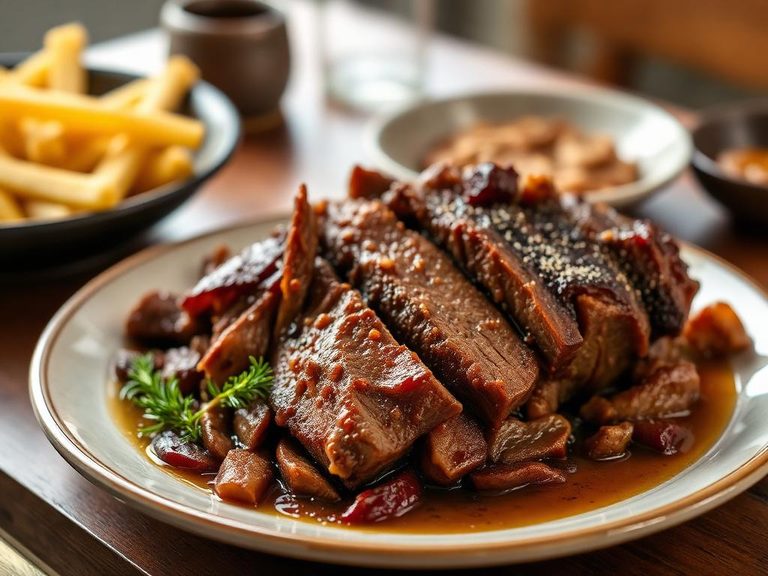
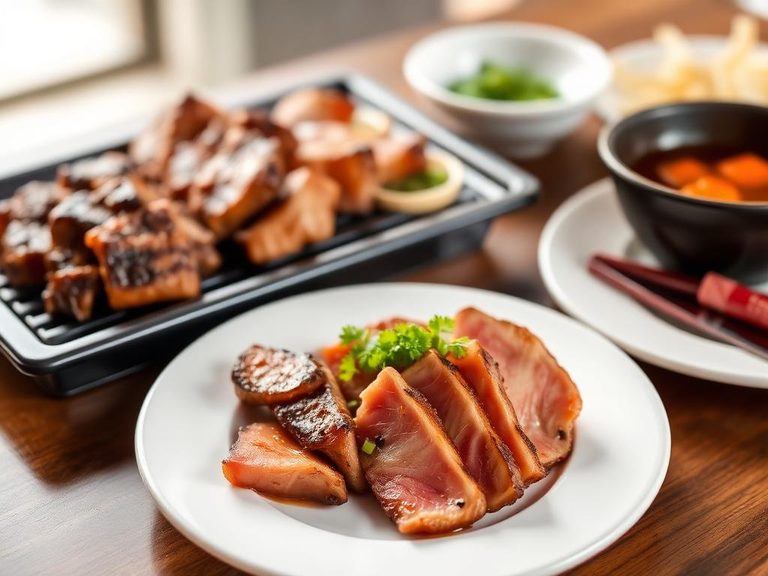
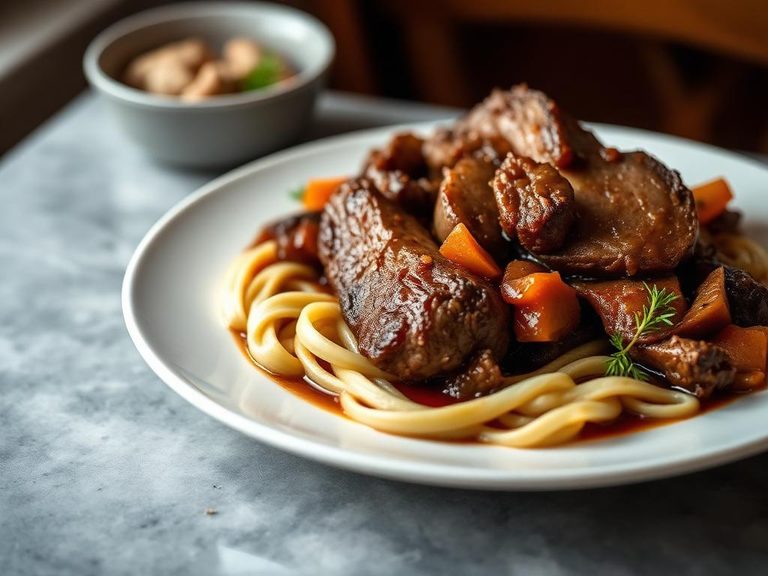
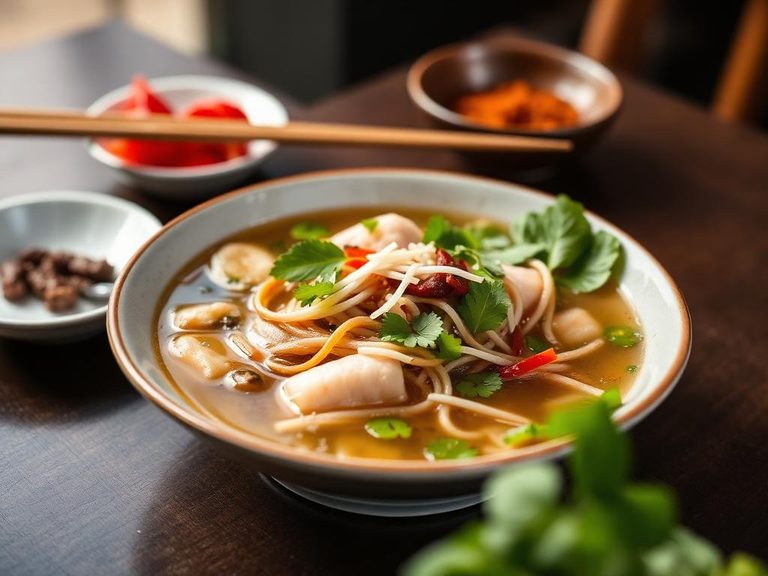
🌍 Where it's eaten
💡 Did you know?
The word 'brisket' comes from the Middle English 'brusket,' referring to the lower part of the breast, and the cut's connective tissue is primarily collagen, which melts into gelatin during slow cooking, creating that signature succulent texture.
Full nutrition (USDA data · scales with serving)
| Water | 73.3 g |
| Energy | 129 kcal |
| Energy | 541 kj |
| Protein | 21.7 g |
| Total lipid (fat) | 4.1 g |
| Ash | 1.0 g |
| Carbohydrate, by difference | 0.00 g |
| Fiber, total dietary | 0.00 g |
| Total Sugars | 0.00 g |
| Calcium, Ca | 15.0 mg |
| Iron, Fe | 2.0 mg |
| Magnesium, Mg | 23.0 mg |
| Phosphorus, P | 203 mg |
| Potassium, K | 335 mg |
| Sodium, Na | 75.0 mg |
| Zinc, Zn | 5.5 mg |
| Copper, Cu | 0.09 mg |
| Manganese, Mn | 0.01 mg |
| Selenium, Se | 24.7 ug |
| Vitamin C, total ascorbic acid | 0.00 mg |
| Thiamin | 0.08 mg |
| Riboflavin | 0.17 mg |
| Niacin | 5.2 mg |
| Pantothenic acid | 0.65 mg |
| Vitamin B-6 | 0.48 mg |
| Folate, total | 13.0 ug |
| Folic acid | 0.00 ug |
| Folate, food | 13.0 ug |
| Folate, DFE | 13.0 ug |
| Choline, total | 90.6 mg |
| Betaine | 13.3 mg |
| Vitamin B-12 | 2.1 ug |
| Vitamin B-12, added | 0.00 ug |
| Vitamin A, RAE | 0.00 ug |
| Retinol | 0.00 ug |
| Carotene, beta | 0.00 ug |
| Carotene, alpha | 0.00 ug |
| Cryptoxanthin, beta | 0.00 ug |
| Vitamin A, IU | 0.00 iu |
| Lycopene | 0.00 ug |
| Lutein + zeaxanthin | 0.00 ug |
| Vitamin E (alpha-tocopherol) | 0.29 mg |
| Vitamin E, added | 0.00 mg |
| Tocopherol, beta | 0.00 mg |
| Tocopherol, gamma | 0.00 mg |
| Tocopherol, delta | 0.00 mg |
| Vitamin K (phylloquinone) | 1.1 ug |
| Alcohol, ethyl | 0.00 g |
| Caffeine | 0.00 mg |
| Theobromine | 0.00 mg |
Fat & fatty acid profile (per 100g)
| Fatty acids, total saturated | 1.5 g |
| SFA 4:0 | 0.00 g |
| SFA 6:0 | 0.00 g |
| SFA 8:0 | 0.00 g |
| SFA 10:0 | 0.00 g |
| SFA 12:0 | 0.00 g |
| SFA 14:0 | 0.11 g |
| SFA 16:0 | 0.90 g |
| SFA 18:0 | 0.50 g |
| Fatty acids, total monounsaturated | 1.7 g |
| MUFA 16:1 | 0.15 g |
| MUFA 18:1 | 1.6 g |
| MUFA 20:1 | 0.00 g |
| MUFA 22:1 | 0.00 g |
| Fatty acids, total polyunsaturated | 0.18 g |
| PUFA 18:2 | 0.14 g |
| PUFA 18:3 | 0.01 g |
| PUFA 18:4 | 0.00 g |
| PUFA 20:4 | 0.02 g |
| PUFA 20:5 n-3 (EPA) | 0.00 g |
| PUFA 22:5 n-3 (DPA) | 0.00 g |
| PUFA 22:6 n-3 (DHA) | 0.00 g |
| Cholesterol | 65.0 mg |
Amino acid profile (per 100g)
| Tryptophan | 0.14 g |
| Threonine | 0.87 g |
| Isoleucine | 0.99 g |
| Leucine | 1.7 g |
| Lysine | 1.8 g |
| Methionine | 0.56 g |
| Cystine | 0.28 g |
| Phenylalanine | 0.86 g |
| Tyrosine | 0.69 g |
| Valine | 1.1 g |
| Arginine | 1.4 g |
| Histidine | 0.69 g |
| Alanine | 1.3 g |
| Aspartic acid | 2.0 g |
| Glutamic acid | 3.3 g |
| Glycine | 1.3 g |
| Proline | 1.0 g |
| Serine | 0.85 g |
| Hydroxyproline | 0.23 g |
FAQ
What's the best way to cook this lean brisket flat to avoid dryness?
Low-and-slow is key. Use methods like braising in liquid (beef broth, wine) at 300-325°F (150-163°C) until fork-tender, or smoking at 225°F (107°C) with a water pan. Always let it rest after cooking to redistribute juices.
Is this cut suitable for grilling?
It's not ideal for direct, high-heat grilling due to its leanness, which can cause it to dry out quickly. If grilling, use a two-zone method: sear over high heat briefly, then move to a cooler zone to cook slowly with indirect heat, and consider a marinade.
How does the nutrition change when cooked?
Cooking primarily reduces water content, so protein and fat percentages per 100g will increase slightly. The calorie count will rise if you add fats (oil, butter) or sugary sauces during cooking. The base nutritional profile remains high-protein and low-carb.
Nutrient density (calculated · NRF9.3)
Nutrient Rich Foods index: beneficial nutrients (protein, fiber, vitamins, minerals) minus saturated fat, added sugar & sodium, per 100 kcal.
NRF9.3 index — Fulgoni, Keast & Drewnowski, 2009. Computed from USDA nutrients.
Weight-loss friendliness (composite index)
Energy density 1.29 kcal/g · 67% calories from protein · 0.0 g fiber · 0.0 g sugar per 100 g.
Composite of energy density (Rolls et al., 1999), protein & fiber satiety, minus sugar. A calculated heuristic — ranks satiety-per-calorie, not a clinical measure.
Dietary load (calculated from USDA values)
Potential renal acid load. Positive = acid-forming, negative = alkaline-forming.
Sodium-to-potassium ratio: 0.22 (lower is better — aim for ≤ 1)
Sodium:potassium per WHO potassium guidance. Computed from USDA nutrients.