

Beef, brisket, flat half, separable lean only, trimmed to 0" fat, select, cooked, braised
Whole food · Beef Products

Photo: Wikipedia
This is the lean, flat half of a beef brisket, meticulously trimmed of all visible fat and then slow-braised to tender perfection. The result is a deeply savory, beefy-flavored cut with a firm yet yielding texture that shreds beautifully. Nutritionally, it's a powerhouse of high-quality protein with virtually no carbohydrates or sugars.
Calorie split: 72% protein · 0% carbs · 28% fat
↓ Full nutrition💚 Why it's loved
People adore it for its profound, concentrated beef flavor that serves as a perfect canvas for spices and sauces. Its ability to become fork-tender through braising makes it a beloved centerpiece for comforting, hearty meals across many cultures.
⚠️ Watch-outs & how to enjoy it better
As a red meat, it can be high in saturated fat and cholesterol if not trimmed as specified here. Those monitoring sodium intake should be cautious, as braising often involves salty broths or sauces. To counteract, use low-sodium braising liquids, pair with potassium-rich vegetables like leafy greens or tomatoes, and practice portion control by making it part of a balanced plate.
Key benefits
- Exceptionally high in complete protein for muscle maintenance and satiety.
- Very low in carbohydrates, making it suitable for ketogenic and low-carb diets.
- Rich in essential minerals like zinc and iron.
- Provides B vitamins, particularly B12, crucial for nerve function.
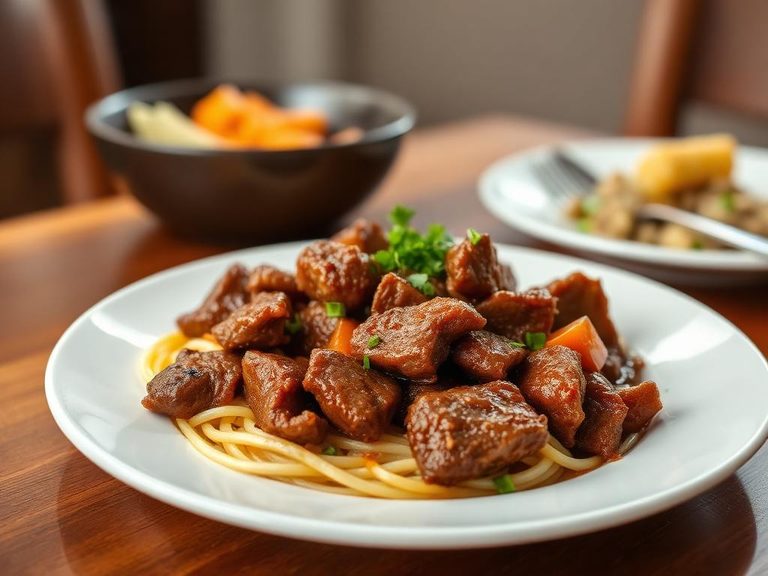
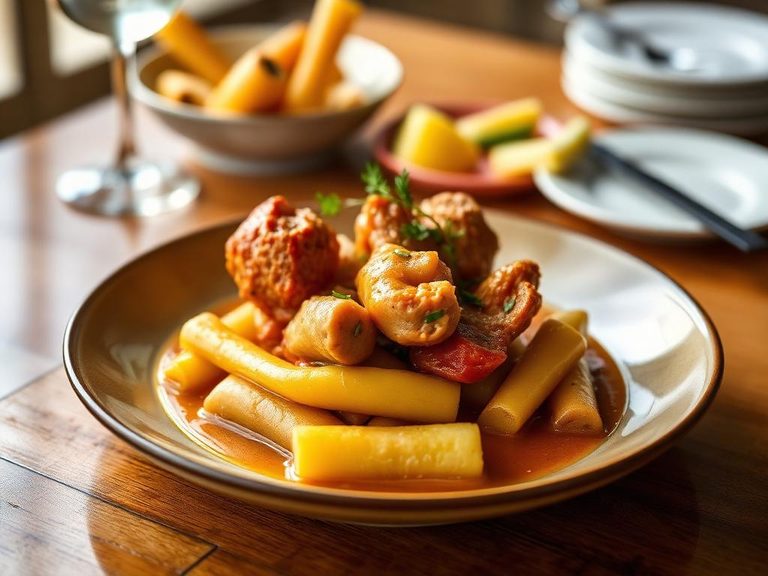
🍽️ Popular dishes
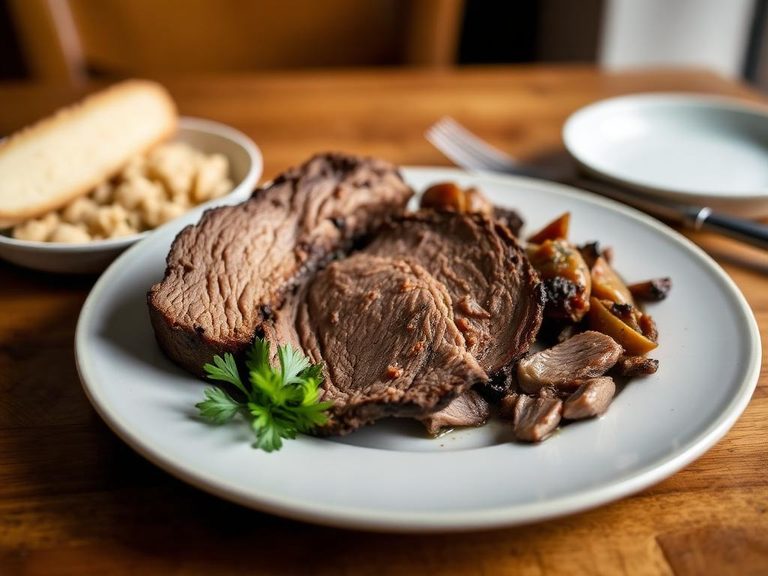
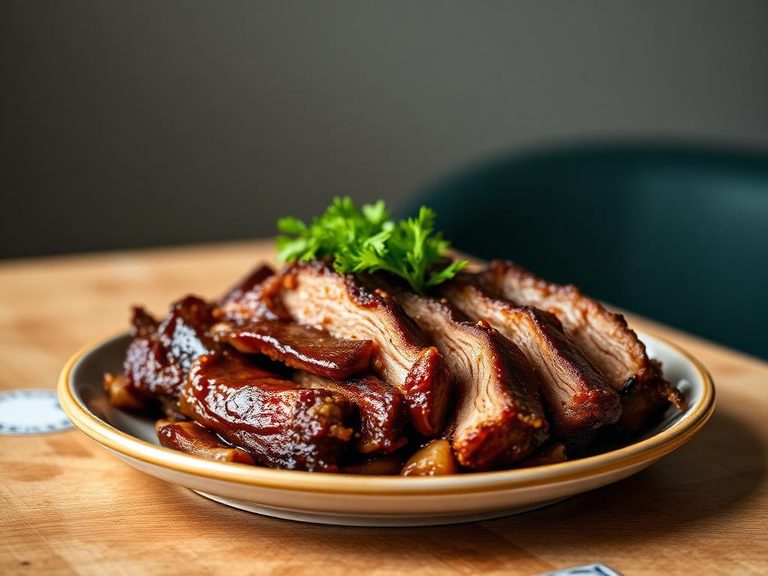
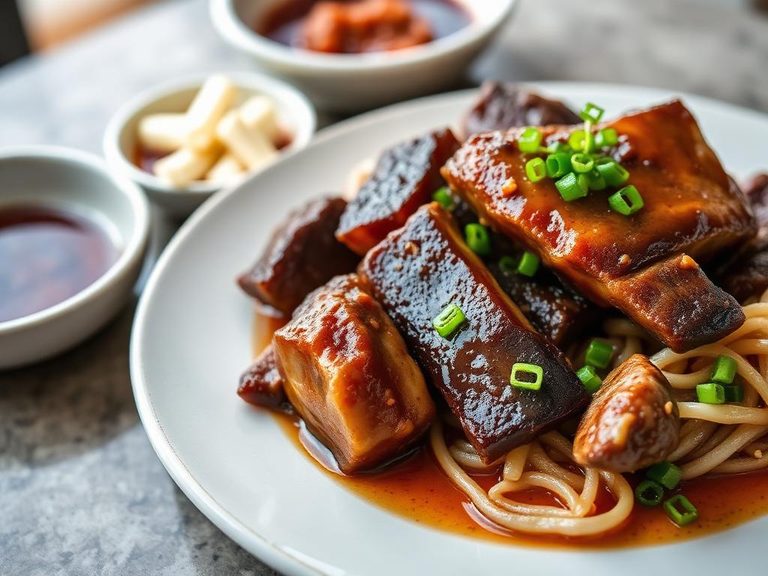
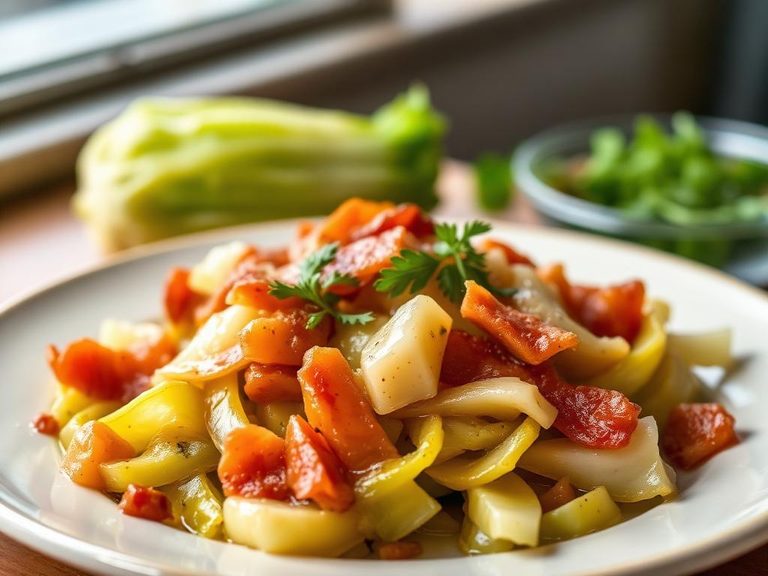
🌍 Where it's eaten
💡 Did you know?
The 'flat half' of the brisket is anatomically the lower pectoral muscle, which does less work than the 'point' (the upper muscle), resulting in a more uniform, leaner cut that's easier to slice neatly.
Full nutrition (USDA data · scales with serving)
| Water | 59.9 g |
| Energy | 198 kcal |
| Energy | 829 kj |
| Protein | 33.9 g |
| Total lipid (fat) | 5.9 g |
| Ash | 0.98 g |
| Carbohydrate, by difference | 0.00 g |
| Fiber, total dietary | 0.00 g |
| Total Sugars | 0.00 g |
| Calcium, Ca | 17.0 mg |
| Iron, Fe | 2.9 mg |
| Magnesium, Mg | 23.0 mg |
| Phosphorus, P | 214 mg |
| Potassium, K | 279 mg |
| Sodium, Na | 56.0 mg |
| Zinc, Zn | 8.4 mg |
| Copper, Cu | 0.11 mg |
| Manganese, Mn | 0.01 mg |
| Selenium, Se | 39.2 ug |
| Vitamin C, total ascorbic acid | 0.00 mg |
| Thiamin | 0.07 mg |
| Riboflavin | 0.21 mg |
| Niacin | 4.9 mg |
| Pantothenic acid | 0.67 mg |
| Vitamin B-6 | 0.31 mg |
| Folate, total | 11.0 ug |
| Folate, food | 11.0 ug |
| Choline, total | 129 mg |
| Betaine | 17.0 mg |
| Vitamin B-12 | 2.3 ug |
| Vitamin B-12, added | 0.00 ug |
| Vitamin A, RAE | 0.00 ug |
| Retinol | 0.00 ug |
| Carotene, beta | 0.00 ug |
| Carotene, alpha | 0.00 ug |
| Cryptoxanthin, beta | 0.00 ug |
| Vitamin A, IU | 0.00 iu |
| Lycopene | 0.00 ug |
| Lutein + zeaxanthin | 0.00 ug |
| Vitamin E (alpha-tocopherol) | 0.43 mg |
| Vitamin E, added | 0.00 mg |
| Tocopherol, beta | 0.00 mg |
| Tocopherol, gamma | 0.00 mg |
| Tocopherol, delta | 0.00 mg |
| Vitamin K (phylloquinone) | 1.5 ug |
| Alcohol, ethyl | 0.00 g |
| Caffeine | 0.00 mg |
| Theobromine | 0.00 mg |
Fat & fatty acid profile (per 100g)
| Fatty acids, total saturated | 2.2 g |
| SFA 4:0 | 0.00 g |
| SFA 6:0 | 0.00 g |
| SFA 8:0 | 0.00 g |
| SFA 10:0 | 0.00 g |
| SFA 12:0 | 0.01 g |
| SFA 14:0 | 0.17 g |
| SFA 16:0 | 1.3 g |
| SFA 18:0 | 0.74 g |
| Fatty acids, total monounsaturated | 2.5 g |
| MUFA 16:1 | 0.21 g |
| MUFA 18:1 | 2.3 g |
| MUFA 20:1 | 0.00 g |
| MUFA 22:1 | 0.00 g |
| Fatty acids, total polyunsaturated | 0.21 g |
| PUFA 18:2 | 0.17 g |
| PUFA 18:3 | 0.01 g |
| PUFA 18:4 | 0.00 g |
| PUFA 20:4 | 0.02 g |
| PUFA 20:5 n-3 (EPA) | 0.00 g |
| PUFA 22:5 n-3 (DPA) | 0.00 g |
| PUFA 22:6 n-3 (DHA) | 0.00 g |
| Cholesterol | 102 mg |
Amino acid profile (per 100g)
| Tryptophan | 0.22 g |
| Threonine | 1.4 g |
| Isoleucine | 1.5 g |
| Leucine | 2.7 g |
| Lysine | 2.9 g |
| Methionine | 0.88 g |
| Cystine | 0.44 g |
| Phenylalanine | 1.3 g |
| Tyrosine | 1.1 g |
| Valine | 1.7 g |
| Arginine | 2.2 g |
| Histidine | 1.1 g |
| Alanine | 2.1 g |
| Aspartic acid | 3.1 g |
| Glutamic acid | 5.1 g |
| Glycine | 2.1 g |
| Proline | 1.6 g |
| Serine | 1.3 g |
| Hydroxyproline | 0.36 g |
FAQ
What's the best way to cook this lean brisket cut to avoid it becoming tough?
Low and slow is the key. Braise it in liquid at a low temperature (around 300°F/150°C) for several hours until the connective tissue breaks down, making it tender. A slow cooker or Dutch oven is ideal.
Since it has 0g fat, is it dry?
When properly braised, the collagen within the meat converts to gelatin, creating a juicy, moist texture despite the lack of marbled fat. The braising liquid is crucial for this.
How does it differ from a regular brisket?
A regular brisket includes both the lean 'flat' and the fattier 'point' muscles, along with a fat cap. This specific cut is only the lean flat, meticulously trimmed of all separable fat.
Nutrient density (calculated · NRF9.3)
Nutrient Rich Foods index: beneficial nutrients (protein, fiber, vitamins, minerals) minus saturated fat, added sugar & sodium, per 100 kcal.
NRF9.3 index — Fulgoni, Keast & Drewnowski, 2009. Computed from USDA nutrients.
Weight-loss friendliness (composite index)
Energy density 1.98 kcal/g · 68% calories from protein · 0.0 g fiber · 0.0 g sugar per 100 g.
Composite of energy density (Rolls et al., 1999), protein & fiber satiety, minus sugar. A calculated heuristic — ranks satiety-per-calorie, not a clinical measure.
Dietary load (calculated from USDA values)
Potential renal acid load. Positive = acid-forming, negative = alkaline-forming.
Sodium-to-potassium ratio: 0.20 (lower is better — aim for ≤ 1)
Sodium:potassium per WHO potassium guidance. Computed from USDA nutrients.