Classic Jewish Braised Brisket
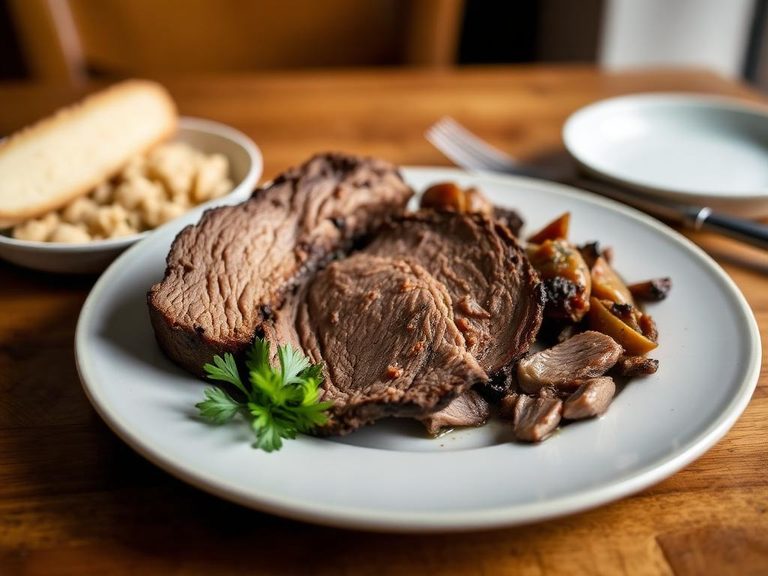
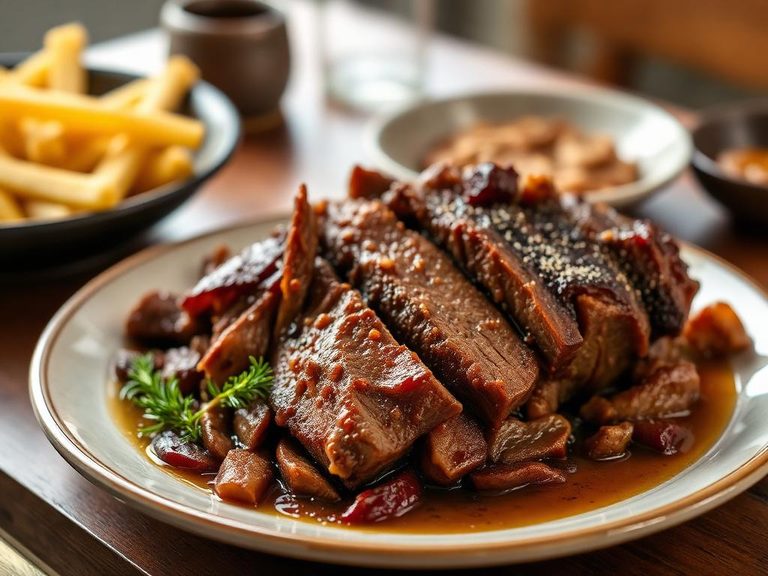
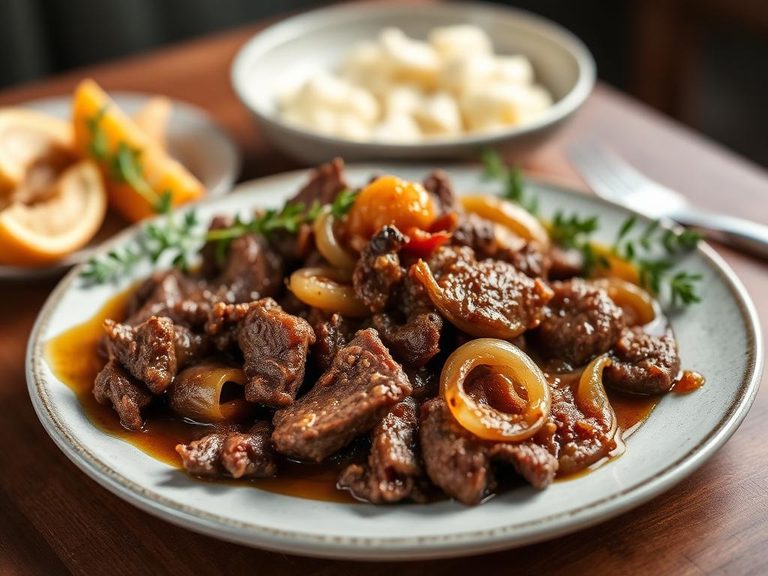
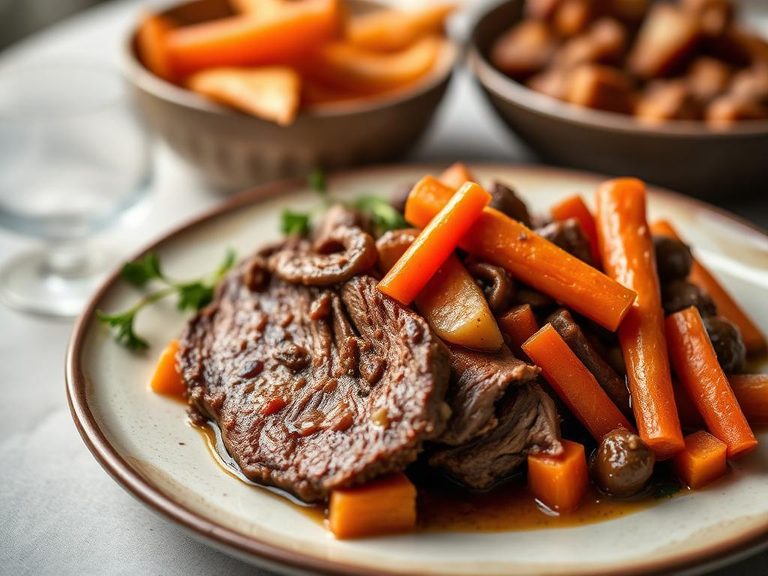
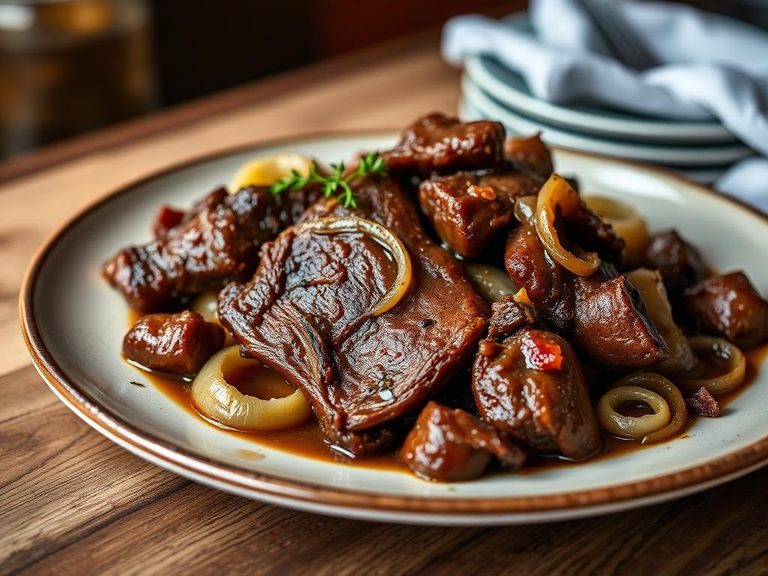
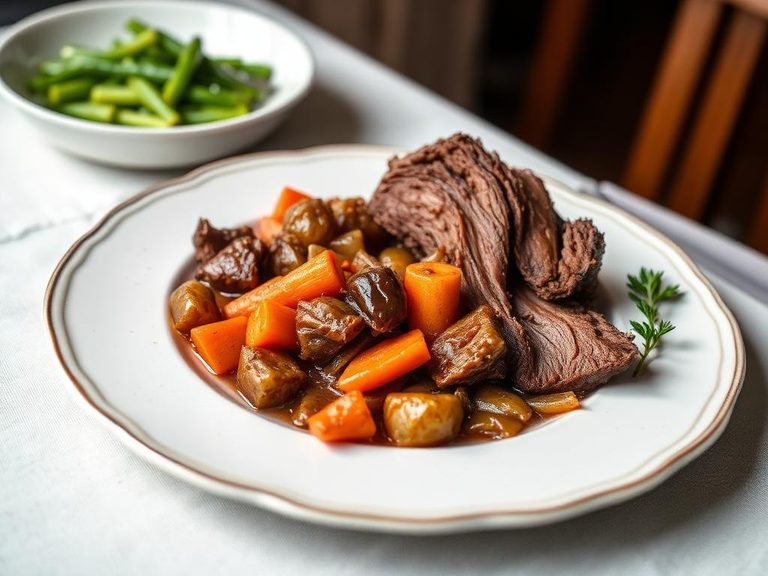
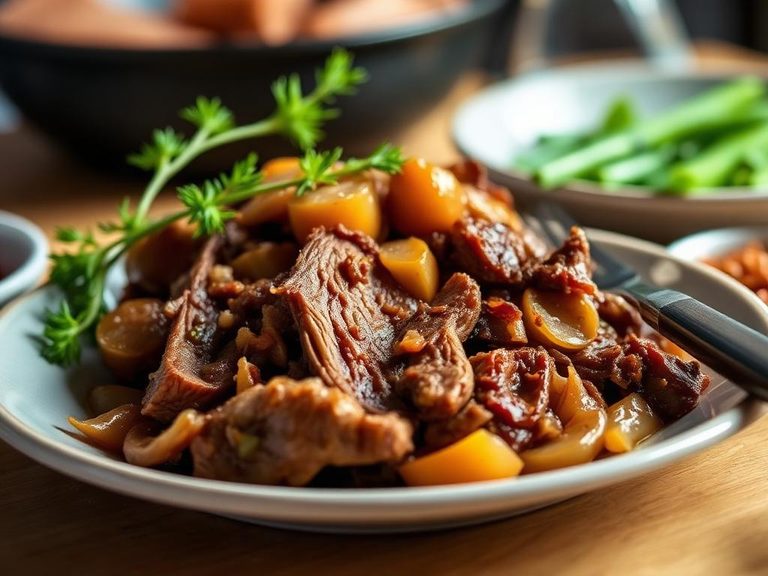
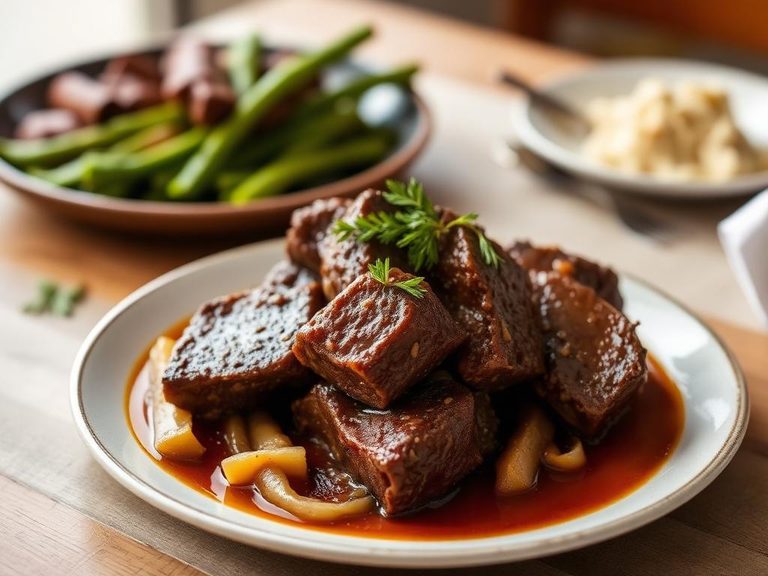
Classic Jewish Braised Brisket is a cornerstone of Ashkenazi Jewish cuisine, particularly beloved for holiday meals like Passover and Rosh Hashanah. It features a tough cut of beef brisket that is slowly cooked for hours in a flavorful liquid, often with onions, carrots, celery, and a combination of sweet and savory elements like wine, broth, and sometimes tomato paste or dried fruit.
🍽️ Nutrition at a glance
This dish is a high-protein, high-fat meal, with the long braising process rendering the fat and breaking down connective tissue into rich gelatin. It is very low in carbohydrates unless served with starchy sides, and a typical serving provides a substantial amount of iron, zinc, and B vitamins, with a calorie count generally ranging from 400 to 600 per generous portion.
Nutrition breakdown
| Calories | 480 kcal |
| Protein | 42 g |
| Carbs | 12 g |
| Fat | 28 g |
| Fiber | 2 g |
| Sugar | 6 g |
| Sodium | 950 mg |
| Iron | 4.5 mg |
| Zinc | 8 mg |
| Potassium | 650 mg |
| Phosphorus | 320 mg |
| Niacin (B3) | 9 mg |
| Vitamin B12 | 2.5 mcg |
| Selenium | 45 mcg |
| Vitamin B6 | 0.6 mg |
Per 1 cup (240 g) · estimated, varies by recipe
💡 What's interesting
Culturally, the slow-braised brisket is a symbol of patience and celebration, with family recipes often guarded and passed down for generations. Nutritionally, the transformation of a tough, inexpensive cut into a tender, flavorful dish through low-and-slow cooking is a perfect example of how traditional methods can maximize both taste and the bioavailability of nutrients.