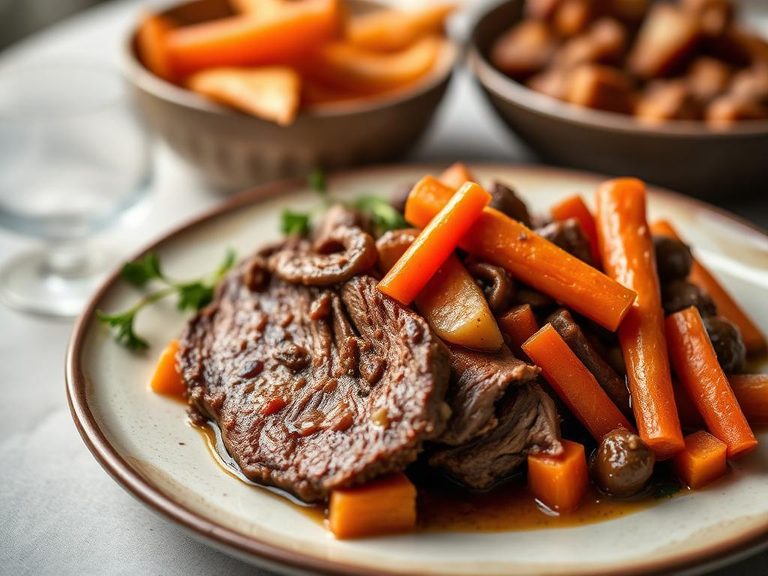
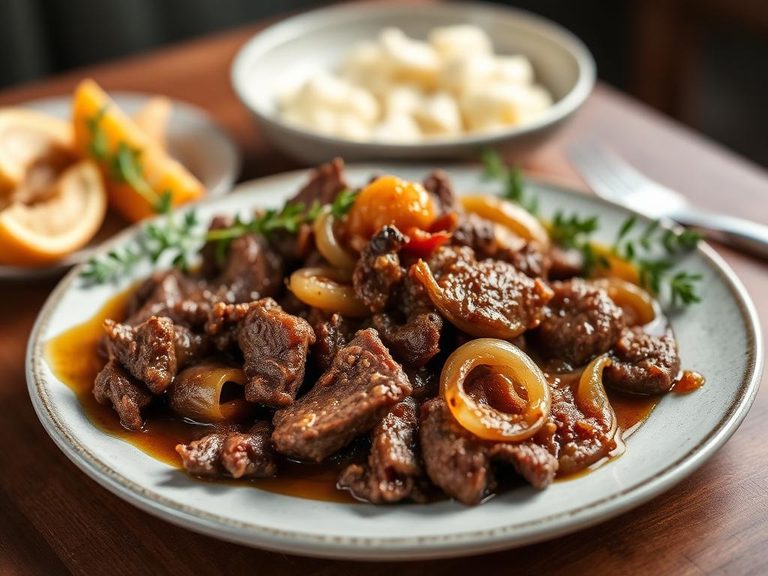
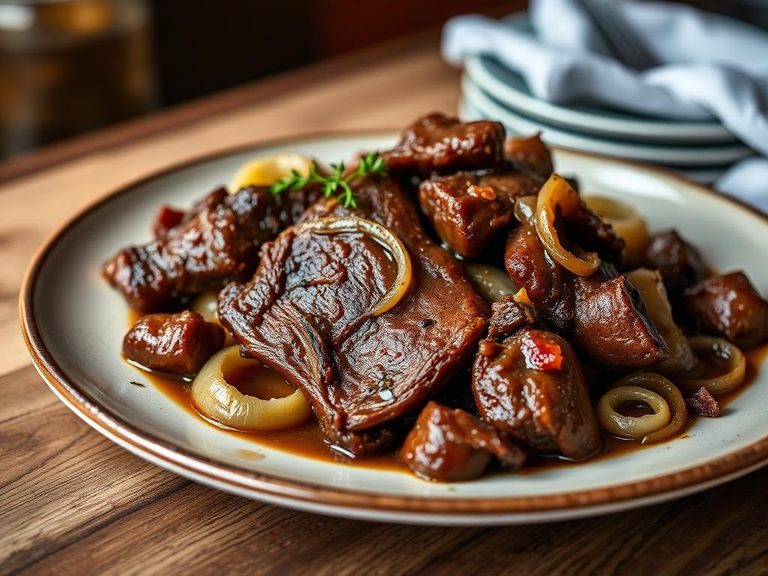
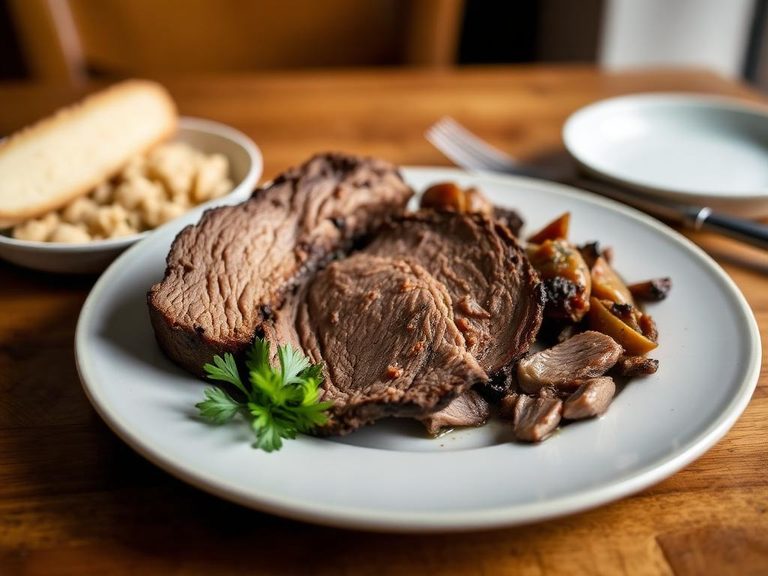
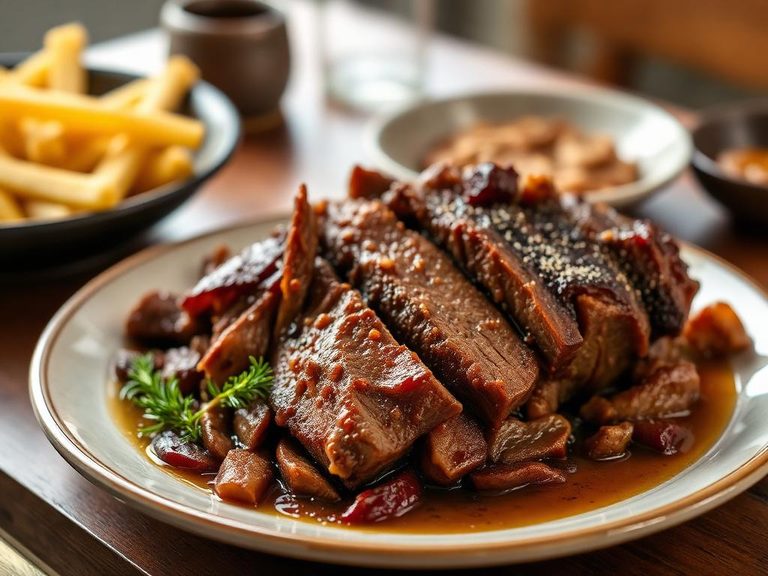
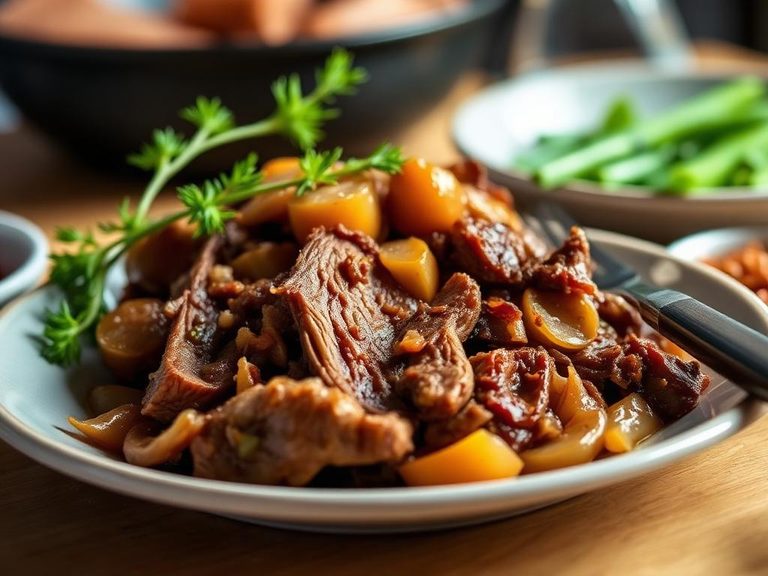
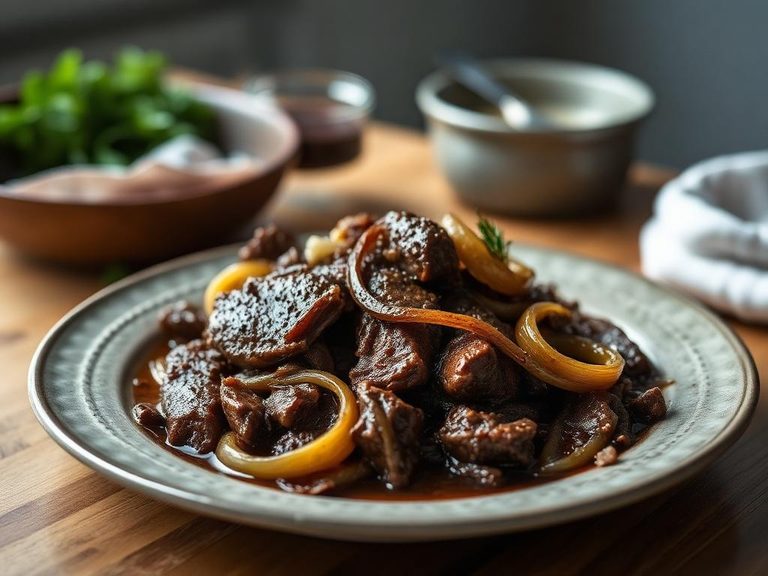
Jewish-style braised brisket with onions and carrots
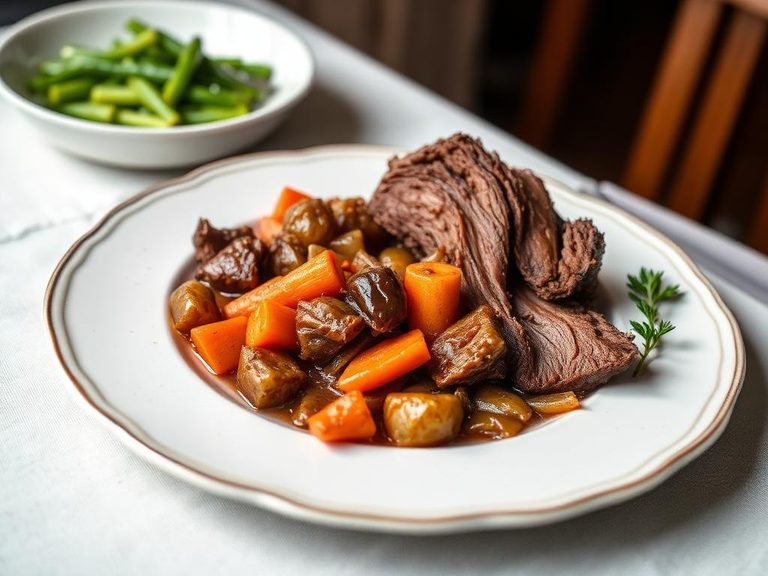
Jewish-style braised brisket is a slow-cooked, savory dish where beef brisket is simmered until tender in a rich sauce of onions, carrots, and often tomatoes or sweeteners like brown sugar or prunes. It is a cornerstone of Ashkenazi Jewish cuisine, traditionally served during holidays such as Passover and Rosh Hashanah, or as a comforting Sunday family dinner.
🍽️ Nutrition at a glance
This dish is high in protein from the beef brisket and also contains significant fat, especially if the brisket is not trimmed. It provides key nutrients like iron, zinc, and B vitamins from the meat, along with vitamin A and fiber from the carrots, with a rough ballpark of 400-600 calories per serving depending on cut and sauce richness.
Nutrition breakdown
| Calories | 350 kcal |
| Protein | 35 g |
| Carbs | 12 g |
| Fat | 18 g |
| Fiber | 2 g |
| Sugar | 5 g |
| Sodium | 680 mg |
| Potassium | 520 mg |
| Iron | 3.5 mg |
| Zinc | 6.2 mg |
| Vitamin B12 | 2.8 mcg |
| Niacin (B3) | 8.5 mg |
| Phosphorus | 280 mg |
| Selenium | 32 mcg |
| Vitamin A | 4500 IU |
Per 1 cup (240 g) · estimated, varies by recipe
💡 What's interesting
Culturally, this dish embodies the principle of 'low and slow' cooking, which was practical for Sabbath observance as it could be prepared ahead and left to simmer without active work. Nutritionally, the long braising process breaks down tough connective tissue into gelatin, making the meat easier to digest and enhancing its savory flavor.