PAPA JOHN'S 14" The Works Pizza, Original Crust
Whole food · Fast Foods
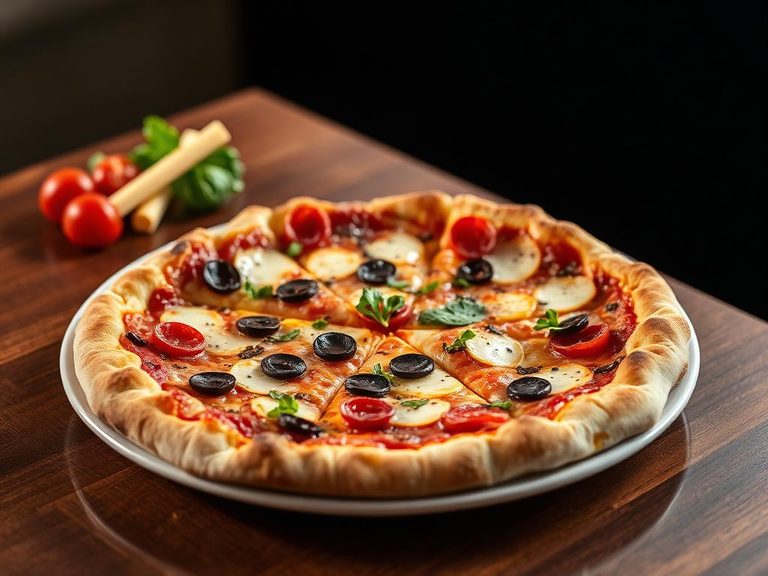
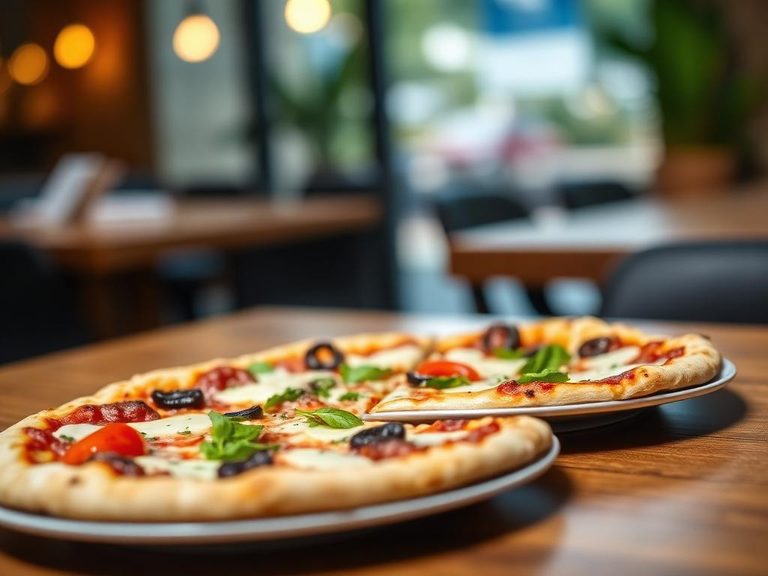
Papa John's 'The Works' is a loaded 14-inch original crust pizza, featuring a medley of savory meats like pepperoni, sausage, and ham, alongside green peppers, onions, mushrooms, and black olives on a classic tomato sauce base. Each slice offers a satisfying chew from the dough, a tangy-sweet sauce, and a salty, umami-rich burst from the toppings. Nutritionally, it provides a solid protein source but is notably dense in calories and fats per 100g.
💚 Why it's loved
People adore it for the 'supreme' combination of salty, savory, and slightly sweet flavors, where every bite offers a different mix of textures. It's a crowd-pleasing, customizable staple for social gatherings, movie nights, and casual family dinners.
⚠️ Watch-outs & how to enjoy it better
It is high in sodium, saturated fat, and refined carbohydrates, which can contribute to blood-sugar spikes and may be problematic for those monitoring heart health or calorie intake. To counteract this, practice strict portion control (e.g., limit to 1-2 slices), pair with a large, vinegar-dressed salad to increase fiber and fullness, and drink water instead of sugary soda.
Key benefits
- High protein content (10.27g per 100g) supports muscle maintenance.
- Contains dietary fiber (2.5g per 100g) from vegetable toppings.
- Provides a complete meal with carbs, protein, and fats in one dish.
- The variety of toppings offers a range of micronutrients.
🍽️ Popular dishes
🌍 Where it's eaten
💡 Did you know?
The 'Works' is essentially the American pizza industry's standard-bearer for the 'supreme' or 'deluxe' category, a topping combination so iconic it was a key part of the 1990s 'pizza wars' between major chains.
Full nutrition (scales with serving)
| Water | 50.6 g |
| Energy | 240 kcal |
| Energy | 1003 kj |
| Protein | 10.3 g |
| Total lipid (fat) | 10.2 g |
| Ash | 2.3 g |
| Carbohydrate, by difference | 26.7 g |
| Fiber, total dietary | 2.5 g |
| Total Sugars | 4.8 g |
| Sucrose | 0.33 g |
| Glucose | 1.5 g |
| Fructose | 1.6 g |
| Lactose | 0.16 g |
| Maltose | 1.2 g |
| Galactose | 0.07 g |
| Starch | 18.4 g |
| Calcium, Ca | 99.0 mg |
| Iron, Fe | 1.5 mg |
| Magnesium, Mg | 21.0 mg |
| Phosphorus, P | 160 mg |
| Potassium, K | 160 mg |
| Sodium, Na | 570 mg |
| Zinc, Zn | 0.98 mg |
| Copper, Cu | 0.15 mg |
| Manganese, Mn | 0.28 mg |
| Selenium, Se | 26.8 ug |
| Vitamin C, total ascorbic acid | 0.00 mg |
| Thiamin | 0.23 mg |
| Riboflavin | 0.29 mg |
| Niacin | 3.2 mg |
| Pantothenic acid | 0.33 mg |
| Folate, total | 65.0 ug |
| Folic acid | 38.0 ug |
| Folate, food | 27.0 ug |
| Folate, DFE | 92.0 ug |
| Vitamin B-12 | 0.72 ug |
| Vitamin A, RAE | 31.0 ug |
| Retinol | 27.0 ug |
| Vitamin A, IU | 172 iu |
| Vitamin E (alpha-tocopherol) | 1.1 mg |
| Tocopherol, beta | 0.05 mg |
| Tocopherol, gamma | 1.1 mg |
| Tocopherol, delta | 0.27 mg |
| Tocotrienol, alpha | 0.08 mg |
| Tocotrienol, beta | 0.00 mg |
| Tocotrienol, delta | 0.00 mg |
| Vitamin K (phylloquinone) | 5.6 ug |
| Vitamin K (Dihydrophylloquinone) | 0.00 ug |
Fat & fatty acid profile (per 100g)
| Fatty acids, total saturated | 3.8 g |
| SFA 8:0 | 0.03 g |
| SFA 10:0 | 0.08 g |
| SFA 12:0 | 0.09 g |
| SFA 13:0 | 0.00 g |
| SFA 14:0 | 0.38 g |
| SFA 15:0 | 0.04 g |
| SFA 16:0 | 2.1 g |
| SFA 17:0 | 0.04 g |
| SFA 18:0 | 0.97 g |
| SFA 20:0 | 0.02 g |
| SFA 22:0 | 0.01 g |
| SFA 24:0 | 0.00 g |
| Fatty acids, total monounsaturated | 3.7 g |
| MUFA 14:1 | 0.03 g |
| MUFA 15:1 | 0.00 g |
| MUFA 16:1 | 0.17 g |
| MUFA 17:1 | 0.03 g |
| MUFA 18:1 | 3.4 g |
| MUFA 20:1 | 0.04 g |
| MUFA 22:1 | 0.00 g |
| Fatty acids, total polyunsaturated | 1.9 g |
| PUFA 18:2 | 1.7 g |
| PUFA 18:3 | 0.15 g |
| PUFA 18:4 | 0.03 g |
| PUFA 20:3 | 0.00 g |
| PUFA 20:4 | 0.02 g |
| PUFA 20:5 n-3 (EPA) | 0.00 g |
| PUFA 22:5 n-3 (DPA) | 0.00 g |
| PUFA 22:6 n-3 (DHA) | 0.00 g |
| Cholesterol | 21.0 mg |
Amino acid profile (per 100g)
| Tryptophan | 0.10 g |
| Threonine | 0.40 g |
| Isoleucine | 0.41 g |
| Leucine | 0.83 g |
| Lysine | 0.55 g |
| Methionine | 0.17 g |
| Cystine | 0.14 g |
| Phenylalanine | 0.52 g |
| Tyrosine | 0.34 g |
| Valine | 0.50 g |
| Arginine | 0.44 g |
| Histidine | 0.28 g |
| Alanine | 0.43 g |
| Aspartic acid | 0.77 g |
| Glutamic acid | 2.9 g |
| Glycine | 0.38 g |
| Proline | 1.0 g |
| Serine | 0.54 g |
FAQ
What meats are on a Papa John's 'The Works' pizza?
It typically includes pepperoni, Italian sausage, ham, and bacon.
Is this pizza a good source of vegetables?
While it contains green peppers, onions, mushrooms, and olives, the quantity is modest compared to the cheese and dough. It shouldn't be considered a primary vegetable serving.
How does the original crust compare nutritionally to thin crust?
The original crust is thicker and softer, resulting in more calories and carbohydrates per slice compared to a crispier thin crust option.