Soymilk, original and vanilla, unfortified
Whole food · Legumes and Legume Products

Photo: Wikipedia
This is the classic, unadulterated form of soy milk, a creamy, plant-based beverage made from soaked and ground soybeans. It has a mild, slightly beany taste in its original form, with the vanilla version adding a subtle, sweet aroma. Nutritionally, it's a lean source of plant protein with a modest calorie count, making it a lighter alternative to dairy.
💚 Why it's loved
People love it for its clean, neutral flavor that serves as a perfect canvas for coffee, cereal, or smoothies, and for its cultural significance as a staple in East Asian diets for centuries. Its versatility in both sweet and savory cooking makes it a beloved pantry item.
⚠️ Watch-outs & how to enjoy it better
As an unfortified version, it lacks the added calcium and vitamin D found in fortified varieties, so those relying on it exclusively should seek other sources. It is a common allergen, and its natural sugars (3.99g per 100g) can contribute to blood sugar spikes if consumed in large amounts. To counteract this, pair it with high-fiber foods or a source of protein/fat, and opt for the unsweetened original version when possible.
Key benefits
- Good source of plant-based protein (3.27g per 100g).
- Naturally low in saturated fat and contains no cholesterol.
- Provides essential amino acids, making it a complete protein.
- A common and versatile dairy-free alternative for lactose intolerance.
- Contains isoflavones, which are phytoestrogens studied for various health effects.
🍽️ Popular dishes
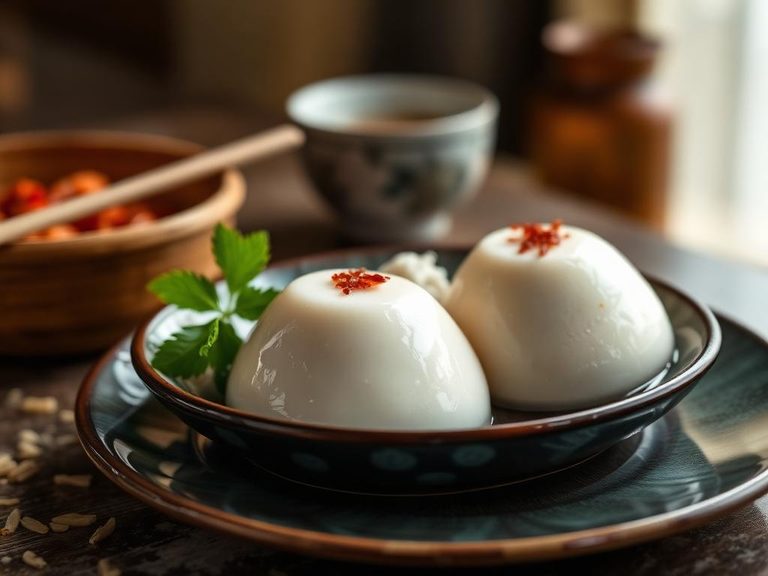
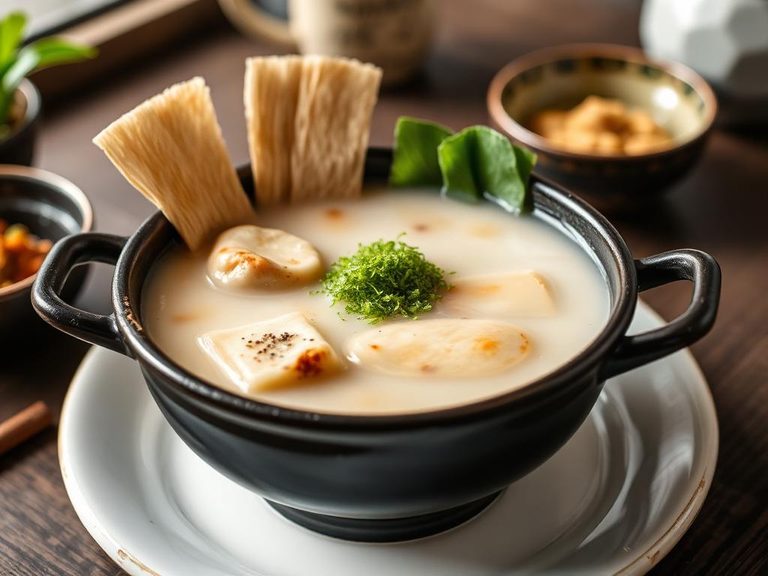
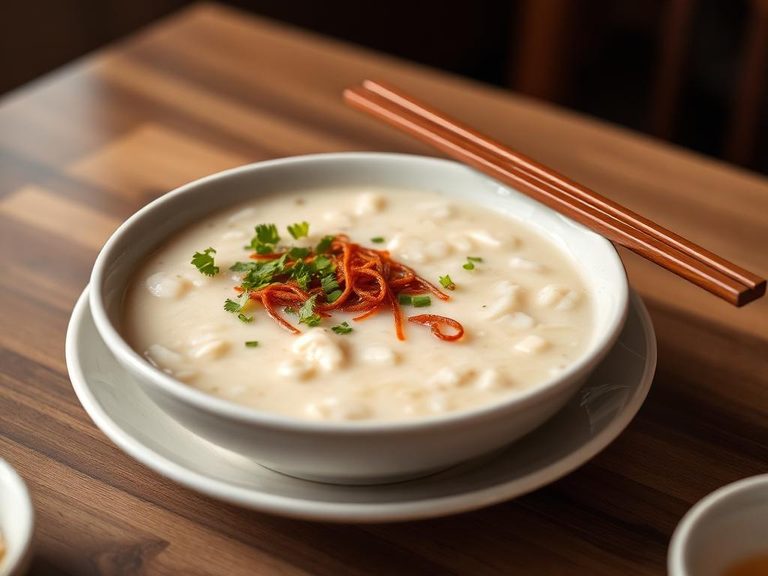
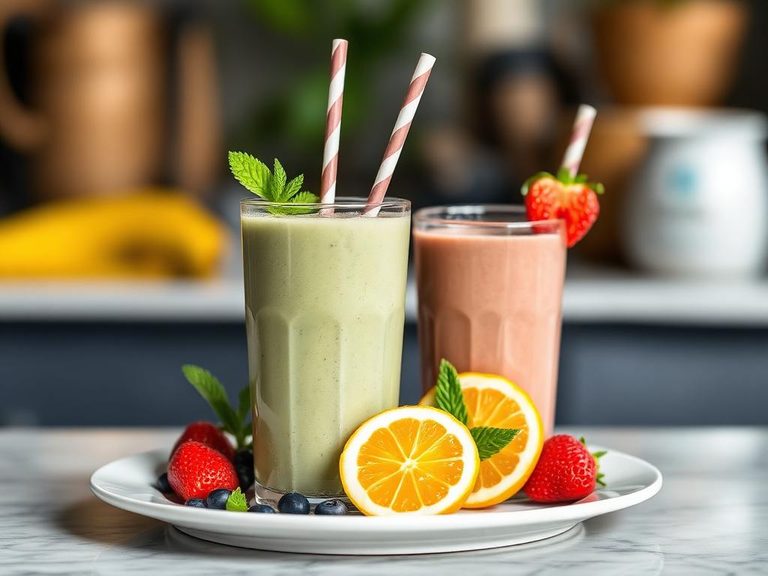
🌍 Where it's eaten
💡 Did you know?
The traditional method of making soy milk, called 'wet milling,' involves soaking the beans before grinding, which is believed to improve digestibility and reduce the 'beany' flavor compared to dry-roasting methods.
Full nutrition (scales with serving)
| Water | 88.0 g |
| Energy | 54.0 kcal |
| Energy | 226 kj |
| Protein | 3.3 g |
| Total lipid (fat) | 1.8 g |
| Ash | 0.65 g |
| Carbohydrate, by difference | 6.3 g |
| Fiber, total dietary | 0.60 g |
| Total Sugars | 4.0 g |
| Calcium, Ca | 25.0 mg |
| Iron, Fe | 0.64 mg |
| Magnesium, Mg | 25.0 mg |
| Phosphorus, P | 52.0 mg |
| Potassium, K | 118 mg |
| Sodium, Na | 51.0 mg |
| Zinc, Zn | 0.12 mg |
| Copper, Cu | 0.13 mg |
| Manganese, Mn | 0.22 mg |
| Selenium, Se | 4.8 ug |
| Vitamin C, total ascorbic acid | 0.00 mg |
| Thiamin | 0.06 mg |
| Riboflavin | 0.07 mg |
| Niacin | 0.51 mg |
| Pantothenic acid | 0.37 mg |
| Vitamin B-6 | 0.08 mg |
| Folate, total | 18.0 ug |
| Folic acid | 0.00 ug |
| Folate, food | 18.0 ug |
| Folate, DFE | 18.0 ug |
| Choline, total | 23.6 mg |
| Betaine | 0.80 mg |
| Vitamin B-12 | 0.00 ug |
| Vitamin B-12, added | 0.00 ug |
| Vitamin A, RAE | 0.00 ug |
| Retinol | 0.00 ug |
| Carotene, beta | 2.0 ug |
| Carotene, alpha | 0.00 ug |
| Cryptoxanthin, beta | 0.00 ug |
| Vitamin A, IU | 3.0 iu |
| Lycopene | 0.00 ug |
| Lutein + zeaxanthin | 0.00 ug |
| Vitamin E (alpha-tocopherol) | 0.11 mg |
| Vitamin E, added | 0.00 mg |
| Vitamin D (D2 + D3), International Units | 0.00 iu |
| Vitamin D (D2 + D3) | 0.00 ug |
| Vitamin K (phylloquinone) | 3.0 ug |
| Alcohol, ethyl | 0.00 g |
| Caffeine | 0.00 mg |
| Theobromine | 0.00 mg |
Fat & fatty acid profile (per 100g)
| Fatty acids, total saturated | 0.20 g |
| SFA 4:0 | 0.00 g |
| SFA 6:0 | 0.00 g |
| SFA 8:0 | 0.00 g |
| SFA 10:0 | 0.00 g |
| SFA 12:0 | 0.00 g |
| SFA 13:0 | 0.00 g |
| SFA 14:0 | 0.00 g |
| SFA 15:0 | 0.00 g |
| SFA 16:0 | 0.15 g |
| SFA 17:0 | 0.00 g |
| SFA 18:0 | 0.05 g |
| SFA 20:0 | 0.00 g |
| SFA 22:0 | 0.00 g |
| SFA 24:0 | 0.00 g |
| Fatty acids, total monounsaturated | 0.40 g |
| MUFA 14:1 | 0.00 g |
| MUFA 15:1 | 0.00 g |
| MUFA 16:1 | 0.00 g |
| MUFA 17:1 | 0.01 g |
| MUFA 18:1 | 0.31 g |
| MUFA 20:1 | 0.01 g |
| MUFA 22:1 | 0.00 g |
| Fatty acids, total polyunsaturated | 0.96 g |
| PUFA 18:2 | 0.58 g |
| PUFA 18:3 | 0.07 g |
| PUFA 18:4 | 0.00 g |
| PUFA 20:2 n-6 c,c | 0.00 g |
| PUFA 20:3 | 0.00 g |
| PUFA 20:4 | 0.00 g |
| PUFA 20:5 n-3 (EPA) | 0.00 g |
| PUFA 22:5 n-3 (DPA) | 0.00 g |
| PUFA 22:6 n-3 (DHA) | 0.00 g |
| Fatty acids, total trans | 0.00 g |
| Cholesterol | 0.00 mg |
Amino acid profile (per 100g)
| Tryptophan | 0.04 g |
| Threonine | 0.11 g |
| Isoleucine | 0.11 g |
| Leucine | 0.19 g |
| Lysine | 0.13 g |
| Methionine | 0.03 g |
| Cystine | 0.00 g |
| Phenylalanine | 0.11 g |
| Tyrosine | 0.09 g |
| Valine | 0.12 g |
| Arginine | 0.19 g |
| Histidine | 0.06 g |
| Alanine | 0.10 g |
| Aspartic acid | 0.29 g |
| Glutamic acid | 0.49 g |
| Glycine | 0.10 g |
| Proline | 0.15 g |
| Serine | 0.14 g |
FAQ
Is unfortified soy milk as nutritious as cow's milk?
Not exactly. While it's a good source of protein, unfortified soy milk lacks the naturally high calcium and vitamin D found in dairy. Fortified versions are designed to match this nutritional profile more closely.
Why does my homemade soy milk sometimes curdle in coffee?
This is due to the acidity and temperature of the coffee. Using a barista-style soy milk (formulated with stabilizers) or adding the milk to the coffee slowly can help prevent curdling.
Can I use this for cooking savory dishes?
Absolutely. Its mild flavor makes it a great base for creamy soups, sauces, and braising liquids, especially in East Asian cuisines. It adds richness without dairy.