

Ham, chopped, canned
Whole food · Sausages and Luncheon Meats
Chopped canned ham is a shelf-stable, pre-cooked pork product with a distinctly salty, smoky flavor and a soft, uniform texture. It is an exceptionally high-protein, virtually zero-carb food, making it a staple for quick meals and low-carb diets. Its convenience and long shelf life make it a reliable pantry item.
Calorie split: 27% protein · 0% carbs · 72% fat
↓ Full nutrition💚 Why it's loved
People love it for its intense, savory umami flavor and incredible versatility—it can be tossed into salads, fried with eggs, or stirred into soups with zero prep. Its salty, smoky taste is a comforting, nostalgic staple in many households, especially for quick lunches.
⚠️ Watch-outs & how to enjoy it better
The primary downside is its very high sodium content, which can contribute to water retention and is a concern for those managing blood pressure. To mitigate this, pair it with potassium-rich foods like leafy greens or avocado, and always rinse the ham pieces under water before use to reduce sodium by up to 30%. Those watching their saturated fat intake should also practice portion control.
Key benefits
- Excellent source of high-quality protein (16g per 100g).
- Virtually carbohydrate-free, ideal for low-carb or ketogenic diets.
- Extremely long shelf life and requires no cooking.
- Convenient, ready-to-eat protein source for quick meals.
- Often fortified with B vitamins like B1 (thiamine).
🍽️ Popular dishes


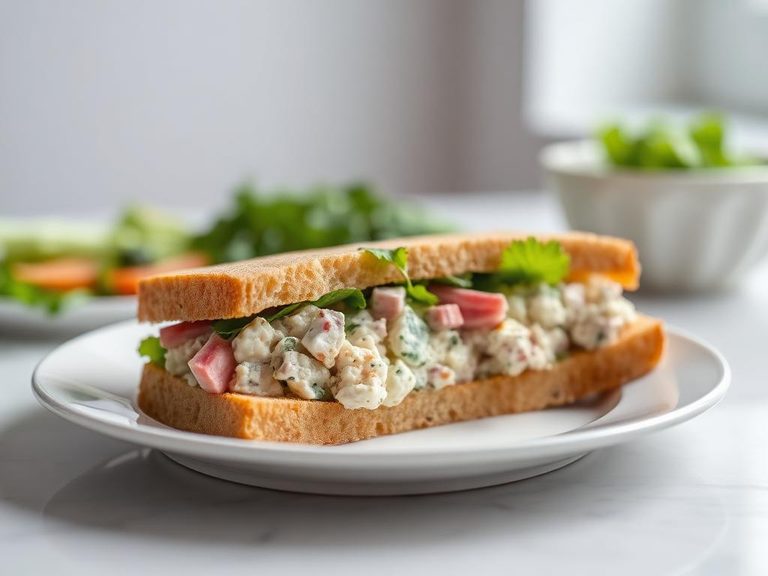
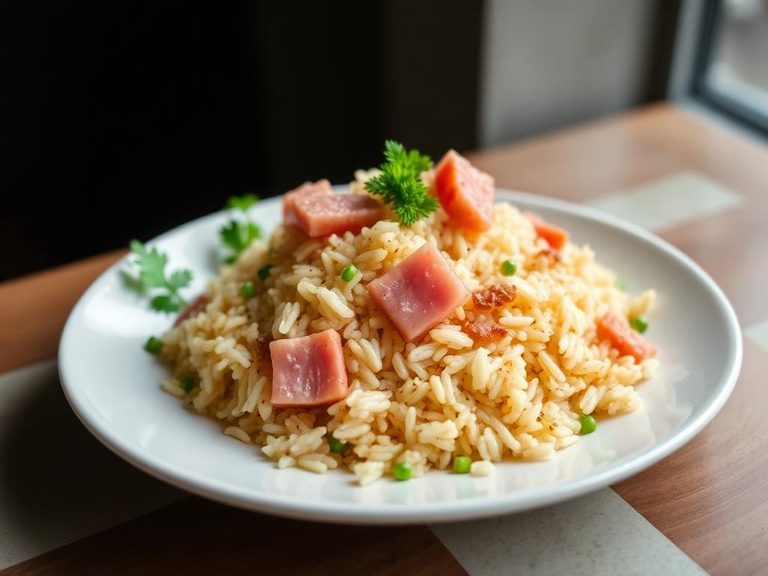

🌍 Where it's eaten
💡 Did you know?
The process of canning ham was a major innovation for military rations in the 19th century, with brands like Spam (a related canned meat) becoming iconic during World War II for their shelf stability and caloric density.
Full nutrition (USDA data · scales with serving)
| Water | 60.8 g |
| Energy | 239 kcal |
| Energy | 1000 kj |
| Protein | 16.1 g |
| Total lipid (fat) | 18.8 g |
| Ash | 4.1 g |
| Carbohydrate, by difference | 0.26 g |
| Fiber, total dietary | 0.00 g |
| Total Sugars | 0.00 g |
| Calcium, Ca | 7.0 mg |
| Iron, Fe | 0.95 mg |
| Magnesium, Mg | 13.0 mg |
| Phosphorus, P | 139 mg |
| Potassium, K | 284 mg |
| Sodium, Na | 1280 mg |
| Zinc, Zn | 1.8 mg |
| Copper, Cu | 0.05 mg |
| Manganese, Mn | 0.03 mg |
| Selenium, Se | 18.6 ug |
| Vitamin C, total ascorbic acid | 2.0 mg |
| Thiamin | 0.54 mg |
| Riboflavin | 0.17 mg |
| Niacin | 3.2 mg |
| Pantothenic acid | 0.28 mg |
| Vitamin B-6 | 0.32 mg |
| Folate, total | 1.0 ug |
| Folic acid | 0.00 ug |
| Folate, food | 1.0 ug |
| Folate, DFE | 1.0 ug |
| Choline, total | 64.4 mg |
| Betaine | 6.3 mg |
| Vitamin B-12 | 0.70 ug |
| Vitamin B-12, added | 0.00 ug |
| Vitamin A, RAE | 0.00 ug |
| Retinol | 0.00 ug |
| Carotene, beta | 0.00 ug |
| Carotene, alpha | 0.00 ug |
| Cryptoxanthin, beta | 0.00 ug |
| Vitamin A, IU | 0.00 iu |
| Lycopene | 0.00 ug |
| Lutein + zeaxanthin | 0.00 ug |
| Vitamin E (alpha-tocopherol) | 0.25 mg |
| Vitamin E, added | 0.00 mg |
| Vitamin D (D2 + D3), International Units | 24.0 iu |
| Vitamin D (D2 + D3) | 0.60 ug |
| Vitamin D3 (cholecalciferol) | 0.60 ug |
| Vitamin K (phylloquinone) | 0.00 ug |
| Alcohol, ethyl | 0.00 g |
| Caffeine | 0.00 mg |
| Theobromine | 0.00 mg |
Fat & fatty acid profile (per 100g)
| Fatty acids, total saturated | 6.3 g |
| SFA 4:0 | 0.00 g |
| SFA 6:0 | 0.00 g |
| SFA 8:0 | 0.00 g |
| SFA 10:0 | 0.03 g |
| SFA 12:0 | 0.01 g |
| SFA 14:0 | 0.24 g |
| SFA 16:0 | 4.0 g |
| SFA 18:0 | 2.0 g |
| Fatty acids, total monounsaturated | 9.2 g |
| MUFA 16:1 | 0.67 g |
| MUFA 18:1 | 8.5 g |
| MUFA 20:1 | 0.00 g |
| MUFA 22:1 | 0.00 g |
| Fatty acids, total polyunsaturated | 2.1 g |
| PUFA 18:2 | 1.9 g |
| PUFA 18:3 | 0.20 g |
| PUFA 18:4 | 0.00 g |
| PUFA 20:4 | 0.00 g |
| PUFA 20:5 n-3 (EPA) | 0.00 g |
| PUFA 22:5 n-3 (DPA) | 0.00 g |
| PUFA 22:6 n-3 (DHA) | 0.00 g |
| Cholesterol | 49.0 mg |
| Phytosterols | 0.00 mg |
Amino acid profile (per 100g)
| Tryptophan | 0.18 g |
| Threonine | 0.72 g |
| Isoleucine | 0.69 g |
| Leucine | 1.2 g |
| Lysine | 1.4 g |
| Methionine | 0.42 g |
| Cystine | 0.19 g |
| Phenylalanine | 0.62 g |
| Tyrosine | 0.53 g |
| Valine | 0.72 g |
| Arginine | 1.00 g |
| Histidine | 0.64 g |
| Alanine | 0.92 g |
| Aspartic acid | 1.5 g |
| Glutamic acid | 2.4 g |
| Glycine | 0.79 g |
| Proline | 0.68 g |
| Serine | 0.63 g |
FAQ
Is canned ham fully cooked?
Yes, canned ham is fully cooked and ready to eat straight from the can. It can be heated if desired, but it is not necessary for safety.
How long does canned ham last after opening?
Once opened, transfer the ham to an airtight container and refrigerate. It will keep for 3-5 days.
Is canned ham high in sodium?
Yes, it is typically very high in sodium due to the curing and canning process. Rinsing the ham before use can help reduce the salt content.
Nutrient density (calculated · NRF9.3)
Nutrient Rich Foods index: beneficial nutrients (protein, fiber, vitamins, minerals) minus saturated fat, added sugar & sodium, per 100 kcal.
NRF9.3 index — Fulgoni, Keast & Drewnowski, 2009. Computed from USDA nutrients.
Weight-loss friendliness (composite index)
Energy density 2.39 kcal/g · 27% calories from protein · 0.0 g fiber · 0.0 g sugar per 100 g.
Composite of energy density (Rolls et al., 1999), protein & fiber satiety, minus sugar. A calculated heuristic — ranks satiety-per-calorie, not a clinical measure.
Dietary load (calculated from USDA values)
Potential renal acid load. Positive = acid-forming, negative = alkaline-forming.
Sodium-to-potassium ratio: 4.51 (lower is better — aim for ≤ 1)
Sodium:potassium per WHO potassium guidance. Computed from USDA nutrients.