Pickles, cucumber, sweet (includes bread and butter pickles)
Whole food · Vegetables and Vegetable Products
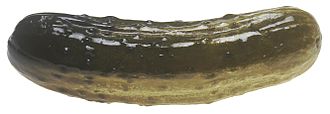
Photo: Wikipedia
These are cucumber slices preserved in a sweet, tangy brine, often with mustard seed and turmeric, resulting in a crisp, crunchy texture with a pronounced sweet-sour flavor. Nutritionally, they are a low-calorie, low-fat condiment, but their carbohydrate content is almost entirely from added sugar, making them a source of quick energy rather than complex nutrients.
💚 Why it's loved
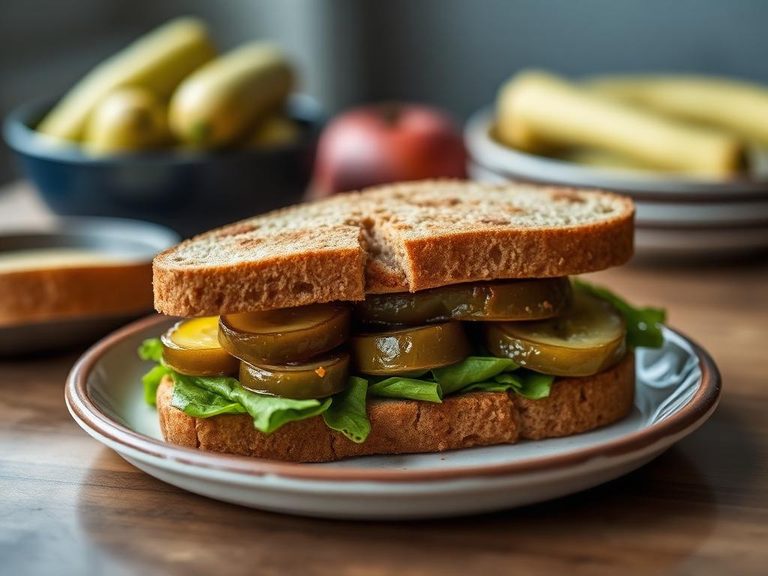
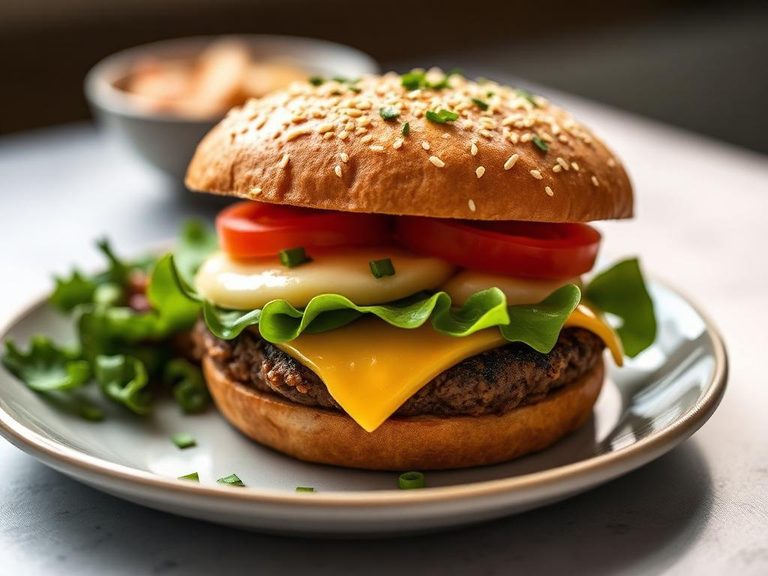
People love them for their addictive sweet-and-sour punch and satisfying crunch, which can brighten up rich, fatty, or salty foods like sandwiches and burgers. They are a nostalgic comfort food for many, deeply embedded in American deli and barbecue culture.
⚠️ Watch-outs & how to enjoy it better
The high sugar content (over 18g per 100g) can cause a rapid blood-sugar spike, making them a poor choice for diabetics or those monitoring sugar intake. To counteract this, pair a small portion with a source of protein or healthy fat (like cheese or nuts) to slow sugar absorption, or opt for dill pickles instead. Their sodium content can also be high, so rinsing them briefly or choosing low-sodium varieties is advisable.
Key benefits
- Very low in calories and fat
- Provides a quick source of energy from carbohydrates
- Adds intense flavor and crunch to meals with minimal calories
- Can satisfy a sweet-and-sour craving
- Long shelf life as a preserved food
🍽️ Popular dishes
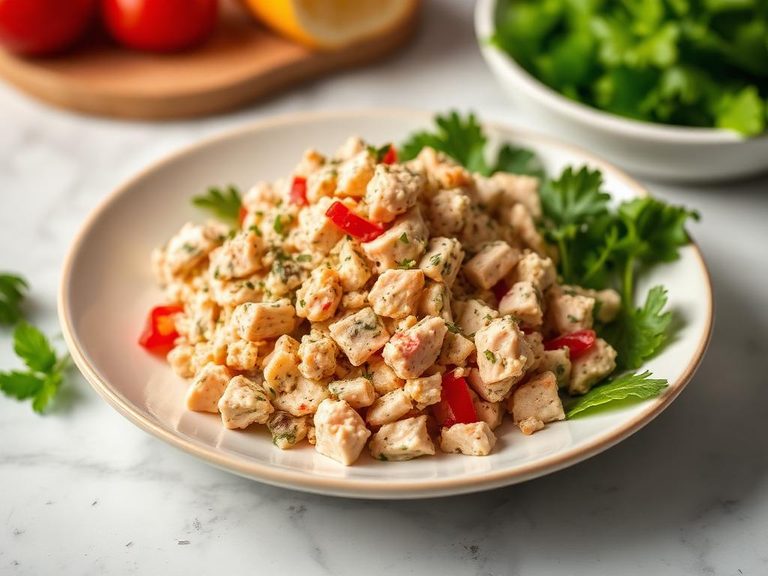
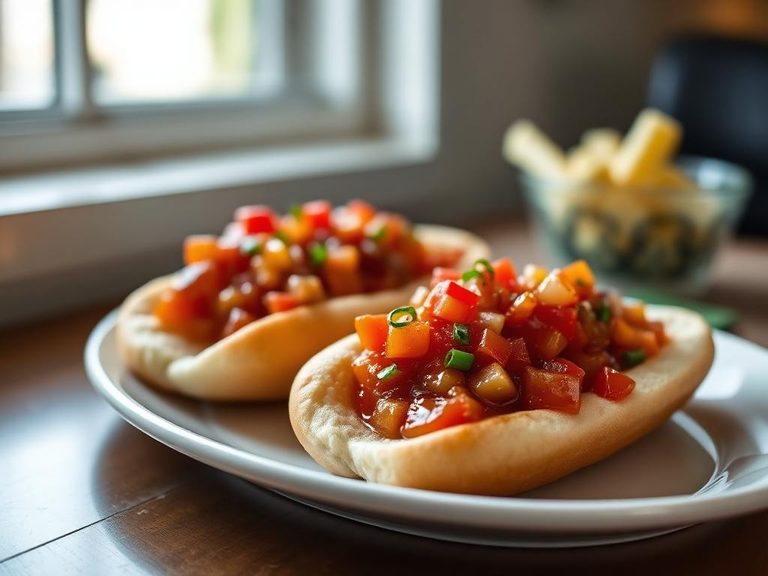
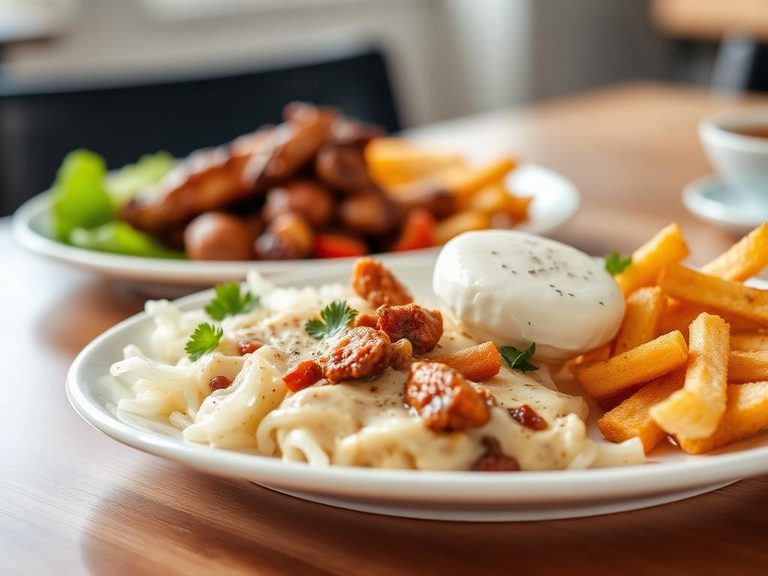
🌍 Where it's eaten
💡 Did you know?
The name 'bread and butter' pickles is said to originate from the Great Depression, when resourceful homemakers made these sweet pickles to serve with the simple, staple meal of bread and butter.
Full nutrition (scales with serving)
| Water | 76.2 g |
| Energy | 91.0 kcal |
| Energy | 379 kj |
| Protein | 0.58 g |
| Total lipid (fat) | 0.41 g |
| Ash | 1.6 g |
| Carbohydrate, by difference | 21.1 g |
| Fiber, total dietary | 1.0 g |
| Total Sugars | 18.3 g |
| Sucrose | 0.00 g |
| Glucose | 9.2 g |
| Fructose | 8.8 g |
| Lactose | 0.00 g |
| Maltose | 0.29 g |
| Galactose | 0.00 g |
| Calcium, Ca | 61.0 mg |
| Iron, Fe | 0.25 mg |
| Magnesium, Mg | 7.0 mg |
| Phosphorus, P | 18.0 mg |
| Potassium, K | 100 mg |
| Sodium, Na | 457 mg |
| Zinc, Zn | 0.12 mg |
| Copper, Cu | 0.03 mg |
| Manganese, Mn | 0.07 mg |
| Selenium, Se | 0.00 ug |
| Vitamin C, total ascorbic acid | 0.70 mg |
| Thiamin | 0.03 mg |
| Riboflavin | 0.03 mg |
| Niacin | 0.12 mg |
| Pantothenic acid | 0.05 mg |
| Vitamin B-6 | 0.02 mg |
| Folate, total | 1.0 ug |
| Folic acid | 0.00 ug |
| Folate, food | 1.0 ug |
| Folate, DFE | 1.0 ug |
| Choline, total | 3.1 mg |
| Betaine | 0.30 mg |
| Vitamin B-12 | 0.00 ug |
| Vitamin B-12, added | 0.00 ug |
| Vitamin A, RAE | 38.0 ug |
| Retinol | 0.00 ug |
| Carotene, beta | 325 ug |
| Carotene, alpha | 81.0 ug |
| Cryptoxanthin, beta | 186 ug |
| Vitamin A, IU | 764 iu |
| Lycopene | 0.00 ug |
| Lutein + zeaxanthin | 170 ug |
| Vitamin E (alpha-tocopherol) | 0.36 mg |
| Vitamin E, added | 0.00 mg |
| Vitamin D (D2 + D3), International Units | 0.00 iu |
| Vitamin D (D2 + D3) | 0.00 ug |
| Vitamin K (phylloquinone) | 47.1 ug |
| Vitamin K (Dihydrophylloquinone) | 0.00 ug |
| Vitamin K (Menaquinone-4) | 0.00 ug |
| Alcohol, ethyl | 0.00 g |
| Caffeine | 0.00 mg |
| Theobromine | 0.00 mg |
Fat & fatty acid profile (per 100g)
| Fatty acids, total saturated | 0.07 g |
| SFA 4:0 | 0.00 g |
| SFA 6:0 | 0.00 g |
| SFA 8:0 | 0.00 g |
| SFA 10:0 | 0.00 g |
| SFA 12:0 | 0.00 g |
| SFA 14:0 | 0.00 g |
| SFA 16:0 | 0.06 g |
| SFA 18:0 | 0.01 g |
| Fatty acids, total monounsaturated | 0.00 g |
| MUFA 16:1 | 0.00 g |
| MUFA 18:1 | 0.00 g |
| MUFA 20:1 | 0.00 g |
| MUFA 22:1 | 0.00 g |
| Fatty acids, total polyunsaturated | 0.11 g |
| PUFA 18:2 | 0.05 g |
| PUFA 18:3 | 0.06 g |
| PUFA 18:4 | 0.00 g |
| PUFA 20:4 | 0.00 g |
| PUFA 20:5 n-3 (EPA) | 0.00 g |
| PUFA 22:5 n-3 (DPA) | 0.00 g |
| PUFA 22:6 n-3 (DHA) | 0.00 g |
| Fatty acids, total trans | 0.00 g |
| Cholesterol | 0.00 mg |
| Phytosterols | 14.0 mg |
Amino acid profile (per 100g)
| Tryptophan | 0.01 g |
| Threonine | 0.02 g |
| Isoleucine | 0.02 g |
| Leucine | 0.03 g |
| Lysine | 0.03 g |
| Methionine | 0.01 g |
| Cystine | 0.01 g |
| Phenylalanine | 0.02 g |
| Tyrosine | 0.01 g |
| Valine | 0.02 g |
| Arginine | 0.03 g |
| Histidine | 0.01 g |
| Alanine | 0.03 g |
| Aspartic acid | 0.04 g |
| Glutamic acid | 0.17 g |
| Glycine | 0.03 g |
| Proline | 0.01 g |
| Serine | 0.03 g |
FAQ
Are bread and butter pickles the same as dill pickles?
No. The primary difference is the flavor profile. Bread and butter pickles are sweet and tangy, made with a sugar-vinegar brine. Dill pickles are savory and herbal, flavored with dill, garlic, and mustard seed in a salt-vinegar brine.
Can I use them in cooking?
Yes! They are excellent chopped into potato salad, egg salad, or tartar sauce. You can also use the brine as a tangy-sweet base for marinades or salad dressings.
Why are they called 'bread and butter' pickles?
The most common origin story is that during the Great Depression, families would make these sweet pickles to serve with the simple, affordable meal of bread and butter, stretching their food budget while adding flavor.